Missouri Safety Flag Requirements
Riding your ATV or UTV in Missouri can be an absolute blast, whether you're tackling trails or making a quick hop down a county road. But let's be real, the rules around what's "street legal" or even what's required on public lands can feel like navigating a maze. One of the most frequently confusing topics is safety flag requirements – do you need one? How tall does it need to be? Where does it go? This guide is here to clear up that confusion, giving you the definitive scoop on Missouri's safety flag rules for your off-road machine.
Why a Flag? Understanding the Purpose of Safety Flags in Missouri
It might seem like just another accessory, but that bright flag waving from your ATV or UTV serves a crucial purpose, especially in areas where visibility can be compromised. Think about it: a lot of our favorite riding spots in Missouri feature rolling hills, dense tree lines, blind corners, and even the occasional dust cloud. A flag helps everyone see you coming.
Visibility on Roads and Trails
The primary reason for a safety flag is, quite simply, visibility. When you're cresting a hill on a trail, driving through tall grass, or even just attempting to cross a paved road, your machine's low profile can make it hard for others to spot you. This is especially true for passenger vehicles whose drivers are often looking over the typical height of an ATV or UTV. A flag extends your visible presence, making you stand out against the backdrop and giving other riders, drivers, or even hikers a better chance to react. It's an extra layer of peace of mind, knowing you've done what you can to be seen.
Legal Requirements and Local Ordinances
Beyond general safety, there are specific instances where Missouri law, or local city and county ordinances, absolutely require you to have a safety flag. Ignoring these requirements isn't just a lapse in safety; it can lead to citations, fines, and even having your riding privileges revoked in certain areas. It's a real headache that no one wants to deal with on a fun day out. We're talking about everything from riding on designated public roads under a special permit to accessing certain state-managed riding areas. It's not a one-size-fits-all rule across the entire state, which is precisely why it gets so confusing for riders just trying to follow the rules.
Missouri's State-Level Flag Rules: Where and When They Apply
When we talk about state-level flag rules in Missouri, we're primarily looking at two distinct scenarios: when you're operating certain types of machines on public roads, and when you're riding in specific state-managed off-road parks. It's important to understand the difference because the requirements can vary significantly.
The Seven-Foot Rule for Road-Legal ROVs
Here's where a lot of the statewide confusion comes in: Missouri has specific requirements for what it defines as a "recreational off-highway vehicle" (ROV) when it's operated on public roads under specific conditions. And yes, this generally applies to many side-by-sides. If you're fortunate enough to live in a Missouri city or county that has passed an ordinance allowing ROVs on certain public roads, or if you're utilizing the state's agricultural highway exception, your machine must typically display a safety flag.
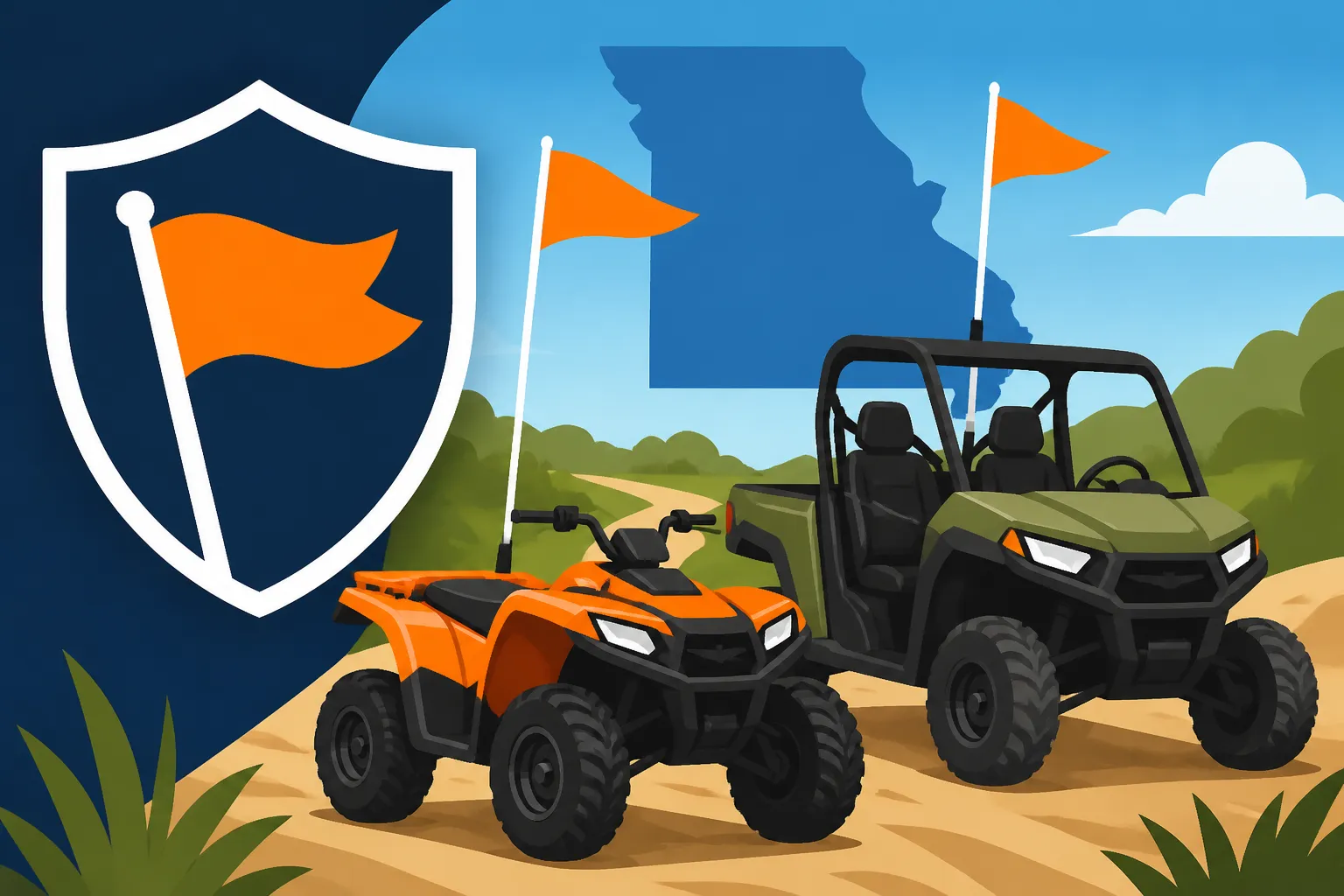
The law is pretty clear on this point: the flag must be fluorescent orange or red, at least 30 square inches in size, and mounted at least seven feet above the ground on the machine. This is designed to ensure maximum visibility to other motorists. Imagine you're driving your side-by-side down a country road, even for a short distance under the [Missouri's 3-Mile Rule for Side-by-Sides]. Without that flag flying high, you're just another low-profile vehicle that a truck driver might not see until it's too late. Many riders choose a sturdy flagpole from a company like SuperATV that can withstand wind and trail vibrations while maintaining the required height. For more details on this specific requirement, you can check out [Missouri's 7-Foot Safety Flag].
State Parks and Conservation Areas
Now, let's shift gears from road use to dedicated off-road riding areas. Missouri's state parks and some conservation areas that permit ORV use have their own set of rules, and they can sometimes differ from the highway code. For example, at popular spots like St. Joe State Park or Finger Lakes State Park, you'll find clear rules regarding safety flags. These parks often require a bright, orange flag mounted on a flexible mast. While the height requirement might not always be the exact "seven feet" mandated for road-legal ROVs, the general principle of maximizing visibility remains paramount.
These park-specific rules are typically posted clearly at the entrance or staging areas, and it's always your responsibility to know them before you unload your machine. Why the difference? Because the riding environment is different. On trails, you're dealing with varied terrain, blind turns, and often other machines moving in close proximity. A flexible mast helps prevent damage if the flag snags on a low branch, and the bright color ensures you're seen by other riders, especially those topping hills or emerging from dense brush. Always check the specific park's regulations before heading out, as Missouri Safety Flag Requirements can have nuances depending on where you plan to ride.
What Makes a Flag "Legal" in Missouri? Specifications and Best Practices
Knowing when you need a flag is only half the battle; the other half is understanding what kind of flag meets Missouri's requirements and how to best utilize it. It's not just any old piece of cloth on a stick. There are specific dimensions and materials to consider to ensure you're compliant and, most importantly, safe.
Height, Material, and Color
For road-legal ROVs operating on public roads where allowed, Missouri law specifies a few key things:
- Height: The flag must be mounted so that its uppermost point is at least seven feet (84 inches) above the ground. This height is critical because it elevates the flag above the line of sight for most passenger vehicles, making your ROV visible even if the machine itself is obscured by dips in the road or other vehicles.
- Material and Color: The flag itself needs to be made of fluorescent orange or red material. This isn't just any orange or red; "fluorescent" means it's designed to be exceptionally bright and attention-grabbing, especially in daylight.
- Size: The flag must have a minimum surface area of 30 square inches. This ensures it's large enough to be easily noticeable. A small, handkerchief-sized flag simply won't cut it.
When you're looking for a flag system, think about durability. A cheap flag that rips in the wind or a flimsy pole that snaps on the first bump isn't going to do you any good. Many riders turn to aftermarket options from brands like SuperATV for robust flagpoles and flags that are built to last through tough Ozark riding conditions. You can find more specific details about the required height at [Missouri Safety Flag Height].
Mounting Your Flag for Maximum Effectiveness
Getting the right flag is one thing; mounting it correctly is another. To ensure your flag meets the height requirements and provides optimal visibility, consider these best practices:
- Sturdy Mounting Point: Don't just tape it to your roll cage. Invest in a proper flag mount that can securely attach to your ROV's frame or bumper. Many side-by-sides have dedicated mounting points or accessory clamps that make this easy. A wobbly flag is not a safe flag.
- Clear Line of Sight: Ensure the flag isn't obstructed by any part of your machine, cargo, or passengers. It needs an unobstructed view of the world to be effective. Think about where you place spare tires, coolers, or other gear.
- Flexible Mast (for trails): While the seven-foot rule is for roads, if you're riding trails, especially in state parks, a flexible mast is usually a better choice. It allows the flag to bend and flex when it hits low branches, preventing damage to both the flag and your machine. A rigid pole might be fine for open roads, but it's a liability in dense woods.
- Regular Inspection: Before every ride, give your flag and its mounting hardware a quick check. Is the flag still bright and intact? Is the pole secure? Has anything loosened up due to vibrations? A quick inspection can prevent problems down the line. Sometimes, the vibrant colors can fade over time with sun exposure, so replace it if it's no longer a strong, attention-grabbing fluorescent.
Local Variation: How City and County Ordinances Impact Flag Requirements
This is where things can get particularly intricate for Missouri riders. While the state outlines general parameters, individual cities and counties have a lot of leeway in establishing their own specific rules for off-road vehicle use on their roads, and this often includes flag requirements that might go above and beyond or even differ slightly from state recommendations.
The Power of Local Jurisdictions
Missouri law grants cities and counties the authority to pass ordinances that allow ROVs (and sometimes ATVs, though less commonly) on their public roads. This isn't a blanket permission, though. Each local government can set its own terms. For instance, one town might permit ROVs on all city streets with a certain speed limit, while a neighboring county might only allow them on specific county roads, and both could have unique flag mandates. [How a City Ordinance Opens a Street to UTVs] is a great resource if you want to dive deeper into this.
When a city or county decides to open its roads to ROVs, they often consider safety a top priority. This is why you'll frequently see safety flag requirements as part of these local ordinances, along with things like lighting, mirrors, and even helmet rules for [Missouri Helmet Law for Riders Under 18]. They want to ensure that if these machines are sharing the road with cars, they're as visible as possible. This means that while the state might have a general guideline for seven feet, a local ordinance could specify an even larger flag size or a different mounting location to meet their specific safety concerns.
Always Check Before You Ride
Given this patchwork of local rules, the most crucial piece of advice for any Missouri rider planning to take their ATV or UTV anywhere beyond private land is this: always check the specific ordinances for the city or county you plan to ride in.
Here's how you can do that:
- City/County Clerk's Office: A quick call or visit to the city clerk's office or county administrator's office can yield the most accurate and up-to-date information. They can usually point you to the specific ordinance or provide a copy.
- Local Law Enforcement: Sometimes, the local police department or sheriff's office can offer guidance, especially if they are the ones enforcing the rules. Just be polite and understand that they might not have every nuance memorized, but they can usually tell you where to find the official text.
- Online Research: Many Missouri cities and counties publish their ordinances online. Searching for "[City Name] UTV ordinance" or "[County Name] ATV rules" might lead you to the relevant document.
Don't assume that because your flag is legal in one part of Missouri, it's legal everywhere. The permit you obtain to ride in one town, for instance, typically doesn't extend its validity to an adjacent municipality; [Does a City Permit Work in the Next Town?] explains this concept. It's a bit of extra homework, but it's far better than getting pulled over and facing a fine or, worse, being involved in an accident because you weren't properly equipped for the local conditions. A quick search for information on where [Missouri Cities That Allow UTVs on Streets] or [Missouri Counties That Allow ATVs on Roads] can get you started on your research.
Beyond the Law: Why a Flag Is Always a Good Idea
Even in situations where a safety flag isn't legally mandated, equipping your ATV or UTV with one is a smart move. Think of it as an inexpensive, yet highly effective, piece of extra insurance for your safety and the safety of those around you.
Enhancing Safety for All Riders
When you're out on the trails, especially in areas with varied terrain or dense vegetation like the Mark Twain National Forest, visibility is key. You might encounter other riders, hikers, mountain bikers, or even wildlife around a blind corner. A flag gives everyone an earlier warning of your presence. It's not just about avoiding collisions; it's about making the shared outdoor experience safer and more enjoyable for everyone.
Consider a scenario where you're riding a hilly trail and another rider is coming up the other side. You might not see their machine until they're nearly at the crest, but their flag, extending several feet above their vehicle, could be visible much sooner. That extra few seconds of warning can mean the difference between a near miss and a sudden stop, or even worse. This is especially important for young riders or those with less experience, as they might not react as quickly to unexpected encounters. Companies like SuperATV offer a variety of flag options, from basic fluorescent designs to more elaborate lighted flags for low-light conditions, allowing you to choose the best fit for your riding style and environment.
Preventing Collisions and Misunderstandings
Beyond the trails, if you ever find yourself needing to cross a rural road, even momentarily, that flag becomes your best friend. Missouri roads, especially outside of major metropolitan areas, can be winding, hilly, and have limited sightlines. A car traveling at 55 mph needs a significant distance to stop. Your ATV or UTV, being lower to the ground, can be easily missed until the last second. The flag elevates your presence, giving oncoming traffic a much greater chance to spot you and react appropriately.
This isn't just about preventing accidents with other vehicles. It's also about preventing misunderstandings. If a landowner or law enforcement officer sees a flag, it often signals that you're an informed and responsible rider making an effort to be seen and follow regulations. It helps convey a sense of professionalism and adherence to safety. It shows you're not trying to sneak around but are actively participating in safe riding practices. In an era where off-road access can sometimes be contentious, every bit of positive perception helps.
Comparing Missouri ATV/UTV Safety Flag Requirements
To help you keep track of the different scenarios, here’s a quick overview of flag requirements in Missouri. Remember, always verify the most current and specific local ordinances for your exact riding location.
| Riding Scenario | Flag Requirement | Key Specifications (if applicable) | Notes |
|---|---|---|---|
| Public Roads (ROV under local ordinance/ag exception) | Required | – Fluorescent orange or red | Only applies to ROVs (typically side-by-sides) where a city/county has passed an ordinance allowing road use, or for specific agricultural use exceptions. Your city might require a permit, as discussed in [Missouri Special Permit Cost for ATVs]. |
| – Minimum 30 square inches of surface area | |||
| – Mounted at least 7 feet above the ground | |||
| Missouri State Parks (e.g., St. Joe, Finger Lakes) | Required | – Bright orange flag | Specific rules are posted at each park's entrance or staging area. Often requires a flexible mast. These are different from road permits, so refer to Missouri State Park ORV Permit Prices. |
| – Mounted on a flexible mast (height often specified by park, but generally high for visibility) | |||
| Missouri National Forests (e.g., Mark Twain National Forest – Sutton Bluff, Chadwick) | Required | – Bright orange/red flag (usually 80-100 sq inches) | Rules typically align with federal guidelines, often requiring a flag of a certain size (e.g., 8"x12" or larger) and mounted prominently. What the Mark Twain Forest ATV Permit Covers is a good resource. |
| – Mounted prominently (specific height/location may be recommended) | |||
| Private Land (with landowner permission) | Not legally required by state law | – Optional, but highly recommended for safety. | A good idea if riding with a group, in tall crops, or areas with varied terrain. Still adhere to [Missouri Rules for Riding Private Land]. |
| Crossing a State or Federal Highway | Not legally required specifically for crossing, but generally implied if road-legal. | – If your machine is road-legal per local ordinance for short distances, the 7-foot flag rule would apply. | Always exercise extreme caution, check for traffic, and cross at a right angle as quickly and safely as possible. [Missouri Rules for Crossing a Highway] covers this in detail. |
| Designated Off-Road Trails (non-park) | Not always legally required, but highly recommended | – Optional, but enhances safety and visibility, especially when riding with others or in challenging terrain. | Some private parks or organized rides may have their own flag rules. |
As you can see, the specific details can vary. The best approach is to always err on the side of caution and equip your machine with a high-visibility flag. It's a small investment that pays huge dividends in safety and compliance, no matter where your Missouri adventures take you.
Disclaimer
This article is for general informational purposes only and does not constitute professional advice. Laws, prices and regulations vary by location and change over time. Consult a qualified professional for guidance on your specific situation.