Missouri Trail Etiquette on Shared Ground
A ride can go sideways fast when a quiet Missouri trail suddenly has hikers, horseback riders, cyclists, or another machine around a blind bend. Good trail etiquette is more than being polite: it helps prevent collisions, protects the land, and keeps riding areas open. This guide explains how to share Missouri trails thoughtfully, from approaching other users to handling dust, noise, and muddy conditions.
Start by Knowing What Kind of Trail You Are On
Confirm who is allowed to use the route
“Shared ground” does not always mean that every trail is open to every kind of user. A forest road, a marked motorized trail, a hiking path, and a multi-use route can look similar on a map but have very different rules. Before unloading, check the posted trailhead information and the managing agency’s current notices. Pay attention to restrictions on vehicle type, machine width, seasonal closures, and one-way travel.
This matters especially in places where several recreation areas sit close together. Chadwick, St. Joe State Park, Finger Lakes State Park, and trails in the Mark Twain National Forest each have their own layout and rules. A route that is open to motorized riding in one place does not mean a nearby path is open to the same use. If you’re planning a bigger trip, [Missouri Trail Maps From State Parks] can help you think about what mapping information to check before leaving home.
A navigation app such as onX Offroad can be useful for planning a route and keeping your bearings, particularly when trails branch or cell service fades. Still, a phone map should not overrule a closed gate, a trailhead sign, or an official closure notice. Download or save the information you need before heading out, then compare what you see on the screen with signs on the ground. Trail layouts can change, and a line on a map is not permission to ride a route.
Treat signs, gates, and closures as instructions
A closed trail is not an invitation to find another way through. A gate may be protecting a damaged trail, private property, wildlife habitat, a work area, or a route that is unsafe after heavy rain. Going around it can widen the damaged area, create a new unauthorized track, and put riders on land where they do not belong. Turn back and choose an open route instead.
The same care applies to temporary notices. A trail can be closed after storm damage, during maintenance, or for seasonal reasons. Even if the surface looks dry from the trailhead, conditions farther along may be different. Check the route before you load, and read the board again when you arrive. [Missouri Trail Closures to Check First] is a useful reminder that checking access is part of trip planning, not a chore to handle after you reach the gate.
If a route appears to be open on an app but a sign says otherwise, follow the sign and ask the land manager if you need clarification. Don’t rely on tire tracks as proof that a trail is permitted. Other riders may have missed the notice, or they may be on an unauthorized route. A few minutes spent turning around is frustrating, but it is much better than making the closure worse or putting your group in a difficult situation.
Share the Trail With Other People
Slow down, make yourself predictable, and give space
The safest approach to another trail user is usually to slow early, stay in control, and make your presence known without startling them. On a narrow trail, a rider who rounds a bend quickly can leave a hiker or cyclist with nowhere to move. Reduce speed before blind corners, crests, and tight turns—not after you can already see someone in your path. Keep enough room to stop if the route is blocked.
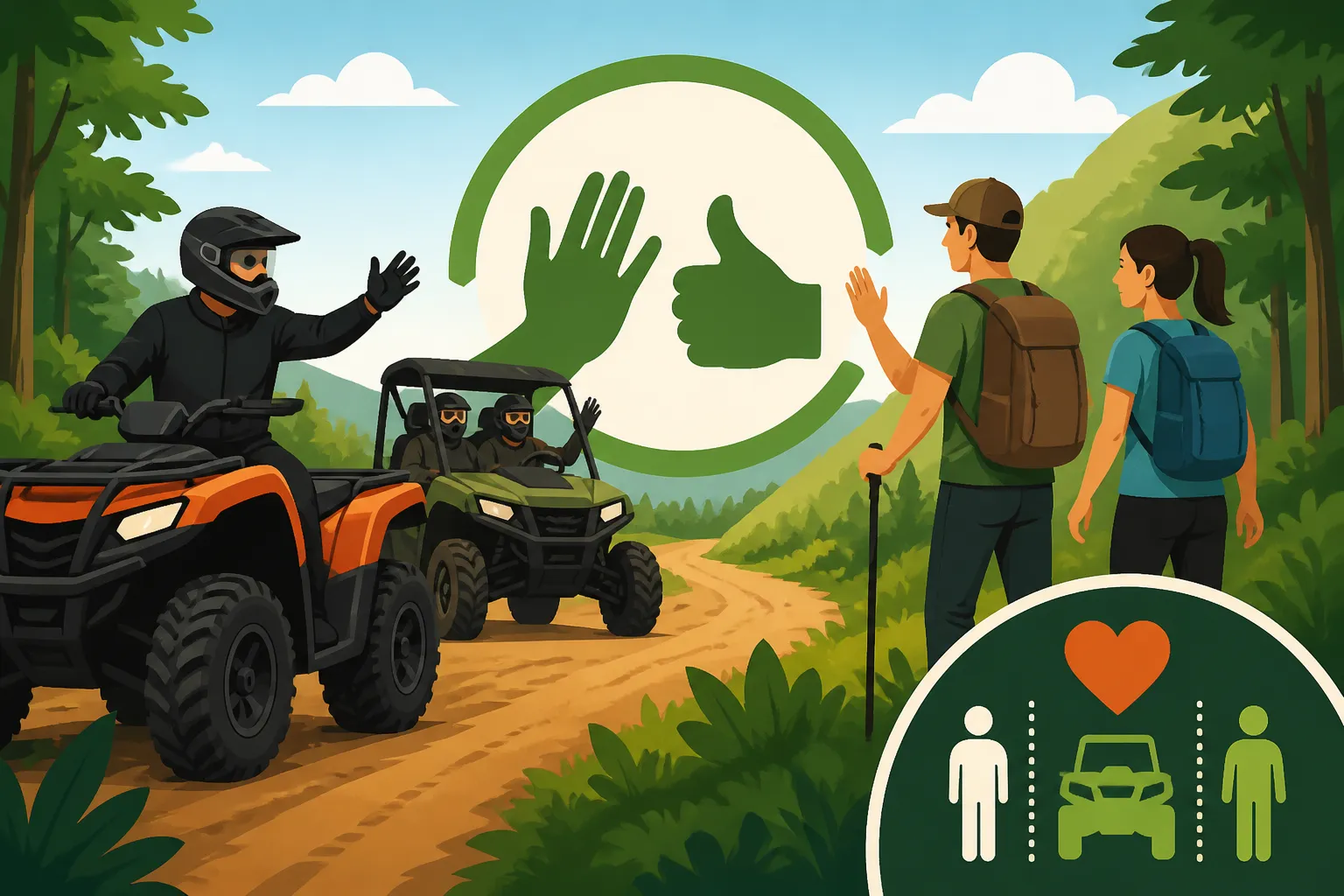
When you meet someone, avoid assuming they can hear you coming. Engines, wind, helmets, and vegetation can hide the sound of an approaching machine. A brief, calm greeting from a safe distance is generally better than revving the engine or rushing past. If the trail is narrow, wait for a wider spot and pass slowly, leaving as much room as the terrain allows. Don’t force another person onto a steep edge, loose slope, or muddy shoulder just to keep your group moving.
Be especially deliberate where sightlines are short. On winding Ozark trails, a blind turn may hide a family on foot, a rider stopped to check a map, or someone dealing with a mechanical problem. Keep to the established route and ride at a speed that lets you react to what you can’t see yet. If you’re riding with a group, leave enough space between machines for each rider to stop without creating a pileup.
Be extra considerate around horses and organized groups
Horses may react suddenly to engine noise or a fast-moving vehicle. If you encounter a horse, reduce speed well before reaching it, stop at a safe distance, and let the handler tell you how to proceed. Avoid revving, making abrupt movements, or trying to squeeze by in a tight space. The handler may ask you to wait, move slowly, or take another route. Give them time to settle the animal before continuing.
A polite exchange can prevent a frightening moment for everyone. If you are unsure what the rider wants, ask calmly rather than guessing. Don’t assume that a horse is comfortable with machines simply because it has passed vehicles before. Trail conditions, the animal’s temperament, and the amount of room available can all change the situation. When the path is too narrow to pass safely, waiting is the right call.
Groups deserve the same care. A hiking group or organized ride may take a little time to clear a narrow section, and a line of machines can feel intimidating if it approaches too quickly. Stop where everyone can see you, give the group space to move, and follow any direction from the trail manager or group leader. On busy routes, [Missouri Trail Etiquette on Shared Ground] is about this simple habit: make room for other users instead of expecting them to make room for you.
Protect the Trail Surface and Nearby Land
Avoid riding around mud, obstacles, and damaged sections
Missouri trails can change quickly after a hard rain. A firm-looking path at the trailhead may become slick or deeply rutted farther into the woods. If you come to a muddy section, do not create a bypass through grass, brush, or trees. Repeated detours widen the trail and can damage plants, soil, and drainage. If the route is too rough or wet for your machine and skill level, turn around rather than making a new route.
Stay on the marked trail, including when it is tempting to take a shortcut around a puddle or washout. Riding beside the trail can damage the edge and create parallel tracks that are difficult to repair. Avoid spinning tires for fun, roosting dirt toward other users, or using a trail berm as a jump. Those choices can erode the surface and make the route more hazardous for the next person.
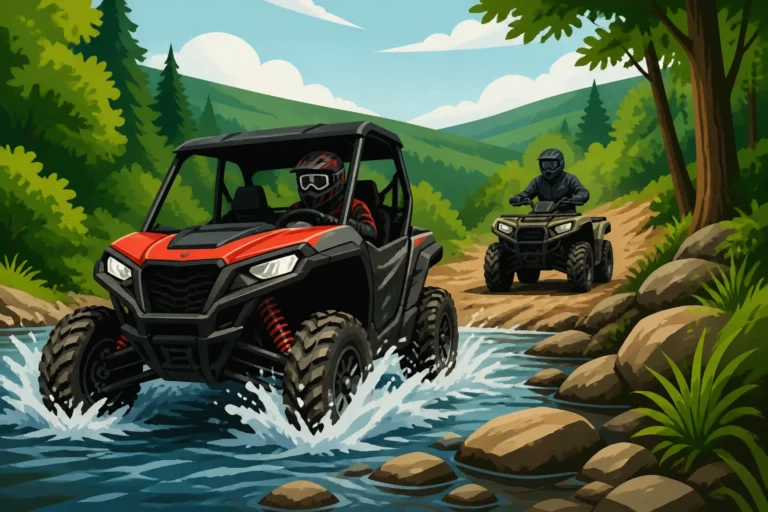
After heavy rain, use extra caution around low spots, creek crossings, and slopes. Water can hide loose rocks, soft edges, or damage to a culvert. If you’re not confident a crossing is safe, don’t enter it just because another machine has left tracks. [Missouri Riding After Heavy Rain] offers more context for why conditions deserve a fresh check after a storm. Protecting a trail sometimes means skipping a favorite loop for a day.
Keep gates, vegetation, and wildlife in mind
If you pass through a gate, leave it as you found it unless posted instructions say otherwise. A gate left open can let livestock wander onto a road or into an area where they could be injured. If it is closed, do not treat it as a suggestion or drive around the side. A gate often marks a boundary or access control point, and following the posted direction helps preserve access for responsible users.
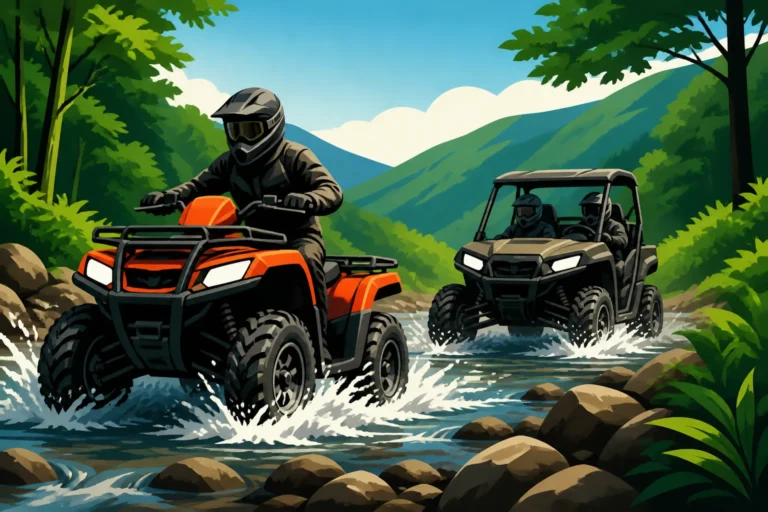
Keep your machine on the route and avoid brushing through young trees, tall grass, or streamside vegetation. Even a short detour can damage plants or create an opening that other riders follow. Near water, slow down and avoid unnecessary splashing or idling in the streambed. Be attentive to wildlife, especially when visibility is limited or animals are moving across the route. Give them room to leave rather than chasing or crowding them.
Pack out everything you bring in, including food wrappers, drink containers, broken straps, and small repair items. A dropped zip tie or empty bottle may seem insignificant, but it still becomes someone else’s cleanup problem. If you notice litter or damage, report it through the appropriate land manager rather than attempting repairs that could make the problem worse. Shared access depends on showing that riders can use an area without leaving it in poorer condition.
Manage Noise, Dust, and Group Behavior
Ride with the people behind and ahead of you in mind
Noise carries farther in quiet woods than many riders expect. A loud exhaust or repeated bursts of throttle can disturb nearby homes, wildlife, and other trail users well beyond the machine’s immediate path. Keep the machine in good working order, avoid unnecessary revving at staging areas, and use a considerate pace when passing people or stopping near a trailhead. If your group is waiting, move to a suitable spot rather than idling beside a busy route.
Dust can be just as unpleasant. In dry weather, leaving a long gap between machines reduces the amount of dust one rider has to breathe. Slow down when passing another group, and don’t accelerate hard on loose soil just to close a gap. If someone is stopped or there are people on foot nearby, give the dust time to settle before continuing. These small choices make a long ride more comfortable, especially for families and riders wearing open-face protection.
Keep your group together without turning the trail into a race. Set expectations before leaving the staging area: agree on a pace, decide how you will handle missed turns, and choose safe places to stop. A lead rider should slow before intersections and wait where the group can regroup without blocking the route. A sweep rider at the back can help ensure no one is left behind, but the whole group still needs to maintain a manageable distance.
Make room at trailheads and staging areas
Parking and unloading can create conflict before anyone reaches the trail. Use marked parking spaces, keep ramps and access lanes clear, and avoid spreading gear across a shared staging area. If another vehicle is waiting to unload, make space rather than treating the entire lot as your group’s base camp. Keep children and pets away from moving machines, trailers, and backing vehicles.
At busy trailheads, be ready before pulling into a queue or blocking a gate. Secure loose equipment, check that your group has what it needs, and move to a designated area if you need extra time. Don’t leave a machine idling while everyone sorts out helmets, maps, or snacks. A little preparation at home can prevent congestion and reduce noise for people who are trying to start or finish a ride.
If you meet another group at a junction, communicate clearly about who is going which way. Avoid blocking the intersection while deciding. A map tool such as onX Offroad can help your group identify a planned route in advance, but make the final decision based on posted directions and trail conditions. After the ride, [Missouri Trail Etiquette on Shared Ground] also means leaving the staging area clean, with no trash, spilled fluids, or equipment left behind.
Use a Simple Trail Etiquette Checklist
Match your actions to the situation
Etiquette is not one rigid rule for every encounter. The right response depends on visibility, terrain, the kind of trail, and who else is there. Use the following as a quick reference, then follow any posted rules that are more specific.
| Situation | Considerate response | Avoid |
|---|---|---|
| Blind corner or crest | Slow before reaching it and stay alert for others | Accelerating because the trail looks empty |
| Hiker or cyclist ahead | Reduce speed, communicate calmly, and pass only when there is room | Squeezing by or raising dust |
| Horse on the trail | Stop at a safe distance and follow the handler’s direction | Revving, rushing past, or startling the animal |
| Muddy or damaged section | Stay on the marked route or turn back if needed | Creating a bypass through vegetation |
| Closed gate or trail | Respect the closure and choose an open route | Riding around the barrier |
| Busy staging area | Park and unload without blocking access | Treating the lot or trail entrance as private space |
| Group ride | Leave stopping room and regroup in a safe place | Tailgating or racing to catch up |
When you’re uncertain, slow down and communicate. You do not need to settle a disagreement on the trail. If someone is behaving unsafely, give them room and report a serious concern through the appropriate park or forest contact afterward. Avoid escalating a tense moment by shouting, following, or trying to block another rider.
Planning ahead helps reduce those uncertain moments. Review the rules for your destination, check closures, and make sure your group understands which routes are open to its machines. [Missouri Trail Conditions Before You Ride] is a helpful topic to check before loading, and [Missouri Trail Closures to Check First] belongs on the same pre-trip list. If you’re heading into an area with limited reception, save maps and important details ahead of time. onX Offroad may help with route awareness, but always use official signage and land-manager information to confirm access.
Teach the habits before the ride begins
A quick conversation at the truck can be more effective than correcting someone after a close call. Tell new riders to slow at blind corners, keep distance between machines, stay on marked routes, and stop when they encounter horses or people on foot. Explain that a group should ride at the pace of its least experienced member, not the fastest person in the line. Everyone should know where to regroup if the group gets separated.
Children and newer riders often copy what they see. If an experienced adult tears around a corner or spins through a wet section, a young rider may assume that is normal trail behavior. Model the habits you want them to keep: steady speed, clear communication, and respect for closures. For family outings, choose routes that suit the least experienced rider and take breaks before people become tired or impatient.
A good ride leaves room for the next person to enjoy the same trail. That means being courteous in passing, staying within the allowed route, limiting noise and dust, and accepting that a closed or damaged trail may need to wait. Responsible behavior does not guarantee that every trail will remain open, but it helps build trust with land managers and other users. For related planning, see [Missouri Trail Etiquette on Shared Ground] and [Missouri Trail Etiquette on Shared Ground]—and remember that the best trail interaction is often the one where everyone gets through safely without having to make a big deal of it.
Disclaimer
This article is for general informational purposes only and does not constitute professional advice. Laws, prices and regulations vary by location and change over time. Consult a qualified professional for guidance on your specific situation.