Overnight Parking at a Missouri Trailhead
Arriving at a Missouri trailhead late, or wanting to leave a truck and trailer while you ride, can raise a practical question: is overnight parking allowed there? The answer depends on who manages the land, the specific lot, and whether you mean parking or camping. This guide explains how to check the rules, protect your vehicle and plan a safer overnight stay.
Check the trailhead’s overnight parking rules first
Parking is not the same as camping
A vehicle may be allowed to remain in a trailhead lot overnight even when sleeping in the vehicle, setting up a tent, or using a trailer as a campsite is not allowed. Those activities can be covered by different rules. A lot that looks like a convenient place to stop is not automatically a campground or a place where overnight stays are permitted.
Before you unload, look for posted signs about closing hours, overnight parking, camping, fees, and vehicle limits. Read the rules for the specific lot, not only the general information for the riding area. If signage is missing or unclear, contact the land manager before your trip rather than relying on what another rider remembers.
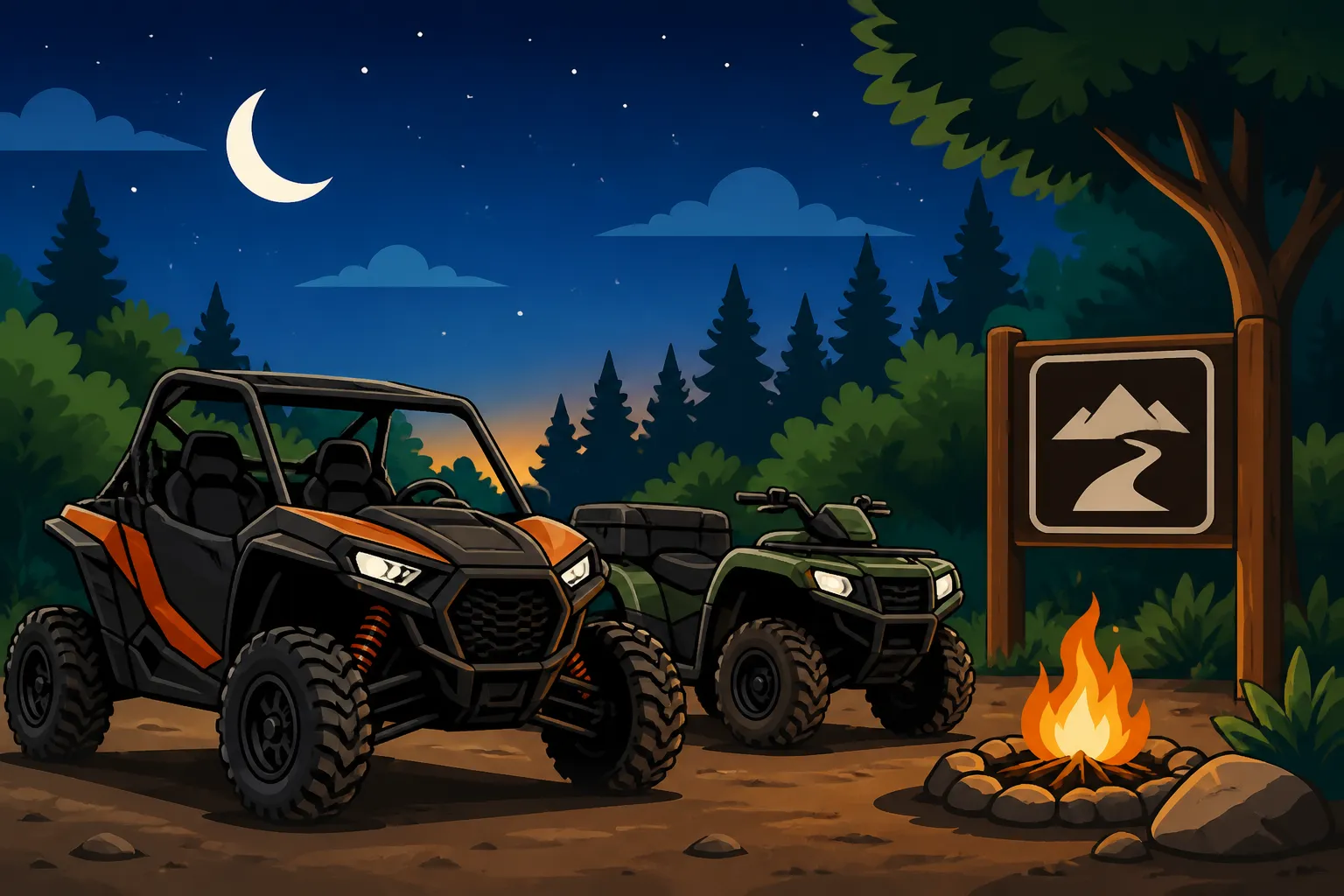
This distinction matters when you are tired after a long drive. Suppose you reach a trailhead near the Mark Twain National Forest after dark and plan to sleep in your truck before riding in the morning. The fact that the truck can be parked there during the day does not settle whether an overnight stay is allowed. Ask whether parking overnight is permitted and whether staying in the vehicle counts as camping under that location’s rules.
Identify who manages the lot
Missouri riding areas can be managed by different agencies, municipalities, private operators, or landowners. Rules at one destination may not carry over to another, even if both have trailheads, staging areas, and parking for trailers. Check the official information for the exact riding area and, when possible, the specific access point you plan to use.
For public-land riding, a useful first step is to determine whether your route involves a state park, a national forest, or another type of property. For example, St. Joe State Park and Finger Lakes State Park are not the same destination as riding areas in the Mark Twain National Forest. Each site may have its own parking, hours, camping, permit, and access arrangements. Start with Missouri Trail Maps From State Parks if you are planning a state park visit, and review Missouri’s National Forest Riding when your trip involves national forest routes.
Mapping apps can help you find access points, but a pin on a map does not confirm that a lot allows overnight parking. onX Offroad can be useful for planning routes and locating trailheads, but confirm overnight rules with the responsible land manager. A mapped road or parking area is not proof that the public may park there overnight.
Ask specific questions before you leave home
A quick call or message can prevent a frustrating arrival. Ask whether overnight parking is allowed in the exact lot, whether a vehicle and trailer may remain there, whether a fee or permit applies, and whether there are limits on the number of nights. If you plan to sleep in the vehicle or camp nearby, ask about that separately.
Be precise about your setup. “Can I park overnight?” might get a different answer than “Can I leave a truck and a 20-foot trailer in this staging lot overnight?” Mention whether you will leave the vehicle unattended while riding, whether you expect to return after dark, and whether you need to park for more than one night. If there are multiple access points, give the name or location of the lot rather than asking about the whole riding area.
| What you plan to do | What to confirm |
|---|---|
| Leave a truck overnight | Whether overnight parking is allowed in that exact lot |
| Leave a truck and trailer | Trailer space, size limits, and any parking restrictions |
| Sleep in your vehicle | Whether vehicle sleeping is allowed or treated as camping |
| Set up a tent or camp | Whether camping is permitted and where |
| Leave a vehicle for several nights | Maximum stay and any registration or permit requirements |
| Arrive after dark | Gate hours, access restrictions, and where to park |
Plan around the riding area and your arrival time
Check access details for the specific destination
A trailhead can have a different schedule or set of restrictions from the riding area it serves. A gate may close, a lot may be reserved for day use, or a road leading to the access point may be unsuitable for a long trailer. Verify access conditions before setting out, especially if your plan depends on arriving late or leaving a vehicle unattended.
If you are headed to a state park, review Missouri State Park ORV Hours and Missouri Trail Closures to Check First. These are useful starting points for understanding that riding access and trail conditions can change. Still, confirm parking information for the lot you intend to use; trail hours alone do not answer whether overnight parking is allowed.
For a Mark Twain National Forest ride, research the intended trailhead and any applicable permit or access requirements. The rules for a riding permit do not necessarily establish where you may park or camp. Review What the Mark Twain Forest ATV Permit Covers for the permit question, then separately verify overnight parking with the appropriate land manager.
Build a backup plan
A good overnight parking plan includes another legal place to leave your vehicle if the preferred lot is full, closed, or does not allow overnight stays. Depending on the trip, that might be a campground, a private riding park with an established camping area, or a lodging option where you can leave the trailer securely. Do not assume a nearby roadside pull-off, business lot, or access gate is an acceptable substitute.
If you are considering a campground, confirm that it can accommodate your vehicle and trailer and that the site permits the type of stay you have in mind. Some riders need more than a place to sleep: they may need room to turn around, a surface that can handle a loaded trailer, or a nearby place to unload safely. Ask those practical questions before you arrive.
Leave enough time to reach the backup option before you are exhausted. A late arrival can make it tempting to park wherever there is open space, but that may block access, violate a posted restriction, or leave the rig exposed. Put the confirmed address, phone number, and route to the alternative in your trip notes.
Use maps for planning, not permission
Digital maps are helpful for checking the general layout of a riding area, comparing access points, and estimating the drive between a trailhead and a campground. onX Offroad can help with route planning and orientation, particularly when you are trying to match an intended ride with a nearby access point. Treat it as a planning aid rather than the final word on land access or parking rules.
Before the trip, compare the map with official information and recent notices from the land manager. Look for barriers, seasonal closures, restricted roads, or a trailhead that is not intended for overnight use. Download or save the information you need in case mobile reception is unreliable. For a broader trip checklist, Missouri Trail Conditions Before You Ride can help you think beyond the parking question.
Protect your vehicle and keep the trailhead clear
Park thoughtfully and secure your equipment
Once you have confirmed that overnight parking is allowed, use the designated area and follow the signs. Do not block gates, loading zones, turnarounds, access roads, emergency routes, or spaces intended for other visitors. A truck and trailer can occupy more room than expected, especially when the lot is busy, so park squarely and leave room for other rigs to maneuver.
Remove valuables from view and secure loose equipment. Lock the truck, trailer, toolboxes, and storage compartments. Keep registration or other paperwork you need with you, but avoid leaving sensitive documents visible in the cab. If you have an ATV or UTV on the trailer, use appropriate tie-downs and consider whether the machine can be secured against easy removal.
Tell someone where the vehicle will be parked and when you expect to return. If your route changes, update them. That is a simple precaution if you are riding in an area with limited cell signal or if weather delays your return. onX Offroad may be part of your route-planning routine, but do not rely on a phone app as your only way to communicate your plan.
Keep the lot safe and leave no trace
Trailhead parking areas are shared spaces, not private staging yards. Keep noise down, especially late at night or early in the morning. Do not dump trash, wastewater, fuel, or oil. If there are no facilities, pack out what you bring in and plan for waste before leaving home.
Avoid making a camp in a parking space unless the land manager explicitly allows it. Chairs, cooking gear, tents, and open fires can turn an otherwise permitted parked vehicle into a use that is not allowed. Follow posted fire restrictions and campground rules wherever you stay. If your overnight plan involves camping, use a designated campground or another location that clearly permits it.
When you return from riding, check that you have not left mud, debris, or equipment in the lot. If you are loading in low light, use a headlamp or work light without shining it into other visitors’ vehicles or nearby homes. A courteous departure helps keep access open for the next group.
Make a reliable overnight parking checklist
Confirm the details before departure
A little preparation can prevent a long, uncomfortable search for a place to park. Save the land manager’s contact details, the trailhead location, and the written or posted overnight rules. If a staff member confirms permission, note the name of the location and any limits they mention. Rules can differ from lot to lot, so avoid treating a general answer as approval for every access point.
Use this checklist before loading the trailer:
- Identify the agency, business, or landowner responsible for the exact lot.
- Confirm that overnight parking is permitted there.
- Ask whether a truck and trailer may remain together.
- Clarify whether sleeping in the vehicle or camping is allowed.
- Check access hours, closures, fees, permits, and maximum stays.
- Confirm your backup parking or camping option.
- Save directions and important contact information offline.
- Secure the vehicle and leave the lot clear when you depart.
If you are traveling with a group, share the rules and the backup plan with everyone. One person may assume overnight parking is fine because they have used a nearby lot before, while another may be heading to a different access point. Confirm the exact location together before the convoy leaves.
Recheck conditions close to the trip
Even a well-planned visit can be affected by a closure, maintenance work, a special event, severe weather, or a change in access. Recheck official notices shortly before departure and again if you are making a long drive. If the preferred lot is unavailable, do not improvise by leaving a trailer somewhere that is not clearly open to public parking.
For multi-day trips, make the overnight plan for each stop rather than assuming one arrangement will work throughout the route. A place that allows parking for a single night may have a shorter limit, and a riding permit may not cover parking or camping. Use Missouri ORV Park Camping to explore camping considerations for park visits and Missouri National Forest ATV Permit when your ride involves national forest access. Then verify the parking rules for your actual trailhead.
The safest approach is straightforward: confirm the exact lot, distinguish parking from camping, and arrive with a legal backup. That small bit of planning can spare you from reaching a dark trailhead only to discover that your truck and trailer have nowhere suitable to stay.
Disclaimer
This article is for general informational purposes only and does not constitute professional advice. Laws, prices and regulations vary by location and change over time. Consult a qualified professional for guidance on your specific situation.