Missouri ORV Park Camping
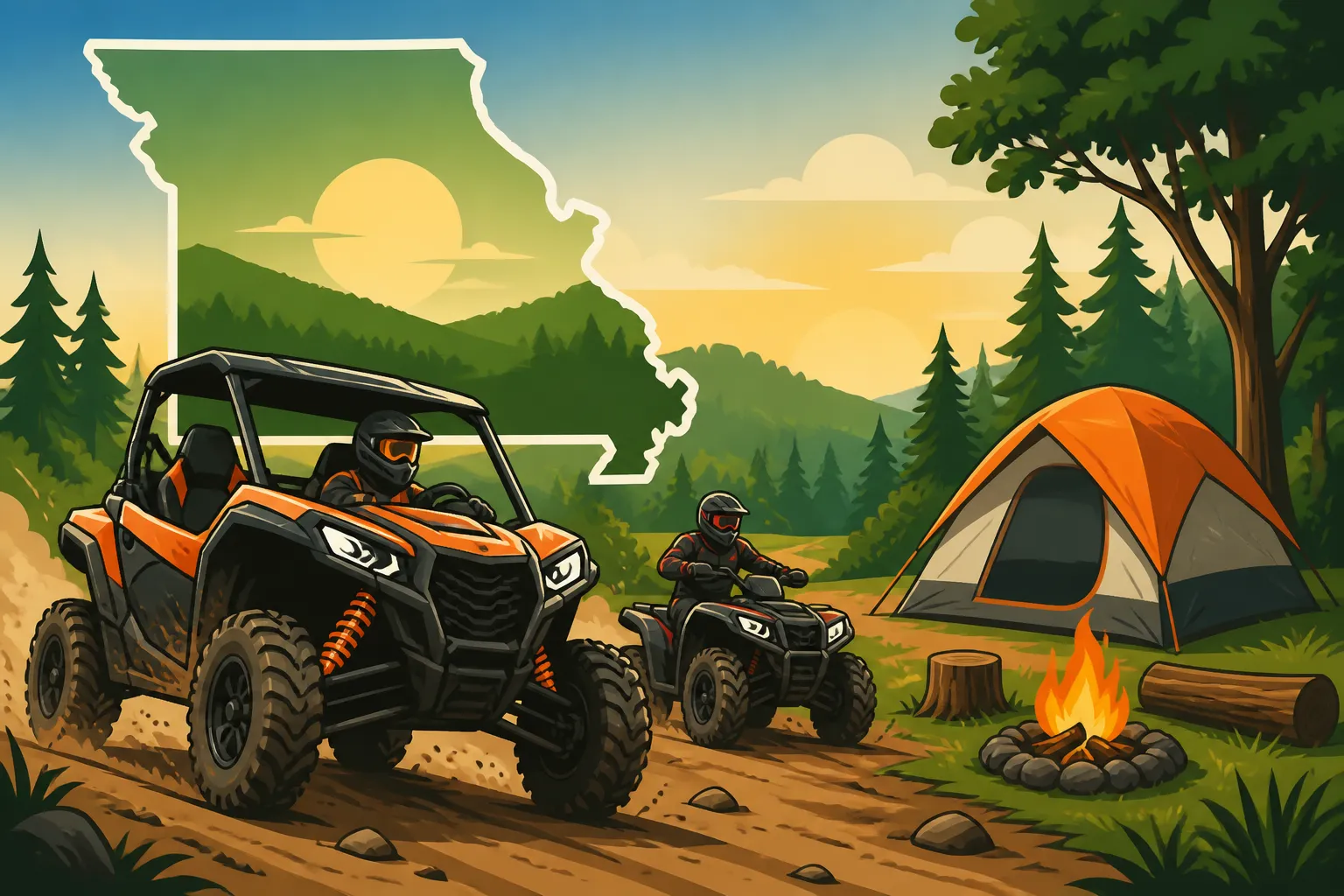
Camping near a Missouri ORV trail can turn a rushed day ride into a relaxed weekend, but the campsite you want may not be the one that lets you unload and ride straight from camp. This guide explains how to plan camping around Missouri’s state park and national forest riding areas, what to check before you book, and how to make arrival day easier.
Choose a campground that fits your riding plan
Missouri’s popular ORV destinations sit in different kinds of public land, so “camping at the park” can mean a developed campground, a nearby forest campground, or a separate overnight stop that requires trailering to the riding area. Before reserving anything, confirm the campground’s location, the riding area’s access rules, and whether the route between them is open to your machine.
St. Joe State Park camping
St. Joe State Park, near Park Hills, combines ORV riding with developed park facilities, making it a practical choice if your group wants to camp and ride in the same general destination. The park’s campground is a separate part of the trip from the ORV riding area: don’t assume that a campsite reservation automatically covers trail access, or that a riding permit includes a campsite. Check both requirements before you travel.
Think through your setup before choosing a site. A family arriving with a travel trailer, a truck, and two machines may need a different space than a rider sleeping in a tent and bringing one quad on a small trailer. Confirm the site’s vehicle and trailer arrangement, available services, and any limits that affect your rig. If your group plans to ride early, also consider how long it will take to get from camp to the riding area and unload.
St. Joe is a reclaimed mining landscape with sandy riding areas, so dusty gear and gritty equipment can be part of the weekend. Keep helmets, gloves, and trail clothes in a separate bin rather than spreading them across the sleeping area. If you’re new to the park, read [St. Joe State Park's Sand Flats in Missouri] and [Missouri State Park ORV Hours] while planning. Verify operating hours and access details before setting off, especially if your arrival is late in the day.
Finger Lakes camping near Columbia
Finger Lakes State Park, north of Columbia, is another option to consider when you want to combine riding with a state park visit. It’s worth checking campground details early, particularly if you’re traveling with a larger trailer or need a specific kind of site. A campground close to a riding destination may still have its own booking process, facility rules, and access arrangements.
Use the same separation-of-plans approach here: confirm your campsite, confirm the riding area’s requirements, and map how you’ll move between them. A campsite booking is not a substitute for checking ORV access rules. For trail planning, compare the riding area’s terrain and layout with your group’s experience. A younger rider may be happiest with a manageable route and regular breaks, while an experienced group may want to spend more time covering the riding area. [Finger Lakes State Park in Missouri] and [Camping With an ORV Trailer at St. Joe] can help you think through the differences between a state park ride and a trailer-based weekend.
Camping near Chadwick and Sutton Bluff
Chadwick’s riding opportunities are in the Mark Twain National Forest, where camping arrangements can differ from a developed state park campground. Cobb Ridge Recreation Area is a familiar camping reference for riders planning a Chadwick trip, but confirm what facilities and access are available for the dates you intend to go. A forest campground can offer a more outdoors-focused stay, yet may require more self-sufficiency than a developed campground.
Sutton Bluff is another forest riding destination in the Ozarks. When you plan to camp nearby, check whether the overnight location is actually within the riding area, whether trail access connects to it, and whether you’ll need to trailer your machine between the campsite and trailhead. Do not assume that a road suitable for a truck and trailer is also an authorized ATV route. [Chadwick Motorcycle and ATV Use Area], [Cobb Ridge Recreation Area Camping], and [Sutton Bluff's 45 Miles in Missouri] are useful starting points for comparing destinations.
Compare camping styles before you reserve
There isn’t one best Missouri ORV campground for every group. The right fit depends on whether you prioritize hookups, a simple tent site, short access to the riding area, or a quieter overnight spot. The table below is a planning aid, not a guarantee of specific site features or availability; confirm details with the campground or land manager before booking.
| Camping plan | Often a good fit for | Check before you book | Riding-day consideration |
|---|---|---|---|
| Developed state park campground | Families, first-time campers, and groups wanting established facilities | Site dimensions, services, reservation rules, and vehicle limits | Confirm how to reach the ORV area and what riding permit is needed |
| Forest recreation area campground | Riders seeking a more rustic base near public-land trails | Facility level, access road conditions, fire rules, and current notices | Confirm permitted routes and whether your machine must be trailered |
| Private campground near a riding destination | Groups seeking a particular service or a backup location | Distance, cancellation terms, trailer space, and machine rules | Plan the drive to the trailhead and a secure place to leave the rig |
| Overnight stop outside the riding area | Travelers splitting a long drive or arriving late | Whether the stop allows trailers and overnight parking | Avoid assuming it provides legal or direct trail access |
Decide what “near the trails” means for your group
A campground can look close on a map but still involve a longer drive because of road layout, access restrictions, or the need to use a trailer. Work out the whole sequence: park the tow vehicle, unload, secure the trailer, and get to the permitted riding area. If children or new riders are coming along, a shorter and simpler morning routine can make the weekend feel much less hectic.
A navigation app can help you understand the broader area and identify useful landmarks. Some riders use onX Offroad to explore route options and save map information before leaving home. Treat any app as a planning aid rather than permission to ride: confirm trail status, boundaries, and rules with the land manager. onX Offroad can help you prepare a route, but it cannot make a closed road or unauthorized connection legal.
Match the campsite to your trailer and machine
Measure your trailer and consider how you’ll park it, not just how many people will sleep at the site. A long trailer can be awkward in a tight site or on a narrow access road, while a machine that is easy to unload in a spacious staging area may be harder to manage beside a crowded campsite. If you’re bringing multiple machines, decide beforehand whether you need space to unload and inspect them without blocking other campers.
Also think about where equipment will go overnight. Helmets, boots, tie-downs, tools, and muddy riding gear can quickly take over a small tent or vehicle. Pack a few durable storage tubs, a tarp for dirty gear, and a separate container for food and cooking items. Keep documents and keys in a dry, secure place rather than leaving them on a rack or in an open trailer.
Plan the ride and the overnight stay separately
One of the easiest planning mistakes is treating campsite access and ORV access as a single reservation. They may be managed separately and have different rules. Confirm each part of the trip directly, and make sure your machine fits the riding area you intend to use.
Check permits, machine limits, and access rules
Before departure, find out which permit applies to the specific riding area. A state park riding permit and a national forest permit are not interchangeable just because both trips involve ORVs. Confirm what the permit covers, where it must be displayed, whether the machine has to meet equipment requirements, and what happens if the trail system is closed.
Machine dimensions matter too. Public trail systems can have width limits, and a wide side-by-side may not be allowed on a route that works for a narrower ATV. Measure your machine as required instead of relying on the model name or a rough estimate. If you’re comparing riding locations for different machines, [Missouri Trails for a Wide Machine] and [Missouri ORV Permits Explained] can help organize the questions to resolve before the trip.
Check conditions and closures close to departure
Ozark weather can change the feel of a trail weekend quickly. Heavy rain may leave a route muddy, damage a crossing, or lead to a closure. Dry conditions can create dust and reduce visibility behind other riders. Check current trail notices before loading, and check again before leaving camp if weather has changed overnight. Don’t use an old map or a route someone posted online as proof that a trail is open today.
Planning tools can make it easier to prepare for a ride, especially when cell service is limited. You can use onX Offroad to review mapped routes and save information for offline reference where available. Then cross-check your intended route with the official land manager’s notices and trailhead signs. The map helps with orientation; posted closures and local rules take priority. For more trip-planning context, see [Missouri Trail Conditions Before You Ride] and [Missouri Trail Closures to Check First].
Build a realistic arrival and departure routine
If you arrive late, setting up camp and unloading machines in the dark can turn a relaxing weekend into a frustrating one. Where possible, plan to reach the campground with enough daylight to find your site, park the trailer, and secure equipment without rushing. If a delay is unavoidable, consider camping near the destination first and riding the next morning rather than trying to squeeze in a late arrival and an uncertain trail session.
Before you leave home, give one person responsibility for campground details and another for riding-area requirements. Keep reservation information, permit instructions, and directions accessible offline or on paper. On departure day, check the site for small items that are easy to overlook—gloves, charging cables, tie-downs, and trash—and inspect the trailer and machine before heading onto public roads.
Pack for camping and riding in Missouri
The best packing list depends on the season, your campsite, and how far you’ll be from services. A developed campground may make some needs easier to handle, while a forest-area stay may call for more careful preparation. Either way, pack for the return to camp as well as the ride itself.
Separate camp gear from trail gear
Keep riding equipment together so you can find it quickly without unpacking the entire truck. A basic trail kit might include helmets, eye protection, gloves, boots, weather-appropriate layers, drinking water, and a small first-aid kit. Bring machine-specific essentials too, such as the tools and recovery equipment appropriate for your vehicle. Check the owner’s manual for maintenance and towing guidance rather than guessing about a repair.
For camp, plan for sleeping, meals, lighting, and weather protection. A waterproof container can protect clothing and bedding from a sudden shower, while a separate tub keeps muddy boots away from food and sleeping gear. If you’re camping with children, put their important items—warm layers, snacks, and spare socks—in a clearly marked bag so they’re easy to reach after a wet or dusty ride.
Protect your equipment and respect the campground
Tie machines down properly for travel and recheck the straps after the first part of the drive. At camp, use the designated parking and unloading areas, and avoid running a machine where campground rules prohibit it. Be considerate about noise, especially early in the morning or after other campers have turned in for the night. Campground quiet rules and vehicle restrictions can apply even when the nearby ORV area is open.
Keep food and rubbish secured, use fire rings only where permitted, and follow local fire restrictions. Don’t wash mud, fuel, or maintenance residue into a stream or campground drain. At the end of the stay, leave the site clean and take your trash with you if disposal isn’t available. Good campground habits help keep access pleasant for the next group of riders.
Make a backup plan before you need one
A full campground, a storm, or a trail closure can disrupt a weekend even when you’ve planned carefully. Identify a second overnight option and check whether it accepts your trailer and allows the kind of stay you need. Keep enough flexibility in the schedule to switch riding days or spend a day on a different activity if conditions change.
Finally, set expectations with everyone in the group. Agree on a meeting point, a turnaround time, and what to do if riders become separated. Save key campground and land-manager contact details before the trip. A little preparation can prevent the familiar scramble of searching for directions, permits, or a dry pair of gloves while everyone else is waiting.
Disclaimer
This article is for general informational purposes only and does not constitute professional advice. Laws, prices and regulations vary by location and change over time. Consult a qualified professional for guidance on your specific situation.