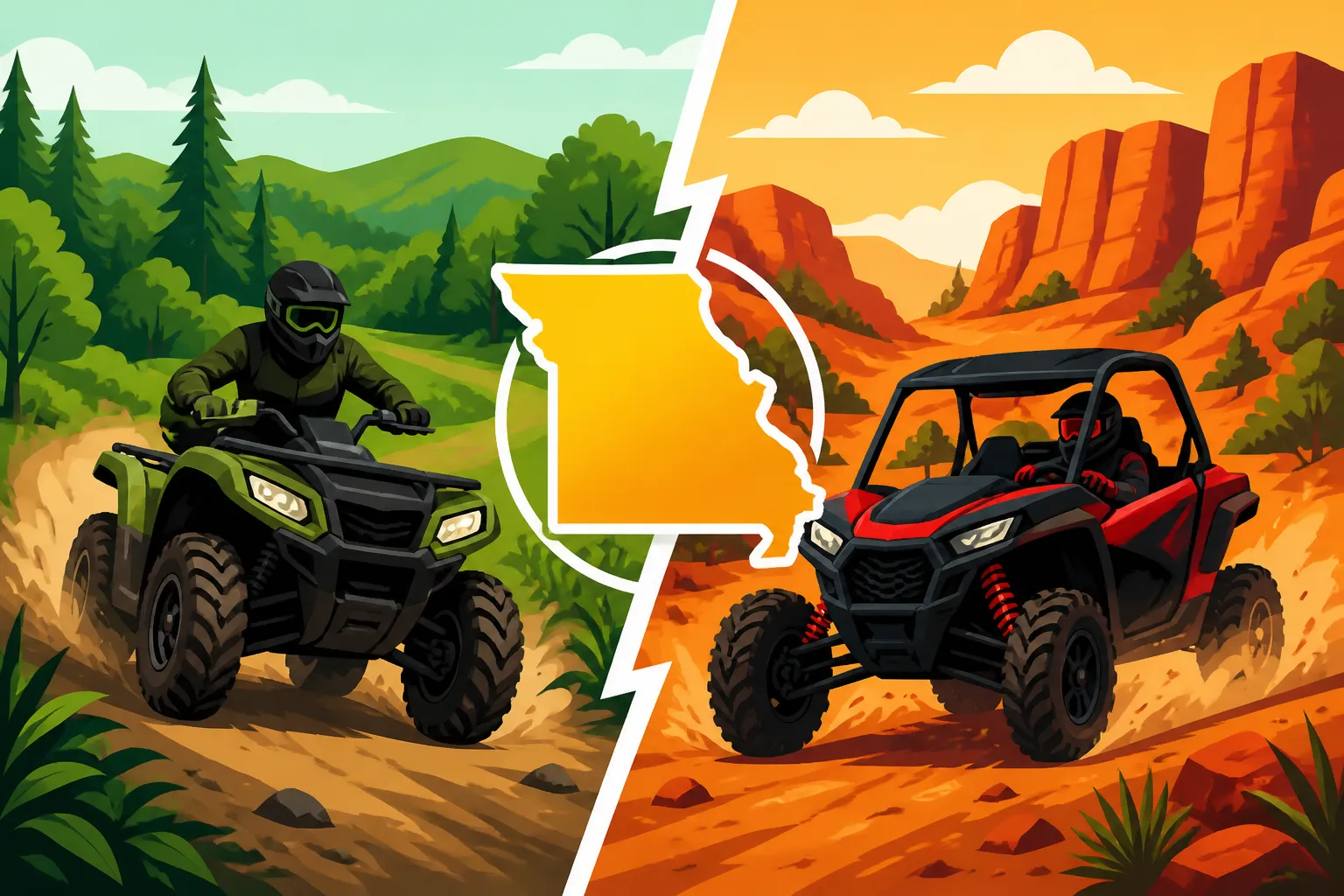
Riding Two Parks in One Weekend
A two-park ATV weekend in Missouri can sound like twice the riding, but the drive between trail systems, separate access rules, weather, and unloading time can eat into the fun. The key is to choose parks that make sense together, confirm each one’s current access requirements, and plan the weekend around one dependable riding base rather than trying to cover too much ground.
Choose a pairing that fits your weekend
Missouri’s riding areas are spread out, so “two parks” does not necessarily mean two nearby trailheads. St. Joe State Park is near Park Hills, Finger Lakes State Park is near Columbia, Chadwick Motorcycle and ATV Use Area is in the Ava area, and Sutton Bluff is in Reynolds County. A pairing that looks appealing on a map may involve more towing than riding.
Compare drive time before trail mileage
Start with the distance between the riding areas, not just the number of trails at each one. Remember that a truck and trailer move differently from a car: fuel stops, narrow roads, campground check-in, and the time it takes to secure machines all add up. A drive that seems manageable without a trailer may feel like a real chunk of the day when everyone is tired and the machines are muddy.
Here are a few broad ways to think about a two-park weekend:
| Pairing approach | What may work well | What to plan around |
|---|---|---|
| St. Joe State Park and Finger Lakes State Park | A chance to experience two established state park riding areas | They are not a next-door pairing; allow for a substantial tow between them |
| Chadwick and Sutton Bluff | A forest-riding-focused trip with two different settings | Treat the move between areas as a separate travel leg and verify each area’s access rules |
| One primary park and a nearby secondary destination | Less time spent packing, towing, and setting up again | Confirm that the second destination is open and appropriate for your machine |
| Two days at one riding area | More time on the trails and less weekend logistics | You give up the novelty of visiting a second area |
If your group has only Saturday and Sunday, two distant parks can turn the weekend into a driving trip with a little riding attached. For many families and friend groups, it is more enjoyable to ride one area thoroughly and add a second stop only if the geography and trail conditions make it practical.
Match the park to your machine and riding style
Before settling on an itinerary, check that both destinations suit the machines in your trailer. Width limits, trail surfaces, sound requirements, flags, helmets, and other site rules can differ. A side-by-side that is comfortable on one system may not fit the rules or trail layout at another. An ATV that handles a narrow, rocky route well may feel out of place on a sandy or faster trail.
Use official park or land-manager information to confirm the rules for the exact area you plan to ride. For a state park and a national forest riding area, do not assume one permit or set of requirements covers both. The distinctions are explained further in Missouri ORV Permits Explained and Does a State Park Permit Work at Chadwick?.
A mapping tool such as onX Offroad can help you visualize the route, nearby roads, and general trip layout while you compare options. Treat a map as a planning aid, not proof that a trail is open or that your machine is allowed there. Check the land manager’s current notices before you load.
Build a realistic two-day itinerary
The best weekend plan leaves room for the parts that are easy to underestimate: unloading, safety checks, finding the correct trail entrance, eating, and getting machines ready for the next day. A schedule that assumes everyone can arrive, unload, and ride immediately tends to fall apart as soon as someone needs fuel or a tie-down has worked loose.
Decide whether to change campsites or keep one base
Changing campsites between parks can save some morning driving, but it also adds packing and setup. You may need to load machines, secure loose gear, hitch the trailer, drive to the next area, and check in before you can settle down. With a group, those tasks take longer than they do on paper.
Keeping one base can be simpler if the second riding area is close enough for a day trip. On the other hand, a long commute from camp can leave everyone tired before the ride begins. Compare the full sequence, not just the overnight distance: campsite to first trailhead, trailhead back to camp, camp to second destination, and the return trip home.
A practical itinerary might look like this:
- Friday evening: Arrive at the first area or nearby lodging, unload only if the site rules and setup allow it, and organize paperwork and safety gear.
- Saturday: Ride the primary area. Keep the day flexible so the group can learn the trail layout, adjust to conditions, and avoid rushing to meet a second destination.
- Saturday evening: Refuel, inspect the machines, clean or secure muddy gear, and confirm the next area’s access information.
- Sunday morning: Move to the second park only if the drive and access schedule leave enough time for a worthwhile ride.
- Sunday afternoon: Leave a buffer for loading, traffic, and the drive home instead of planning the final ride to the last possible minute.
If the second park requires a long tow, consider riding there on Sunday only when the group can arrive early and still have a comfortable return plan. Otherwise, use the weekend for one area and save the second destination for another trip.
Plan around trail conditions, not just the forecast
A sunny forecast does not guarantee good riding. Heavy rain can affect trail conditions, create muddy or damaged sections, and lead to closures. In the Ozarks, steep slopes, loose rock, creek crossings, and low spots deserve extra attention after rain. Dry weather can bring its own challenges, including dust, heat, and reduced visibility in a group.
Check each area’s notices close to departure and again before you leave camp. A trail app may help you understand the layout, but it cannot replace local closure information. In onX Offroad, use mapped routes to orient yourself and compare trail networks; then confirm that the routes you intend to ride are open and authorized through the land manager. It is also worth saving relevant maps for offline use if phone coverage may be unreliable.
For location-specific preparation, review Missouri Trail Conditions Before You Ride and Missouri Trail Closures to Check First. If you are considering Chadwick, Chadwick’s 80 Miles in Missouri can help you understand the scale of that riding area before you decide how much to fit into one day.
Handle access rules and permits separately
One of the most frustrating trip surprises is arriving at a trailhead and discovering that the paperwork or equipment you brought does not meet that site’s requirements. Missouri riding areas do not all operate under one shared access system. A registration decal, a park riding permit, and a forest permit are not interchangeable just because they relate to the same machine.
Confirm requirements for each destination
Make a short checklist for every park in your itinerary. Confirm whether a permit is required, where it is sold, what machine types it covers, and whether it must be displayed or carried in a particular way. Also check age and supervision rules, helmet requirements, machine-width limits, sound limits, and any required safety equipment.
This matters especially when combining a state park with a national forest trail system. Before purchasing anything, read the rules for both destinations and note whether the permit applies to one site only. The details for state park and forest access are covered in Do You Need a Permit for Missouri State Park Trails? and Missouri National Forest ATV Permit. For Chadwick-specific options, see Where Chadwick Permits Are Sold.
Do not rely on an old permit, a friend’s pass, or a decal from another state without checking the destination’s rules. If you are riding in Missouri as a visitor, Missouri ORV Permit for a Visitor and Does Missouri Honor Out-of-State Registration? are useful topics to review before packing.
Pack paperwork and equipment where you can reach them
Keep permits, registration documents, and emergency contacts in a dry, accessible place—not buried under helmets or camping gear. Bring a phone copy as a backup, but do not assume a photo will satisfy every site’s requirements. A small document pouch in the tow vehicle or a waterproof bag can save a lot of rummaging at the gate.
Make a machine-by-machine check before leaving home. Confirm that each ATV or UTV meets the rules for both destinations, then check tires, brakes, lights, belts, fuel, and tie-down points. If one machine has a repair issue, decide before the trip whether it is safe and sensible to bring it. A two-park itinerary leaves less time for troubleshooting than a relaxed weekend at one location.
If you use onX Offroad to keep route information handy, save the relevant maps before you leave home and make sure everyone in the riding group understands how the route will be shared. Keep a separate note with official contact details, access rules, and the address or coordinates for each staging area. Navigation tools can support a plan, but riders still need to follow posted signs and stay on authorized trails.
Make the weekend enjoyable instead of overpacked
A successful two-park trip is not measured by how many trailheads you visit. It is measured by whether the group gets meaningful riding time without spending the whole weekend rushing, towing, or sorting out avoidable access problems.
Set a turnaround point before the trip
Agree on a simple decision rule before anyone is tired or disappointed. For example, if the first day runs late, the second area is closed, or the weather worsens, the group stays at the primary park rather than forcing the transfer. That makes it easier to adjust without turning a practical change into an argument.
A good plan includes a fallback: an extra loop at the first area, a shorter ride, or a relaxed morning before heading home. Keep fuel and meal plans realistic, especially when riding in remote areas. Do not count on finding supplies at the trailhead or assume cell service will be available when someone needs directions.
Choose the trip style your group actually wants
If your riders enjoy new scenery and do not mind packing up, two parks can make a memorable weekend. If there are young riders, first-time visitors, or people who prefer a slower pace, a single base may be the better choice. The same is true when the machines are wide, the tow vehicle is heavily loaded, or the trail conditions are uncertain.
Before booking, ask everyone what matters most: more trail time, different terrain, camping, a relaxed schedule, or seeing a new area. Then build the plan around that priority. If the goal is variety, make sure the second park adds a genuinely different experience rather than just another long drive. If the goal is riding, spend the weekend at one area and leave the second park for a trip when you can give it more time.
Disclaimer
This article is for general informational purposes only and does not constitute professional advice. Laws, prices and regulations vary by location and change over time. Consult a qualified professional for guidance on your specific situation.