Riding With Children at a Park
Taking children to an ATV or UTV park can turn stressful fast: the machine may be too large, the trail too challenging, or the rules different from what you expected. This guide explains how to choose a suitable Missouri riding area, prepare young riders, check park requirements, and make the day safer and more enjoyable for the whole family.
Choose a Missouri riding area that fits your child
Check what the park actually offers
“Family-friendly” can mean very different things from one riding area to another. A park might have a designated youth riding area, beginner loops, or wide trails with gentler terrain. Another may be mostly steep, rocky, or narrow routes that are a poor match for a first ride with a child. Before you load the trailer, check the park’s official information for age rules, machine limits, trail descriptions, hours, closures, and permit requirements.
At Missouri state parks, youth riding areas and supervision rules matter. Riders 12 and under are restricted to the designated youth area, and riders under 16 must follow the applicable supervision requirements. Review [Missouri Park Access for Riders Under 16] and Riders 12 and Under in the Youth Area before planning a family visit. Don’t assume that a child who can handle a machine on private property is allowed on every public trail.
It also helps to separate a park’s general riding area from its youth area. A child might be allowed to ride independently within the designated youth space but still be barred from the main trail system. That distinction can affect your whole day, especially if adults in your group were hoping to ride longer or more difficult routes. Check Missouri Youth Riding Area Rules and confirm the details for the specific location you plan to visit.
Match the terrain to the least experienced rider
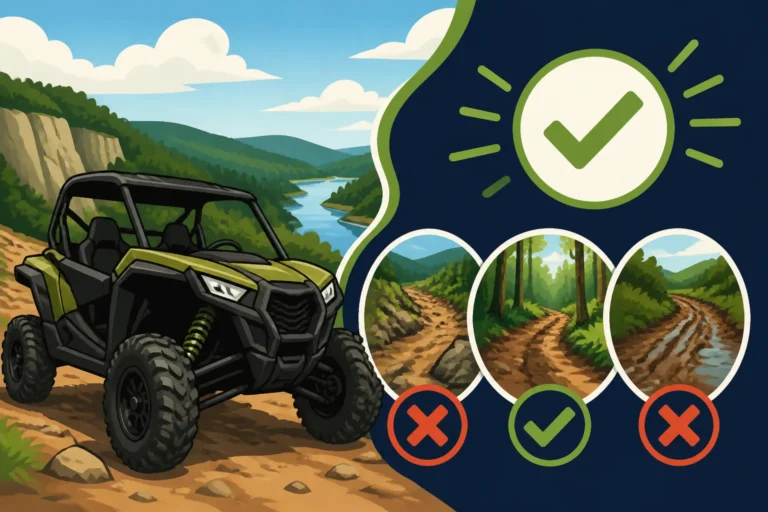
A good family route is one everyone can manage comfortably, not the most demanding trail the most confident adult can handle. Look for descriptions of trail difficulty, surface, elevation changes, and obstacles. If a route includes loose rock, deep ruts, water crossings, or steep grades, consider whether your youngest or least experienced rider can manage it without pressure.
Use Missouri Trail Difficulty Ratings as part of your planning, but treat a rating as a starting point rather than a promise. Conditions change with rain, traffic, and maintenance. A trail that felt manageable during a dry visit may be slick or deeply rutted after a storm. Check Missouri Trail Conditions Before You Ride close to departure, and be willing to switch plans if the ground is wet or a route is closed.
A mapping app such as onX Offroad can help you review the broader area and discuss a route before you arrive. Use it as a planning aid, not as a replacement for the park’s current trail map, signs, closures, or staff instructions. Save or screenshot useful information before leaving home, then confirm your route against posted park guidance once you get there.
Compare the main planning questions
| Planning question | What to check | Why it matters with children |
|---|---|---|
| Age and supervision | Age limits, youth-area rules, and adult supervision requirements | A child may be restricted to a specific area even if they are a capable rider |
| Trail difficulty | Ratings, surface, hills, obstacles, and route length | Children tire sooner and may need an easier route than adults |
| Machine fit | Size, controls, condition, and permitted width | A machine that is hard to steer or stop increases stress and risk |
| Park requirements | Permits, helmets, flags, sound limits, and equipment rules | Missing required gear can end the ride before it starts |
| Current conditions | Closures, rain, mud, and trail notices | Terrain can change significantly between visits |
| Breaks and facilities | Staging area, restrooms, shade, water, and parking | A comfortable reset can prevent fatigue from turning into poor decisions |
Prepare the child and the machine before you ride
Choose a machine the child can control
A child’s age alone does not tell you whether a particular ATV is appropriate. Consider the rider’s size, strength, attention span, experience, and ability to reach and operate the controls. They should be able to sit securely, steer without stretching, use the brakes correctly, and understand how to stop the machine. A child who has to lean awkwardly or strain to reach a control may not be ready for that machine.
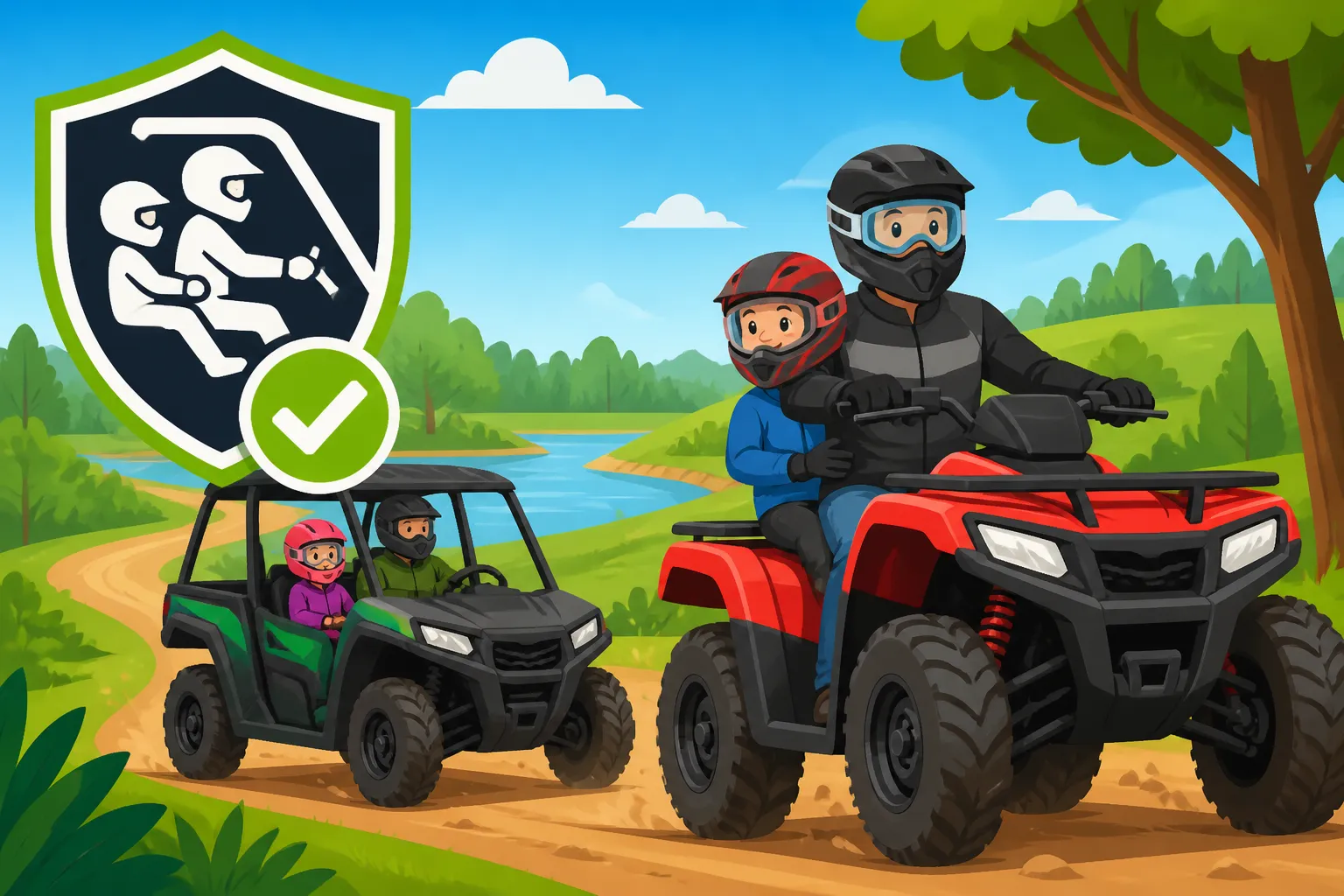
Before you leave, inspect the machine as carefully as you would for an adult’s ride. Check the brakes, tires, throttle, steering, lights where required, fuel, and any guards or protective parts. For a UTV, make sure the child fits the seating position properly and can use the seat belt as designed. A helmet and other protective gear should fit securely rather than wobble or slide around.
If you are deciding whether a child is ready to move up to a larger machine, practice in a controlled setting first. Begin with simple starts, stops, turns, and low-speed maneuvers on suitable private ground where you have permission. Teaching a Young Rider in Missouri can help you think through basic preparation. Don’t use a crowded staging area or a public trail as the place to find out whether your child can handle the controls.
Explain the rules in plain language
A long safety lecture is easy for a child to forget. Keep the briefing short and concrete: stay where the adult can see you, follow the marked trail, slow down near other people, stop when asked, and never ride ahead to look for the group. Explain what to do if the machine stalls or the child becomes uncomfortable. The plan should be to stop and get help, not to keep riding just to avoid disappointing anyone.
Show your child how to recognize trail signs, junctions, and closed routes. Make it clear that a closed trail is not an invitation to find a shortcut. At intersections, agree on where the group will pause and regroup. If you are riding with more than one child, keep the pace slow enough that the youngest rider can stay with the adults without feeling chased.
Practice a simple stop-and-wait routine before entering the trail system. For example, choose a clear, safe place where everyone will stop if the group becomes separated. Make sure children know not to follow strangers or continue down an unfamiliar route. Adults should keep the child in sight and close enough to respond, especially at turns, crossings, and busy trail junctions.
Pack for comfort as well as safety
Children often decide they are “done” before adults expect them to. Heat, cold, dust, noise, hunger, and a helmet that pinches can make a short ride feel endless. Pack water, snacks, weather-appropriate layers, gloves, eye protection, and a change of clothes. Consider bringing ear protection if appropriate for the machine and park rules, and make sure helmets meet the park’s requirements and fit the rider well.
A mapping tool such as onX Offroad may be useful for reviewing the area and identifying potential route options, but don’t let a phone become the family’s only navigation plan. Batteries can drain, reception can be limited, and trail conditions can change. Carry the park map or keep an offline version available, and follow signs and staff directions if they differ from what you planned.
Build in breaks before anyone is exhausted. A child who is hungry or overheated may become distracted, impatient, or less able to follow instructions. Decide in advance where you can stop safely, and don’t wait for a child to be visibly upset before taking a pause. A shorter outing with a relaxed finish is usually a better introduction than trying to ride until every adult has covered a favorite loop.
Follow park rules and keep the ride manageable
Confirm permits and required equipment
A vehicle registration decal and a park riding permit are not necessarily the same thing. Check what the specific riding area requires and whether the permit applies to the machine, the operator, or the visit. Review Missouri ORV Permit for a Visitor if you are traveling from outside the area or riding as a visitor, and check the park’s official permit instructions before departure. Missouri State Park ORV Permit Prices is another useful topic to review when budgeting for the visit.
Missouri state park riding areas may have requirements for helmets, safety flags, sound, and spark arresters. The details can differ from rules for road use or other public land. Read Missouri Flag Rules at a State Park rather than assuming a highway flag setup will meet park requirements. Check Missouri Sound Limits at a State Park as well; a loud machine can create problems at the entrance even when it seems normal to the owner.
Do a final equipment check before the machine leaves the trailer. Look for the required permit, helmet, flag, and any other equipment specified by the park. If you are unsure whether a machine or accessory meets a rule, ask the park before making the trip. Discovering a missing requirement after the family has driven to the staging area is frustrating, and children often take that disappointment hard.
Ride at the child’s pace
Once you start, choose a conservative pace and keep the group together. Adults should not ride far ahead and expect children to catch up. Give children time to stop, look at a junction, and ask questions. If the trail narrows or becomes rougher than expected, stop in a safe place and decide whether continuing makes sense.
Avoid encouraging a child to follow a faster rider’s line or speed. The child needs room to react to bumps, turns, and other trail users. Keep enough distance between machines to avoid dust and sudden braking, but close enough to communicate and supervise. On a UTV outing, make sure every passenger is seated and restrained properly before moving.
Check in often without turning every moment into a test. Ask whether the child’s hands are tired, whether the helmet feels comfortable, and whether they want a break. If a rider becomes nervous, slow down or return to an easier section. Turning back is a smart decision, not a failed outing. A child who feels listened to is more likely to want to ride again.
Make a backup plan before setting out
Agree on a turnaround point and a time to reassess. If the child is tired, the weather changes, or the trail is rougher than expected, shorten the ride rather than pushing through. A backup route should be easier to follow and should lead back toward the staging area. Confirm that the whole group understands the plan before moving.
Use onX Offroad or another mapping option to help visualize possible routes in advance, but keep the official park map accessible too. Pay attention to park signs and announcements, since closures and detours take priority over a route saved on a phone. If you are riding with several adults, decide who is responsible for watching the child rather than assuming everyone else is doing it.
Finally, leave time for the return to the staging area. Children may need help with gear, water, or a machine that has stalled. Rushing at the end of the day can lead to careless loading, forgotten belongings, or a tired rider making poor choices. Plan the outing around a comfortable finish, not a maximum number of miles.
Make the first visit a positive one
Keep expectations realistic
A successful first park ride might involve a few easy laps, a short trail, or time spent learning the youth area. It does not have to include a full day on the machine. Let the child build confidence gradually, and avoid comparing their pace with siblings, friends, or adults. Some children need several visits before they are comfortable with noise, dust, other machines, and unfamiliar terrain.
Praise careful choices: slowing down, stopping when asked, staying on the marked route, and telling an adult when something feels wrong. These habits matter more than speed or distance. If a child does not enjoy the first visit, ask what was difficult before deciding whether they dislike riding altogether. The problem may have been a poor machine fit, too much heat, an intimidating trail, or an outing that lasted too long.
End the day before fatigue takes over
Watch for small signs that a child is getting worn out: slower responses, repeated mistakes, frustration, or difficulty focusing. Children may not recognize fatigue early enough to ask for a break. Stop while the ride is still going well, especially on a hot or physically demanding day.
After the ride, check the machine and gear, clean up, and talk briefly about what the child enjoyed and what they would change next time. A calm conversation helps you choose a better route or schedule for the next visit. If you are planning another outing, review Missouri Trails Good for Kids and the park’s latest information rather than assuming the same conditions will be waiting.
A little preparation goes a long way. Choose an area that fits the rider, make sure the machine and required gear are appropriate, keep the route conservative, and follow the park’s posted rules. When children feel safe, included, and unhurried, the day is more likely to become a happy family memory instead of a stressful lesson.
Disclaimer
This article is for general informational purposes only and does not constitute professional advice. Laws, prices and regulations vary by location and change over time. Consult a qualified professional for guidance on your specific situation.