Camping With an ORV Trailer at St. Joe
Taking an ATV or UTV to St. Joe State Park can turn a riding weekend into a much easier getaway, but the trailer adds its own planning: where it will fit, how to unload safely, and what to do when the ground is muddy or the riding area is busy. This guide walks through the trip from campsite planning to the ride home, with practical ways to avoid common trailer-day headaches.
Plan the campsite and trailer as one setup
Check what the site needs to accommodate
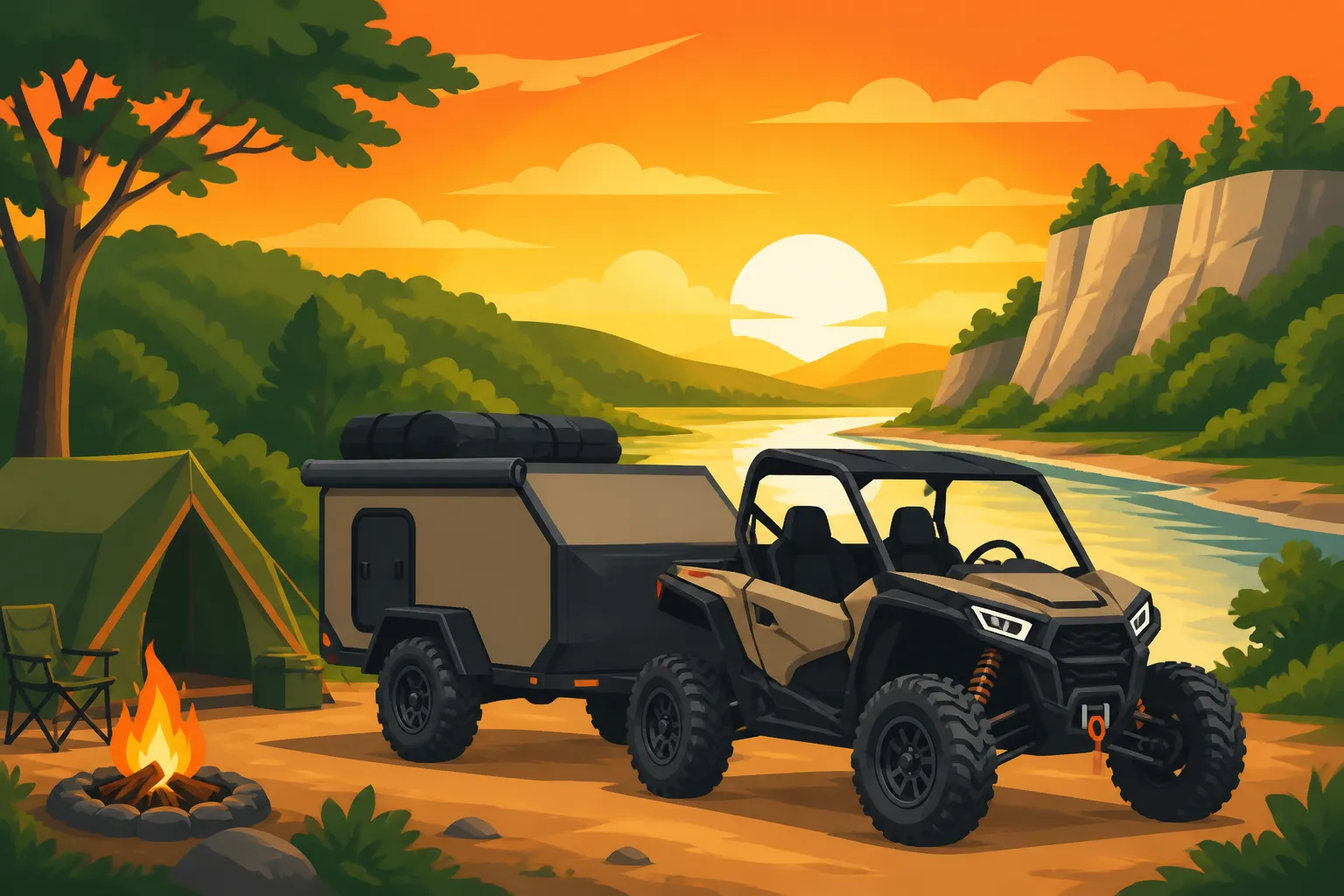
A campsite that fits your tow vehicle may not comfortably fit your tow vehicle, trailer, and camping gear. Before reserving, think about the full footprint: the truck or SUV, the loaded ORV trailer, a tent or other camping setup, and enough room to move around without blocking access. A trailer that looks manageable in a driveway can feel quite different on a sloped or narrow site, especially when you are trying to back in after a long drive.
Look at the site details offered when you make a reservation, and contact the park if the listed information does not make the layout clear. Ask specifically whether the site can accommodate both your camping vehicle and your trailer, and whether there are restrictions that matter to your setup. Do not assume that a second vehicle or a detached trailer can be placed wherever there is open ground. If the site cannot safely hold your rig, a nearby overflow area is not something to count on unless the park confirms it is available and permitted.
It helps to measure your loaded trailer from the hitch to the rear, then compare that measurement with the site information. Remember to allow room for the tow vehicle to maneuver and for the trailer gate or ramps to open. If you are camping with friends, coordinate who is bringing what before reserving. Two families arriving with separate trucks and trailers may need a different plan from one family hauling a single machine.
Choose a layout that makes unloading easier
A level site can make a big difference when you are unhooking a trailer, placing wheel chocks, or loading a machine again at the end of the weekend. If the site slopes, consider how the trailer will sit when parked and whether the loading ramps will rest securely. A machine can roll unexpectedly on a grade, and a ramp that shifts while someone is walking up it can cause a serious injury. Choose a stable, designated unloading area rather than improvising on soft ground or beside a roadway.
Think through the order of arrival, too. If someone in your group has never backed a trailer into a campsite, arriving during daylight gives you more time to assess the turn and communicate without feeling rushed. A spotter should stand where the driver can see them and stay clear of the trailer’s path. Agree on simple signals before backing up; a few minutes of coordination is easier than correcting a tight turn while other campers wait.
For first-time visitors, the broader advice in [Camping at a Missouri ORV Area] can help you think through the camping side of the trip, while [Missouri ORV Park Camping] is useful for comparing what to check at other riding areas. The specific campsite details at St. Joe still deserve their own confirmation. Treat the trailer, tow vehicle, and campsite as one setup rather than assuming they will sort themselves out after you arrive.
Prepare the machine and trailer before departure
Secure the ATV or UTV for the drive
A machine that feels solid on the trailer in the driveway still needs careful securing for a longer haul. Park it in the intended position, set the parking brake if equipped, and use appropriate tie-down points and straps in good condition. Follow the machine and trailer manufacturers’ guidance. Avoid attaching straps to parts that are not designed to take the load, and check that the machine cannot shift forward, backward, or side to side.
After the first stretch of driving, pull over somewhere safe and recheck the tie-downs. Straps can settle as the suspension moves, and a quick look is much better than discovering looseness at the campground entrance. Check the trailer tires, lights, coupler, safety chains, and wheel bearings as part of your pre-trip routine. Carrying a spare tire and the tools needed to change it can also save a trip from turning into a long wait beside the road.
A simple pre-departure check is especially helpful when several people share loading duties. One person can confirm the machine is positioned and secured; another can verify the trailer connection, lights, and load balance. Keep ramps and loose gear fastened so they cannot bounce out or strike the machine. If you are transporting fuel or other equipment, secure it separately and follow the relevant safety rules rather than letting containers roll around in the trailer.
Bring the small items that prevent big delays
A trailer trip often goes sideways because of a small item left behind: a hitch pin, wheel chock, tire-pressure gauge, or the key to a storage box. Make a checklist and keep it with your towing gear. Include the machine keys, helmets, riding equipment, gloves, basic tools, a tire repair kit suitable for your setup, and any paperwork or permits you will need. Pack a tarp or other useful cover only if you can secure it properly; loose fabric can flap against the machine or come free while driving.
Missouri riding plans can involve more than one permit or rule set. A state park riding permit is not automatically the same thing as a machine’s title or registration. Check what applies to your machine and your intended riding area before you leave, and review [Missouri ORV Permits Explained] if you need a general overview. For current requirements and purchase steps, confirm details through the relevant park or agency rather than relying on an old receipt or another rider’s recollection.
Also plan for the possibility that the forecast or trail status changes. Pack clothing for wet conditions, a dry bag for essential items, and a way to keep your phone charged. If you use onX Offroad for trip planning, download the map information you expect to need before you reach an area with weak reception. The app can help with orientation, but it is not a substitute for park signs, posted closures, or staff instructions.
Ride St. Joe State Park with the campsite in mind
Understand the riding area before unloading
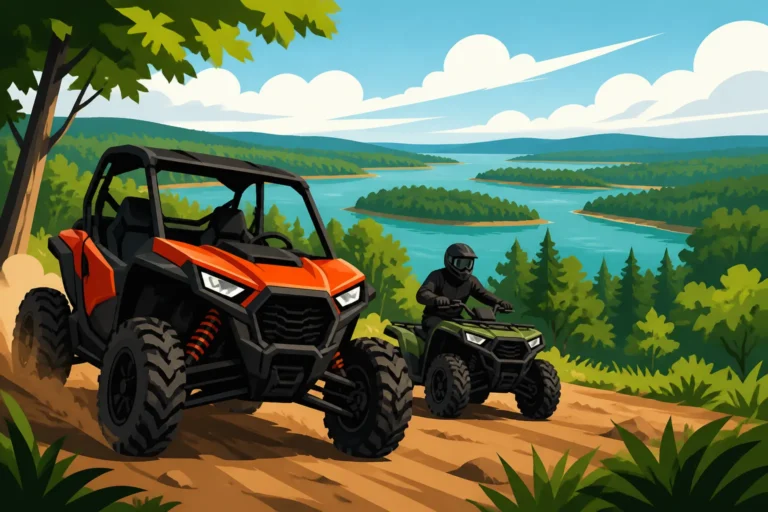
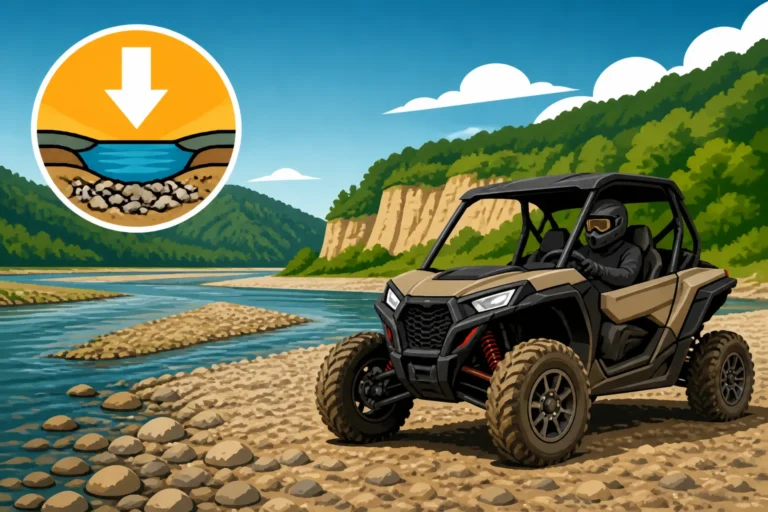
St. Joe State Park is known for its off-road vehicle riding, including the sand flats. The terrain and designated riding areas are part of what makes the park appealing, but the conditions you encounter can vary. A route that seems straightforward on a dry day may feel more demanding after rain, and sand can place different demands on a machine and rider than a familiar gravel road. If you are new to the park, take time to understand where riding is allowed and what the posted rules require before setting out.
Review the park’s information and any notices before unloading. Ask staff if you are unsure whether a route is open to your type of machine or whether a particular area has changed. [St. Joe State Park's Sand Flats in Missouri] offers more background on the area’s riding feature, while [Missouri Trail Conditions Before You Ride] is a useful reminder to check conditions rather than treating a map as a promise that every route is usable.
If you use onX Offroad to get oriented, compare the map with the signs and information at the park. Mapping tools can be helpful for planning and keeping track of where you are, but a digital line does not grant permission to ride somewhere or override a closure. Save the park’s contact information and note a meeting place in case members of your group become separated. For a family ride, it can be reassuring to agree on a simple turnaround point before anyone starts exploring.
Match your route to the group and conditions
A riding day is more enjoyable when the route fits the least-experienced person in the group, not just the most confident rider. If someone is new to ATVs or UTVs, start with a manageable outing and build up only if they are comfortable. Pay attention to fatigue, temperature, visibility, and how the machine is handling. A rider who is tired or struggling with unfamiliar ground is more likely to make a poor decision than someone who has had time to take a break and reset.
Before starting, check that everyone has suitable protective gear and understands the group’s basic plan. Keep a safe following distance, choose a pace that allows riders to react, and stop in an appropriate place if someone needs help. UTV groups should also review passenger and seat-belt expectations for their machine and the riding area. Young riders need supervision appropriate to their age and ability; an adult should not assume that a child’s comfort on private land automatically transfers to a busy public riding area.
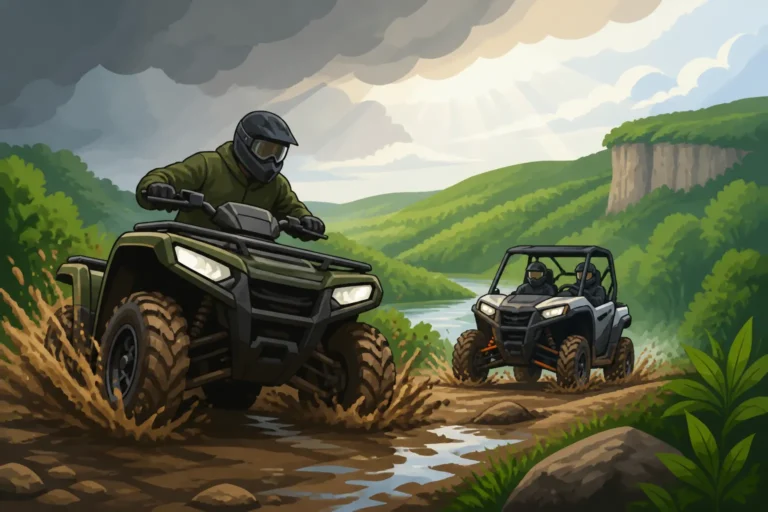
Weather deserves special attention because Missouri heat, heavy rain, and changing ground conditions can alter a ride quickly. If rain arrives, reassess rather than pressing on because you have already unloaded. Check [Missouri Trail Closures to Check First] and follow any notices posted at the park. When the group returns to camp, talk through what worked and what felt difficult. That quick debrief can help you choose a better route the next morning.
Make the campsite work after a muddy ride
Keep mud, sand, and gear under control
A muddy machine can make a pleasant campsite feel crowded fast. Before unloading, decide where riding gear will go and where dirty equipment can be staged without tracking debris into the sleeping or cooking area. A plastic storage tote, washable mat, or designated gear bag can keep muddy gloves and boots from spreading across the campsite. Keep wet gear away from food and drinking water, and give helmets and protective equipment time to dry in a safe, shaded spot.
Avoid washing a machine wherever runoff could create a mess or violate park rules. Check what cleaning options are permitted and whether the park provides a designated area. If no suitable place is available, remove loose mud carefully and save a more thorough wash for an appropriate location after the trip. [Washing a Machine After a Muddy Ride] covers the practical side of getting home without carrying half the trail in your trailer.
Before loading, inspect the machine for packed mud, branches, or debris that could interfere with controls, cooling, or moving parts. Check the tires and look for obvious damage. Clean enough to secure the machine safely, but do not let a rushed cleanup distract you from proper loading and tie-downs. Once the machine is on the trailer, secure it before anyone starts packing the rest of the campsite.
Keep shared space safe and considerate
A campsite is a shared space, and trailers make it especially important to be thoughtful about where people walk and where gear is left. Keep ramps, tie-down straps, tools, and fuel containers out of paths used by other campers. Do not leave a machine running or revving near neighboring sites, and respect quiet hours and park rules. A small campground can magnify noise, so routine maintenance and loading are best handled with consideration for nearby campers.
If you arrive after dark, make only the necessary setup moves and avoid prolonged backing, unloading, or engine work. A spotter should wear visible clothing and stay in view of the driver. Keep children well away from the trailer while it is moving or while ramps are being positioned. Even an experienced driver cannot see every blind spot, and a child can move into the area quickly.
Good trail etiquette continues back at camp. Follow the posted routes to and from the riding area, avoid cutting across vegetation, and do not treat an open-looking patch of ground as an extra trail or parking space. [Missouri Trail Etiquette on Shared Ground] is a useful companion for thinking about how riders affect other visitors and the places they use. The goal is simple: leave both the riding area and the campsite in good shape for the next group.
Build a simple weekend plan and avoid common snags
Use a practical arrival and departure checklist
A little structure makes the weekend less stressful, especially if the trip includes children, several machines, or a long tow. Before leaving home, confirm the reservation, check the park’s current riding notices, and verify what the permit applies to. Review the machine and trailer, then make sure everyone knows who is driving, who is spotting, and who is responsible for the keys and documents. If the plan depends on a particular route or facility, confirm that it is available before you set out.
When you reach the campground, check in and identify the site before unloading. Walk the site first, look for slopes or obstacles, and decide where the tow vehicle and trailer will go. Set up the campsite before riding if that will make the return easier, especially if the group expects to come back tired or muddy. Keep a charged phone and a paper note with the campsite number or meeting point in case the group is separated.
On departure day, leave enough time to cool and secure the machines, pack the site, and inspect the trailer connection. Check for forgotten gear under the picnic table or beside the fire area, and make sure all waste is handled as directed. Do a final walk-around of the trailer after the load is secured. A calm departure is safer than trying to beat a line by skipping the last checks.
Compare the main decisions before booking
Use this quick comparison to decide what needs attention first. It is not a replacement for park-specific rules or the details for your individual reservation, but it can help you catch the questions that are easy to overlook.
| Trip decision | What to check | Why it matters |
|---|---|---|
| Campsite fit | Space for tow vehicle, trailer, and camping setup | Prevents arriving with a rig that cannot be parked comfortably |
| Trailer setup | Length, ramp clearance, tie-down points, and level ground | Makes unloading and reloading safer |
| Riding plan | Allowed machine type, open routes, posted rules, and conditions | Helps avoid riding where access is restricted or unsuitable |
| Permits | Which permit applies to the planned riding area and machine | A title or registration document may not satisfy park access rules |
| Weather | Rain, heat, and changing trail notices | Conditions can affect comfort, traction, and whether riding is appropriate |
| Departure | Time for inspection, loading, and campsite cleanup | Reduces the temptation to rush important safety checks |
For a broader look at park access costs and permit planning, see [Missouri State Park ORV Permit Prices] and confirm the applicable details before the trip. Do not assume that a permit for one riding area covers another. If your weekend includes more than one destination, check each location separately and keep the relevant information accessible.
onX Offroad can be one part of that planning process, particularly when you want to review a route before leaving camp. Save what you need in advance, but make the posted signs and official park guidance your authority on where you may ride. A careful campsite choice, a properly secured trailer, and a flexible riding plan do more to prevent a rough weekend than any single app or piece of gear.
Disclaimer
This article is for general informational purposes only and does not constitute professional advice. Laws, prices and regulations vary by location and change over time. Consult a qualified professional for guidance on your specific situation.