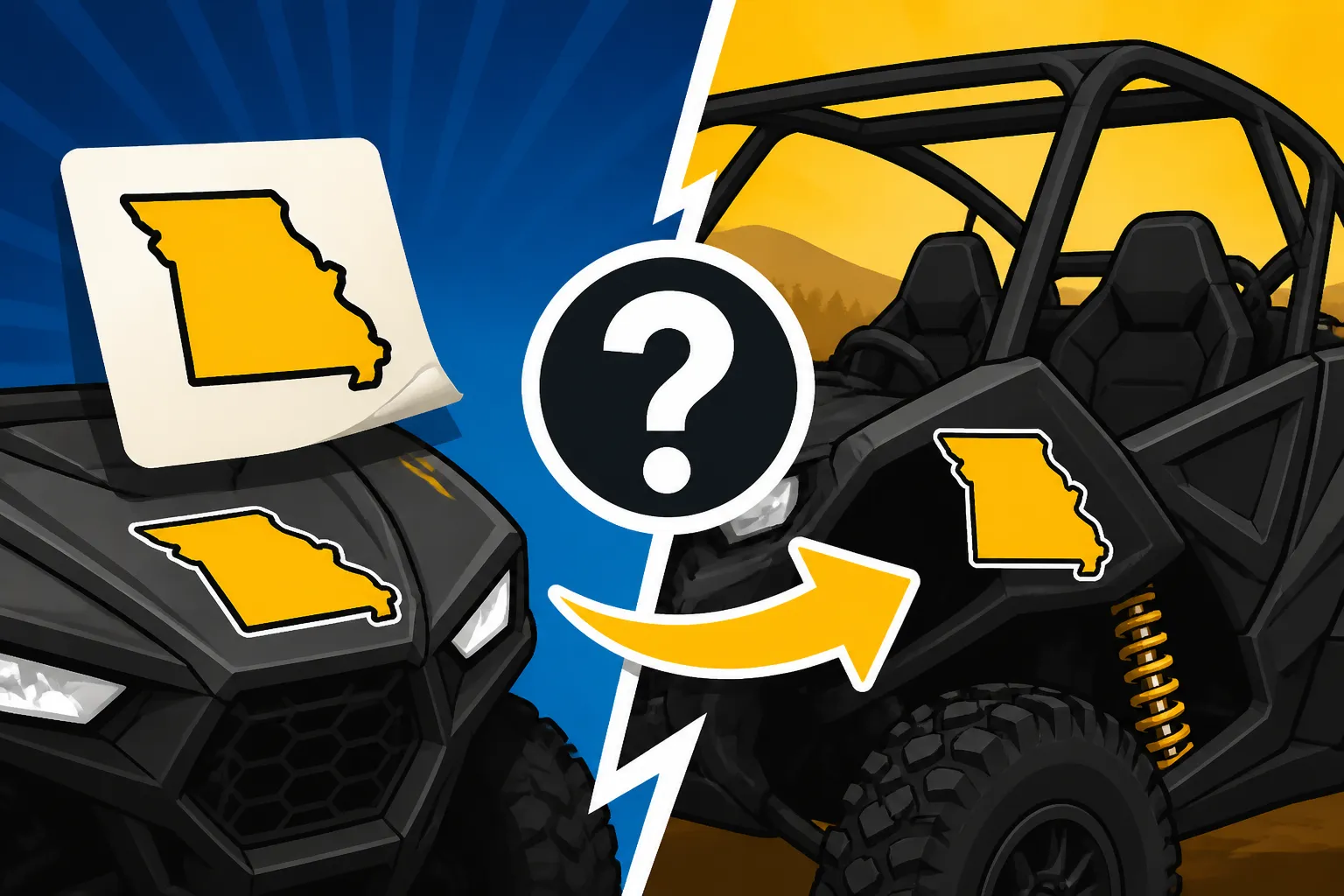
Can the Decal Go on the Frame Instead?
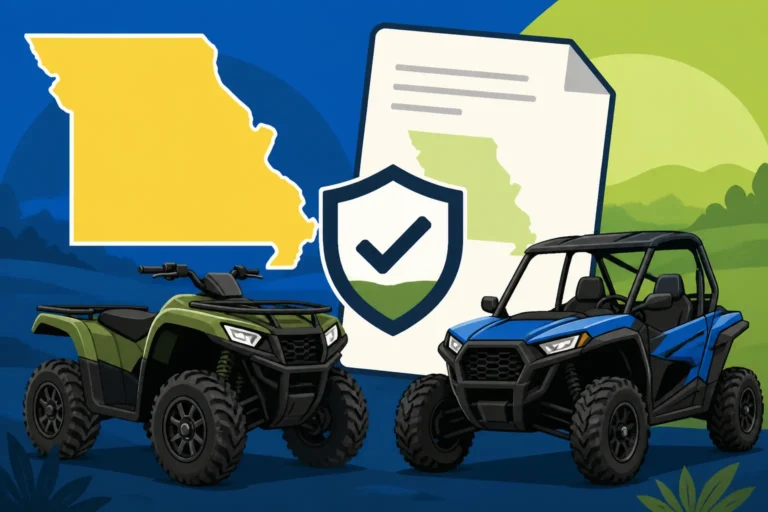
It’s incredibly frustrating when you’re trying to do everything right as a Missouri ATV owner, meticulously going through the [Titling an ATV in Missouri] process and paying all your fees, only to hit a wall of confusion about where that little registration decal actually needs to go. Many riders wonder if they can just slap it on the frame or a fender, thinking it’s out of the way there, but Missouri law is quite particular. This guide will cut through the confusion and explain exactly why your ATV decal has a specific home and what happens if it's not there.
Missouri's Specific Decal Placement Rule
Missouri isn't just trying to be particular for the sake of it; there's a real method to the madness when it comes to where your ATV decal must be displayed. While it might seem like a small detail, proper placement is crucial for ensuring your machine is legally recognized and easily identifiable by law enforcement or park rangers. This isn't just about sticking it on any visible surface; it's about following a clear directive.
Why the Right Front Fork?
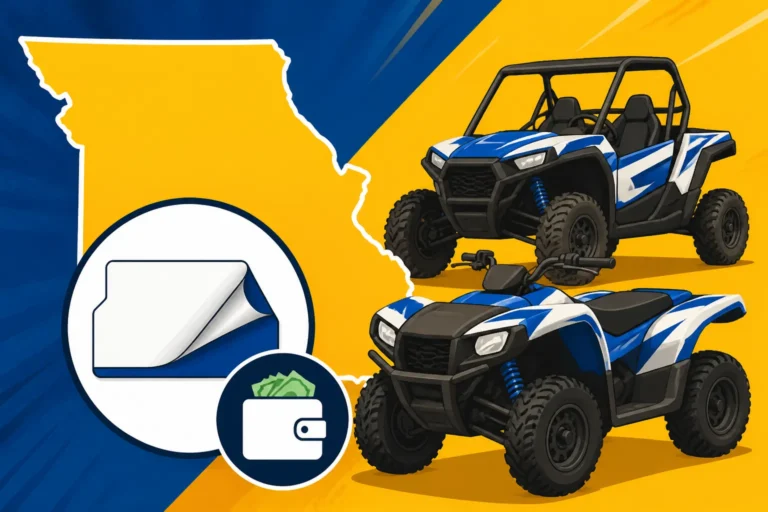
The Missouri Department of Revenue explicitly states that the ATV decal, your proof of [Missouri's Three-Year ATV Decal], must be mounted on the right front fork of your machine. Now, why there? Think about it from an enforcement perspective: it's a standardized location that makes it easy for officials to quickly verify your registration status without having to search all over your quad. When a conservation agent or a deputy needs to check dozens of machines at a trailhead, consistency is key.
This location ensures high visibility from the front and side, which is essential for quick checks as machines enter or exit riding areas. It’s not just a random spot; it’s designed for immediate identification. Plus, the right front fork is often a relatively flat and stable surface, minimizing the chances of the decal tearing or getting obscured by mud and debris, although that can still happen on aggressive rides. It’s all about maintaining a uniform system across thousands of ATVs registered in the state. [Why the Decal Goes on the Right Front Fork] delves deeper into this.
The Problem with Other Locations
So, what happens if you decide the right front fork is just too inconvenient and opt for the frame, a fender, or even the handlebars? Simply put, you're not in compliance with Missouri law. While your intention might be good – perhaps you're trying to protect the decal from brush or just prefer a cleaner look on your fork – placing it elsewhere renders your registration essentially invalid in the eyes of the law. You could face a citation even if you have a valid decal, because it’s not displayed as required.
Imagine a scenario where a state park ranger is doing a quick check at the entrance to St. Joe State Park. They’re looking for that decal on the right front fork. If it’s on your rear fender, they might not see it, leading to delays and questioning. Even if you point it out, the fact that it's not in the prescribed location means you're technically in violation. This isn't about being nitpicky; it's about adhering to the letter of the law that governs [Registering an ATV in Missouri].
Understanding the "Straddle Seat" Definition
It’s also important to remember what machine Missouri even requires a decal for. The state defines an ATV specifically as a motorized vehicle designed to travel on four low-pressure tires, having a seat designed to be straddled by the operator, and handlebars for steering. This "straddle seat" definition is key. If your machine doesn't meet this description – for example, if it has bucket seats and a steering wheel – then it's likely not an ATV in Missouri's eyes, and thus, this specific decal requirement wouldn't apply to it.
Understanding this distinction is vital because it explains why some off-road vehicles require a decal on the fork, and others do not have a decal requirement at all. It clarifies [What Missouri Counts as an ATV]. This isn’t a one-size-fits-all rule for every machine with knobby tires, which often surprises new owners of larger side-by-sides.
What Happens If Your Decal Isn't Where It Belongs?
Nobody wants to deal with a roadside stop or a ranger interaction, especially when you think you've done everything correctly. But when your ATV decal isn't properly placed, you're opening yourself up to potential issues that could turn a fun day of riding into a frustrating, costly experience. It's not just about having the decal; it's about displaying it according to the rules.
The Importance of Compliance
Compliance with the decal placement rule is about more than just avoiding a ticket; it's about smooth sailing when you're out enjoying the trails. If a conservation agent, sheriff's deputy, or state park ranger observes your ATV and can't immediately verify its registration because the decal is missing or improperly placed, they are within their rights to stop you and investigate. This can lead to delays, questions about your ownership, and proof of registration.
Even if you have all your paperwork, including your title and registration receipt, you could still be cited for improper display. A citation for an improperly displayed decal is often a minor offense, but it can still carry a fine, which no one wants. It’s an easy fix to avoid, so making sure it's on the right front fork is always the best approach. Keep your registration receipt and title handy, perhaps in a waterproof bag, just in case you ever need to prove ownership or registration on the spot.
Common Scenarios and Mistakes
Let’s be real, things happen out on the trails. Sometimes a branch snags the decal and tears it off, or maybe the adhesive just failed after a particularly muddy ride. Another common mistake is a new owner, unaware of the specific rule, just sticking it wherever they think it looks best. Perhaps you’re bringing a machine in from out of state and just assumed the rules were the same.
In these situations, honesty and knowing the process for [Replacing a Lost Missouri Decal] are your best allies. If your decal is damaged or missing, you should address it as soon as possible. Continuing to ride without a properly displayed decal, even if you paid for it, is asking for trouble. It's easy for an officer to assume you're unregistered if they don't see the decal where it's supposed to be.
Replacing a Damaged or Lost Decal
If your decal gets damaged, goes missing, or you realize it was applied incorrectly, don't panic. You can obtain a replacement through the Missouri Department of Revenue. This usually involves filling out a form, proving ownership of the ATV (your title or registration receipt will be key here), and paying a small fee. It’s a straightforward process, but it's one you should initiate promptly.
To prepare for a replacement, it's a good idea to have copies of your important documents. Even a simple bill of sale, which you can easily draft using a service like LawDepot, can help reinforce your ownership claim alongside your official title. While LawDepot itself doesn't issue decals, having your personal records in order can smooth out interactions when dealing with state agencies for things like replacements. Ensure you keep all records, including the original application for your [Missouri ATV Title Cost], in a safe place at home.
Practical Tips for Decal Application and Maintenance
Once you receive your shiny new decal, you want to make sure it lasts and stays exactly where it needs to be. Proper application and a little TLC can go a long way in preventing it from peeling, fading, or getting knocked off prematurely. Think of it as investing a few extra minutes now to save yourself a headache down the road.
Preparing Your Fork for the Decal
Before you even think about peeling off the backing, the surface of your right front fork needs to be pristine. Dirt, grease, mud, or even old adhesive residue can prevent the new decal from sticking properly. Give the area a thorough cleaning with rubbing alcohol or a good degreaser, then dry it completely. The surface should be smooth and free of any debris. A warm fork can sometimes help the adhesive bond better, so if it's a cold day, you might consider bringing the ATV into a warmer garage for a bit.
Applying the decal carefully, pressing out any air bubbles, will ensure maximum adhesion. You want it to be as flush with the fork as possible, reducing edges that could catch on brush or spray. Taking your time with this step, rather than just slapping it on, significantly increases its lifespan.
Protecting Your Decal from Wear and Tear
ATVs live a rough life. They go through mud, brush, dust, and all sorts of elements that can be brutal on a decal. While the decal is designed to be durable, you can give it an extra layer of protection. Some riders opt for a clear protective film or even a dab of clear sealant around the edges once the decal has fully adhered. This can help prevent water intrusion and protect against scrapes.
However, be mindful not to obscure the decal's visibility or legibility. The numbers and expiration date must remain clear. Regular cleaning of your ATV, especially around the decal area, will also prevent grime buildup that can degrade the adhesive over time. A quick wipe-down after a ride is a small effort for a big reward in decal longevity.
Keeping Your ATV Paperwork Accessible
Beyond the physical decal, it's always smart to have your essential ATV paperwork readily available, even if not on your person while riding. This includes your ATV title, proof of registration, and perhaps a [Missouri Bill of Sale for an ATV] if you purchased it used. While you won't keep the title on the machine (that's something to keep safe at home, perhaps in a fireproof box), having a copy of your current registration receipt in a waterproof bag on your quad is a good practice.
This becomes especially important if your decal does get damaged or lost during a ride. Being able to show a law enforcement officer a physical copy of your registration, even if the decal is gone, can often smooth things over. For important documents like a bill of sale or other ownership records, services like LawDepot offer templates that can help you create and store these securely, making it easier to manage your ATV's legal documentation.
What About Other Types of Off-Road Vehicles?
The world of off-road vehicles is vast, and Missouri's rules are quite specific about what counts as an "ATV" and what doesn't. This distinction is paramount because it dictates whether a decal is required, and if so, where it needs to be placed. Many owners of side-by-sides often get caught off guard by this difference, leading to confusion when they see ATVs with decals and their UTVs without.
Why Side-by-Sides Don't Get Decals
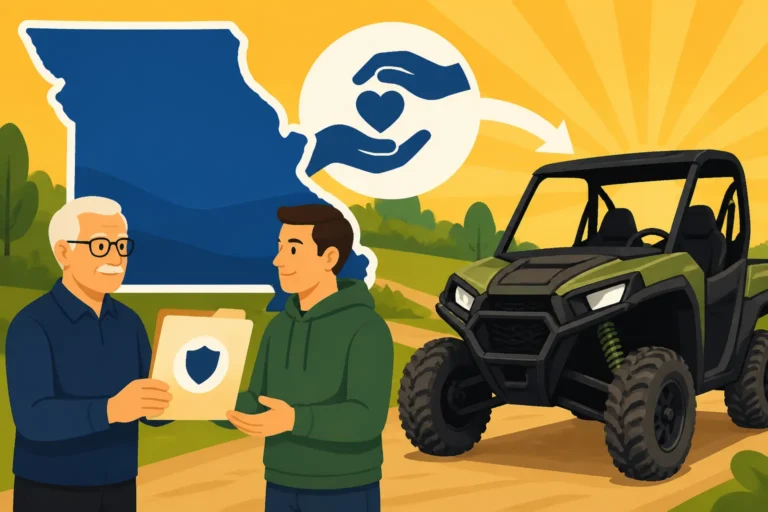
Here’s the big reveal for many side-by-side owners: your machine doesn't get an ATV decal because, by Missouri's definition, it's generally not an ATV. Side-by-sides, often categorized as Utility Vehicles (UTVs) or Recreational Off-Highway Vehicles (ROVs), typically feature bucket seats, a steering wheel, and often a roll cage. These characteristics fundamentally differ from the "straddle seat and handlebars" definition that Missouri uses for an ATV. Because they aren't classified as ATVs, they fall outside the specific ATV registration and decal requirements.
This means you won't be visiting the Department of Revenue to pay for [Missouri's $10.25 Three-Year Registration] or get a decal for your side-by-side. While this might seem like a loophole or an oversight, it’s simply how Missouri law distinguishes between different types of off-road machines. It's a key reason [Why Missouri Does Not Register Side-by-Sides].
Other Identification for UTVs/ROVs
Just because a side-by-side doesn't need an ATV decal doesn't mean it operates in a legal void. Owners still need to ensure their vehicle has a valid title, which proves ownership. [Titling an ATV in Missouri] also applies to UTVs and ROVs, though the process might have slightly different nuances. The title is your fundamental proof of legal ownership and is essential for buying, selling, or resolving any legal disputes.
When operating UTVs/ROVs on authorized roads or trails, you'll still need to carry proof of ownership, and potentially a special permit if riding on certain county or municipal roads. Many local jurisdictions that have opened their roads to UTVs/ROVs require drivers to carry proof of insurance, a valid driver's license, and sometimes a specific local permit. So, while there's no state-issued decal for UTVs, there are still responsibilities for owners.
The Nuances of Missouri's ORV Classifications
Missouri's approach to off-road vehicles can feel like navigating a maze. The law makes distinct classifications that impact everything from registration to permissible riding locations. Beyond ATVs (straddle seat, handlebars) and UTVs/ROVs (bucket seats, steering wheel), there are also definitions for things like golf carts and low-speed vehicles, each with its own set of rules, particularly regarding road use.
Understanding these distinctions is critical for any off-road enthusiast in Missouri. For example, some trails might be open to ATVs but restrict wider side-by-sides, or vice versa. Always check the specific rules for any public land or riding park you plan to visit, as their regulations might add further layers on top of state law, such as specific safety flag requirements or sound limits. Staying informed about [What Missouri Counts as an ATV] and how it differs from other ORV types is your best defense against unintentional rule-breaking.
| Feature | Missouri ATV (Quad) | Missouri UTV/ROV (Side-by-Side) |
|---|---|---|
| Seating | Straddle seat | Bucket seats (often two or more) |
| Steering | Handlebars | Steering wheel |
| Roll Cage | Not standard (some aftermarket options) | Standard (factory-equipped) |
| State Decal Req. | YES, on right front fork | NO |
| State Registration | YES (decal proves this) | NO (no state registration or decal required) |
| State Title Req. | YES | YES |
| Common Uses | Recreation, sport, light utility | Utility, recreation, transport, hunting, farming |
Disclaimer
This article is for general informational purposes only and does not constitute professional advice. Laws, prices and regulations vary by location and change over time. Consult a qualified professional for guidance on your specific situation.