Missouri ATV Decal Placement
It's easy to get caught up in the thrill of riding your ATV across Missouri's beautiful landscapes and overlook some of the seemingly minor details of ownership. But when it comes to your ATV decal, what might seem like a small sticker actually carries significant legal weight. Getting its placement wrong can lead to frustrating encounters with law enforcement, unnecessary delays, and even fines. This guide is dedicated to untangling the specifics of Missouri's ATV decal placement rules, ensuring you know exactly where that little sticker belongs so you can ride confidently and legally.
Why Your Missouri ATV Decal Isn't Just for Show
That small decal isn't just a pretty accessory; it's a vital piece of identification for your off-highway vehicle (OHV) in Missouri. Think of it as your ATV's license plate for off-road use, but specifically designed to show that your machine has met the state's registration requirements. When you take the time to properly [Registering an ATV in Missouri], you're not just paying a fee; you're obtaining the official authorization to operate your ATV on designated public lands and trails. The decal is the visual proof of that authorization.
The state mandates this decal for a few key reasons. First, it helps local authorities quickly identify machines that are legally registered versus those that aren't. This is crucial for managing trail access, enforcing safety regulations, and even tracking down stolen machines. Without a clearly visible and correctly placed decal, an officer wouldn't have an easy way to verify your ATV's legal status at a glance. Imagine pulling up to a trailhead at St. Joe State Park, excited for a day of riding, only to be stopped because your decal is missing or obscured. It's a frustrating situation that can easily be avoided.
Furthermore, the decal helps ensure that funds from registration fees are properly allocated. The money collected from these registrations goes towards important initiatives, often supporting the very trails and riding areas that ATV enthusiasts enjoy. So, by displaying your decal correctly, you're not only complying with the law, but you're also playing a small part in maintaining the infrastructure for the entire riding community. It's a testament to your participation in a larger system designed to keep Missouri's outdoor recreation thriving. This is why understanding [Where Missouri ATV Fees Go] is so important.
The Official Spot: Where Missouri Says Your Decal Belongs
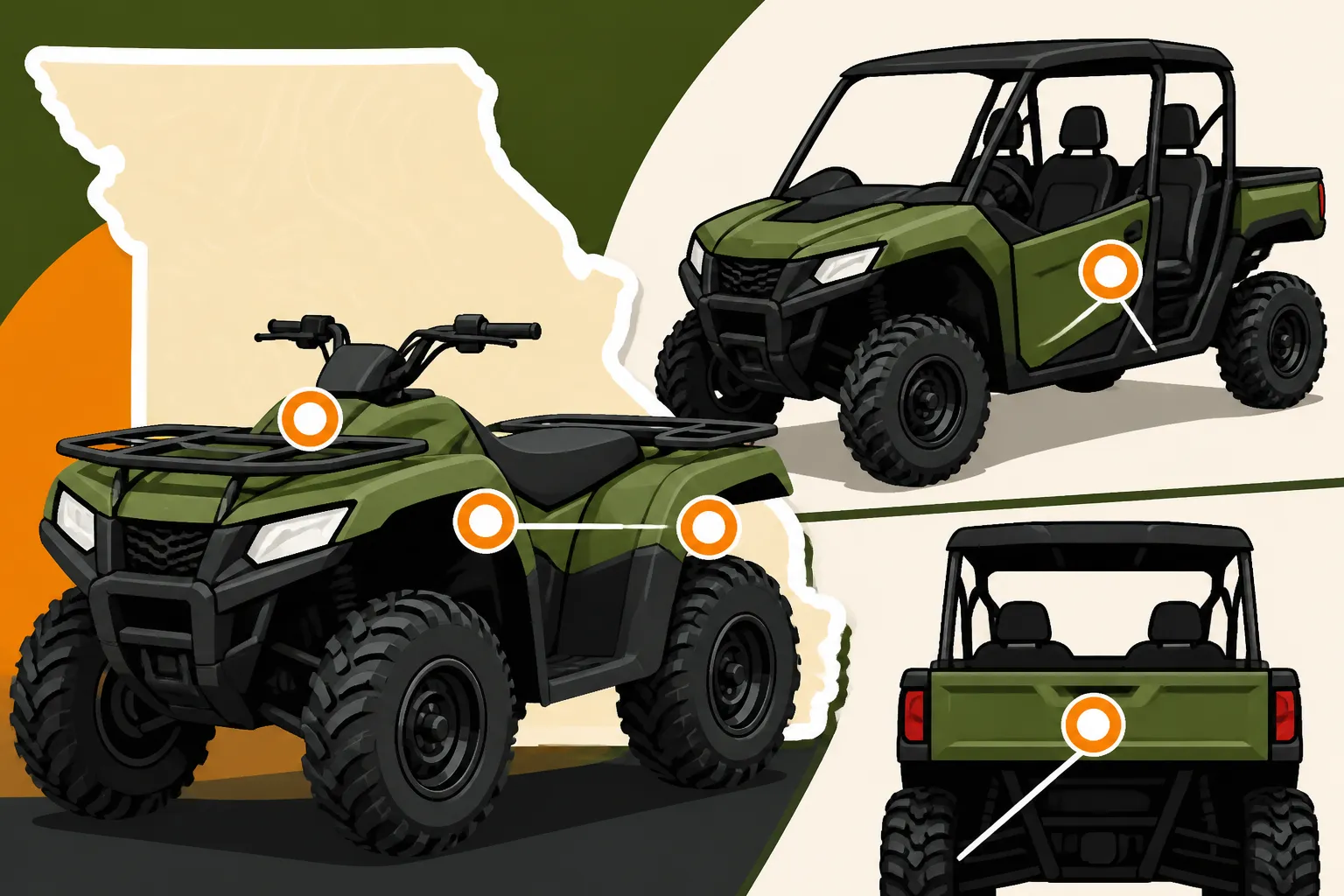
Missouri's regulations are quite specific about where your ATV decal needs to be displayed, and for good reason. The goal is maximum visibility for officials and other riders. The rule is simple: the decal must be affixed to the right front fork of your all-terrain vehicle. This isn't just a suggestion; it's a firm requirement. It needs to be prominently displayed and clearly visible at all times while the machine is in operation on public land.
Let's break down what "right front fork" actually means in practice. If you're sitting on your ATV, it's the fork tube on your right-hand side. The decal should be placed on a clean, flat surface of this fork, away from cables, hoses, or any other obstructions that might obscure it. It shouldn't be wrapped around the fork tube in a way that makes it difficult to read, nor should it be placed on the fender or the frame in a different location. The intent is for the decal to be easily identifiable, even from a distance, by someone observing your ATV. For those who wonder about alternatives, the state is quite clear that [Why the Decal Goes on the Right Front Fork] is a specific regulation.
Many riders, especially those new to the sport or those who've moved from other states, might find this level of specificity a bit much. "Why can't I just put it on the front bumper?" they might ask. The answer lies in standardization and enforcement. By having a universal placement, every law enforcement officer knows exactly where to look. This saves time during checks and minimizes disputes about whether a decal was "visible enough." The location also helps protect the decal from mud, debris, and wear and tear that might occur if it were placed in a more exposed area, though even on the fork, it requires some care.
Decal Placement Specifics and Common Mistakes
While the rule for placement is straightforward, sometimes the execution can be tricky. When you receive your new decal after fulfilling the [Missouri ATV Title Paperwork] and paying the fees, make sure the fork surface is thoroughly cleaned and dry before application. Any dirt, grease, or moisture can prevent the decal from adhering properly, leading to it peeling or falling off prematurely. Using rubbing alcohol to clean the area and letting it dry completely is often a good practice.
A common mistake is placing the decal too low or too high on the fork. While the exact vertical position isn't specified down to the inch, common sense dictates it should be easily seen without having to crouch down or stand on your tip-toes. Aim for a spot that's readily visible when someone is standing next to your machine. Another error is placing the decal at an angle or overlapping it with other stickers. This can make it difficult to read the unique registration number, defeating the purpose of its placement. Remember, clarity and visibility are paramount.
One particular frustration many riders experience is dealing with brush and trail hazards. Missouri's trails are often wooded, and branches can easily snag and damage decals if they're not robustly attached or if you're riding too aggressively through thick areas. It's a real bummer to discover your new decal is torn or missing after a great ride. Some riders try to protect their decal with clear tape or a protective film, but be cautious not to obscure any of the information. If you're questioning whether [Can the Decal Go on the Frame Instead?], remember the regulations are quite precise for this very reason.
What Happens If Your Decal Isn't Right
Operating your ATV in Missouri without a properly displayed decal can lead to a few unpleasant situations, ranging from a polite warning to a more serious citation. Enforcement officers, whether they're Missouri State Park Rangers, Conservation Agents, or local deputies, are trained to look for these decals. If they spot a machine operating on public lands or crossing a public road (where permissible) without one, it's a clear red flag.
At the very least, you'll likely be stopped and questioned. This can eat into your riding time and cause unnecessary stress. An officer will want to know why your decal isn't present or correctly displayed, and they may ask for proof of ownership and registration. If you can produce your physical [Titling an ATV in Missouri] documents, that might help alleviate some concerns, but it doesn't excuse the decal violation. Always carry your paperwork, even if it's just a sturdy copy in a waterproof bag. It's also a good idea to know about services like LawDepot for preparing legal documents that might support your claims of ownership if needed.
More seriously, you could face a citation. While the specific fines can vary, operating an unregistered or improperly decaled ATV is a violation of state law. These fines might not break the bank, but they're certainly an expense you'd rather avoid, especially when the solution is as simple as correctly applying a sticker. Beyond monetary penalties, repeat offenses or particularly egregious violations could lead to your riding privileges being suspended or even your machine being impounded in extreme cases. It's simply not worth the risk.
Consequences of a Missing or Obscured Decal
Let's consider a few scenarios. Imagine you're riding at Chadwick Motorcycle and ATV Use Area, and a U.S. Forest Service officer spots your machine. If your decal is completely missing, the officer will likely assume your ATV is unregistered. This will lead to a full stop, a request for your identification, and a demand for proof of registration. If you cannot provide it, you'll almost certainly receive a ticket. This situation also brings up the importance of knowing [Missouri Rules for Riding Public Land] and the associated permits.
What if the decal is there, but it's caked in mud, peeled back, or covered by another sticker? An officer might still consider it "obscured" and therefore not properly displayed. While you might argue it's "there," the intent of the law is for it to be visible and readable. It's your responsibility as the ATV owner and operator to ensure that your decal remains in good condition and clearly discernible. This means regular checks, especially after muddy rides or during long periods of storage.
Finally, think about safety and accountability. In the unfortunate event of an accident or incident on the trail, a clearly visible decal provides crucial identification. It helps emergency services or other riders identify your machine and, by extension, you as the owner. Having your decal correctly placed isn't just about avoiding a ticket; it's about being a responsible member of the riding community. This also applies to understanding rules like [Missouri Rules for Riding With a Firearm] or [Missouri DWI Rules for ATV Riders], as all these aspects contribute to responsible operation.
Keeping Your Decal Visible and Legal
Maintaining your ATV decal in Missouri isn't a "set it and forget it" task. To avoid issues, you need to be proactive about its care and visibility. The decal needs to last for its full three-year term, which means it has to withstand sun, rain, mud, and trail debris. Knowing [How Long a Missouri ATV Decal Lasts] helps you plan for its upkeep.
The first step is proper initial application, as discussed earlier. A clean, dry surface is key for good adhesion. Once applied, periodically inspect your decal. Is it starting to peel at the edges? Is it faded from sun exposure? Is it scratched or torn from brush? If you notice any significant damage that compromises its readability, you should consider ordering a replacement. It's far better to proactively replace a damaged decal than to risk a citation.
Cleaning your ATV regularly also contributes to decal longevity and visibility. While you might be tempted to blast your entire machine with a pressure washer, be mindful around your decal. Direct, high-pressure spray can lift the edges and eventually ruin it. Instead, gently wash the area around the decal with soap and water, wiping it clean with a soft cloth. This removes dirt and grime without damaging the adhesive.
Decal Maintenance and Replacement
Riding conditions in Missouri can be tough on decals. Mud, water, and even direct sunlight can take their toll. After a particularly muddy ride through the Ozarks, for instance, make sure to gently clean your decal along with the rest of your machine. Letting thick mud dry and harden on the decal can make it harder to clean later without causing damage. Consider using a clear protective film over the decal if you frequently ride in harsh conditions, but again, ensure it doesn't obscure any information.
If your decal becomes so damaged, faded, or completely lost that it's no longer clearly visible or readable, you'll need to get a replacement. The process for [Replacing a Lost Missouri Decal] is typically handled through the Missouri Department of Revenue or your local license office. You'll usually need to provide your ATV's title number and pay a small fee. It’s a straightforward process, but one that shouldn't be neglected. Having all your original purchase documents, perhaps organized using a reliable template from LawDepot, can make this process smoother by easily verifying your ownership details.
Here's a quick summary of decal dos and don'ts:
| Action | Do | Don't |
|---|---|---|
| Placement | Right front fork, clean surface, clearly visible. | Fender, frame, engine, or obscured by cables/hoses. |
| Application | Clean and dry the fork thoroughly before applying. | Apply over dirt, grease, or moisture. |
| Maintenance | Inspect regularly, gently clean with soap and water, protect from sun. | Use high-pressure washers directly on the decal, let mud dry on it. |
| Damage/Loss | Order a replacement immediately if unreadable or missing. | Continue riding with a damaged, faded, or missing decal. |
| Visibility | Ensure it's legible from a reasonable distance. | Place it at an angle or cover it with other stickers. |
Adhering to these simple guidelines will keep you in compliance with Missouri law, allowing you to focus on the enjoyment of your ride rather than worrying about potential issues with your decal. Being a responsible ATV owner means understanding all the rules, from [Missouri Rules for a Disabled Rider on a Road] to the seemingly small detail of where your decal goes.
Disclaimer
This article is for general informational purposes only and does not constitute professional advice. Laws, prices and regulations vary by location and change over time. Consult a qualified professional for guidance on your specific situation.