Replacing a Lost Missouri Decal
It’s a scenario many of us riders in Missouri have faced: you’re out on the trails, enjoying a beautiful day, when you glance down and realize your ATV decal is gone. Maybe it snagged on a rogue branch, got caked in mud that a pressure washer later aggressively removed, or simply faded into oblivion under the relentless Missouri sun. Whatever the cause, a missing decal is a hassle, potentially inviting unwanted attention from law enforcement. This guide is here to walk you through the straightforward process of getting a replacement for your lost Missouri ATV decal, ensuring you can get back to riding legally and worry-free.
Why Your Decal Matters and Why It's Often Lost
That small, unassuming decal on your ATV's front fork isn't just decoration; it's tangible proof that your machine is properly registered with the state of Missouri. Without it, even if your registration is perfectly valid, you're missing a key piece of identification that local authorities use to verify your compliance.
The Purpose of Your Missouri ATV Decal
Think of your ATV decal as its ID badge. Unlike cars, which get license plates, ATVs in Missouri are issued a decal, which is typically affixed to the right front fork. This decal displays a unique registration number and an expiration date, signaling to anyone who needs to know that your off-road vehicle is legally permitted for use on designated trails and other approved areas. It's the visual confirmation that you've paid your dues and are operating within the state's guidelines. For more insight into why Missouri uses this system, you might find [Why Missouri Issues a Decal and Not a Plate] an interesting read.
This system might seem a bit different if you're used to other states or vehicle types, but it's Missouri's way of distinguishing registered ATVs. The decal is generally good for a three-year period, providing a decent stretch of time between renewals. During this time, it's expected to endure all the elements and rigors of off-road riding, which brings us to why they so often disappear. You can learn more about its duration in [Missouri's Three-Year ATV Decal].
Common Ways Decals Go Missing
Let's be honest, ATVs are meant for adventure, and adventure often involves rough terrain, mud, water, and plenty of bumps and scrapes. It's no wonder these little decals sometimes don't make it through the whole three-year journey. One of the most common culprits is getting snagged by brush or low-hanging branches while navigating tight trails. A thicket that barely scratches your fender can easily peel off a decal you didn't even know was there.
Another frequent cause is the clean-up afterward. After a particularly muddy ride, many of us reach for the pressure washer. While effective, the intense spray can be merciless on decals, lifting edges and eventually stripping them clean off the machine. Sun exposure is another silent destroyer, gradually fading the decal's colors until it's barely legible, or making the adhesive brittle until it simply crumbles away. And, unfortunately, sometimes they're simply stolen, though this is less common than environmental factors. It's a frustrating situation because you know you did everything right, but now you have to jump through hoops to prove it again.
The Process of Getting a Replacement Decal
When you realize your decal is missing, the first thought might be panic, but rest assured, replacing it is a fairly straightforward process. The key is knowing where to go and what to bring.
Where to Start Your Search for a Replacement
Your journey to a new decal begins at your local Missouri license office. These are the same offices where you title your vehicles and renew your registrations. You can't just call up the Department of Revenue and expect them to mail one out without proper verification. They need to ensure you are the rightful owner of the ATV and that the original registration is still current.
While the process is designed to be efficient, it always helps to be prepared. Before you head out, it's a good idea to gather all your existing documentation related to your ATV, even if you think it might not be explicitly required. This proactive approach can save you a second trip and unnecessary frustration.
Essential Information and Paperwork
To replace a lost decal, you'll need to prove ownership and that the ATV is indeed registered to you. The most critical piece of documentation you'll need is your ATV's title. This serves as undeniable proof of ownership. If you've financed your ATV and the lender holds the physical title, you should still have access to the title number, which will be essential. You'll also need your personal identification, such as a valid driver's license.
Beyond the title and your ID, you'll need the ATV's Vehicle Identification Number (VIN). This unique identifier is typically stamped on the frame of your ATV. Having it written down or, even better, a clear photo of it on your phone, can expedite the process at the license office. They will likely have a specific form for requesting a replacement decal, which you'll fill out with details about your ATV and why you need a new decal. It's good practice to keep these important documents in a safe place at home, separate from your ATV, so they don't get lost along with your decal. For those who frequently buy or sell machines, understanding the paperwork involved, perhaps even utilizing services like LawDepot to create clear bills of sale, can make future interactions with the license office much smoother.
Step-by-Step at the License Office
Once you arrive at a Missouri license office, the process is usually quite streamlined. You'll typically take a number or be directed to a specific counter for ATV services. When it's your turn, explain to the clerk that you need to replace a lost or damaged ATV decal.
- Present Your Documents: Hand over your ATV title, personal identification, and the ATV's VIN.
- Fill Out the Form: The clerk will provide you with the necessary application form. This form will ask for your personal details, the ATV's information (VIN, make, model), and the reason for the replacement.
- Pay the Fee: There will be a nominal fee for the replacement decal. More on this in the next section, but be prepared to pay it right then and there.
- Receive Proof of Replacement: In most cases, you won't walk out with a new decal immediately. The clerk will issue you a temporary receipt or some form of documentation proving you've applied for a replacement. This temporary proof is crucial as it shows you've taken the proper steps and are awaiting your new decal.
- Wait for the Mail: The actual replacement decal will usually be mailed to your registered address within a certain timeframe. Make sure your address on file is current to avoid further delays.
This might seem like a bit of a trek for a small sticker, but it's the state's way of maintaining accurate records and preventing fraud. The staff at the license offices are usually quite helpful, so don't hesitate to ask questions if anything is unclear.
Managing a Replacement from Out-of-State
Life takes us in different directions, and sometimes you might find yourself living or temporarily residing outside of Missouri when you realize your decal is missing. This can add a layer of complexity, but it's certainly not insurmountable.
If you're out of state, your best bet is often to contact the Missouri Department of Revenue directly, or access their forms online. Many license offices also have websites where you can download the necessary forms. You'll likely need to mail in the completed form, a copy of your identification, proof of ownership, and the appropriate fee. It's always wise to include a self-addressed, stamped envelope for the return of your temporary proof and eventually, your new decal.
Remember, the turnaround time might be longer when dealing with mail, so plan accordingly, especially if you have an upcoming riding trip. If you have a trusted family member or friend in Missouri, you might be able to grant them a power of attorney to handle the transaction on your behalf at a local license office, though this requires additional legal steps and documentation.
Costs and What to Expect for a Replacement
Let's talk about the practical side of things: what will this replacement decal set you back, and what’s the timeline for getting back on the trail with legitimate paperwork?
The Cost of a Replacement Decal
Good news on the cost front: replacing a lost or damaged decal is usually a very minimal expense. You're not paying for a whole new registration; you're simply paying a small administrative fee for a new piece of vinyl. While exact figures can shift, typically, the fee for a replacement decal in Missouri is quite modest. You can get specific details on [Missouri ATV Decal Replacement Cost] to ensure you're prepared.
This fee is designed to cover the administrative costs of processing your request and printing and mailing the new decal, not to penalize you for losing it. It's significantly less than the original registration fee, and certainly less than any potential fines you might incur for riding without a visible, valid decal. Be ready to pay this fee at the license office with cash, check, or a credit/debit card, depending on the accepted payment methods at that particular location.
What to Expect for Turnaround Time
After you've submitted your application and paid the fee, the waiting game begins. You won't typically receive the physical decal on the spot. Instead, it will be mailed to you from a central processing facility. The turnaround time can vary, but generally, you can expect your new decal to arrive within a few weeks. It's always a good idea to ask the clerk for an estimated timeframe when you're at the license office.
In the meantime, that temporary receipt or documentation you received is your golden ticket. Keep it with you whenever you ride your ATV, especially if you're venturing out before your new decal arrives. This document serves as proof that you've initiated the replacement process and are awaiting the official decal. A quick word of caution: while this temporary proof is valid, always try to have the physical decal on your ATV as soon as you receive it. Relying on a paper document can be a bit more cumbersome if you're stopped.
Replacement Versus Renewal: Understanding the Difference
This is a crucial distinction that often confuses ATV owners. A "replacement" decal is for when your current, active registration decal is lost, stolen, or damaged. Your three-year registration period is still valid, you just need a new sticker to reflect it. The process we've been discussing so far is for this scenario.
A "renewal," on the other hand, is when your three-year registration period is expiring or has already expired. In this case, you'll go through the standard renewal process, which will result in a brand new decal being issued to you, effectively starting a new three-year cycle. The fees for renewal are different from a replacement fee. If your decal is lost and your registration is near its expiration or has already passed, you'll want to focus on the renewal process, as that will encompass getting a new decal automatically. Understanding [How Long a Missouri ATV Decal Lasts] and [When a Missouri ATV Decal Expires] can help you determine which situation you're in.
Here's a quick comparison table to clarify:
| Feature | Lost Decal Replacement | Standard Decal Renewal |
|---|---|---|
| Registration Status | Current and valid | Expiring or expired |
| Primary Goal | Obtain a new physical sticker | Extend registration period |
| Fee Type | Small administrative fee | Standard three-year registration fee |
| New Expiration Date | Remains the same as original | New three-year cycle starts |
| Urgency | As soon as decal is missing | Before expiration date (or shortly after) |
| Documentation Needed | Title, ID, VIN, application | Title, ID, VIN, renewal notice (if available) |
Avoiding Future Decal Mishaps
Nobody wants to go through the hassle of replacing a decal more than once. There are some simple steps you can take to protect your new decal and ensure it stays put for its full three-year lifespan.
Proper Decal Placement
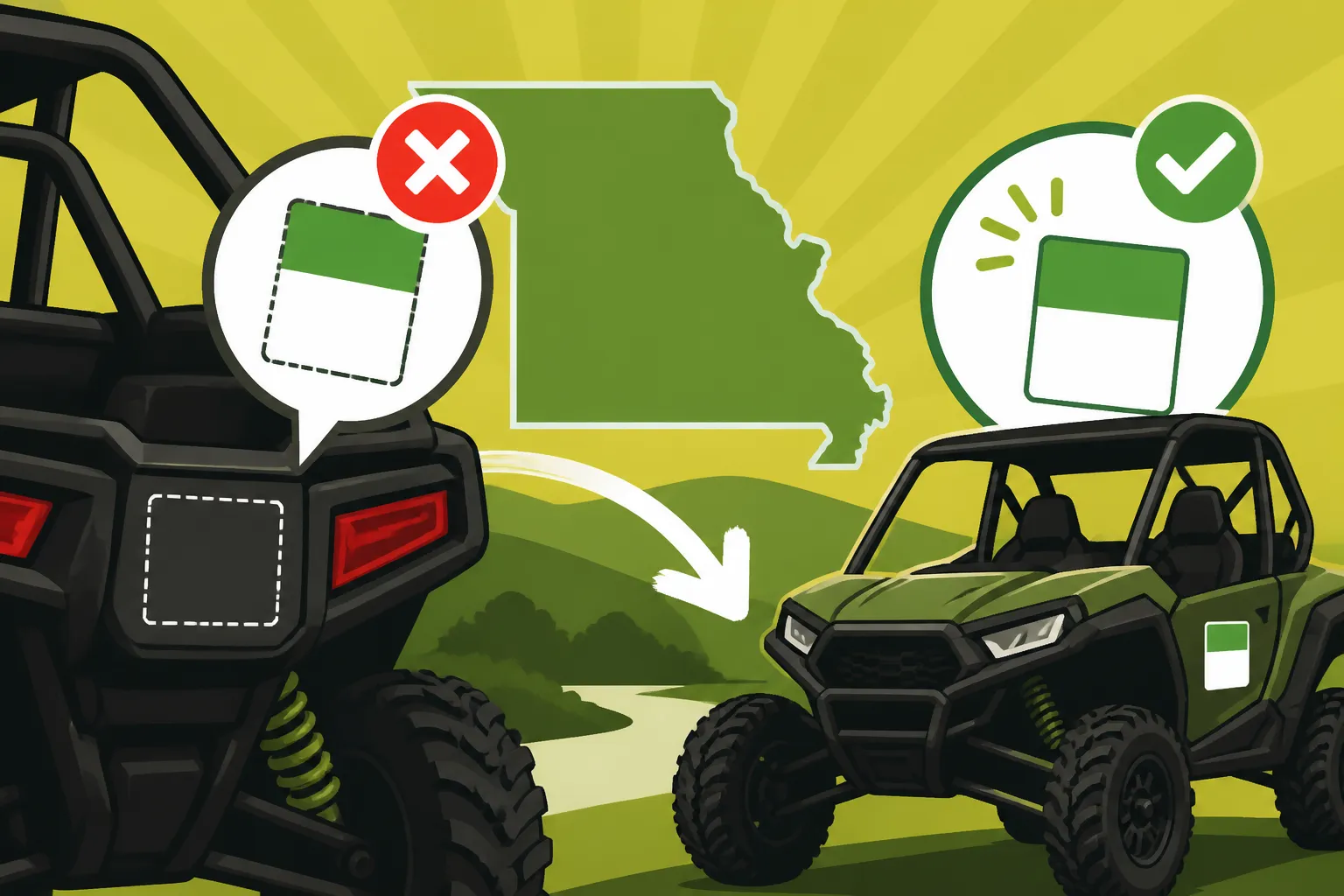
The Missouri Department of Revenue specifies that your ATV decal should be mounted on the right front fork of your machine. This isn't just a suggestion; it's where law enforcement expects to see it for easy identification. Putting it elsewhere might lead to questions or even a citation, as it could be deemed not "properly displayed." You can review [Where the Missouri Decal Mounts] and [Why the Decal Goes on the Right Front Fork] for more details on the specific requirements.
When applying the new decal, make sure the surface of the fork is clean, dry, and free of any grease or old adhesive residue. Use a rubbing alcohol wipe to ensure a pristine surface. Apply the decal smoothly, pressing out any air bubbles, and give it plenty of time to cure before hitting the trails or blasting it with a hose. A strong initial adhesion is key to its longevity.
Protecting Your Decal from the Elements
Once your new decal is applied, take proactive steps to protect it. One popular method is to apply a clear, heavy-duty vinyl protector over the decal. These can be purchased online or at most powersports dealers. They act as a sacrificial layer, absorbing the scrapes and impacts that might otherwise damage the decal itself.
When washing your ATV, be mindful of your decal. If you're using a pressure washer, keep the nozzle a safe distance away and avoid directing the high-pressure stream directly at the edges of the decal. Focus on cleaning the dirt off the rest of the machine, and use a gentler spray or a sponge and bucket for the area around the decal. For more aggressive cleaning needs, use specialized ATV cleaners that are safe for plastics and decals.
Regular Checks and Record Keeping
Make it a habit to do a quick visual check of your decal before each ride. Look for any signs of peeling, fading, or damage. Catching a loose edge early can allow you to press it back down or reinforce it before it completely detaches. This proactive approach can save you a trip to the license office.
Beyond physical checks, maintaining good records is a smart move. Keep a copy of your ATV registration certificate (the paper document that comes with your decal) in a safe, dry place at home, perhaps with your ATV's title. You might even take a clear photo of your decal and registration document with your smartphone. While a photo isn't a substitute for the real thing, it can be helpful for quick reference or if you need to provide information over the phone. When you're dealing with private sales, especially, having all your ducks in a row with clear documentation, potentially including a robust bill of sale from a resource like LawDepot, just makes everything easier in the long run. [Buying a Used ATV Privately in Missouri] really underscores the importance of good record-keeping.
What If My Registration Is Also Expired?
This is a common scenario: you realize your decal is gone, only to discover that your registration expired months ago. Don't fret; it simply means your process will lean more towards a renewal than a simple replacement.
When to Renew, Not Just Replace
If your three-year ATV registration period has ended, or is about to end, the correct action is to renew your registration. When you successfully renew, the Department of Revenue will automatically issue you a brand-new decal along with a new registration certificate. This means you won't need to go through a separate "replacement" request; the renewal process covers it. The new decal will reflect your updated expiration date, giving you another three years of legal riding.
It's a good idea to keep track of your registration expiration date, perhaps by adding a reminder to your calendar or phone. The state doesn't always send out renewal notices far in advance, and it's ultimately the owner's responsibility to keep the registration current. Checking [Renewing a Missouri ATV Decal] will provide more specific steps for that process.
Understanding Late Renewal Penalties
If your registration has already expired, you might be subject to a late renewal penalty. Missouri has specific regulations for overdue renewals, and it's best to address them as soon as possible. While the penalty for late renewal of an ATV decal is generally less severe than a late titling penalty, it's still an avoidable cost.
The late renewal penalty is usually a set, smaller fee that applies once your registration passes its expiration date. You'll pay this fee in addition to the standard renewal cost. This encourages riders to keep their registrations current and helps fund the state's administrative processes. For details on what this might entail, you can check out [Missouri's $5 Late Renewal Penalty]. It's always cheaper to renew on time than to pay a penalty, so marking that expiration date on your calendar is truly worth it.
Combining the Processes for Efficiency
The good news is that if your decal is lost and your registration needs renewal, you can typically handle both situations in a single visit to your local Missouri license office. When you explain your situation to the clerk, they will guide you through the renewal process. Once completed, your new registration certificate and decal will be processed and mailed to you.
This combined approach saves you time and ensures that you leave the office with the peace of mind that your ATV is fully compliant. Just be sure to bring all the necessary documentation for a renewal, which includes your ATV title, personal identification, and the ATV's VIN. Don't forget the correct fees for the renewal, which will be higher than a simple replacement, but will give you a fresh three-year period of legal riding. Having your [Missouri ATV Title Cost] sorted out from the start is important, as proof of ownership through a clear title is paramount for either replacement or renewal.
Disclaimer
This article is for general informational purposes only and does not constitute professional advice. Laws, prices and regulations vary by location and change over time. Consult a qualified professional for guidance on your specific situation.