Roll Bar and Seat Belt Rules for an ROV
It's incredibly frustrating when you want to take your Recreational Off-Highway Vehicle (ROV), often called a side-by-side or UTV, out for a spin, perhaps just down the road to a neighbor's house or to access a trail, only to be met with a maze of rules. One of the most critical and often misunderstood areas revolves around the safety equipment: specifically, the roll bar and seat belt requirements for operating your ROV on Missouri's public roads. This guide aims to clear up that confusion, giving you a clear picture of what Missouri law expects, so you can ride safely and legally.
Understanding Missouri's Definition of an ROV
Before we dive into the specifics of roll bars and seat belts, it's really important to understand what Missouri considers an ROV. The state makes clear distinctions between different types of off-highway vehicles, and these definitions directly impact which rules apply to your machine, especially when it comes to road use. This isn't just bureaucratic jargon; it's the foundation of legal and safe operation.
What is an ROV in Missouri?
In Missouri, a Recreational Off-Highway Vehicle (ROV) is defined quite specifically, and it's distinct from an All-Terrain Vehicle (ATV). Generally, an ROV is a motor vehicle 60 inches or less in width, has a dry weight of 2,000 pounds or less, travels on four or more wheels, is designed for use off public highways, and has a non-straddle seat and a steering wheel. Think of your typical side-by-side or UTV; these are the machines the state typically classifies as ROVs. This definition often brings with it features like a roll cage or occupant protective structure and seat belts, which are inherently part of their design.
This specific definition is key because ATVs, with their straddle seats and handlebars, are treated differently under Missouri law. While ATVs are meant for a single rider or sometimes two on a designated two-up model, ROVs are built with multiple occupants in mind, typically seated side-by-side, hence the "side-by-side" moniker. This difference in design philosophy directly leads to different safety requirements, particularly when these vehicles venture onto public roadways, even if it's just for a short hop.
Why the Distinction Matters for Road Use
The distinction between an ATV and an ROV isn't just for titling or registration; it's absolutely crucial for understanding road use regulations. Missouri's statutes often have separate provisions for ATVs and ROVs, especially regarding what makes them "street legal" or allows them temporary access to public roads. When the law talks about roll bars and seat belts, it's almost exclusively in the context of ROVs, because these features are fundamental to their design and operation.
For an ROV to even be considered for limited road use in Missouri, it must meet certain baseline safety criteria, and these often hinge on its factory-installed equipment. An ATV, by its very nature, doesn't come with a roll bar or seat belts in the same way an ROV does. This means that if you own a side-by-side and dream of riding it down a county road, you'll need to pay close attention to the ROV-specific rules. Ignoring these distinctions can lead to fines, citations, or worse, put you and your passengers at serious risk.
The Core Requirement: Factory-Installed Safety Features
When you buy a brand-new ROV from a dealer, it typically comes equipped with certain safety features right off the assembly line. For Missouri road use, these aren't just suggestions; they're often mandatory components that the state expects to see. The law is pretty clear that if you're going to operate these machines where cars also travel, they need to have the fundamental safety systems designed to protect occupants.
Built-In Protection: Roll Bars
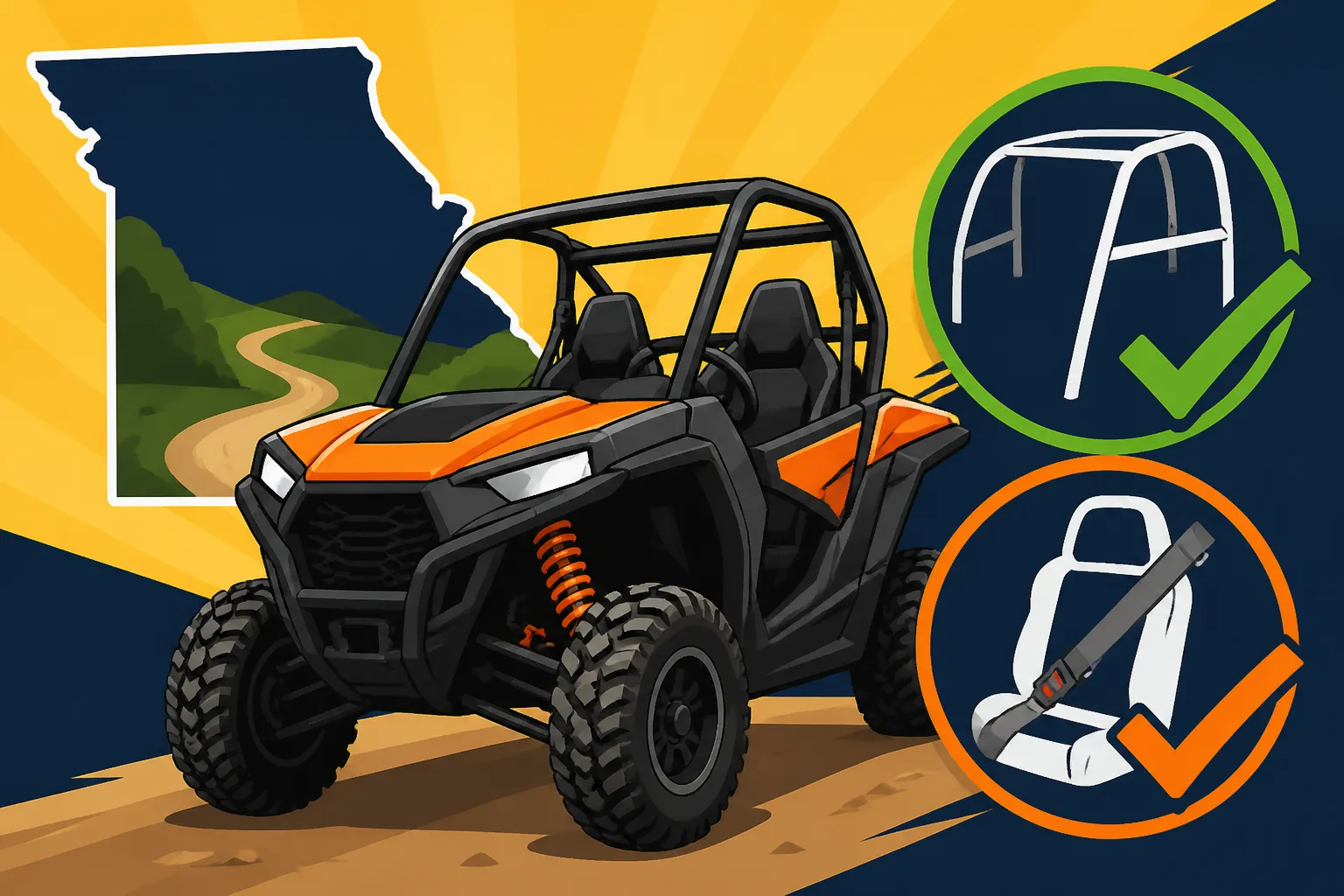
One of the most identifiable safety features on an ROV is its roll bar, often referred to as a roll cage or Occupant Protective Structure (OPS). In Missouri, for an ROV to be eligible for limited road use under specific conditions, it absolutely must have a factory-installed roll bar. This isn't something you can easily add later to meet the law; it's expected to be part of the original design. The roll bar is designed to protect occupants in the event of a rollover, providing a safety cell that helps prevent serious injury.
This is a critical distinction from ATVs, which, by their design, do not have roll bars. The presence of a sturdy, integrated roll bar is one of the foundational requirements that allows an ROV to even be considered for certain types of road access. Without it, your ROV would likely not meet the criteria for operating on public highways, even if you have all the necessary permits. It's about ensuring a minimum level of structural integrity and occupant protection for machines that are much heavier and often carry multiple people compared to a typical ATV.
Staying Secured: Seat Belts
Just having a roll bar isn't enough; you also need to ensure that the occupants are properly secured within that protective structure. That's where seat belts come in. Missouri law states that an ROV, when operated on a public road under permitted conditions, must have seat belts for each occupant, and these seat belts must be used. Again, this typically refers to the factory-installed seat belts that came with the machine.
Think about it this way: the roll bar creates the safety bubble, but the seat belt keeps you inside that bubble during a sudden stop, turn, or, heaven forbid, a rollover. Just like in your car, these belts are there to restrain you and prevent you from being ejected from the vehicle or colliding with the interior. The requirement extends to all occupants, meaning if your ROV has three seats, it needs three working seat belts, and everyone in those seats must be buckled up. You can't just have one person belted and let others ride unbelted; that's a recipe for a citation and, more importantly, a safety disaster.
Why These Are Non-Negotiable
The reason these factory-installed features—the roll bar and seat belts—are non-negotiable for road use in Missouri boils down to public safety and accident mitigation. ROVs, while incredibly fun and useful off-road, are not passenger cars. They handle differently, often have a higher center of gravity, and can be more susceptible to rollovers, especially at higher speeds or on uneven terrain often found on road shoulders.
By requiring these safety features, Missouri is trying to ensure that if an incident does occur on a public road, the occupants have the best possible chance of avoiding severe injury. It's about minimizing the risks that come with mixing off-highway vehicles and public highway traffic. These rules aren't meant to punish riders but to protect them, their passengers, and other drivers on the road. A deputy checking your ROV for road use will definitely be looking for these items as part of [What a Missouri Deputy Checks on a Road-Legal ROV].
Expanding Road Use: City and County Ordinances
While state law sets the baseline for what an ROV needs to have in terms of safety equipment, the ability to actually ride your ROV on public roads in Missouri often comes down to local ordinances. Many cities and counties have taken it upon themselves to create their own rules for ROV operation, and these permits always circle back to the state's safety requirements, including roll bars and seat belts.
Local Permits and State Requirements
Many Missouri cities and counties have enacted ordinances that allow ROVs to operate on certain public roads within their jurisdiction. These local rules often require you to obtain a special permit from the city hall or sheriff's department. However, it's crucial to understand that these local permits don't override state safety mandates. Instead, they typically incorporate them.
This means that when you apply for a permit, the issuing authority will likely verify that your ROV meets the state's baseline requirements, including having a factory-installed roll bar and functional seat belts for all occupants. The permit is essentially a green light to use your ROV on designated local roads, but only if your vehicle already adheres to the fundamental safety standards. You might be asked to present your machine for inspection or sign an affidavit confirming it meets these criteria. For example, [Missouri Cities That Allow UTVs on Streets] will have specific permit requirements that often include a safety check.
The 3-Mile Rule and Safety Gear
Missouri also has a specific "3-mile rule" for ROVs, primarily designed to allow riders to access a trail or move their machine short distances from their home or primary staging area. This rule generally permits ROV operation on public roads for a maximum distance of three miles for various purposes, like reaching a trail or gas station, but it comes with strict conditions. One of those conditions, of course, is that the ROV must be equipped with and occupants must use seat belts, and it must have a roll bar.
This "3-mile rule" is a convenience, but not a free pass. It's meant for very limited, specific use, not for cruising around town. And even for these short distances, the state expects the same level of occupant protection. So, if you're just taking your side-by-side [3 Miles From Your Own Front Door], don't think you can skip buckling up or that the roll bar is suddenly optional. The rules for [Missouri's 3-Mile Rule for Side-by-Sides] are quite clear about these safety requirements.
Operator Licensing and Awareness
Beyond the physical safety features of the ROV itself, the operator also plays a huge role in ensuring safety on public roads. Missouri law typically requires an ROV operator to hold a valid operator's or chauffeur's license when operating on public roads. This isn't just about showing you can drive; it implies a certain level of awareness of road rules and safety.
An operator with a valid license is expected to understand and abide by all traffic laws, including those pertaining to ROV operation. This means not only ensuring that the roll bar and seat belts are in place and used but also operating the vehicle responsibly. This includes maintaining appropriate speeds, signaling turns, and generally sharing the road safely with other vehicles. A driver who takes their ROV onto public roads assumes the responsibility of knowing and following these rules, making the use of safety features like seat belts a no-brainer. This aspect is crucial for anyone considering [An Operator's or Chauffeur's License in Missouri] for their ROV.
Beyond the Basics: Enhancing Safety Features
While factory-installed roll bars and seat belts are the legal minimum for road use in Missouri, many ROV owners choose to go above and beyond these requirements. Aftermarket enhancements can significantly increase occupant protection and overall safety, especially if you plan on pushing your machine's limits, whether on trails or simply desiring more peace of mind during road transitions.
Aftermarket Enhancements for ROV Safety
The stock roll cage on an ROV is designed to meet minimum safety standards, but some riders look for even more robust protection. This is where aftermarket roll cages come into play. These can be constructed from heavier-gauge tubing, feature more complex designs for greater rigidity, or offer additional tie-in points to the frame, all of which can enhance structural integrity in a rollover. For those who frequently tackle challenging terrain or participate in more extreme off-road activities, upgrading the roll cage is a common modification.
Beyond the main roll bar, other enhancements like door kits, window nets, and upgraded harnesses also contribute significantly to occupant safety. Factory doors might be rudimentary, offering limited protection from debris or limb ejection in a side impact. Aftermarket door systems can provide a more enclosed cabin, while window nets keep arms and legs inside the vehicle during a dynamic event. These aren't typically required for Missouri road use, but they're smart additions for aggressive riding.
Choosing Quality Upgrades
When considering aftermarket safety upgrades for your ROV, quality is absolutely paramount. This is not the place to cut corners or opt for the cheapest option. A roll cage, door, or harness is a life-saving device, and it needs to be built to exacting standards. Many reputable manufacturers specialize in ROV accessories and put their products through rigorous testing.
When shopping for upgrades, look for brands that have a proven track record for safety and durability. For instance, many riders turn to companies like SuperATV for a wide range of aftermarket parts, including heavy-duty roll cages, full doors, and multi-point harness systems. Products from trusted names often come with detailed specifications and installation instructions, ensuring they integrate properly with your ROV's existing structure. Remember, a poorly installed or inferior quality safety component could do more harm than good in an accident. Investing in high-quality items, like a stronger harness from a brand known for its commitment to safety, such as SuperATV, is always a wise decision.
Regular Inspections and Maintenance
Whether your ROV has factory safety features or aftermarket upgrades, regular inspection and maintenance are crucial to ensure they remain effective. A roll bar can only protect you if it's not compromised by rust, cracks, or impact damage. Seat belts need to be free of fraying, cuts, or any mechanism failures.
Before every ride, especially if you plan to hit public roads, take a few moments to visually inspect your roll cage for any signs of damage. Check that all mounting bolts are tight and secure. Pull on your seat belts to ensure they retract smoothly and latch securely, and inspect the webbing for wear. If you notice any issues with these critical safety components, they should be addressed immediately by a qualified mechanic or by replacing the part. Never assume a slight tear or a loose bolt is "good enough," especially when your safety is on the line. Consistent maintenance helps prolong the life of these features and ensures they perform as intended when you need them most.
Riding Safely and Legally: A Checklist for ROV Operators
Navigating Missouri's rules for ROVs on public roads can feel like a lot to keep track of, but breaking it down into a simple checklist makes it much more manageable. Ultimately, safety and legality go hand-in-hand, and being prepared means you can enjoy your ROV without unnecessary stress or risk.
Pre-Ride Checklist for Road-Legal ROVs
Before you ever turn the key and pull out onto a public road, running through a quick checklist can save you a lot of headaches and keep you safe. Here’s what you should always verify:
| Feature | Check Point | Status |
|---|---|---|
| Roll Bar/OPS | Is it factory-installed and free of damage? Are all mounting points secure? | |
| Seat Belts | Are they present for all occupants? Free of wear/fraying? Do buckles latch securely? | |
| Headlamps | Do both headlamps work (required for ROV road use)? | |
| Tail Lamps | Do both tail lamps work (required for ROV road use)? | |
| Brake Lights | Do brake lights illuminate when applied? | |
| Horn | Is the horn functional? | |
| Rearview Mirror | Is a functional rearview mirror present? | |
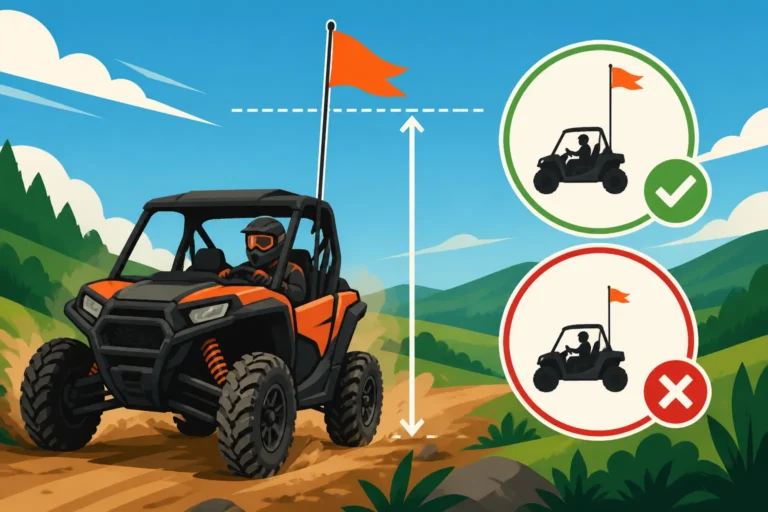
| Safety Flag | Is a 7-foot safety flag with 30 sq. inches of blaze orange attached and visible? | |
| License/Permit | Do you have a valid driver's license and any required local road use permit? | |
| Insurance | Do you have proof of liability insurance (often required for road use)? |
Beyond this, always make sure your tires are properly inflated, your brakes are responsive, and your fluid levels are good. It's a comprehensive approach to safety, ensuring not only compliance but also the reliable operation of your machine. This list helps you adhere to [Missouri's Safety Flag Requirements] and [Missouri Lighting Requirements for ROVs], among others.
Understanding Penalties for Non-Compliance
Missouri isn't shy about enforcing its off-highway vehicle laws, especially when it comes to road use. Failing to comply with requirements like having a roll bar, using seat belts, or obtaining the necessary permits can lead to significant penalties. These can range from fines to having your ROV impounded, and in more serious cases, even civil penalties up to a thousand dollars a day for certain violations.
For example, if a law enforcement officer pulls you over on a county road and finds that an occupant isn't wearing a seat belt, or if your ROV doesn't have a required safety feature, you could receive a citation. These tickets can add up quickly, not just in fines but also in potential court costs and even points on your driving record if certain violations are treated as moving infractions. The penalties are designed to deter unsafe and illegal operation, reinforcing the importance of taking these rules seriously. It's far better to spend a few minutes on a pre-ride check than to face the legal and financial consequences of non-compliance. [Missouri Fines for Illegal ATV Road Use] (which often applies to ROVs too) can be quite steep.
The Importance of Continued Education
The landscape of ROV laws, particularly concerning street legality, is always evolving. What might be permissible today in one county could change next year, or a new statewide regulation could be introduced. Because of this dynamic environment, it's incredibly important for ROV owners and operators to stay informed. Relying on outdated information or hearsay could inadvertently lead to violations.
Make it a habit to check the official Missouri Department of Revenue website, county sheriff's department sites, and your local city's municipal codes periodically. Joining local ROV clubs or forums can also be a great way to stay abreast of local changes, as members often share updates on new ordinances or enforcement trends. Continuous learning ensures that you're always operating your ROV not just safely, but also fully within the bounds of current Missouri law. This proactive approach ensures your rides remain enjoyable and hassle-free, whether you're just enjoying a day on the trails or making a quick trip down a permitted road.
Disclaimer
This article is for general informational purposes only and does not constitute professional advice. Laws, prices and regulations vary by location and change over time. Consult a qualified professional for guidance on your specific situation.