Weighing a Machine Against 1,500 Pounds
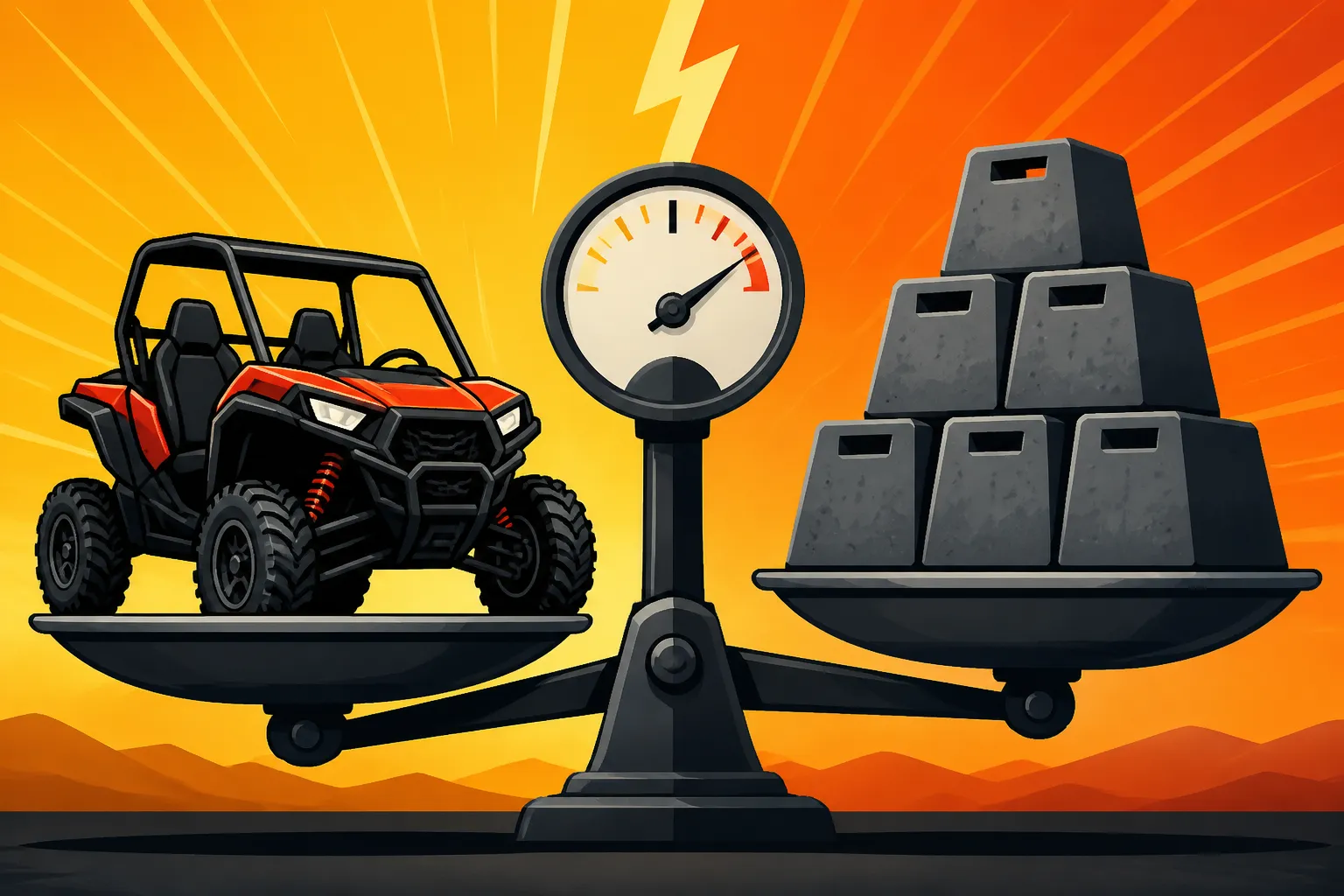
Trying to make sense of what Missouri considers an "ATV" can feel like a real head-scratcher, especially when you start hearing about specific weight limits and how they impact whether you can even get a decal. Many riders get confused, thinking all their off-road toys fall under the same rules, only to find out that a small difference in size or weight can change everything about how they register (or don't register!) their machine. This guide will walk you through Missouri's 1,500-pound dry weight rule, explain why it's so important, and help you understand what it means for your specific machine.
Understanding Missouri's 1,500-Pound Dry Weight Definition
When you're looking at getting your off-road machine ready for the trails or even just for your property in Missouri, one of the first hurdles you'll encounter is how the state actually defines an All-Terrain Vehicle (ATV). It's not just about having four wheels and handlebars anymore; there are specific criteria that determine if your machine qualifies for a Missouri ATV decal and title. Among these, the dry weight of your machine is a critical factor, often causing confusion for folks with larger or modified quads.
The Official Weight Threshold for ATVs
Missouri law specifically defines an ATV as "any motorized vehicle manufactured and used exclusively for off-highway use which is fifty inches or less in width, with an unladen dry weight of one thousand five hundred pounds or less, traveling on three, four or more nonhighway tires, and having a seat or seats designed to be straddled by the operator and any passenger." That "unladen dry weight of one thousand five hundred pounds or less" is the key part we're focusing on here. This isn't the weight of the machine with you on it, or with a full tank of gas, or loaded up with gear for a weekend ride. It's the weight of the vehicle itself, without any fluids, cargo, or occupants. This distinction is crucial because many side-by-sides, which look similar to large ATVs, will easily exceed this weight. Understanding [What Missouri Counts as an ATV] starts with this precise definition.
Why "Dry Weight" Matters So Much
The term "dry weight" is used to provide a consistent measurement across all machines, regardless of how much fuel is in the tank or how many accessories have been added since it left the factory. Think of it as the vehicle's base weight. For manufacturers, it's a standard specification that allows for easy comparison. For Missouri, it's a black-and-white line in the sand. If your machine's dry weight is even one pound over that 1,500-pound mark, it simply won't be considered an ATV for titling and registration purposes, no matter how narrow it is or if it has a straddle seat. This means it won't be eligible for [Missouri's Three-Year ATV Decal] that genuine ATVs receive.
Identifying Your Machine's Dry Weight
So, you're looking at your quad, maybe it's a big bore utility ATV or even an older model, and you're wondering, "How do I actually figure out its dry weight?" It's a valid question, and fortunately, there are a few reliable ways to get this information without hauling your machine to a weigh station (though that's an option too!). Knowing this figure is the first step in deciding if you need to pursue [Titling an ATV in Missouri] or if your machine falls into a different category entirely.
Checking Manufacturer Specifications
The easiest and most common way to determine your machine's dry weight is to look at the manufacturer's specifications. This information is usually found in a few key places. Your owner's manual is typically the best source. Most manuals have a specifications section that lists dimensions, engine size, and both wet and dry weight. If you don't have the physical manual, often a quick search online for your specific make, model, and year will bring up the manufacturer's official website or reputable enthusiast sites that compile this data. Be careful with forum posts or unofficial sources, as numbers can sometimes be inaccurate. Always try to verify with a primary source. This research can save you a lot of headache down the road, ensuring you're correctly categorizing your machine from the start.
The Role of a Bill of Sale or Certificate of Origin
When you purchase a new ATV, the dealer will provide you with a Manufacturer's Statement of Origin (MSO) or Certificate of Origin (CO). This document is absolutely vital for titling your machine and will usually contain all the official specifications, including the dry weight. For used machines, a detailed bill of sale can also be incredibly helpful. While a private seller might not have the original MSO, a well-drafted bill of sale that includes make, model, VIN, and explicitly states the dry weight can be very useful for your records. If you're selling a machine that's on the cusp of the 1,500-pound limit, or if you're buying one, having robust documentation is key. Services like LawDepot can provide templates for a comprehensive bill of sale, ensuring all the necessary details, like manufacturer specifications and weight, are clearly laid out for both buyer and seller. This added layer of documentation can prevent disputes later and confirms the machine's identity.
Weighing Your Machine (If All Else Fails)
If you can't find the manufacturer's specs anywhere—perhaps it's a very old machine, or custom-built, or you just want absolute certainty—you can actually weigh your machine. You'll need access to a scale that can handle the weight and is accurate. Agricultural co-ops or trucking weigh stations sometimes have scales accessible to the public, or you might even find a heavy-duty shop scale. Remember to remove everything from the machine before weighing: no fuel (or as little as possible), no tools, no accessories, and definitely no rider. The goal is to get it to its "unladen dry weight." This might sound like a hassle, but for machines close to the 1,500-pound mark, it's the definitive way to know where you stand. This concrete data will then inform your next steps, whether it's preparing for [Missouri's $8.50 ATV Title Fee] or understanding why your particular machine won't qualify.
What Happens When Your Machine Exceeds the Weight Limit?
Discovering your off-road machine tips the scales past Missouri's 1,500-pound dry weight limit can be a bit of a bummer, especially if you had visions of getting an ATV decal and hitting designated trails. But it's not the end of the road for your machine; it just means it falls into a different category with its own set of rules and limitations. This is where understanding the distinctions between ATVs, UTVs, and ROVs truly comes into play in Missouri.
Your Machine Isn't an "ATV" in Missouri's Eyes
If your vehicle has an unladen dry weight over 1,500 pounds, Missouri does not classify it as an ATV. This is regardless of its width or whether it has a straddle seat. Most side-by-sides (SxS) or utility vehicles (UTVs) will fall into this category. They are generally much heavier and wider, even if they're designed for off-highway use. This distinction is vital because it directly impacts your ability to title and register the machine as an ATV in the state. So, if you own a larger side-by-side, you won't be going through the process of [Registering an ATV in Missouri] or worrying about the [Missouri ATV Registration Cost].
The UTV/ROV Landscape in Missouri
For machines that exceed the 1,500-pound dry weight limit, along with other defining characteristics like having bucket seats and a steering wheel instead of handlebars, they are generally classified as Utility Vehicles (UTVs) or Recreational Off-Highway Vehicles (ROVs). These machines are treated differently under Missouri law. Crucially, Missouri does not have a statewide registration or titling system for UTVs or ROVs in the same way it does for ATVs. This means you won't get a decal for your side-by-side from the Missouri Department of Revenue. For many owners, this is confusing, but it's a clear legislative difference. You'll want to read up on [Utility Vehicles Outside the Missouri System] to get a clearer picture.
Implications for Trail Riding and Road Use
The biggest implication of your machine not being classified as an ATV is how and where you can legally ride it. Since UTVs and ROVs don't receive a state registration decal, their access to certain public lands or state trails might be different. Some state parks or national forests have specific rules for UTVs, often related to width limits (many are wider than 50 inches, which is another ATV criteria) or other safety requirements.
When it comes to road use, things get even more localized and complex. Unlike registered ATVs that might have limited exceptions for crossing roads, UTVs and ROVs in Missouri are generally not street legal on state or federal highways. However, many individual counties and municipalities have enacted ordinances that allow for limited road use of UTVs/ROVs within their specific jurisdictions, usually requiring a special local permit, insurance, and specific safety equipment like seat belts and an orange flag. This patchwork of local rules means you absolutely must check with local authorities where you intend to ride. For more details on this, explore [What a Side-by-Side Owner Does Instead in Missouri].
Below is a table summarizing the key differences based on Missouri's definitions, particularly concerning the weight and seat type:
| Feature | Missouri ATV (Typically) | Missouri UTV/ROV (Typically) |
|---|---|---|
| Unladen Dry Weight | 1,500 lbs or less | Over 1,500 lbs |
| Width | 50 inches or less (but weight is also a key factor) | Generally over 50 inches (often 60+ inches) |
| Seating Arrangement | Designed to be straddled | Bucket seats, bench seats, or side-by-side seating |
| Steering Control | Handlebars | Steering wheel |
| Missouri State Decal? | Yes, required for legal operation on public lands | No statewide decal issued |
| Road Use | Very limited exceptions (e.g., crossing roads) | Generally prohibited on state/federal roads; local permits required for limited use in some areas |
| Titling Process | [Missouri's $8.50 ATV Title Fee] and formal title document | Formal title may still be required, but no "ATV registration" |
Remember, while the state defines and titles ATVs, the rules for UTVs and ROVs on public land and local roads are often managed at the park, county, or city level. Always verify before you ride! If you're involved in a private sale, ensuring you have a solid [A Missouri Bill of Sale for an ATV] or UTV, clearly stating the nature of the machine and its weight, can be very helpful, and tools like LawDepot can assist in drafting these kinds of documents. This document can be particularly useful for proving the machine's classification to local authorities if you're seeking a special road-use permit for a UTV.
Navigating the Rules for Your Specific Machine
It's clear that the 1,500-pound dry weight rule, coupled with other defining characteristics like width and seating, is fundamental to how your off-road machine is classified in Missouri. This classification directly impacts whether you need a state-issued decal, how you handle titling, and where you can legally ride. Getting this right from the start can save you a lot of grief and potential fines down the road.
Ensuring Compliance and Avoiding Pitfalls
The most important takeaway is to know your machine's specifications. Don't guess. Look up the manufacturer's data or, if absolutely necessary, weigh it yourself. If your machine meets the definition of an ATV, which includes that 1,500-pound dry weight limit, then you'll need to go through the proper [Titling and Registering a Quad in One Visit] at your local license office. This will involve paying the [Missouri ATV Title Cost] and the [Missouri ATV Registration Cost], and ultimately receiving your three-year decal.
If your machine exceeds the 1,500-pound limit or has features like a steering wheel and bucket seats, then it's likely a UTV or ROV. While these machines don't get a state decal, you still typically need to title them in Missouri. For example, [Recreational Off-Highway Vehicles and Missouri Titles] details that these machines still go through a titling process, even without the registration component of an ATV. Understanding these nuances is crucial for enjoying your off-road adventures responsibly and legally in the Show-Me State. When preparing for any sale or purchase, having official documentation, perhaps even drafted with assistance from services like LawDepot, can provide peace of mind regarding the exact specifications and classification of the machine.
Disclaimer
This article is for general informational purposes only and does not constitute professional advice. Laws, prices and regulations vary by location and change over time. Consult a qualified professional for guidance on your specific situation.