Why Missouri Does Not Register Side-by-Sides
It can be incredibly frustrating and downright confusing trying to navigate the rules for off-road vehicles here in Missouri. You bought your side-by-side, you love hitting the trails or using it around your property, and now you’re trying to figure out if you need to "register" it like your buddy’s ATV, only to find a whole lot of conflicting information or dead ends. This guide is here to clear up that head-scratching situation once and for all, explaining exactly why Missouri doesn't issue a registration decal for side-by-sides and what that means for you as an owner.
The Core Distinction: ATVs vs. Side-by-Sides in Missouri Law
The biggest reason for the confusion, and the answer to why side-by-sides aren't registered, really comes down to how Missouri law defines different types of off-road vehicles. It’s not just a generic "off-road" category; the state has very specific criteria that put vehicles into different buckets, and those buckets have different rules.
What Missouri Does Call an ATV
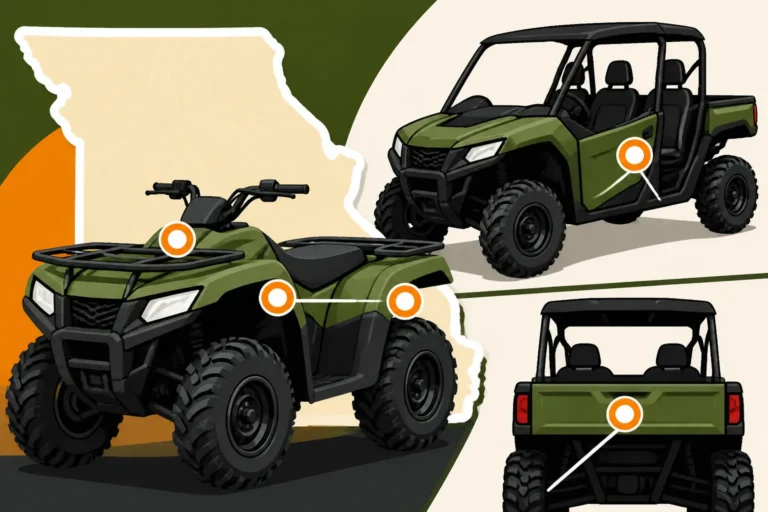
When Missouri law talks about an All-Terrain Vehicle (ATV) for the purpose of titling and registration, it's looking for a few very distinct features. First and foremost, an ATV is defined by having a seat designed to be straddled by the operator. Think of a motorcycle-style seat, where you throw your leg over it. Coupled with that, it must have handlebars for steering, much like a dirt bike or a traditional quad. These two characteristics are usually the most obvious visual cues.
Beyond the seating and steering, the law also considers the vehicle’s dry weight and width. For an ATV, it needs to weigh less than 1,500 pounds dry. This isn't its weight with all your gear or a full tank of gas, but the weight of the machine itself, empty. Additionally, it must be 50 inches wide or less. These dimensions are crucial because they dictate how the state classifies the vehicle for various purposes, including where it can be ridden and what permits or decals it might need. These specific measurements reflect a design intent for agility and single-rider (or specific two-rider) operation on narrower trails. [What Missouri Counts as an ATV] goes into more detail about these specifics.
It's this precise definition that traditional quads or three-wheelers fit into. They are designed for a single rider to sit astride, steer with handlebars, and their dimensions generally fall within the dry weight and width limits. When you see a machine with a Missouri decal, you can be almost certain it meets these criteria because, by law, only vehicles that fit this narrow definition are issued one.
Why Side-by-Sides Don't Fit the ATV Mold
Now, when you look at a side-by-side, also commonly known as a Utility Terrain Vehicle (UTV) or Recreational Off-Highway Vehicle (ROV), it becomes immediately clear why they don't slot into Missouri's ATV definition. The most significant difference is the seating arrangement: side-by-sides feature bucket seats or a bench seat, where operators and passengers sit beside each other, just like in a car. You don't straddle anything.
Furthermore, side-by-sides are controlled with a steering wheel, not handlebars. This car-like control system provides a different driving experience and implies a different intended use compared to an ATV. Beyond these fundamental control differences, side-by-sides are often significantly wider than 50 inches, with many models easily exceeding 60 or 64 inches. They also frequently tip the scales at well over 1,500 pounds dry weight.
Because side-by-sides fail to meet the "straddle seat," "handlebars," "under 1,500 lbs dry weight," and "under 50 inches wide" criteria simultaneously, they simply do not qualify as an ATV under Missouri law. This means the registration and decal system specifically designed for ATVs cannot apply to them. It's not an oversight; it's a deliberate legal distinction based on vehicle design and characteristics.
Missouri's Separate Categories: UTVs and ROVs
Since side-by-sides don't fit the ATV definition, Missouri law has, over time, created distinct categories for them. These categories reflect their different designs, intended uses, and, consequently, different sets of rules regarding their operation, especially concerning public roads and lands. Understanding these classifications is key to grasping why registration isn't part of the picture.
Understanding Utility Vehicles (UTVs)
Utility Vehicles, or UTVs, are generally characterized by their work-oriented design. While they share the side-by-side seating and steering wheel with their recreational cousins, their primary focus is often on hauling, towing, and performing tasks around farms, ranches, or large properties. They tend to have larger cargo beds, more robust towing capacities, and may not be designed for the same high speeds or aggressive trail riding as sportier ROVs.
In Missouri, UTVs are essentially treated as off-road machines without a statewide registration requirement. There's no decal from the Department of Revenue that you need to purchase and affix to a UTV for general off-road use. This can be a relief for those who use their UTVs exclusively on private land for work, as it means less paperwork and fewer fees. However, it also means that if you plan to use your UTV on public lands, you'll need to check the specific rules of that land manager, as the lack of a state decal doesn't grant automatic access. For instance, [Utility Vehicles Outside the Missouri System] elaborates on their specific status.
The key takeaway here is that if your side-by-side is built primarily for work – think of models often seen on farms or construction sites – it falls into this UTV understanding, and the state does not require or offer a general registration or decal for its operation. Its legality on public roads, if any, will fall under very specific, limited circumstances or local ordinances, not a blanket state registration.
Deciphering Recreational Off-Highway Vehicles (ROVs)
Recreational Off-Highway Vehicles, or ROVs, are the side-by-sides primarily designed for sport and recreation. These are the machines you see tearing up trails, often with powerful engines, advanced suspensions, and roll cages built for adventure. Like UTVs, they feature side-by-side seating and a steering wheel, distinguishing them from traditional ATVs.
Similar to UTVs, ROVs do not have a statewide registration or decal requirement in Missouri. You won't be heading to the license office to get a three-year decal for your sportier side-by-side. However, the designation of ROV is particularly important because this category does have some specific provisions for limited road use, unlike general UTVs or ATVs. This is where a lot of the nuance comes in, and where owners really need to pay attention to the details of state statutes and local ordinances. For more specifics, [Recreational Off-Highway Vehicles and Missouri Titles] dives into the titling aspect.
While no state registration is issued, ROVs can sometimes qualify for local permits or operate under specific state rules, such as the 3-mile rule (which we'll explore later). This distinction highlights that while the state does not "register" them in the same way as ATVs, it still differentiates them from other off-road vehicles and provides certain, albeit highly restricted, operational frameworks. This is why a Ranger or RZR owner has no decal to renew, but still needs to be aware of other rules.
The Purpose of ATV Registration and Why It Doesn't Apply to Side-by-Sides
The concept of "registration" can mean different things for different types of vehicles. For your family car, it means annual fees, a license plate, and permission to drive on public roads. For ATVs in Missouri, it's a different beast entirely, and understanding its specific purpose helps clarify why side-by-sides aren't included.
What ATV Registration Accomplishes in Missouri
When you "register" an ATV in Missouri, what you're actually getting is an ATV decal. This decal serves several key purposes, but chief among them is identifying that your machine is authorized for use on public lands such as state parks and national forests that allow ATV access. It's not a road registration in the traditional sense; it's more like a permit to ride specific, designated off-road trails. The fee collected for this decal directly contributes to the maintenance and development of these very trails, creating a self-sustaining system for ATV enthusiasts.
The decal itself is typically valid for three years, and there's a specific fee associated with it. This [Missouri's Three-Year ATV Decal] costs a specific amount, which you pay every three years to keep your riding privileges current on those state-managed trails. The state also charges a small processing fee. When you visit a state park like St. Joe State Park or Finger Lakes State Park, rangers will be looking for this decal prominently displayed on your ATV, usually on the right front fork. If you want to know more about the cost, [Missouri's $10.25 Three-Year Registration] outlines the fee.
This system is specifically tailored to ATVs because of their size and design, which are often more compatible with existing narrower trails. The money generated ensures these trails remain accessible and enjoyable for the types of machines that historically used them.
Side-by-Sides and Public Land Access
Because side-by-sides, particularly ROVs, are wider and often heavier than traditional ATVs, they don't necessarily fit the exact same trail infrastructure or management model as ATVs. As a result, they aren't included in the state's ATV decal registration system. Instead, if you want to ride your side-by-side on public lands, you'll need to obtain separate, specific permits for those areas.
For example, Missouri State Parks that allow off-road vehicles will have their own permit system for ROVs. These permits often come with different fees and may have specific rules regarding machine width. [Missouri State Park ORV Permit Prices] will give you an idea of what these costs look like. Similarly, if you plan to ride in a National Forest area like Chadwick Motorcycle and ATV Use Area, you'll need to purchase a Forest Service permit, which is distinct from a state ATV decal.
This approach allows land managers to control access and manage the impact of different vehicle types more effectively. It ensures that wider machines are directed to trails that can accommodate them without causing undue damage or safety concerns. So, while your side-by-side won't have a state-issued registration decal, it absolutely will need proper permits if you plan to take it off your private property and onto designated public riding areas.
Titling vs. Registration: A Critical Distinction for Side-by-Sides
This is where a lot of people trip up, mixing up two very different administrative processes. In Missouri, just because a side-by-side doesn't need registration doesn't mean it doesn't need a title. In fact, titling is almost universally required for ownership proof of motorized vehicles, and side-by-sides are no exception.
Why Missouri Requires a Title for Side-by-Sides
Missouri absolutely requires a title for all side-by-sides, whether they're UTVs or ROVs. The title is the official document that proves who legally owns the machine. Think of it like the deed to your house or the title to your car – it's the ultimate proof of legal ownership. Without a title, you can't legally sell the machine, and if it's ever stolen, proving it's yours becomes an enormous headache. It's also crucial for securing financing or if a lien needs to be recorded against the vehicle.
The process for [Titling an ATV in Missouri] is largely the same for side-by-sides, even though the subsequent registration step for a decal isn't necessary. You'll still need to go to a Missouri license office, present the manufacturer's statement of origin (MSO) if it's new, or the previous owner's properly assigned title if it's used. You'll pay sales tax and the titling fee. This step is non-negotiable for establishing legal ownership.
Even though you won't walk out with a decal for your side-by-side, you will leave with that all-important title certificate. This document is your proof that you are the rightful owner, and it's essential for any future transaction involving the machine. Don't skip this step!
The Practical Implications for Owners
For side-by-side owners, understanding the titling requirement is incredibly practical and important. When you purchase a new side-by-side from a dealer, they will typically handle the initial titling paperwork, collecting the necessary sales tax and fees from you. They'll then submit the paperwork to the Department of Revenue on your behalf, and your title will be mailed to you.
If you're buying a used side-by-side privately, the responsibility for titling falls squarely on you, the buyer. You'll need to obtain the properly assigned title from the seller, making sure it's signed over correctly. It's also wise to use a detailed bill of sale to document the transaction. Services like LawDepot offer customizable bill of sale templates that can help you create a clear, legally sound document, ensuring all the details of the sale, including the VIN, purchase price, and condition, are recorded. This can be invaluable should any disputes arise later.
Having a clean title is also vital for insurance purposes. While Missouri doesn't generally mandate insurance for off-road use, most reputable insurers will require proof of ownership (your title) before they'll issue a policy. An insurance policy protects your investment from damage or theft and provides liability coverage if you're involved in an accident. Without a title, obtaining such protection would be difficult, if not impossible. Furthermore, if you ever decide to sell your side-by-side, a buyer will almost certainly demand a clear, properly transferred title. A machine without a title is often considered un-sellable or significantly devalued in the private market, as the buyer can't legally prove ownership.
Limited Road Use and Special Permits for Side-by-Sides
While Missouri doesn't register side-by-sides for general road use like cars, it's not a complete ban on them ever touching pavement. The state has specific, limited provisions, and local governments have the power to create their own rules for side-by-sides within their jurisdictions.
Missouri's 3-Mile Rule and Local Ordinances
One of the most talked-about provisions for side-by-sides (specifically ROVs) is Missouri's "3-mile rule." This state law allows an owner of an ROV to operate it on a highway (which can include county roads and state routes) for a distance of up to three miles from their residence. This is a very specific exception, designed to allow owners to travel short distances for purposes like accessing trails, going to a nearby store, or visiting neighbors. However, it's not a free pass for joyriding on public roads.
To operate under the 3-mile rule, several conditions must be met. The ROV must be equipped with a safety flag, mounted to fly at least seven feet above the ground, and displaying a minimum of 30 square inches of day-glow orange. Operators under 18 must wear a helmet. Additionally, the operator must possess a valid driver's license (an operator's or chauffeur's license). The machine must also be equipped with working headlamps and tail lamps if operated between sunset and sunrise, and must have seat belts for all occupants, which must be worn. It's also important to note that this rule applies only to ROVs, not traditional ATVs. [Missouri's 3-Mile Rule for Side-by-Sides] provides more detail on these restrictions.
Beyond this state-level provision, cities and counties in Missouri have the authority to pass ordinances that allow wider use of UTVs and ROVs on local roads. These ordinances vary widely by locality. Some cities, like Harrisonville or Lebanon, have adopted rules that allow side-by-sides on city streets, often requiring a special local permit, proof of insurance, and adherence to specific equipment standards (like turn signals, mirrors, etc.). The cost and requirements for these permits are set by the local municipality, not the state. If you live in or plan to ride in a specific city or county, you must check their local ordinances before operating your side-by-side on their streets. Many [Missouri Cities That Allow UTVs on Streets] have very particular rules, so always do your homework!
Why ATVs Don't Get the Same Road Privileges
It's a common question: if side-by-sides can sometimes use roads, why can't ATVs? The answer, again, lies in the legislative definitions and the perceived safety differences inherent in their design. Traditional ATVs, with their straddle seating and handlebar steering, are generally considered less stable and less suited for paved road surfaces compared to a side-by-side with its wider stance, steering wheel, and roll cage.
Missouri law simply doesn't extend the same limited road-use provisions to ATVs. The 3-mile rule is explicitly for ROVs. While there are very narrow exceptions for ATVs on public roads for agricultural purposes (e.g., crossing a highway to access another field, or traveling short distances between fields during daylight hours), these are strictly for farm work and not for recreational use or general transportation. You won't find a statewide permit for street-legal ATVs in Missouri.
Essentially, the state views ATVs as off-road machines only, with their design inherently unsuitable for mingling with regular traffic. This is why [Street Legal ATVs in Missouri: The Short Answer] is almost always "no." The legal framework distinguishes between the two, granting ROVs specific, albeit limited, road access privileges that are not extended to ATVs. It's a key reason why you see ROVs on some city streets, but almost never ATVs.
What a Side-by-Side Owner Does Instead in Missouri
So, if you own a side-by-side in Missouri, and it doesn't get a state registration decal, what exactly are your responsibilities and what steps should you take to ensure you're compliant and protected? It's about focusing on the correct legal requirements and being a responsible owner.
Focus on Titling and Proof of Ownership
The absolute first and most critical step for any side-by-side owner in Missouri is to ensure you have a clear and valid title in your name. This is your proof of legal ownership and is indispensable. Whether you bought new from a dealer or used from a private seller, make sure the title is transferred properly and promptly at a Missouri license office. Remember, the absence of a registration doesn't negate the need for a title.
When you're buying or selling a used side-by-side, always insist on a properly assigned title. If the seller doesn't have one, or if there are any discrepancies, walk away or seek legal advice. It's also highly advisable to create a detailed bill of sale for any private transaction. A comprehensive bill of sale, which you can easily generate using a template from a service like LawDepot, provides a written record of the transaction, including the VIN, agreed-upon price, date of sale, and any specific conditions. This document is a crucial layer of protection for both buyer and seller, even if it's not strictly required by the state for the title transfer itself. It serves as excellent documentation for tax purposes and can help clarify any future misunderstandings. [What a Side-by-Side Owner Does Instead in Missouri] should always prioritize this step.
Keep your title in a safe, secure place at home, not on the machine itself. A copy is always good to have, but the original should be protected like any other valuable legal document.
Navigating Public Lands and Local Road Rules
Since there's no state registration for side-by-sides, your ability to ride on public lands or local roads hinges entirely on obtaining the correct permits for those specific areas. For state parks like St. Joe State Park or Finger Lakes State Park, you'll need to purchase an ORV permit at the park office or a designated vendor. These permits are usually day-use or multi-day and are separate from any ATV decal. Always check the park's specific rules regarding machine width, helmet requirements, and other safety regulations, as they can differ from general state statutes.
If you plan to ride in a National Forest, such as Chadwick or Sutton Bluff, you'll need a Forest Service ORV permit, which can often be purchased at local vendors or through online platforms like Recreation.gov. Again, always verify the specific rules for the forest area you intend to visit, including any width restrictions or trail closures.
For road use, if you intend to travel beyond your private property, you must be intimately familiar with both the state's 3-mile rule (if applicable to your ROV) and any local city or county ordinances. Many local governments require you to apply for a special permit through their police department or sheriff's office. These permits will have their own fees and specific equipment requirements (e.g., turn signals, mirrors, horn) that you'll need to install on your side-by-side. Always carry any required permits with you while operating on public roads or lands, along with a copy of your title or proof of insurance.
Insurance and Safety Considerations
While Missouri does not mandate liability insurance for off-road vehicles operated exclusively off public roads, it is highly, highly recommended for side-by-side owners. Accidents happen, and without insurance, you could be personally liable for significant costs if you cause damage to property or injury to another person. Many insurance providers offer specialized off-road vehicle policies that cover damage to your machine, theft, and liability.
Even if you only ride on private land, having insurance provides peace of mind. If you do plan to use your ROV on public roads under the 3-mile rule or a local ordinance, many of those local ordinances will require proof of insurance. Don't wait until it's too late; talk to your insurance agent about coverage options tailored for your side-by-side.
Finally, always prioritize safety. Wear appropriate safety gear, including helmets (especially for minors, but advisable for all), eye protection, and sturdy riding clothes. Understand the capabilities of your machine and never exceed them. Be aware of your surroundings, ride defensively, and always follow all posted rules and regulations, whether you're on private land, a public trail, or a permitted road segment.
Common Misconceptions and Future Considerations
The lack of a statewide registration for side-by-sides in Missouri creates a unique situation that often leads to confusion. It's easy to assume that all motorized vehicles, especially those used recreationally, would have a similar registration process, but that's simply not the case here.
Why the Confusion Persists
The persistent confusion around side-by-side registration in Missouri often stems from several factors. Firstly, many neighboring states do have different registration systems for various off-road vehicles, including side-by-sides. If you've previously ridden or owned an ORV in a state like Arkansas or Illinois, you might come to Missouri expecting a similar process, only to be met with different rules. This regional variation can be quite bewildering for riders.
Secondly, the general public often conflates "titling" with "registration." As we've discussed, Missouri requires a title for side-by-sides as proof of ownership, just like it does for cars and ATVs. However, it does not require a registration decal for side-by-sides for general off-road use. People often hear "you need a title" and assume "that means it's registered," but these are distinct legal concepts with different implications.
Finally, the nuances of state statutes and local ordinances for road use can be incredibly complex. The 3-mile rule for ROVs, combined with the patchwork of city and county permits, makes it hard to grasp a simple, universal answer. This complexity contributes to a general sense of uncertainty among owners and even law enforcement in some areas, leading to misinformation or differing interpretations.
To help clarify the differences, here's a table summarizing the key characteristics and requirements for ATVs, UTVs, and ROVs in Missouri:
| Feature | All-Terrain Vehicle (ATV) | Utility Terrain Vehicle (UTV) | Recreational Off-Highway Vehicle (ROV) |
|---|---|---|---|
| Seating Type | Straddle seat (e.g., motorcycle) | Bucket or bench (side-by-side) | Bucket or bench (side-by-side) |
| Steering Mechanism | Handlebars | Steering wheel | Steering wheel |
| Primary Intended Use | Recreation, work (often narrower) | Work-oriented (hauling, towing) | Recreation (sporty trail riding) |
| State Registration/Decal? | YES (3-year decal for public lands) | NO | NO |
| State Title Required? | YES | YES | YES |
| Limited Road Use (State Law)? | NO (except specific ag exemptions) | NO (except specific ag exemptions) | YES (3-mile rule from residence) |
| Public Land Access | State decal + park permits may apply | Specific park/forest permits required | Specific park/forest permits required |
Potential Changes and Staying Informed
Laws are not static; they evolve over time as vehicle technology changes, as public sentiment shifts, and as legislators respond to various needs and concerns. While Missouri currently does not register side-by-sides, it is not impossible that this could change in the future. There could be new legislative proposals to introduce a statewide registration system, alter definitions, or expand road-use provisions.
For this reason, it's crucial for side-by-side owners to stay informed about any potential changes to Missouri law. The best way to do this is to regularly check the official websites of the Missouri Department of Revenue, Missouri State Parks, and the Missouri Department of Conservation. These agencies are typically the first to publish updates regarding new laws, regulations, or permit requirements affecting off-road vehicles. Additionally, joining local ATV/UTV riding clubs or advocacy groups can be an excellent way to stay abreast of legislative efforts and proposed changes that might impact your ability to ride your side-by-side. Being proactive in seeking out information will ensure you remain compliant and can continue enjoying your machine responsibly in the Show-Me State.
Disclaimer
This article is for general informational purposes only and does not constitute professional advice. Laws, prices and regulations vary by location and change over time. Consult a qualified professional for guidance on your specific situation.