Missouri’s Three-Year ATV Decal
Trying to figure out the ins and outs of ATV "registration" in Missouri can feel like navigating a muddy, unmarked trail in the Ozarks after a heavy rain. You've heard whispers of decals, titles, and three-year periods, but getting a clear, straightforward answer often feels impossible. This guide is here to cut through the confusion and explain everything you need to know about Missouri's specific three-year ATV decal, why it exists, and how to keep your machine legally ready for the trails.
Understanding Missouri's Unique Approach to ATVs
Missouri has a way of doing things that sometimes feels a little different from other states, and how it handles All-Terrain Vehicles (ATVs) is a prime example. If you're coming from a state where every vehicle gets a traditional registration plate, Missouri's decal system for ATVs can be a head-scratcher.
Why "Registration" Is Different for ATVs in Missouri
When most folks think of vehicle registration, they picture a license plate with an annual sticker, renewed every year, attached to the back of a car, truck, or even a motorcycle. But for ATVs in Missouri, it's a completely different ballgame. The state doesn't issue traditional license plates for ATVs, nor does it conduct an annual registration process in the same way. Instead, it issues a distinct, physical decal that is valid for three years. This isn't just a semantic difference; it's a fundamental distinction that impacts how you operate and prove ownership of your off-road machine.
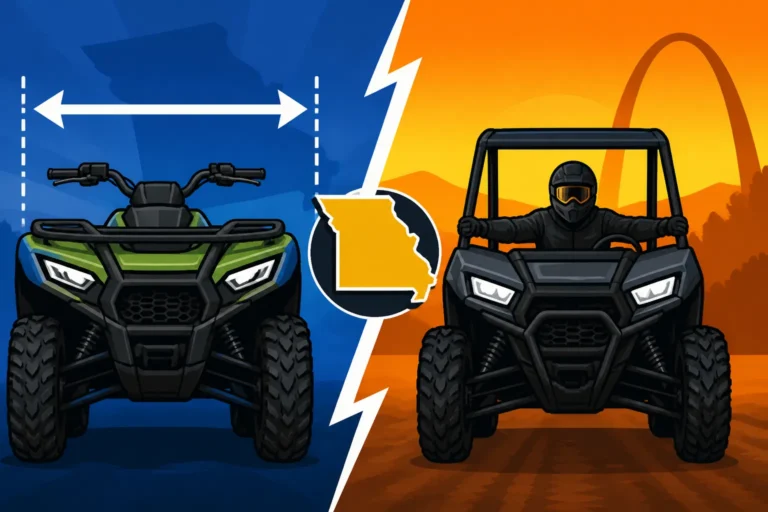
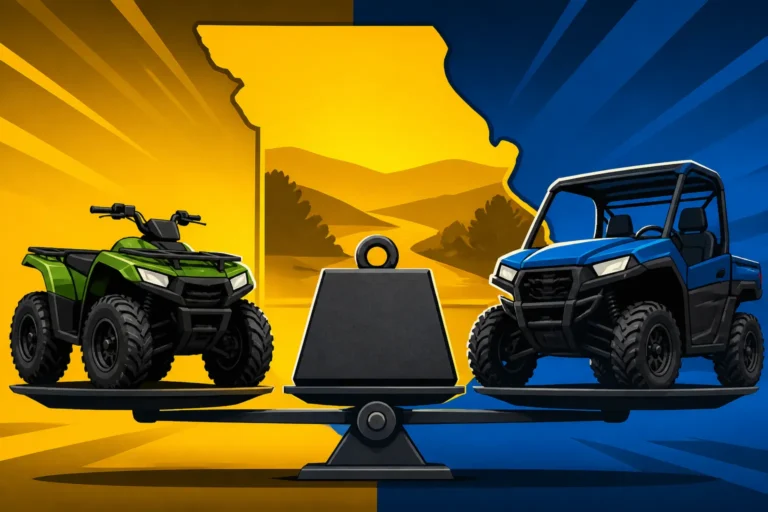
The key here lies in Missouri's specific legal definition of an ATV. The state is quite particular about what qualifies as an ATV versus, say, a Utility Vehicle (UTV) or a Recreational Off-Highway Vehicle (ROV), often called a side-by-side. For an ATV, Missouri generally looks for a machine that's designed for off-road use, has three or more wheels, a straddle seat, and handlebars. It also usually must be under 50 inches wide and weigh less than 1,500 pounds dry weight. If your machine fits this description, then you're on the path to needing a three-year decal. If it's a side-by-side with bucket seats and a steering wheel, the rules diverge entirely – those machines don't get the same decal, which is a source of much confusion for owners. It's crucial to understand this distinction, because trying to get an ATV decal for a side-by-side will be a frustrating dead end.
The Purpose of the Three-Year Decal
So, why does Missouri bother with this decal if it's not a traditional registration? The decal serves several important purposes, primarily as proof that your ATV has been properly titled in the state and that you've paid the necessary fees for its operation. Think of it as your ATV's official identification tag for trail riding on public lands and for legitimate ownership. When you see someone on a state park trail with a valid decal, it signifies that their machine has passed through the official channels.
Part of the frustration for many ATV owners is that they just want to ride and don't necessarily want to deal with government bureaucracy. However, the fees collected through the decal system aren't just for paperwork; they directly contribute to the maintenance and development of off-road trails and facilities within Missouri. This means that a portion of what you pay for your decal comes back to you in the form of better-maintained trails, improved signage, and safer riding areas. It's a way for the riding community to contribute to the infrastructure that supports their passion. Without this system, many of the public riding areas we enjoy today would likely fall into disrepair or cease to exist, making it much harder to find legal and safe places to ride your machine.
Getting Your First Missouri Three-Year Decal
The process of getting your initial three-year ATV decal in Missouri isn't overly complicated, but it absolutely has a required first step that many people overlook or misunderstand: titling. You can't just walk in and ask for a decal without having a title in hand or applying for one simultaneously.
The Titling Requirement Comes First
This is a critical point that can trip up new ATV owners, especially those buying a used machine. Before you can even think about getting a decal, your ATV absolutely must have a Missouri title in your name. This is how the state establishes legal ownership. If you’ve just purchased a brand-new ATV from a dealership, they will typically handle the initial titling paperwork, including the Certificate of Origin, and guide you through the process. However, if you’re buying a used ATV from a private seller, the responsibility falls squarely on your shoulders to ensure the title is properly transferred.
You'll need specific documentation to title your ATV. For a new machine, this means the Manufacturer's Statement of Origin (MSO) or Certificate of Origin (CO), proof of purchase (like a bill of sale), and identification. For a used machine, you'll need the properly assigned previous title, often a [A Missouri Bill of Sale for an ATV], and proof of identification. The state also imposes a strict [Missouri's Thirty-Day Titling Deadline] from the date of purchase. Missing this deadline can result in financial penalties, which start accumulating fairly quickly. It’s a frustrating fee to pay for what feels like a simple oversight, but the state sees it as a necessary measure to encourage prompt registration and titling. So, as soon as you shake hands on that deal, start gathering your paperwork and make a plan to visit your local Department of Revenue license office.
Applying for the Decal at the License Office
Once your ATV is properly titled in Missouri – or you're ready to submit all the necessary paperwork for both titling and decal application in one go – you'll head to a Missouri Department of Revenue fee office, which are often simply called license offices. It’s a relief to know you can often handle both at the same time, saving yourself an extra trip. This integrated process is a small but welcome convenience when you’re already dealing with paperwork and fees. You'll bring your title (or the titling paperwork), proof of identification, and the necessary funds.
When you're applying for your first three-year decal, you'll pay two primary fees. First, there's the actual fee for the three-year decal itself, which is [Missouri's $10.25 Three-Year Registration]. This fee covers the cost of issuing the decal and contributes to those aforementioned trail maintenance funds. In addition to this, there's a processing fee, which is [Missouri's $18 Processing Fee]. This fee goes towards the operational costs of the license office for handling your transaction. While it might seem like a small annoyance to pay a processing fee on top of the decal fee, it's a standard part of most transactions at these offices. All told, you're looking at a manageable total to get your machine legally ready for the trails for the next three years. Many people find it easiest to accomplish [Titling and Registering a Quad in One Visit] to get it all done and over with quickly.
The Specifics of the Three-Year Decal
Missouri's three-year ATV decal isn't just a pretty sticker; it comes with specific rules and expectations regarding its validity and placement. Understanding these details will help you avoid potential issues down the trail.
How Long a Missouri ATV Decal Lasts
The name itself gives it away: the Missouri ATV decal is valid for a full three years. This is a big difference from annual renewals and offers a level of convenience that many riders appreciate. Instead of remembering to renew every single year, you've got a much longer window before you need to think about it again. The decal will have a specific expiration date printed on it, typically showing the month and year. This date isn't necessarily three years from the exact day you got it, but rather three years from the end of the month you obtained it, or sometimes aligned to a specific cycle, depending on how the system calculates it. Always double-check the printed date to be sure [When a Missouri ATV Decal Expires].
This three-year validity is a definite benefit. It means less paperwork, fewer trips to the license office, and more time focused on riding. Compare this to a traditional annual car registration, and you can see how it streamlines the process for ATV owners. It's designed to be efficient for both the state and the rider, acknowledging that ATVs are often recreational vehicles used periodically rather than daily commuters. However, it’s also easy to forget about something that only comes around every three years, so marking your calendar or setting a reminder is a good idea to avoid any lapses.
Where the Decal Mounts
This is one of those rules that, if ignored, can lead to a quick conversation with a park ranger or law enforcement officer: the decal has a very specific placement requirement. In Missouri, the ATV decal is required to be mounted on the right front fork of your ATV. This isn't just an arbitrary rule; it's designed for quick and easy visibility. When an official needs to check your decal, they shouldn't have to search for it. [Why the Decal Goes on the Right Front Fork] boils down to standardization and visibility for law enforcement and park personnel.
Mounting it correctly is simple. Clean the area on the right front fork thoroughly before applying the decal to ensure good adhesion. Make sure it's visible and not obscured by cables, brake lines, or accessories. Common mistakes include putting it on the fender, the frame, or even on the handlebars. While these might seem like logical places, they don't meet the state's specific requirement. If your decal is mounted incorrectly, or if it falls off due to improper application or rough riding (which happens more often than you'd think!), you could potentially face a citation or be denied access to public riding areas. It’s a minor detail, but one that’s worth getting right from the start to avoid any unnecessary hassle or expense down the line.
Renewing Your Missouri ATV Decal
Just like anything else with an expiration date, your three-year ATV decal will eventually need to be renewed. While it's not an annual chore, it's something you'll want to keep on your radar to ensure uninterrupted riding.
When and How to Renew
Once your three years are up, you'll need to renew your decal to continue operating your ATV legally on public lands in Missouri. The exact date your decal expires is printed right on the decal itself, so make sure to check it. You can typically renew your decal up to a few months before it expires, giving you a good window to get it done without rushing. Don't wait until the last minute, especially if your riding season is in full swing around the expiration date. It's always a good practice to handle renewals well in advance to avoid any stress or potential interruption to your riding plans.
The renewal process is straightforward and generally requires less paperwork than your initial application. You'll need your current or expired decal, your ATV title, and proof of identification. Head back to your local Department of Revenue license office. The fee for renewal is [Missouri's $9 Renewal Fee]. This is actually a little less than the initial fee, as you're not paying for the initial titling processing again. The license office will issue you a new three-year decal with an updated expiration date. It’s a fairly quick transaction designed to get you in and out with minimal fuss.
Dealing with a Late Renewal
Life happens, and sometimes these things slip through the cracks. If you forget to renew your ATV decal by its expiration date, don't panic, but also don't delay. Missouri does impose a penalty for late renewal, but it’s far less severe than the penalties for late titling. The [Missouri's $5 Late Renewal Penalty] is a fixed fee that applies if you renew after the decal's expiration date. It’s a relatively small amount compared to the escalating fees you might face for other late vehicle-related transactions, but it's still an avoidable cost.
The important thing is to get it renewed as soon as you realize it's expired. The longer you wait, the longer you're technically operating your ATV without a valid decal, which could lead to issues if you're stopped or if you try to enter a public riding area. It's always best to simply pay the [Missouri's $9 Renewal Fee] and the [Missouri's $5 Late Renewal Penalty] and get your new decal. The goal is to get back to legal operation quickly and efficiently. Don't let a small oversight turn into a bigger headache.
Common Challenges and Solutions for Decals
Even when you follow all the rules, sometimes things go awry. Decals can get lost, damaged, or you might find yourself in a situation where you're buying or selling a machine with a decal already attached. Knowing how to handle these common challenges will save you a lot of grief.
Lost, Damaged, or Stolen Decals
Picture this: you're out on the trails, enjoying a spirited ride, when a low-hanging branch snags your front fork. Later, back at the truck, you notice your decal is gone, or perhaps it's torn and unreadable. Or maybe, your machine was parked somewhere and the decal was vandalized or even peeled off. These things happen, and thankfully, Missouri has a process for replacing a lost, damaged, or stolen decal. You absolutely need that decal for legal operation, especially on public land, so don't try to ride without it.
To get a replacement, you'll need to visit your local Missouri Department of Revenue license office. You'll typically need to bring your ATV title and proof of identification. You might also be asked to fill out a form attesting to the loss or damage. The fee for a replacement decal is [Missouri ATV Decal Replacement Cost]. It's not a huge expense, but it's another one of those minor costs that can add up if you're not careful. It’s a relatively quick process, ensuring you can get back to riding legally as soon as possible. It’s also a good reminder to ensure your decal is properly applied and perhaps protected with a clear vinyl layer if you frequently ride through dense brush.
Buying or Selling an ATV with a Decal
When you buy or sell an ATV in Missouri, the presence of an existing three-year decal on the machine can sometimes cause confusion. It's important to remember that while the decal is physically affixed to the machine, the registration (the act of obtaining the decal) is tied to the owner. This means the decal does not automatically transfer validity to a new owner, even if it still has time left on it.
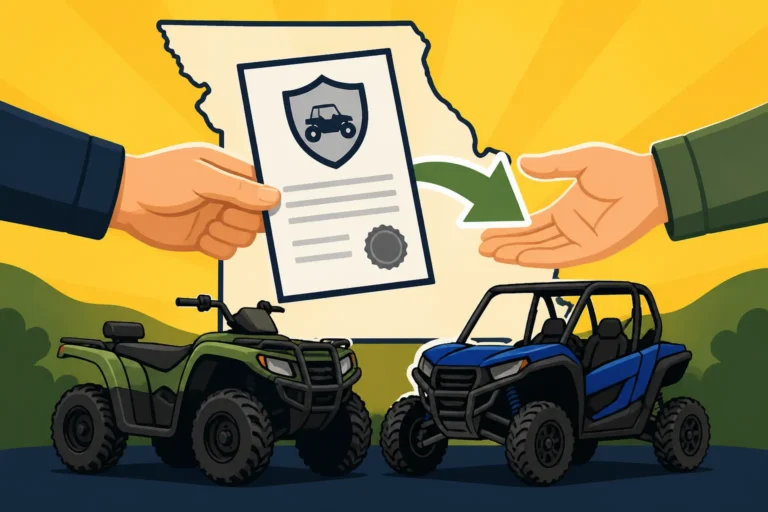
If you're buying a used ATV that still has a valid decal on it, you still need to title the machine in your name and then apply for your own three-year decal. You cannot simply assume the previous owner's decal is good for you. The existing decal serves as proof that the previous owner legally operated the machine, but once the title transfers, you start fresh. For sellers, it's good practice to either remove the decal or make it clear to the buyer that they will need to apply for their own. The most critical piece of documentation in any private sale is a properly executed bill of sale. A good [A Missouri Bill of Sale for an ATV] should clearly identify both parties, the ATV's make, model, VIN, purchase price, and the date of sale. Resources like LawDepot can provide excellent templates for these essential documents, ensuring you have a legally sound record of the transaction. This protects both the buyer and the seller from future disputes.
Distinguishing ATVs from UTVs and ROVs in Missouri
One of the biggest sources of head-scratching when it comes to Missouri's off-road vehicle rules is the state's very particular distinctions between ATVs, UTVs, and Recreational Off-Highway Vehicles (ROVs). These differences directly impact whether your machine gets a three-year decal or falls under a different set of guidelines entirely.
Missouri's Definition of an ATV and Why it Matters for Decals
As we touched on earlier, Missouri has a precise definition for what it considers an All-Terrain Vehicle (ATV). Generally, [What Missouri Counts as an ATV] is a motorized vehicle designed for off-road use, has three or more wheels, a straddle seat (meaning you sit on it like a motorcycle, not in it like a car), and handlebars for steering. Critically, for the purpose of the three-year decal, these machines are also typically limited in width (often around 50 inches) and dry weight (usually under 1,500 pounds). This definition is key because if your machine fits it, then you are required to title it and get the three-year decal.
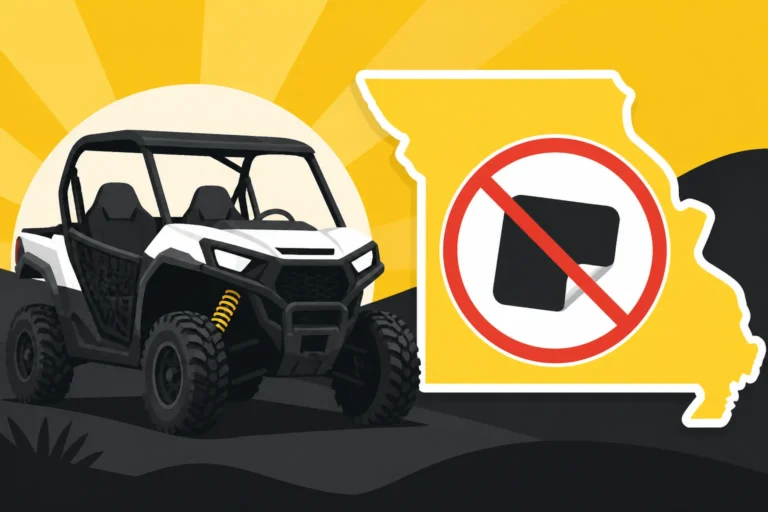
This specific definition is why UTVs and ROVs do not get the same decal. They simply don't fit the criteria. A side-by-side, with its steering wheel, bucket seats, and often much wider stance, is fundamentally different in the eyes of Missouri law. Trying to get an ATV decal for a side-by-side will lead to confusion at the license office, as their system is designed to categorize vehicles based on these specific definitions. It's not that Missouri doesn't acknowledge UTVs or ROVs; it's that they are classified differently, leading to different rules for their legal operation and documentation. Understanding this core distinction is the first step to navigating the system successfully.
What Side-by-Side Owners Do Instead
So, if your UTV or ROV (your side-by-side) doesn't get a three-year ATV decal, what are you supposed to do? This is where many side-by-side owners express frustration, as the rules can seem less clear-cut than for ATVs. The short answer is: side-by-sides are generally not "registered" in the traditional sense with a decal that grants widespread access to public lands in the same way ATVs are. [What a Side-by-Side Owner Does Instead in Missouri] depends heavily on where and how they intend to operate their machine.
For the most part, UTVs/ROVs are treated more like off-road utility equipment, and their operation on public roads or specific trails may require different permits or adherence to local ordinances. For instance, some cities and counties in Missouri have passed ordinances that allow UTVs (and sometimes ATVs, but often only UTVs) on certain public roads, usually within a limited radius of the owner's home or for specific purposes like agricultural work. These situations often require a special local permit, proof of insurance, and sometimes specific safety equipment like turn signals, mirrors, or a slow-moving vehicle sign. These permits are typically issued by the local municipal or county authorities, not the state Department of Revenue. This patchwork of local rules can be incredibly frustrating for side-by-side owners who simply want consistent access to riding areas. It requires diligent research into the specific regulations of each county or municipality where you plan to ride. There isn't one universal state decal for side-by-sides that opens all doors.
Here's a quick overview of the distinctions in Missouri:
| Feature | Missouri ATV (Quad) | Missouri UTV/ROV (Side-by-Side) |
|---|---|---|
| Seating | Straddle seat (like a motorcycle) | Bucket seats or bench seat |
| Steering | Handlebars | Steering wheel |
| Wheels | Three or more | Four or more |
| Width | Usually 50 inches or less | Often wider than 50 inches |
| Dry Weight | Usually under 1,500 pounds | Often over 1,500 pounds |
| State Decal | Yes, a three-year decal is required | No state decal issued |
| Road Use | Very limited, generally prohibited | May be allowed with local permits |
| Public Trails | Generally allowed with state decal | Rules vary, check specific park/area |
Practical Tips for Missouri ATV Decal Owners
Beyond the legal requirements, there are some practical tips that can make your life as a Missouri ATV decal owner much smoother. A little foresight can prevent a lot of headaches out on the trail.
Keeping Your Decal Visible and Intact
Your three-year decal is your ticket to legal riding on many public lands in Missouri. Therefore, protecting it and ensuring its visibility is paramount. We've already discussed [Why the Decal Goes on the Right Front Fork], so proper placement is the first step. But even with correct placement, riding through brush, mud, and various weather conditions can take a toll. Consider applying a clear vinyl protector over the decal once it's in place. These clear films are inexpensive and can significantly extend the life of your decal, protecting it from scuffs, scratches, and fading from UV exposure.
Regularly clean the area around your decal, but do so gently. Harsh chemicals or aggressive scrubbing can damage the decal's integrity or cause it to peel. A soft cloth with mild soap and water is usually sufficient. Also, be mindful when transporting your ATV. Ensure that tie-downs or other equipment aren't rubbing directly against the decal, which can cause premature wear or even rip it off. A quick visual check before and after each ride to ensure your decal is still firmly attached and readable can save you from a potential citation or the inconvenience of needing a replacement.
Paperwork to Keep with Your ATV
While you don't need to carry your original title around with you – that's a document best kept safe at home – it's a very good idea to have some proof of your ATV's legal status with you when you ride. This can be particularly helpful if you encounter a law enforcement officer or park ranger. While your decal is the primary visual proof of your registration, having additional documentation can often clarify things quickly.
Consider keeping a laminated copy or a clear, legible photograph on your phone of your ATV's title and your decal receipt. This isn't strictly required by law, but it can make a roadside stop much smoother. A [A Missouri Deputy at a Roadside Stop] will primarily look for your decal, but if there's any question about its validity or your ownership, having a quick reference can be invaluable. Store these documents in a waterproof bag or container, perhaps in a storage compartment on your ATV or in your backpack. This ensures they remain dry and legible, no matter the weather conditions on the trail. It's all about being prepared and minimizing potential hassles so you can focus on the enjoyment of your ride.
Disclaimer
This article is for general informational purposes only and does not constitute professional advice. Laws, prices and regulations vary by location and change over time. Consult a qualified professional for guidance on your specific situation.