The 1,500-Pound Dry Weight Test in Missouri
One of the biggest head-scratchers for folks getting into the off-road scene in Missouri, or even seasoned riders upgrading their machines, is figuring out what exactly the state considers an ATV. It’s not just a casual label; it directly impacts how you title and legally ride your quad. This guide will walk you through the often-confusing 1,500-pound dry weight test, clarifying why it matters and what it means for your machine in the Show-Me State.
Understanding Missouri's ATV and UTV Distinctions
It can feel incredibly frustrating when you're just trying to enjoy your new ride, only to find yourself buried in government lingo and specific vehicle definitions. You bought what you thought was a "quad" or a "side-by-side," but the Missouri Department of Revenue has its own rulebook for how these machines are categorized, and that rulebook directly affects whether you get an ATV decal or if your machine is considered something else entirely. The distinction isn't just bureaucratic; it determines if you're riding legally or if you're in for a surprise at the license office or, worse, out on the trail.
The Importance of Classification for Riders
Imagine you just bought a shiny new utility vehicle, excited to hit the trails or simply use it for chores around your property. You head to the local license office, expecting to get a title and a registration decal, only to be told, "Sorry, this isn't an ATV, so it doesn't get a decal." That moment of confusion can be a real buzzkill. The state's classification system dictates what kind of paperwork you need, what fees you pay, and even where and how you can legally operate your machine. For instance, an ATV, as defined by Missouri, gets a specific three-year decal for off-road use, while other machines, despite looking similar, are treated differently and usually don't get that same decal. Understanding these nuances from the get-go saves you time, money, and a good deal of headache.
It's not uncommon for new riders to simply assume that if it's an off-road vehicle, it's an ATV, and therefore it needs to be "registered." However, Missouri draws clear lines, primarily to differentiate between smaller, straddle-seat machines (ATVs) and larger, often side-by-side seating vehicles (known as Utility Vehicles or Recreational Off-Highway Vehicles, or ROVs). These different classifications lead to entirely different administrative processes and, crucially, different rules for where and how you can ride. This is why digging into the details of [What Missouri Counts as an ATV] is so vital before you even think about your trip to the Department of Revenue.
Initial Frustrations with Vehicle Definitions
When you look at the sheer variety of off-road machines on the market today – from traditional sport quads to massive, multi-passenger side-by-sides – it's easy to see why the definitions can get blurry. Many manufacturers market everything from a compact 4×4 to a powerful desert racer under a broad "ATV" umbrella. However, Missouri law is quite specific and doesn't always align with manufacturer marketing. This disconnect is a common source of frustration for buyers who often discover the state's unique definitions only when they attempt to title their new purchase.
The struggle is real when you're trying to figure out if your brand-new side-by-side, affectionately dubbed a UTV by its maker, will be treated as an ATV by the state. You might hear stories from friends about their experiences, which can sometimes conflict or add to the confusion because different machines fall into different categories. This is precisely why the state enacted specific criteria, including the famous 1,500-pound dry weight test, alongside other physical characteristics like handlebar steering and a straddle seat, to definitively classify these machines for legal purposes.
The Core of the 1,500-Pound Dry Weight Test
At the heart of Missouri's ATV classification system is a very specific physical characteristic: the dry weight of the vehicle. This isn't just some arbitrary number; it's one of the key indicators the state uses to determine whether your off-road machine is eligible for an ATV title and decal. If your machine is heavier than this benchmark, it simply won't be considered a Missouri-defined ATV, no matter how many wheels it has or how you plan to use it. This test is a foundational step in understanding your machine's legal status in the state.
What "Dry Weight" Truly Means for Your Machine
When the law talks about "dry weight," it's not referring to the weight of your machine after a particularly dusty ride, nor is it the weight with you, your gear, and a full tank of gas loaded up. "Dry weight" specifically means the weight of the vehicle without any fluids (like fuel, engine oil, coolant, or hydraulic fluid) and without any accessories, cargo, or passengers. Think of it as the bare bones, factory-standard weight of the machine itself. This figure is usually provided by the manufacturer in the vehicle's specifications or on the Manufacturer's Certificate of Origin (MCO), which is the document you receive when you buy a new machine. It's a precise measurement meant to standardize how vehicles are categorized, taking out all the variables that might fluctuate with everyday use.
This standardized measurement is crucial because it ensures fairness and consistency in classification. If every machine's "weight" was interpreted differently – one person measuring with a full tank, another with an empty one – the system would quickly become chaotic. So, when you're looking at your vehicle's specs or discussing it at the license office, make sure you're referencing the official dry weight. This is especially important when you are buying a used machine; you’ll want to confirm this detail with the seller or by checking the manufacturer's official specifications, even if you need to perform [Weighing a Machine Against 1,500 Pounds] yourself.
Why the 1,500-Pound Threshold is Key
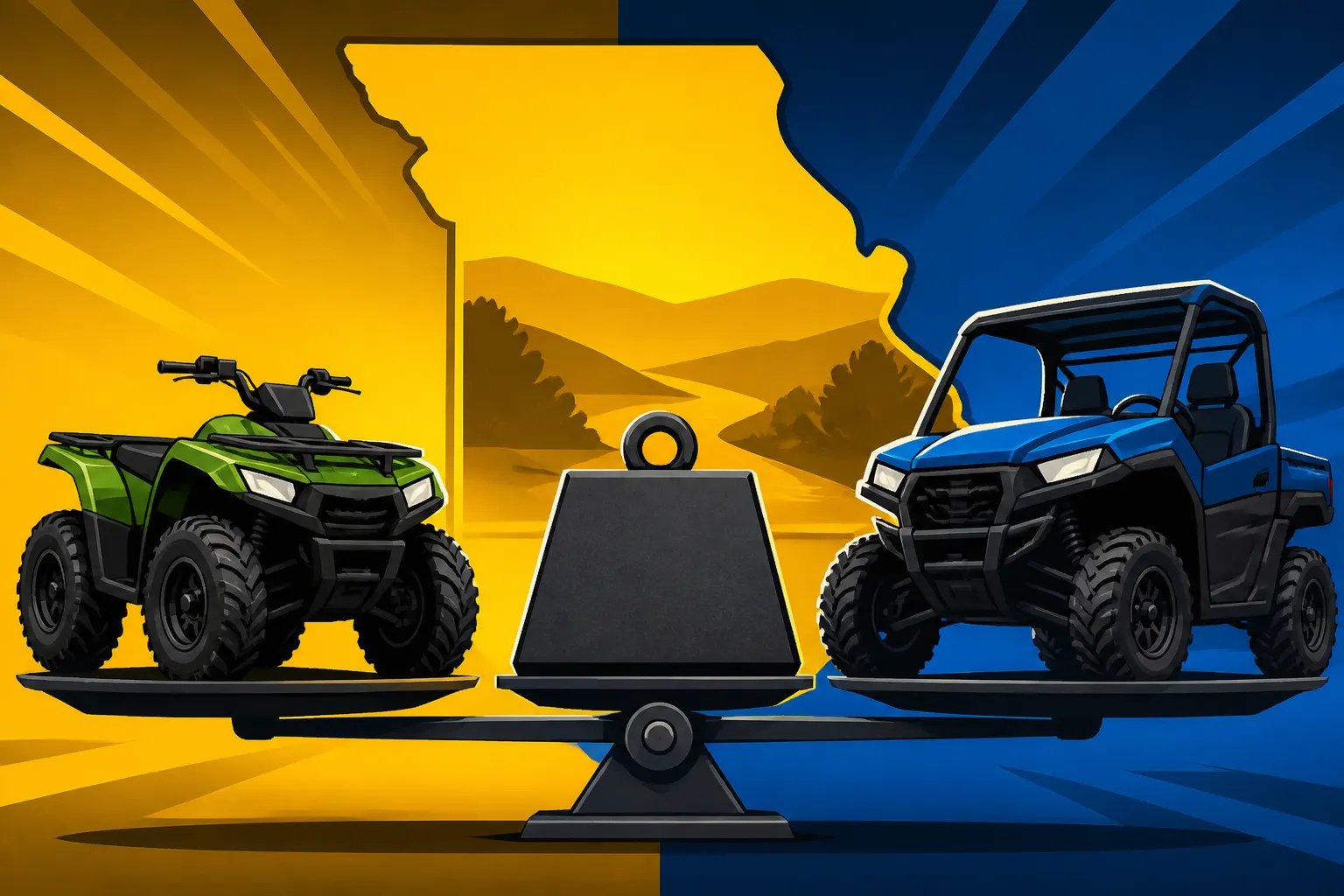
The 1,500-pound dry weight threshold is a critical demarcation point in Missouri law. Any off-road vehicle that weighs more than 1,500 pounds (dry weight) automatically falls outside the state's legal definition of an "all-terrain vehicle." This means that if your machine tips the scales past that limit, it won't be titled as an ATV, and you won't receive the familiar three-year ATV decal for it. This isn't a minor detail; it's a fundamental aspect of how the state regulates these machines.
This threshold exists primarily to distinguish between smaller, often single-rider or two-up quads, and the larger, heavier utility and recreational off-highway vehicles that have become so popular. While many of these larger machines are also designed for off-road use, their size and weight often put them in a different class of vehicle with different operational rules. For example, a heavy-duty side-by-side designed for hauling serious loads would almost certainly exceed this weight, instantly moving it out of the ATV classification, even if it has a powerful engine and four-wheel drive. For those looking at bigger machines, understanding [Why Missouri Does Not Register Side-by-Sides] begins right here with this weight limit.
How the Dry Weight Test Separates ATVs from Other Machines
The 1,500-pound dry weight test is just one piece of the puzzle, but it's a very significant one. Combined with other physical characteristics, it helps the Missouri Department of Revenue decide whether your off-road machine is a true ATV, a Utility Vehicle (UV), or a Recreational Off-Highway Vehicle (ROV). This distinction isn't always obvious to the casual observer, but for the state, it's black and white. Many riders find themselves surprised by how quickly their perceived "ATV" gets reclassified simply because it's a bit too heavy.
Machines That Typically Fall Under the ATV Definition
Generally speaking, the machines that Missouri considers true ATVs are those that are designed for a single rider, or sometimes a passenger on a specific two-up model, and feature handlebars for steering along with a straddle seat. These are your traditional sport quads, utility quads, and youth models. They are built to be agile and responsive, often used for trail riding, hunting, or light utility tasks. Crucially, these machines almost always have a dry weight under 1,500 pounds. Think of the typical Honda Foreman, Polaris Sportsman, or a Yamaha Raptor; these are prime examples of vehicles that would pass the 1,500-pound dry weight test, assuming they also meet the other criteria like handlebar steering and a straddle seat, as outlined in [How a Straddle Seat and Handlebars Define an ATV].
When you head to the license office with one of these machines, assuming it's new and you have a proper [A Certificate of Origin for a New Missouri Machine], or a properly assigned title if used, you'll go through the process to obtain a title and a three-year off-road decal. This decal signifies that your machine is recognized as an ATV by the state and allows you to ride it legally on designated trails and areas. It’s a straightforward process for these machines because they clearly fit within Missouri’s established definition.
When a Heavier Machine Isn't an ATV for Titling Purposes
This is where many people run into confusion. You might have a powerful, four-wheel-drive machine, perhaps even one with a manufacturer label that includes "ATV" somewhere in its marketing. However, if that machine's dry weight exceeds 1,500 pounds, Missouri will not title it as an ATV. This typically applies to many of the larger, multi-passenger side-by-sides, also known as UTVs or ROVs, that have proliferated in recent years. These vehicles are often designed with features like roll cages, seatbelts, and automotive-style steering wheels, and they commonly weigh significantly more than 1,500 pounds, even in their "dry" state.
For example, many popular models like the Polaris RZR, Can-Am Defender, or John Deere Gator, while fantastic for off-road adventure or heavy-duty work, will almost certainly fail the 1,500-pound dry weight test. Because of this, they are simply not classified as ATVs in Missouri's eyes. This means a different set of rules applies to them, particularly concerning titling and what, if any, "registration" they require. For these heavier machines, you'll be dealing with classifications like [Utility Vehicles Outside the Missouri System] or [Recreational Off-Highway Vehicles and Missouri Titles], which operate under different statutes.
The "Catch-All" for Machines Exceeding the Weight Limit
So, what happens if your machine is over the 1,500-pound dry weight limit and therefore isn't considered an ATV? Missouri law places these vehicles into other categories, most commonly as Utility Vehicles (UVs) or Recreational Off-Highway Vehicles (ROVs). While these machines still need a title in Missouri for ownership purposes, they do not receive the three-year off-road decal that an ATV does. This is a critical distinction because it means there's no state-level "registration" process like there is for ATVs.
This system can feel a bit counterintuitive to owners who want to legally operate their side-by-sides on trails and might wonder how they're supposed to show their machine is "legal" without a decal. The truth is, for UTVs and ROVs that exceed the 1,500-pound limit (and/or lack handlebars and a straddle seat), the state-level requirement ends at titling. Any permits or specific permissions for riding these machines on public lands or certain municipal roads will typically come from the managing authority (e.g., state parks, national forests, or local city/county ordinances), rather than through a Department of Revenue decal. You'll often hear people say [Why a Side-by-Side Has No Decal to Buy], and the dry weight test is a huge part of that explanation.
Practical Implications for Owners and Buyers in Missouri
Understanding the 1,500-pound dry weight test isn't just an academic exercise; it has real, tangible consequences for anyone who owns or plans to purchase an off-road vehicle in Missouri. Getting this wrong can lead to headaches at the license office, potential issues with law enforcement, and general confusion about your machine's legal status. It's about being prepared and knowing what to expect from the state's titling and administrative process.
What to Do If Your Machine is Over 1,500 Pounds
If you've checked your machine's specifications and confirmed that its dry weight is indeed over 1,500 pounds, the most important thing to understand is that it will not be titled or registered as an ATV in Missouri. Instead, it will be titled as either a Utility Vehicle (UV) or a Recreational Off-Highway Vehicle (ROV). You still absolutely need to get a title for your machine – this establishes your legal ownership and is essential for buying, selling, or proving ownership if it's ever stolen. However, you will not receive the three-year off-road decal that comes with ATV registration.
The process for titling an ROV or UV is similar to titling an ATV in terms of paperwork, but the classification on the title itself will reflect its true legal status. You'll still need your [A Certificate of Origin for a New Missouri Machine] for a new purchase, or the properly assigned title from the previous owner for a used machine. The key difference is the lack of a registration decal. This means that while your machine is legally owned, its permission to operate on certain trails or roads will depend on the specific rules of that location, not on a general state off-road registration.
Verifying Dry Weight Before a Purchase
For buyers, especially those looking at used machines or debating between a large quad and a compact side-by-side, verifying the dry weight is a crucial pre-purchase step. Don't just rely on what a seller tells you or a casual internet search. Look for the manufacturer's official specifications, often found on their website, in the owner's manual, or on the vehicle's MCO. If you're buying privately, consider asking the seller for a photo of the MCO if it's a newer machine, or confirm the model and year to research the official dry weight yourself. LawDepot, for instance, offers templates for comprehensive bills of sale that can include clauses about verifying vehicle specifications, providing an extra layer of protection and clarity for both buyer and seller.
Purchasing a machine without confirming its dry weight could lead to an unpleasant surprise at the license office. Imagine buying what you thought was a larger "ATV" for a steal, only to discover later that its weight pushes it into the ROV category, meaning no state decal and potentially different riding rules than you anticipated. A little due diligence upfront can save you a lot of hassle and ensure your expectations align with Missouri's legal definitions. This verification is a key component of smart buying, whether you're looking at a brand new machine or one with some miles on it.
The Role of Manufacturers' Specifications
Manufacturers' specifications are your best friend when it comes to the 1,500-pound dry weight test. These official documents provide the exact dry weight of your specific model and year, straight from the source. The Missouri Department of Revenue will typically rely on these published specifications or the MCO to determine your vehicle's weight. It’s rare that they would physically weigh your machine at the license office, but they will scrutinize the paperwork you provide.
Therefore, when you present your title application and supporting documents, having clear, unambiguous proof of your machine's dry weight is essential. If you have an MCO, the dry weight is usually clearly listed. For older machines where the MCO might be long gone, referring to the manufacturer's archived specifications for that model year is the next best approach. This proactive step helps ensure a smooth titling process and avoids any confusion or delays that could arise from an unclear or unverified weight claim.
Navigating Titling and Registration with Missouri's Definitions
Armed with the knowledge of Missouri's 1,500-pound dry weight test and how it impacts classification, you're better prepared to navigate the state's administrative maze. The key is understanding that the process differs significantly based on whether your machine is indeed an "ATV" by Missouri's definition or if it falls into the UV or ROV categories. This understanding will dictate your trip to the license office and ultimately, how you legally use your off-road vehicle.
Titling a Machine That Isn't a Missouri ATV
If your off-road machine exceeds the 1,500-pound dry weight limit, or if it doesn't have handlebars and a straddle seat, it will be titled in Missouri as a Utility Vehicle (UV) or a Recreational Off-Highway Vehicle (ROV). The actual titling process involves presenting the Manufacturer's Certificate of Origin (MCO) for new machines, or the properly assigned previous title for used ones, along with proof of sales tax payment (unless exempt), and paying the state titling fees. You'll typically do this at your local Missouri license office.
The crucial difference, as we've discussed, is the absence of the three-year off-road decal. While your machine will have a valid title proving ownership, there won't be a corresponding state registration or decal for general off-road operation. This is a common point of confusion, as many owners expect a "sticker" of some kind for any off-road vehicle. However, for UVs and ROVs, the focus shifts from a state-issued decal to local ordinances or specific park permits for operational legality. It's a different system, and recognizing this difference is vital to avoid frustration. If you're buying a used machine, ensure the seller has a clean title; LawDepot can assist with creating a proper bill of sale to document the transfer of ownership securely.
What the Department of Revenue Looks For
When you visit [The Missouri Department of Revenue and ATVs], or more commonly, a local license office, they'll primarily look for a few key pieces of information to classify your machine. First and foremost, they'll examine the Manufacturer's Certificate of Origin (MCO) or the existing title. These documents usually list the vehicle type, year, make, model, VIN, and critically, the dry weight. They'll also check for physical characteristics based on the vehicle description, especially if there's any ambiguity in the paperwork.
Their goal is to determine if the vehicle meets the Missouri definition of an ATV: designed for off-road use, 50 inches wide or less, with a dry weight not exceeding 1,500 pounds, equipped with handlebars for steering, and a seat designed to be straddled by the operator. If your machine checks all these boxes, you'll go through the standard [Titling an ATV in Missouri] process, receive your title, and purchase your three-year decal. If it deviates, particularly on the weight or seating/steering criteria, it will be classified differently.
Common Pitfalls and How to Avoid Them
One of the most common pitfalls is simply assuming all off-road machines are titled and registered the same way. Many new buyers, especially those upgrading from a traditional quad to a larger side-by-side, are caught off guard when their new machine doesn't qualify for an ATV decal. To avoid this, always research Missouri's specific definitions before you buy, paying close attention to the 1,500-pound dry weight test and the [Missouri's 50 Inches Wide or a Straddle Seat] rule. If you're buying from a dealer, they should be able to clearly explain how Missouri will classify the specific machine you're interested in.
Another pitfall is not having the correct documentation, especially for used machines. Ensure you receive a clear, properly assigned title from the seller. If the seller doesn't have a title for a machine that should be titled, that's a huge red flag. Always get a detailed bill of sale, perhaps using a template from a service like LawDepot, even if it's a private sale under the informal threshold, to protect yourself. Being proactive and informed is your best defense against administrative headaches and ensures you're riding legally and responsibly.
| Feature | Missouri ATV Classification | Missouri UTV/ROV Classification (Often > 1,500 lbs) |
|---|---|---|
| Dry Weight | 1,500 pounds or less | Generally over 1,500 pounds |
| Steering | Handlebars | Steering wheel |
| Seating | Straddle seat (designed to be straddled by operator) | Side-by-side seating, bucket seats, or bench seats |
| Width | 50 inches or less (a specific statutory criteria) | Often wider than 50 inches |
| State Decal | Yes (three-year off-road decal issued by MO DOR) | No (no state-issued off-road decal) |
| Titling Required | Yes | Yes (for ownership proof) |
| Road Use Potential | Very limited; generally prohibited except for specific agricultural exemptions or crossing | More potential for limited road use under local ordinances or special permits, if equipped |
| Example | Most traditional quads (e.g., Honda Foreman, Yamaha Raptor) | Most side-by-sides (e.g., Polaris RZR, Can-Am Defender, John Deere Gator) |
Disclaimer
This article is for general informational purposes only and does not constitute professional advice. Laws, prices and regulations vary by location and change over time. Consult a qualified professional for guidance on your specific situation.