Conservation Area Roads in Missouri
Missouri conservation areas can look like convenient places to ride, especially when a map shows gravel roads running through woods and fields. But an area road is not automatically an ATV or UTV trail. The key is to check the rules for that specific area and route before unloading; public access, motor-vehicle access and off-road riding are different permissions.
Are ATVs and UTVs allowed on Missouri conservation area roads?
There is no general rule that lets riders use every conservation area road for recreation. The Missouri Department of Conservation manages these areas under site-specific rules. A road may be open to ordinary vehicles for access while ATV or UTV riding remains prohibited, or it may have a restriction that applies only to certain routes, vehicles or times.
That distinction matters because “road” describes the route, not necessarily who may ride on it. A gravel road shown on a map might be an access road for cars and trucks, a closed service road, or a route with restrictions. It does not automatically count as an ORV trail. Likewise, seeing tire tracks or another rider is not reliable proof that motorized recreation is allowed.
For general context, see Missouri Rules on Conservation Areas and Missouri Rules for Riding Public Land. The practical rule is to use a conservation area road with an ATV or UTV only when the current rules for that area clearly allow that type of machine on that route. If the rules are unclear, check with the area manager or the conservation department before riding.
| What you see or want to do | What it tells you | What to confirm |
|---|---|---|
| A road appears on a map | There may be a road or access route there | Whether it is open to the public and to your type of vehicle |
| A gate is open | The route is physically accessible at that moment | Whether vehicle use is allowed and whether the route has seasonal restrictions |
| Cars or trucks use the road | Some motor-vehicle access may be permitted | Whether an ATV or UTV is also allowed |
| A route looks like a trail | It may be a path, service route or informal track | Whether recreational riding is authorized |
| Your machine has a Missouri title or decal | It addresses machine paperwork, not land access | Whether the conservation area permits your planned use |
| Another rider is on the route | Someone has ridden there | Whether that person has permission or is following the current rules |
A conservation area is not interchangeable with a state park ORV area or a national forest riding area. Those places may have designated riding routes and separate permit systems. A conservation area’s roads and regulations work under its own management rules. For other types of riding locations, start with Where to Ride an ATV in Missouri and Missouri ORV Permits Explained.
How to check a specific area before you ride
Do not plan a trip based only on a general map, a social media post or an old ride report. Area rules can differ, and closures or access conditions can change. Check the current information for the exact conservation area and route you want to use.
- Find the area’s official page and map. Look for the conservation area’s current regulations, access notes and map. Read the notes that apply to roads and vehicles, not just the map legend.
- Look for explicit ATV or UTV permission. A road marked as open to vehicles may not be intended for recreational ATV use. Confirm that the rules identify your type of machine or clearly allow it.
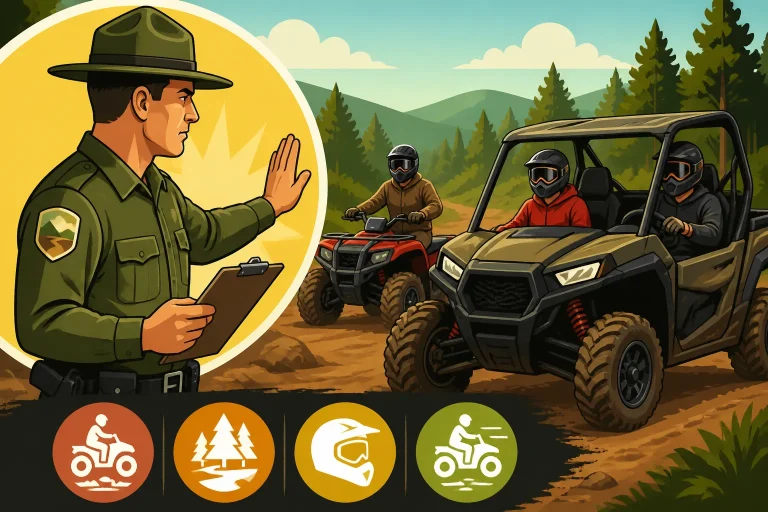
- Check signs and barriers at the site. A posted closure, gate or restriction takes priority over an old map or a route someone described online. Do not go around a closed gate.
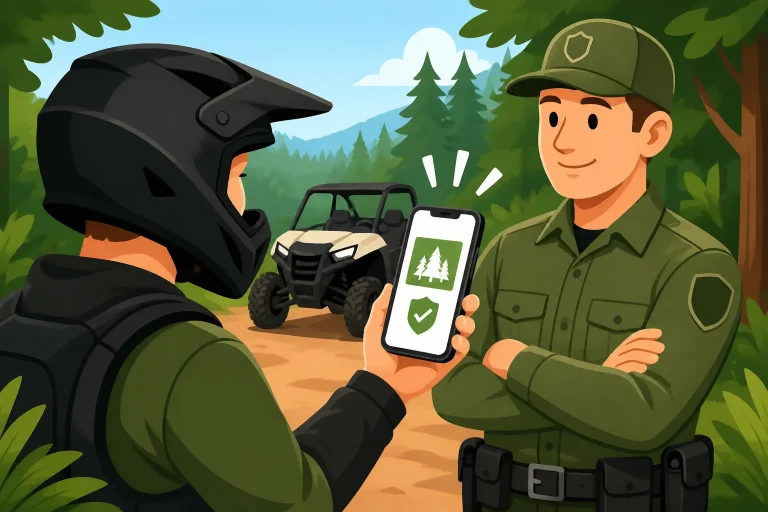
- Ask if anything is ambiguous. Contact the managing office or area staff and describe the specific machine, road and purpose. Ask whether riding is allowed for recreation, not just whether the road is open to vehicles.
- Recheck before leaving. A route that was open on a previous visit may be closed or limited when you return.
When contacting the area manager, keep the question specific. For example: “Can I ride my ATV on the gravel road from the parking area to the east boundary, or is that road for licensed cars and trucks only?” If you ride a UTV, say so; an answer about an ATV may not settle the rules for a wider side-by-side.
Ask about temporary conditions as well as permanent restrictions. A road can be closed because of maintenance, weather, habitat protection, a special event or other management needs. If a route is open only during certain periods or for a particular use, confirm those details directly.
A map app or GPS can help you navigate, but it cannot establish permission. Download the official area map or save the relevant rules before going somewhere with weak cell service. If you use a phone for navigation, keep it secure and do not handle it while moving. A printed map is a useful backup.
What conservation area access does and does not allow
Even where a route is open to your machine, permission to use that road does not necessarily allow riding elsewhere on the area. Stay on the route that is specifically authorized. Do not cut across fields, follow an unmarked path into the woods, ride along a streambank or treat a levee as a shortcut unless the area rules expressly permit it.
This is important for more than avoiding a citation. Off-route riding can damage soil and vegetation, disturb wildlife and create ruts that worsen with rain. It can also put riders into places where staff, hunters, walkers or other visitors do not expect motor vehicles.
The terms below are easy to confuse:
- A public road near or through an area: It may be governed by ordinary road rules, but its location does not establish permission to ride on adjoining conservation land.
- An area road open to vehicles: This may provide access for certain vehicles. Check whether ATVs and UTVs are included.
- A designated ORV trail: This is a route specifically managed for off-road recreation. Do not assume a conservation area road is one.
- A closed or gated road: Treat the closure as binding. Do not move a barrier or ride around it.
- Private land next to an area: Public access to the conservation area does not grant permission to cross private property. For that separate issue, see [Missouri Rules for Riding Private Property].
A Missouri ATV title, registration decal or road-use permit also does not replace permission from the land manager. Those documents address different requirements. A decal is not a pass to ride on every public property, and a local road permit does not open a conservation area route. The same separation applies to road legality: a machine that can legally travel on some roads may still be barred from a particular conservation area road. See Are ATVs Street Legal in Missouri? for the broader road-use distinction.
When an authorized route connects to a public road, confirm where the conservation area route ends and what rules apply next. Do not assume that authorization inside the area extends onto a county road or highway. For questions about those separate routes, see Missouri Rules for Riding a County Road and Missouri Rules for Crossing a Highway.
A practical plan for a conservation area visit
If your main goal is to ride trails, choose a place that clearly offers ATV or UTV riding rather than building a trip around roads that may only serve general access. Conservation areas can still be useful destinations for wildlife viewing, hunting, fishing, hiking or reaching a permitted access point, but they should not be treated as an ORV park without clear authorization.
Before loading the machine, use this short checklist:
- Identify the exact conservation area and the road you intend to use.
- Read the current area-specific rules and map.
- Confirm that the rules allow your vehicle type and recreational purpose.
- Check for closures, gates, seasonal limits and posted restrictions.
- Plan a route that stays on authorized roads.
- Keep any required machine documents with you, while understanding that paperwork does not grant land access.
- Have a backup riding location in case the route is closed or staff confirm that ATVs are not allowed.
If staff say that the area road is not open to ATV or UTV riding, do not try to interpret “open to vehicles” as an exception. Ask where legal riding is available instead, or transport the machine to a designated ORV location. That saves a wasted trip and avoids putting the rider, the land and other visitors in a difficult position.
When you arrive, read the entrance signs even if you checked the rules at home. Follow any new notices and stay off routes marked closed. If conditions are muddy or a road is visibly damaged, turn back rather than widening ruts or finding a route around the problem. A map can help you identify where you are, but posted restrictions and current area rules determine where you may ride.
The safest assumption is simple: a conservation area road is usable by an ATV or UTV only when the area’s current rules clearly allow it. Verify the route and vehicle class before you unload, and keep public-road access, land permission and ORV trail access separate.
Disclaimer
This article is for general informational purposes only and does not constitute professional advice. Laws, prices and regulations vary by location and change over time. Consult a qualified professional for guidance on your specific situation.