Missouri Rules for Carrying Fuel
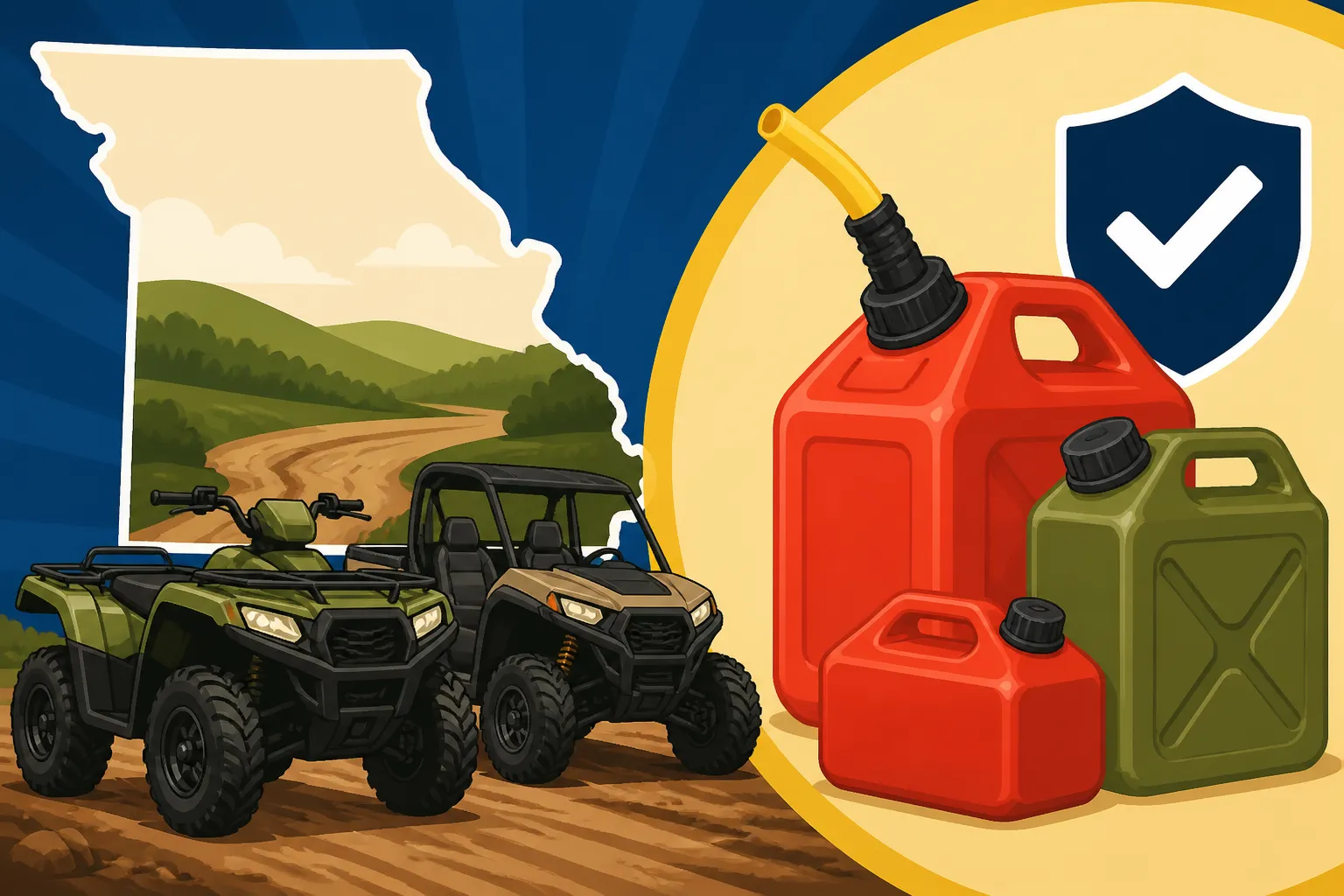
Carrying spare fuel can make a long Missouri trail ride more practical, but a loose can brings spill, fire and handling risks. The rules can also depend on whether you are on a state park trail, national forest land or private property. Here’s how to check the requirements and carry fuel more safely without assuming one permit or rule covers every riding area.
Which rules apply where you ride
There is not one simple fuel-carrying rule to rely on for every place an ATV or UTV can travel in Missouri. The land manager, trail facility, fire conditions and route can all affect what is allowed. A state registration decal or trail permit does not automatically answer whether a spare fuel container is permitted at a particular site.
Before loading, identify who manages the riding area and check its current notices. State park rules may differ from those for national forest land, a private riding park or a landowner’s property. For forest riding, start with the requirements for Missouri National Forest ATV Permit and What the Mark Twain Forest ATV Permit Covers. For a state park, review Missouri State Park ORV Permit Prices and the park’s own current rules. The permit tells you about access and use; it is not a substitute for checking fuel, fire or equipment restrictions.
| Where you ride | What to confirm before carrying a spare can |
|---|---|
| State park ORV area | Whether the facility permits portable fuel containers and where they may be stored or used |
| National forest trail | Current district notices, fire restrictions, permitted routes and any fuel-related directions |
| Private riding park | The operator’s rules for containers, refueling and fuel storage |
| Private property | The landowner’s instructions, plus safe handling and transport practices |
| Public road or parking area | Applicable transport rules and any local restrictions, separate from trail-access rules |
If a website or printed rule sheet is unclear, contact the park, ranger district or operator before you travel. Ask specifically about carrying a spare container on the machine, refueling at the site and leaving fuel in a parked vehicle or trailer. These are different situations, and an answer to one may not cover the others.
Fire restrictions deserve particular attention during dry or windy conditions. A land manager may issue temporary restrictions, close trails or change what activities are allowed. Check Missouri Trail Closures to Check First and Checking a Missouri Trail Notice Before You Load before setting out. Do not assume that a trail being open means every activity or piece of equipment is permitted.
Keep fuel rules separate from permit reciprocity, too. An out-of-state registration or decal may be relevant to whether you can ride, but it does not establish that a spare fuel can is allowed at a specific facility. Missouri ORV Reciprocity With Other States can help with the access question; the riding area remains the best source for its site-specific fuel and fire rules.
Choosing and securing a spare fuel container
Use a purpose-made container suitable for gasoline, in good condition, with a cap and closure that seal properly. Do not carry fuel in a drink bottle, household jug, open container or an unmarked container whose contents could be mistaken for something else. Avoid a can with cracks, a damaged spout, a loose cap or a fuel smell that suggests it is leaking.
A container designed to be mounted to an ATV or UTV can be easier to secure than a general-purpose can, but its fit still matters. Check that the rack, mounting hardware and container are compatible. A fuel can should not block controls, lights, a passenger’s space or the rider’s movement. It should not interfere with access to emergency equipment, nor sit where a fall or branch is likely to strike it.
If shopping for a mounting system, compare how the can locks in place, whether the hardware fits your rack and whether the container is made for the type of fuel you intend to carry. Amazon may offer a broad selection, but confirm the product’s specifications and fit rather than relying on a listing title or vehicle photo alone.
Secure the container so it cannot slide, bounce loose or tip when the machine climbs, descends or leans. Check the mount by hand before riding, then inspect it again during stops. Straps can loosen with vibration, and a can that seems stable on a driveway may shift over rough ground. Keep it away from hot exhaust parts and other heat sources, and do not let it rub against sharp edges.
Avoid carrying a spare can inside an enclosed passenger compartment. Fuel vapor can build up, and a leak inside a cab or luggage area creates a serious hazard. On an open ATV, do not wedge a can between the rider and handlebars or place it where it can interfere with balance or safe dismounting. If you cannot secure the can firmly in a location that keeps it clear of heat and moving parts, carry it in a properly equipped tow vehicle or trailer instead, subject to applicable transport rules.
Keep the amount practical
Carry only what you reasonably need for the planned route and a sensible reserve. More fuel adds weight and can affect handling, especially when mounted high or at the rear of the machine. It also means more fuel that can spill if the vehicle rolls or the container is damaged.
Plan fuel use before loading. Consider the distance, terrain, machine condition, expected riding pace and access to reliable refueling. Do not treat a fuel estimate as exact: deep mud, steep climbs, low tire pressure or frequent stops may change consumption. A reserve can help, but it does not make a closed trail, restricted route or unsafe return trip acceptable.
Filling, riding and refueling safely
Handle gasoline outside, away from flames, smoking, hot surfaces and other ignition sources. Shut the machine off and allow hot components to cool before refueling. Do not fill a portable can while it is mounted on a running or hot machine. Place it on a stable surface, follow the container’s instructions, avoid overfilling and close it securely before mounting it again.
Gasoline expands as it warms, so leave the appropriate space in the container rather than filling it to the brim. Wipe up any spill promptly using suitable materials, and do not ride away with fuel on the machine, your clothing or a hot surface. Keep absorbent material and basic cleanup supplies in your vehicle or trailer; do not wash fuel into soil, a ditch or a stream.
During the ride, watch for odor, wet spots, a loose cap or a shifted mount. If you smell fuel or see a leak, stop in a safe place, shut off the engine and move away from ignition sources. Do not keep riding in hopes that the smell will disappear. If the container or machine is leaking, avoid handling the fuel unnecessarily and follow site directions for reporting or managing the spill.
Choose a safe place to refuel: stable ground, away from traffic, dry vegetation, open flames and other riders. Keep people back while handling fuel. Do not refuel near a campfire or assume that an established staging area is an approved place to dispense gasoline. Some facilities may restrict refueling to certain locations or prohibit it altogether, so check before arriving.
A spare can also affects what you do when you stop. Do not leave it beside a trail, at a trailhead or at a campsite unless the land manager expressly allows that storage. Do not conceal or abandon a container as a way to extend a route. Fuel left unattended can leak, be disturbed or create a fire risk, and it may violate site rules even when carrying the same can on the machine is allowed.
A pre-ride checklist for Missouri trails
Use this short process before each trip, especially when riding a new area or when conditions are dry:
- Identify the land manager. Confirm whether the route is on state park, forest, private or other property. Start with Missouri Rules for Riding Public Land if you need to sort out the general access rules.
- Check current restrictions. Look for closures, fire notices and fuel-container rules from the specific facility or district. Call if the wording does not answer your question.
- Confirm the container and mount. Make sure the container is intended for gasoline, undamaged, closed and firmly secured in a location clear of heat and controls.
- Plan the fuel need. Estimate the route and reserve without overloading the machine. Check whether refueling is allowed at the site.
- Load and transport carefully. Keep the container upright and secured, away from passengers and ignition sources. Follow the container maker’s handling directions and applicable transport rules.
- Inspect it during the ride. Stop if the can moves, smells of fuel or appears wet. Do not continue with a leak.
- Take the container with you when you leave. Do not leave fuel behind unless the site has specifically authorized a storage arrangement.
A spark arrester is a separate equipment issue, but it belongs on the same pre-ride check when using public land. Follow the rules for the riding area and review Missouri Spark Arrester Rules. A compliant machine does not make fuel handling automatically acceptable, and a fuel can does not replace required machine equipment.
The safest plan is straightforward: check the site’s current rules, use a sound gasoline container, mount it securely and refuel only in a suitable place. If the land manager cannot confirm that a portable can is allowed, do not assume it is. Adjust the route, refuel outside the restricted area if permitted, or carry fuel in your tow vehicle instead.
Disclaimer
This article is for general informational purposes only and does not constitute professional advice. Laws, prices and regulations vary by location and change over time. Consult a qualified professional for guidance on your specific situation.