Filming on a State Park Trail
A camera can make a Missouri state park ride easier to remember, but filming raises practical questions: where you may stop, whether a production needs approval, and what riding permits still apply. The safe approach is to keep casual recording low-impact, get permission before organizing or commercializing a shoot, and confirm park-specific rules before arriving with extra equipment.
First decide what kind of filming you are doing
There is a meaningful difference between recording your own ride with a small action camera and bringing a crew, props, lighting, or paid production onto a trail. The more your filming affects other visitors or park operations, the more important it is to contact the park before you go.
Personal ride footage
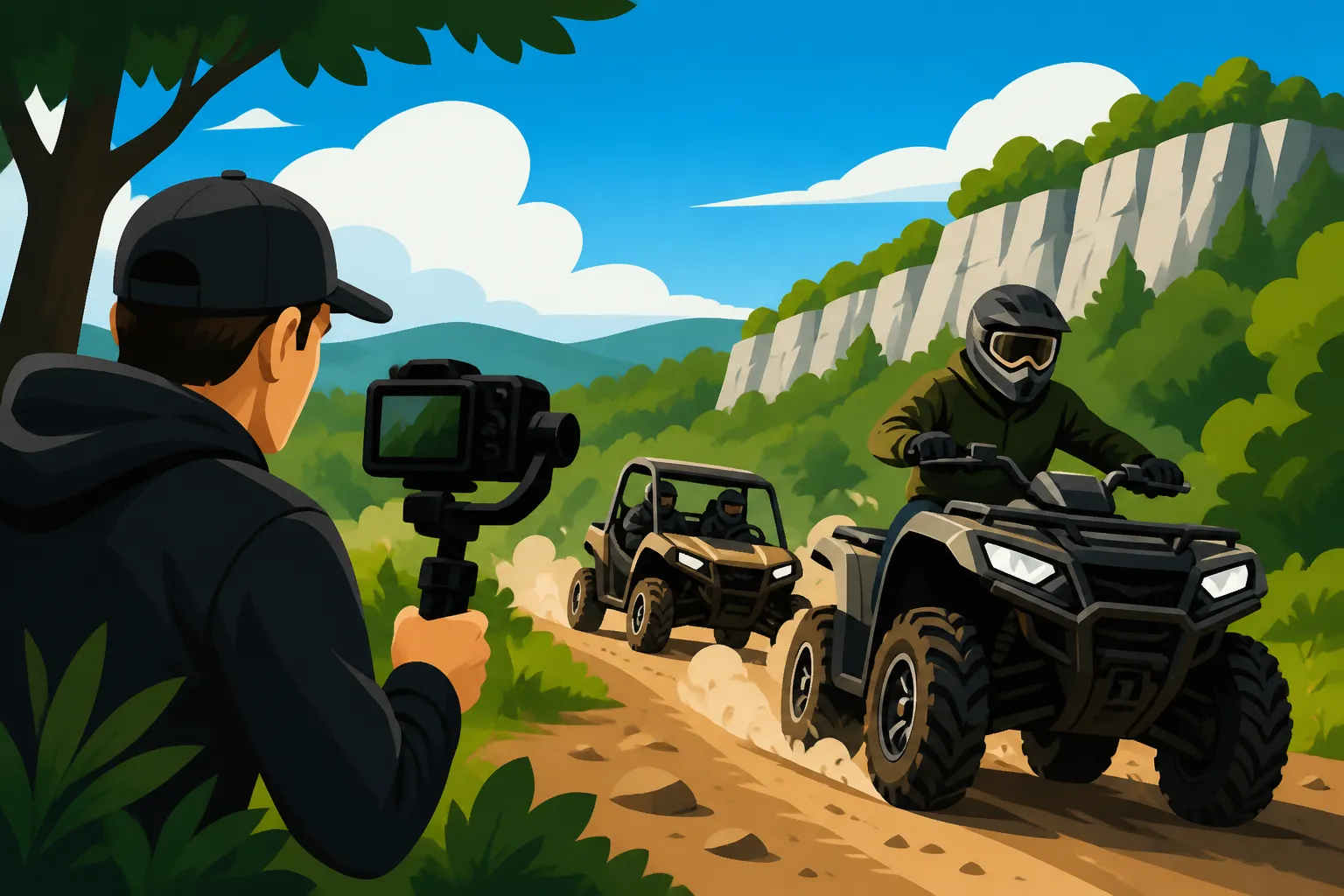
A camera mounted securely to a helmet, chest harness, or machine is generally the least disruptive way to record a ride. It lets you keep moving with the trail and limits the space and equipment involved. Still, do not assume that every camera setup is automatically allowed everywhere. Check the rules for the particular park and riding area, especially if you plan to use a tripod, stop for repeated takes, or record other visitors.
Personal recording does not replace any riding requirements. You still need to use the correct designated area, follow trail signs and closures, and carry whatever permit applies to that riding location. A Missouri state park trail permit is separate from state registration or a decal, and the requirements depend on the place and machine. Missouri ORV Permits Explained offers a broader overview of permits and where they apply.
Organized, commercial, or promotional filming
A shoot becomes more complicated when it is organized around a production rather than simply documenting a ride. Examples include:
- A crew filming a business advertisement or sponsored video
- A production with several riders, camera operators, or support vehicles
- A shoot using lights, stands, tripods, props, or staging areas
- Filming that reserves or blocks part of a trail or facility
- A project involving payment, client work, or other commercial use
For these plans, contact the park office before scheduling the shoot. Ask whether a filming or special-use approval is needed, what materials the park needs to review, and whether the proposed equipment and activity can be accommodated. Do not treat a standard trail permit as permission to conduct a production. Park access and filming approval address different things.
| Filming plan | Practical starting point | Main concern |
|---|---|---|
| Small camera mounted during a personal ride | Check the park’s current visitor and trail rules | Safe mounting and no interference with riding |
| Short personal clips made while stopped in a safe area | Check where stopping is allowed and keep the trail clear | Other riders and trail access |
| Tripod, lighting, or repeated takes | Ask the park before setting up | Space, visitor access, and equipment |
| Business, sponsored, or client production | Contact the park well before the planned date | Approval, conditions, and possible fees |
| Drone footage | Get park-specific approval before launching | Separate rules may apply to aircraft and park property |
The table is a planning aid, not a guarantee that a particular activity is permitted. Park staff can tell you which process applies to your location and proposal.
Get approval before you bring a production to the trail
If filming involves a crew or equipment beyond a personal camera, make the first call before you book travel, invite participants, or promise a client a location. Explain the project plainly. Park staff need enough information to understand its footprint and whether it could affect regular visitors, natural resources, safety, or park operations.
What to tell the park
When you contact the park, be ready to describe:
- Where you hope to film. Name the park and the specific trail, staging area, or facility if known. Ask whether filming is allowed in that location.
- What the footage is for. Explain whether it is personal, educational, promotional, commercial, or part of an organized event. Avoid describing a paid production as casual recreation.
- Who will be there. Give an approximate number of riders, crew members, and support vehicles.
- What equipment you plan to use. List cameras, tripods, lights, microphones, drones, and anything that takes up space or needs to be placed on the ground.
- When you want to film. Include the proposed date, length of the shoot, and whether you need more than one visit.
- How you will protect access. Explain how you will keep trails open, avoid crowding other visitors, and follow instructions from park staff.
Ask whether a written application, insurance documentation, site review, fee, or other condition applies. Requirements can differ by project and location, so get the answer for the park you plan to use rather than relying on someone else’s experience at a different site. Keep written approval and any conditions with your other ride paperwork.
If your shoot is part of an organized ride or event, ask about the process for that activity too. Filming approval should not be assumed to cover event authorization. Missouri Rules for an Organized Ride and Applying for a Forest Service Special Use Permit address related planning questions, though a state park and a national forest may have different procedures.
Leave time for review
Do not assume you can arrive and receive permission on the spot. A park may need time to review the location, equipment, number of people, timing, or impact on other users. If your schedule is fixed, contact the park early and wait for a clear answer before making nonrefundable plans.
A park may suggest a different location or time, limit the size of the crew, or decline a request if the proposed activity conflicts with safety or normal use. That is a reason to adjust the production plan, not to film first and ask later. If a request is not approved, ask whether a smaller setup or a different area would be acceptable.
Drones need a separate check
A drone is not just another handheld camera. Launching or operating one can involve separate aviation requirements as well as park-specific restrictions. Do not assume that permission to ride or film on a trail also authorizes a drone flight. Ask the park and check the applicable flight requirements before bringing one.
If the park does not clearly approve the proposed flight, leave the drone packed. A camera mounted to a rider or machine may be a simpler option, but it still needs to be secured and used without distracting the operator.
Ride and film without creating a trail hazard
The most useful footage is not worth a collision, a blocked trail, or a violation. Plan the filming around safe riding rather than expecting other visitors to work around a camera setup.
Mount equipment securely
Before riding, check that the mount is designed for the camera and the surface where you are attaching it. Tighten it according to the manufacturer’s instructions, confirm it cannot shift into your line of sight, and make sure it will not snag clothing, straps, or controls. Do a stationary check before you set off. Recheck it after a rough section or if the camera takes an impact.
Avoid holding a camera while operating an ATV or UTV. A handheld device can take attention away from steering, braking, trail conditions, and other riders. Keep your hands available for riding and use a secure mount or have a passenger record only if the machine and applicable rules allow that passenger.
Do not attach equipment where it blocks lights, mirrors, controls, safety equipment, or the rider’s view. Keep straps and cables away from moving parts and hot surfaces. If a mount loosens, stop in a safe place off the travel path before adjusting it.
Stop only where it is safe and allowed
A narrow trail is not a staging area. Do not stop around blind corners, on steep sections, at creek crossings, or where other riders cannot see you in time. If you need to pause, choose a designated or clearly safe place where you are not blocking the route. Move the machine fully out of the way if the location allows it, and leave room for other users to pass.
Never ask another rider to stop or repeat a maneuver in a way that creates a hazard. Do not stand in the trail to film approaching machines. If a shot requires a person or equipment in a riding area, get park guidance and use a controlled location only when authorized.
Trail closures and temporary notices take priority over a planned shot. A closed section is not a shortcut to a better angle. Check conditions before the ride and read posted information when you arrive. Checking a Missouri Trail Notice Before You Load and Reading the Trailhead Board Before You Unload can help with that routine.
Respect other visitors and the setting
Other visitors may not want to be identifiable in your footage. Avoid close-up filming of people who have not agreed to be recorded, and do not publish footage that exposes private details or makes another rider look as if they endorsed your project. If you are filming for a business or public channel, plan shots that do not depend on capturing bystanders.
Stay on the permitted trail and keep equipment off plants, waterways, and sensitive ground. Do not move signs, barriers, or trail markers for a better composition. Pack out batteries, tape, packaging, and anything else you bring in. If weather, noise, or congestion makes the area unsuitable for filming, stop and adjust the plan.
Check the full ride requirements before you go
Filming permission and riding permission are separate. A camera does not change which permit applies to the machine or where you can ride. A state registration decal, an out-of-state registration, and a park trail permit serve different purposes; one should not be treated as a substitute for another.
Before leaving, verify the requirements for the exact riding area and vehicle. Confirm whether your machine is allowed on the route, what permit you need, and whether the permit must be displayed or available for inspection. Does Your Decal Cover the Park Trail Permit? explains why a registration decal and a riding-area permit are not automatically interchangeable. Visitors should also check Missouri ORV Reciprocity With Other States rather than assume an out-of-state document covers every Missouri location.
Equipment rules can matter even when the camera is the main reason for the trip. For example, requirements at a park entrance may differ from requirements for riding on public roads. Check the specific park’s rules for helmets, flags, sound, spark arresters, machine width, youth riders, and passengers as applicable. Missouri Flag Rules at a State Park and Missouri Sound Limits on Public Land cover two details that can be easy to overlook.
A simple pre-trip check can prevent an expensive wasted drive:
- Confirm the park is open and the intended trail is available.
- Check whether the machine fits the trail’s limits.
- Secure the correct riding permit and required safety equipment.
- Get park approval in advance for a crew, commercial shoot, drone, or bulky setup.
- Save approval details and park contact information where you can access them.
- Bring a safe camera mount and avoid filming while operating the machine with one hand.
- Be prepared to change the plan if staff, weather, trail conditions, or other visitors make filming unsuitable.
Keep the project modest unless the park has approved a larger setup. A small camera that stays attached to the rider usually makes fewer demands on the trail than a crew, tripod, or repeated staged pass. If the purpose or scale of the filming changes, check again with the park rather than assuming the original answer still applies.
Disclaimer
This article is for general informational purposes only and does not constitute professional advice. Laws, prices and regulations vary by location and change over time. Consult a qualified professional for guidance on your specific situation.