Utility Vehicles Outside the Missouri System
One of the biggest head-scratchers for folks who love to hit the trails or get work done around their property in Missouri is figuring out what's what when it comes to off-road vehicles. It’s particularly confusing for utility vehicle (UTV) owners who often find their machines don't fit neatly into the state's traditional ATV registration and titling system. This guide is here to clear up the confusion, explaining why UTVs often operate "outside the system" and what that truly means for owners in our great state.
Understanding Missouri's Definitions: Why UTVs Aren't ATVs for Registration
It might seem like splitting hairs, but the exact legal definitions of off-road vehicles in Missouri make a world of difference when it comes to titling, registration, and especially how you can operate them. Many people assume if it's an off-road machine, it's all treated the same, but that's just not the case here in the Show-Me State. This misunderstanding often leads to frustration at the license office or, worse, potential issues with law enforcement out on a gravel road.
The Legal Distinctions That Matter
Missouri law is pretty specific about what constitutes an "all-terrain vehicle" (ATV) for the purpose of titling and issuing a decal. If your machine doesn't meet that exact definition, then it falls into other categories, which come with different rules – or, in some cases, a lack of state-level rules regarding registration. This can feel like a bureaucratic maze, but it's important to understand the distinctions to avoid any unwelcome surprises. The key is that not all off-road machines are created equal in the eyes of the law, and that's the root of why utility vehicles operate differently.
The Missouri Department of Revenue, which handles titling and registration, has to go by the statutes established by the state legislature. These statutes were often written at different times, for different types of machines, as the off-road vehicle market evolved. So, while you might call your side-by-side an "ATV" in casual conversation, the state might classify it as a "utility vehicle" (UTV) or a "recreational off-highway vehicle" (ROV), and that classification dictates everything from paperwork to where you can legally ride. It’s a classic example of legal definitions not always matching common parlance.
The "Straddle Seat" and "Handlebar" Rule
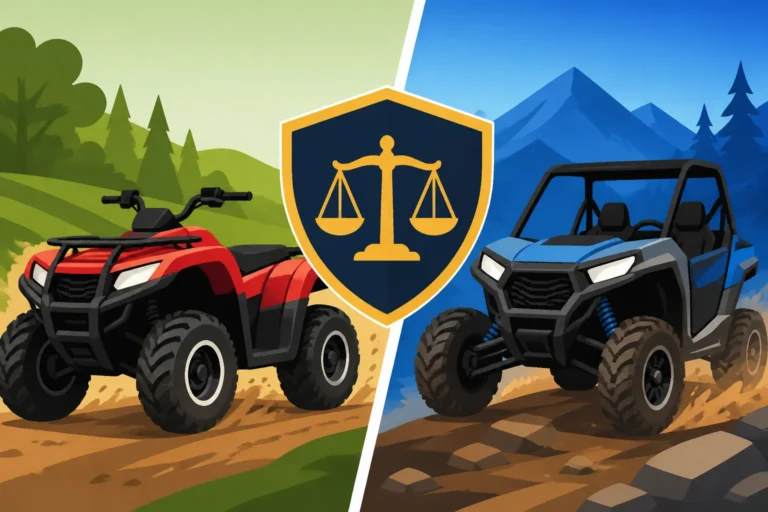
When Missouri law defines an ATV, two key physical characteristics jump out: it's designed to be ridden by an operator straddling a seat, and it's steered by handlebars. Think about it – a traditional quad. You sit on it like a horse, and you steer with handlebars. This specific design is fundamental to how the state categorizes these machines. If your vehicle doesn't have a straddle seat or handlebars, it simply isn't an ATV in Missouri's legal framework, regardless of its engine size or its off-road capability.
This distinction immediately sets most modern utility vehicles apart. UTVs, by their very nature, typically feature side-by-side seating, often with a steering wheel, much like a car or truck. They are designed for a different type of operation and rider posture. Because of this fundamental difference in design, they don't fit the statutory definition of an ATV for state registration purposes. This is the primary reason [Why Missouri Does Not Register Side-by-Sides] in the same way it does ATVs, leading to a lot of questions from owners.
Measuring Up: Beyond the 50-Inch Mark
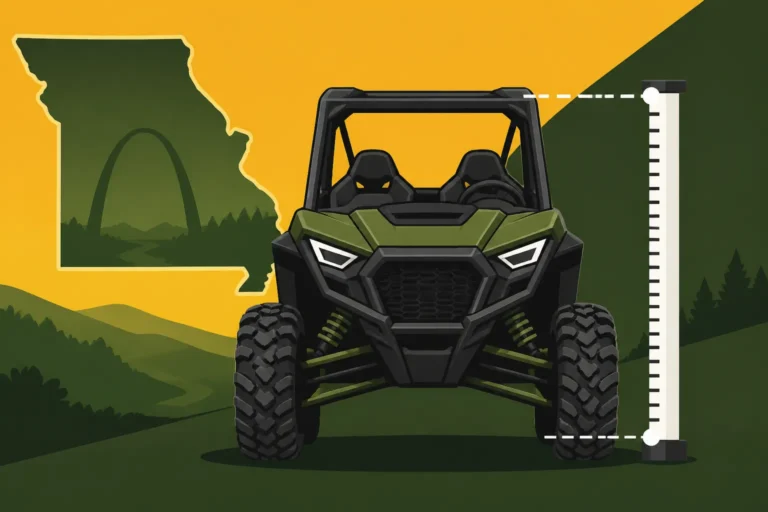
Another defining characteristic for an ATV in Missouri is its width: it must be 50 inches wide or less. This measurement, combined with the straddle seat and handlebars, completes the legal definition. Most traditional ATVs easily fall within this width limit, making them eligible for the state's ATV titling and decal system. This measurement helps distinguish them from larger, often more stable, utility vehicles.
Many UTVs and side-by-sides are significantly wider than 50 inches, sometimes reaching 60, 64, or even 72 inches in width. This extra width, combined with the other design elements, firmly places them outside the ATV category as defined for titling and registration. While these larger dimensions offer more stability and cargo capacity, they also mean your machine falls under a different set of rules when it comes to state oversight. It's not just about what it's called; it's about its physical dimensions and how those compare to the specific language in Missouri statutes that govern registration. [What Missouri Counts as an ATV] is a very narrow definition, and UTVs simply don't make the cut.
Titling Your Utility Vehicle in Missouri: A Different Path Than ATVs
So, if your UTV isn't registered like an ATV, does that mean you can just hop in and go? Not quite. There's a crucial difference between titling and registering a vehicle, and this distinction is absolutely paramount for utility vehicle owners in Missouri. Many folks assume if there’s no decal, there’s no paperwork, but that's a mistake that can lead to headaches down the road.
Why a Title is Still Non-Negotiable
Even though UTVs don't get a registration decal in Missouri, they absolutely still require a title. The title is your proof of ownership, a fundamental document that establishes who legally owns the machine. This is vital for several reasons: it protects you from theft, makes selling the UTV a legal and straightforward process, and is necessary for paying sales tax. Without a title, proving you own your UTV can become incredibly difficult, especially if you ever need to involve law enforcement or an insurance company.
Think of it this way: just because your lawnmower doesn't have a license plate doesn't mean you don't legally own it with a receipt or proof of purchase. A UTV is a much larger, more valuable asset, and the title serves as that official, state-issued proof of ownership. If you purchase a UTV, whether new from a dealer or used from a private seller, securing the title in your name is one of the first things you need to do. This process is handled through the Missouri Department of Revenue, just like a car title or an ATV title. [Missouri ATV Title Cost] for a UTV is essentially the same, as the fees are for the titling process itself, not the registration.
The Missing Piece: No State Registration Decal
Here's where the biggest difference lies for UTV owners: unlike ATVs, utility vehicles in Missouri do not receive a state-issued registration decal. ATVs get that familiar three-year decal that you stick on the right front fork, signifying they've met the state's registration requirements. For UTVs, there's no such program. This is the "outside the system" part many people find confusing and frustrating. You pay your title fee, you get your title, but you won't walk out with a decal to affix to your machine.
This absence of a state-level registration decal doesn't mean your UTV is unregulated or can be used anywhere. It simply means that the state of Missouri, at a broad level, doesn't mandate a recurring registration fee or issue a uniform sticker for these machines. This is often because the legislature has categorized them differently, or sometimes because they’re primarily seen as machines for off-highway use on private land, where a state registration isn't deemed necessary for typical operation. It’s a key distinction when comparing [What a Side-by-Side Owner Does Instead in Missouri] versus an ATV owner.
What a UTV Owner Does Instead in Missouri
So, what exactly does this mean for you as a UTV owner? First and foremost, you must title your machine with the Missouri Department of Revenue. This involves submitting the appropriate paperwork, like a manufacturer's statement of origin (MSO) for a new machine or a properly assigned title from the previous owner for a used one, along with payment for the title fee and any applicable sales tax. Once that's done, you hold the legal proof of ownership.
After titling, your primary focus shifts from state-level registration to local regulations and safe operating practices. Since there's no state-wide decal, your right to operate a UTV on public roads, trails, or other areas often falls under county or municipal ordinances. This means you have to be more proactive in checking local laws where you intend to ride. This localized approach is a common challenge for owners, as what's legal in one town might not be in the next. It underscores why Utility Vehicles Outside the Missouri System often require a different kind of vigilance from their owners.
| Feature | Missouri ATV | Missouri UTV/ROV |
|---|---|---|
| Titling Required? | Yes | Yes |
| State Registration? | Yes (3-year decal) | No (no state decal issued) |
| Primary Steering | Handlebars | Steering Wheel |
| Seating Type | Straddle seat | Side-by-side seating |
| Width (typically) | 50 inches or less | Often > 50 inches |
| State-wide Road Use | Generally restricted | Generally restricted (local rules) |
| Proof of Ownership | Title | Title |
Navigating Road Use for Utility Vehicles in Missouri
The biggest area of confusion and potential legal trouble for UTV owners in Missouri often revolves around road use. Because these machines don't have a state registration decal, many people incorrectly assume they can't be driven on public roads at all, or, conversely, that they are completely exempt from rules. Neither is entirely true. The reality is a mosaic of specific exceptions and local rules that require diligent research on the owner's part.
The Local Control Landscape: City and County Ordinances
Since there's no state-wide registration system for UTVs, the decision to allow them on public roads often falls to individual cities and counties. This means that what's permissible in your hometown might be strictly prohibited just a few miles down the road in the next jurisdiction. Many municipalities have passed their own ordinances to address UTV use, often requiring local permits, specific safety equipment, and sometimes even proof of insurance. This patchwork of rules can be incredibly frustrating for riders who want to travel across different areas.
It's crucial for UTV owners to check with their local city hall or county sheriff's department before venturing onto any public road. These local permits often come with their own set of requirements, such as minimum age for operators, specific hours of operation, and sometimes even speed limits that are lower than the posted limit for other vehicles. Ignoring these local rules can lead to citations, fines, and impoundment of your machine. This is where [Missouri's Special Permit for Road Use] comes into play for many UTV operators who wish to use public thoroughfares.
Missouri's Specific 3-Mile Rule for Recreational Off-Highway Vehicles
Missouri does have one state-level provision that allows for some limited road use for Recreational Off-Highway Vehicles (ROVs), which typically include many side-by-sides. This is often referred to as the "3-mile rule." Under certain conditions, an ROV operator can drive the machine on a state highway or county road for a distance not to exceed three miles, from the point of origin to the destination, for the purpose of accessing services or another parcel of land. However, this isn't a free pass for joyriding on public roads.
The 3-mile rule comes with stringent requirements. The operator must possess a valid driver's license, the ROV must have working headlamps and tail lamps, a safety flag (at least seven feet high with 30 square inches of day-glow orange), and the machine's roll bar and seat belts must be used. It also specifies that this is for ROVs, not traditional ATVs, and is meant for utilitarian purposes, not general transportation. Understanding the nuances of [Missouri's 3-Mile Rule for Side-by-Sides] is vital to avoid a ticket, as many riders misunderstand its limitations.
Agricultural and Industrial Exemptions: When and Where You Can Drive
Beyond local ordinances and the 3-mile rule, Missouri law also provides specific exemptions for utility vehicles used for agricultural or industrial purposes. If your UTV is primarily being used for farming operations—like hauling feed, checking fences, or moving equipment on a farm—you might have more leeway to operate it on public roads for short distances between fields or to access different parts of your property. Similarly, industrial use on private premises might also fall under specific exceptions.
These exemptions are typically tied to the specific nature of the work being performed and the location. For instance, operating a UTV on a county road to move hay from one field to another, as part of an active farming operation, would likely be permitted under agricultural use guidelines. However, using the same UTV for a casual ride down that same road, even if you own a farm, might not qualify. It's always best to understand the specific wording of these exemptions and how they apply to your situation, as misuse can still lead to legal issues. These rules often allow for [Missouri Rules for Agricultural Road Use] from sunrise to sunset, but not for recreational purposes.
Buying, Selling, and Owning a UTV Without Traditional Registration
The lack of a state registration decal for UTVs in Missouri introduces a few unique considerations when you're buying, selling, or simply managing the ownership of your machine. While some aspects are similar to ATVs or other vehicles, the absence of an annual registration process can lead to different expectations and requirements for paperwork and taxes.
The Importance of a Clean Title and Bill of Sale
Just like with any significant purchase, when you're buying or selling a UTV, ensuring you have a clean title and a properly executed bill of sale is crucial. The title is your legal proof of ownership, showing any liens against the machine. A clean title means there are no outstanding financial claims against it. The bill of sale acts as a contract between the buyer and seller, documenting the transaction details, purchase price, date, and signatures of both parties. This document is also what you'll present to the Department of Revenue when you go to transfer the title into your name.
For UTVs, since there's no state registration to transfer, the title and bill of sale are the primary legal documents that change hands. Make sure all information is accurate, including the Vehicle Identification Number (VIN). Using a robust template for your bill of sale, like those available from services such as LawDepot, can help ensure you've covered all the necessary legal bases and provided enough detail to satisfy the state's requirements for title transfer. [A Missouri Bill of Sale for an ATV] provides a good framework, even for a UTV.
Sales Tax and Transferring Ownership
When you purchase a UTV in Missouri, whether new or used, you will still be subject to sales tax. This tax is typically collected at the time you apply for the title transfer at the Department of Revenue or a local license office. The sales tax rate will be a combination of the statewide rate and any applicable local (city, county, district) sales taxes based on where you reside. Unlike a registered vehicle, there aren't recurring property taxes or annual registration fees, but that initial sales tax payment is a significant part of the cost of ownership.
Transferring ownership is a one-time process focused solely on the title. The seller must properly assign the title to the buyer, including their signature, the sale price, and the date of sale. The buyer then takes this assigned title, along with the bill of sale, to the license office to apply for a new title in their name and pay the sales tax. This is generally a straightforward process, but any missing signatures, alterations, or unclear information on the title can cause delays. Remember, there's no ongoing registration to renew for a UTV, so once the title is in your name, that's typically the end of the state's involvement unless you sell it again. [Missouri Sales Tax on an ATV Purchase] applies similarly to UTVs.
Insurance Considerations for Non-Registered Machines
Even though Missouri doesn't require state-level registration for UTVs, and therefore no mandatory state-wide insurance for them, obtaining proper insurance coverage is still a wise decision. If you plan to use your UTV on any public roads where local ordinances allow, those local permits might explicitly require proof of liability insurance. Beyond that, even for purely off-road or private land use, accidents happen. A UTV is a significant investment, and damage, theft, or liability for injuries to others can be financially devastating without coverage.
Many insurance providers offer specific off-road vehicle policies that can cover UTVs for collision, comprehensive (theft, fire, vandalism), and liability. It’s important to discuss your specific usage—whether it’s purely recreational, agricultural, or if you anticipate any road use—with your insurance agent to ensure you have adequate coverage. Don't assume your homeowner's policy will cover your UTV, as many specifically exclude motorized vehicles. Always check the fine print and consider a dedicated policy to protect your investment and yourself. [Missouri ATV Insurance Requirements] might be nil at the state level for UTVs, but private insurance is still crucial.
Common Misconceptions and What to Do When in Doubt
The unique status of utility vehicles in Missouri's regulatory system often leads to a lot of misinformation and confusion. It's easy to fall prey to assumptions or listen to advice that might not be accurate, which can put you at odds with the law or leave you unprotected. Let's tackle some of the biggest myths and clarify how to get the most reliable information.
The Myth of "No Rules" for UTVs
One of the most dangerous misconceptions about utility vehicles operating "outside the Missouri system" is that it means there are "no rules." This could not be further from the truth. While the state might not issue a recurring registration decal, UTVs are still subject to a multitude of regulations, especially concerning public land access, road use, and safety. Thinking your UTV is a free-for-all machine is a recipe for tickets, fines, and potentially serious accidents.
Even on private land, common sense and safety rules apply, and local ordinances, noise restrictions, or environmental regulations can still impact how and where you ride. When you are operating a UTV, you are typically still subject to basic traffic laws, reckless operation statutes, and, if applicable, DWI laws. The lack of a state registration decal simply means a different kind of regulation, not an absence of it. Understanding [Why Missouri Splits ATVs, UTVs and ROVs] is key to dispelling this myth.
Where to Find Accurate Local Information
Given the patchwork of local rules for UTV road use, finding accurate, up-to-date information is paramount. The best place to start is always your local government. For city roads, contact the city clerk's office or the local police department. For county roads, reach out to the county sheriff's department or the county commission. They can provide specific details on any ordinances, permit requirements, and allowed operating areas within their jurisdiction. Don't rely solely on word-of-mouth or social media groups, as regulations can change, and what applies to one area may not apply to another.
Additionally, for information regarding riding on state park lands, conservation areas, or national forests, you'll need to consult those specific agencies. Missouri State Parks and the Mark Twain National Forest, for example, have their own permit systems and rules for off-road vehicle use, regardless of whether your UTV is titled or registered. A quick call or visit to their official websites can save you a lot of trouble and ensure you’re riding legally and responsibly.
Documenting Your Purchase and Ownership
Even without a registration decal, maintaining thorough documentation for your UTV is incredibly important. Keep your official title in a safe place, ideally not on the machine itself, but easily accessible if needed. A copy, perhaps a photo on your phone, can be useful for quick reference while riding, but the original should be secured at home. When you purchase the UTV, make sure you get a complete bill of sale, and keep it with your other important papers. These documents are your evidence of ownership and can be invaluable in case of theft, an accident, or when you decide to sell the machine.
Think about using a reliable service, like LawDepot, to generate a clear and legally sound bill of sale. This can ensure all the necessary details are captured and that both buyer and seller are protected. Proper documentation helps streamline the title transfer process and provides peace of mind. Without the recurring reminder of a registration renewal, it’s easy to become complacent, but good record-keeping remains a fundamental part of responsible UTV ownership in Missouri.
Disclaimer
This article is for general informational purposes only and does not constitute professional advice. Laws, prices and regulations vary by location and change over time. Consult a qualified professional for guidance on your specific situation.