Missouri ATV Title for a Rental Fleet
If you're diving into the exciting world of running an ATV rental fleet in Missouri, you've likely already encountered the labyrinthine challenge of getting all your machines properly titled and legally compliant. It’s not just about buying a fleet; it’s about navigating the paperwork for each individual machine, ensuring every quad is ready for your customers without landing you in a bureaucratic headache. This guide will walk you through the ins and outs of securing Missouri ATV titles for your rental fleet, helping you stay on the right side of the law and keep your business running smoothly.
Understanding What Missouri Considers an ATV for Titling
Before you even start filling out forms, it's absolutely crucial to understand Missouri's specific definition of an All-Terrain Vehicle (ATV) for titling purposes. This isn't just semantics; it directly impacts whether your machines need an ATV title and decal, or if they fall into another category with different rules. It’s easy to assume everything with four wheels and handlebars is an ATV, but Missouri law has some very particular criteria that can catch rental operators off guard.
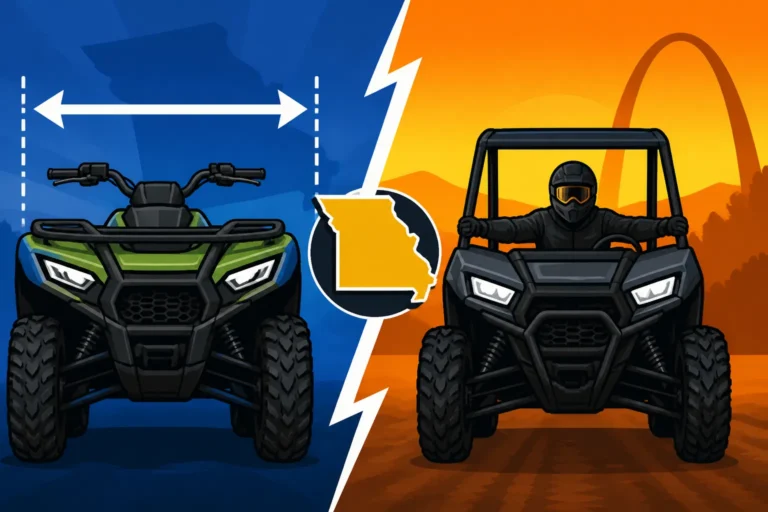
Missouri defines an ATV as any motorized vehicle manufactured and used exclusively for off-highway use, weighing less than 1,500 pounds dry weight, and having a width of 50 inches or less. It must also have a non-straddle seat and handlebars for steering. If your machines are wider than 50 inches or seat passengers side-by-side with a steering wheel, they're likely considered Utility Vehicles (UTVs) or Recreational Off-Highway Vehicles (ROVs), which fall under entirely different, often less stringent, titling requirements. For instance, [Why Missouri Does Not Register Side-by-Sides] delves into why those larger machines don't get the same registration.
This distinction is especially vital for a rental fleet. Imagine investing in a dozen machines, only to find out half of them don't qualify for the ATV title you expected! This could lead to delays, confusion, and potential issues if a law enforcement officer checks your machines. Always double-check the manufacturer's specifications against Missouri's definition before purchase. A common mistake is buying what a dealer markets as an "ATV" only to find it's actually an ROV by Missouri's legal standards.
The Titling Process for Each Machine in Your Rental Fleet
When you're dealing with a fleet of machines, the titling process isn't a one-and-done deal. Each individual ATV in your rental operation needs its own title. Think of it like a car dealership – every single vehicle on the lot has to be properly titled to be legally sold, and your rental machines are no different. This means a lot of paperwork, but it's essential for legal operation and tracking your assets. [Titling an ATV in Missouri] covers the basics, but for a fleet, you're just multiplying that process.
Required Documents for Titling
For every ATV you add to your fleet, you'll need specific documentation to present at your local Missouri license office. This paperwork proves ownership and helps the state track the machine. Missing even one piece of information can send you home to start over, which is a massive time sink when you have multiple machines to title.
Here’s a general rundown of what you’ll need for each ATV:
-
For New ATVs (Purchased from a Dealer):
- Manufacturer's Statement of Origin (MSO) or Certificate of Origin (MCO): This is essentially the birth certificate for your new ATV. The dealer should provide this. It's crucial because it verifies the first legal owner. [A Certificate of Origin for a New Missouri Machine] explains this document's importance.
- Bill of Sale: While not always strictly required for titling a new machine with an MSO, it's good practice to have one, especially for your business records, detailing the purchase price and seller information. You might use a template from a service like LawDepot to ensure all necessary fields are covered for your business accounting.
- Odometer Disclosure Statement: Even though ATVs don't have odometers in the same way cars do, some jurisdictions might still request this form. It's always best to ask your dealer if it's needed for ATV sales.
- Application for Missouri Title and License (Form 108): This is the main form you'll fill out for each ATV. It asks for detailed information about the machine and your business.
-
For Used ATVs (Purchased Privately or from Auction):
- Properly Assigned Title: If you're buying a used ATV, the seller must sign over their existing Missouri title (or an out-of-state title, if applicable). Ensure their signature is correct and matches the name on the title, and that all lien releases (if any) are properly noted. [Buying a Used ATV Privately in Missouri] offers more tips on this.
- Bill of Sale: Absolutely essential for used ATVs. This document proves the transfer of ownership, especially if there are discrepancies or issues with the title. It should include the VIN, purchase price, date of sale, and signatures of both buyer and seller. Again, a comprehensive bill of sale, possibly generated through LawDepot, can protect your business.
- Odometer Disclosure Statement: Same as above, less common for ATVs but worth checking.
- Application for Missouri Title and License (Form 108): Again, this form is required for every machine.
Table: Titling Checklist for Your Rental Fleet
| Document Type | New ATV (Dealer Purchase) | Used ATV (Private/Auction Purchase) | Notes |
|---|---|---|---|
| Manufacturer's Certificate/Stmt. | Required | N/A (Previous title used) | Essential for brand-new machines |
| Properly Assigned Title | N/A (MSO/MCO used) | Required | Ensure seller's signature & lien release are correct |
| Bill of Sale | Recommended (Business Records) | Essential | Crucial for proof of purchase & sales tax calculation |
| Odometer Disclosure Statement | Check with dealer/license office | Check with license office | Less common for ATVs, but confirm |
| Application for MO Title (Form 108) | Required for each ATV | Required for each ATV | Main titling form, available at license office |
| Proof of Sales Tax Payment | N/A (Paid at titling) | N/A (Paid at titling) | You'll pay this at the license office for each machine |
| Lien Release (if applicable) | N/A (New machine) | Required if lien noted on title | Obtain from lender if the previous owner had a loan |
| Valid Photo ID | Required (for person doing paperwork) | Required (for person doing paperwork) | Your business representative will need to provide this for verification |
Sales Tax Implications for a Business
This is where many businesses can face a significant cost. When you title your ATVs, you will owe Missouri sales tax on the purchase price of each machine. Unlike some private sales that might fall under a certain threshold for tax exemption, a rental business purchasing multiple machines will almost certainly be subject to sales tax on every single ATV.
Missouri's state sales tax rate applies, plus any local sales taxes for the city and county where your business is located, or where the ATV is primarily domiciled. This means the overall percentage can vary quite a bit. You’ll pay this tax directly at the license office when you title each ATV. For a fleet of five, ten, or even twenty machines, this adds up quickly, so it's vital to budget for this significant expense upfront. The [Missouri ATV Sales Tax at Titling] is a deep dive into how this calculation works.
Fees and Deadlines for Each ATV
For each ATV in your fleet, you'll pay a title fee. Missouri's standard title fee is modest, but remember, it's per machine. So, if you have ten ATVs, you'll pay that fee ten times. [Missouri's $8.50 ATV Title Fee] is a fixed state charge.
There's also a crucial deadline: you must title each ATV within 30 days of purchase. Missing this deadline incurs a late titling penalty, which is also applied per machine. This penalty can add up quickly across a fleet. It starts at a base amount and increases for every 30 days you delay, though it does cap out eventually. Staying on top of these deadlines for every single ATV is paramount for a rental business to avoid unnecessary costs. [Missouri's Thirty-Day Titling Deadline] and [Missouri's Late Titling Penalty] are important reads here.
Managing Your Fleet's Titles and Decals
Once all your ATVs are titled, you'll receive a title document for each one. This physical piece of paper is incredibly important and serves as legal proof of ownership. For a rental business, managing these documents efficiently is key to avoiding headaches down the road.
Secure Storage of Your Titles
You’ll have a stack of titles, one for each ATV. Treat these like cash. Losing a title means extra paperwork, fees for a duplicate, and potential delays if you need to sell or update information for a particular machine. It's wise to:
- Store them securely: A fireproof safe or a secure, locked filing cabinet is ideal.
- Keep them organized: Label each title with the ATV's Vehicle Identification Number (VIN) and your internal fleet number. This makes it easy to quickly locate the correct title if needed.
- Create digital backups: Scan copies of all your titles and save them to a secure cloud service or external hard drive. While not legal replacements for the physical title, they can be invaluable for reference or in case of loss. [Where to Keep an ATV Title Safe at Home] offers excellent advice applicable to a fleet.
Understanding the Decal System for Your Fleet
Missouri issues a decal, not a traditional license plate, for ATVs. This decal is valid for three years. Each titled ATV in your fleet will receive one of these decals. It must be affixed to the right front fork of the ATV. [Why Missouri Issues a Decal and Not a Plate] clarifies this unique aspect of Missouri's system.
- Initial Decal Cost: When you title each ATV for the first time, you'll pay for the title fee and also the initial three-year decal fee. [Missouri's $10.25 Three-Year Registration] outlines this cost.
- Renewal: Every three years, you'll need to renew the decal for each ATV in your fleet. The renewal process is typically simpler than the initial titling, but again, it's a per-machine task. You'll receive renewal notices, but for a fleet, it's best to have an internal tracking system to ensure no decal lapses. [How Often a Missouri Decal Comes Due] is a must-read.
- Placement: The decal placement is specific: "on the right front fork." This is important for compliance. A decal placed elsewhere could lead to issues during a compliance check. [Where the Missouri Decal Mounts] goes into detail.
Having a lapsed decal on a rental ATV could result in fines for your business and inconvenience for your customers. Imagine a customer being stopped and cited because your business forgot to renew the decal on their rental machine! This is bad for business and customer relations.
Special Considerations for a Rental Fleet Business
Running an ATV rental fleet comes with unique challenges beyond just getting the initial titles. You're dealing with customer interaction, liability, and the wear and tear on machines, all of which tie back to your administrative processes.
Maintaining Accurate Records
With a rental fleet, meticulous record-keeping is not just good business practice; it's a legal necessity. For each ATV, you should maintain a comprehensive file that includes:
- The original title document.
- Copies of all purchase receipts and bills of sale.
- Maintenance and repair logs.
- Copies of decal renewals and any related correspondence.
- Detailed rental agreements for each customer.
These records are invaluable for accounting, insurance claims, and demonstrating compliance during an audit. Using a service like LawDepot for standardized rental agreements can help ensure all necessary legal disclaimers and operational guidelines are consistently provided to every customer, linking directly back to the properly titled machine they are renting.
Handling Damage, Loss, or Sale of Fleet Machines
Rental machines naturally see more use and thus more potential for damage or even total loss. If an ATV in your fleet is totaled in an accident or stolen, having its title readily available is crucial for insurance claims and proving ownership. If you need to sell an older machine from your fleet, you'll need that clean title to transfer ownership to the new buyer.
- Damaged Titles: If a title gets damaged, you'll need to apply for a duplicate, which involves a fee and an affidavit stating the original was lost or mutilated.
- Selling a Machine: When you sell an ATV from your fleet, you'll need to properly sign over the title to the new owner, just as you would when buying a used machine. Ensure all sales tax implications are clear for both you (as the seller) and the buyer. [Selling an ATV in Missouri] provides essential steps.
Insurance and Liability
While Missouri doesn't universally mandate insurance for ATVs for private use, a rental business operates under different liability rules. It is absolutely critical for your business to carry comprehensive insurance for your rental fleet. This protects your investment in the machines themselves and, more importantly, provides liability coverage in case of accidents involving your customers. Many cities or counties that allow ATVs or UTVs on certain roads do require proof of insurance for any special permits.
While titling and registration prove legal ownership and the right to operate, insurance protects your business from the inherent risks of renting out powerful off-road vehicles. Your insurance provider will likely ask for VINs and proof of proper titling for all machines you wish to cover.
Staying Up-to-Date on Missouri ATV Laws
Missouri's ATV laws can change, sometimes subtly, sometimes significantly. For a rental business, staying informed isn't just a good idea – it’s a necessary part of risk management. Subscribe to updates from the Missouri Department of Revenue or relevant industry associations. Changes to what constitutes an ATV, where they can be ridden, or even new safety requirements could directly impact your operations. Regularly reviewing information, perhaps annually, will help ensure your fleet remains compliant.
Disclaimer
This article is for general informational purposes only and does not constitute professional advice. Laws, prices and regulations vary by location and change over time. Consult a qualified professional for guidance on your specific situation.