Where the Fee Money Is Spent
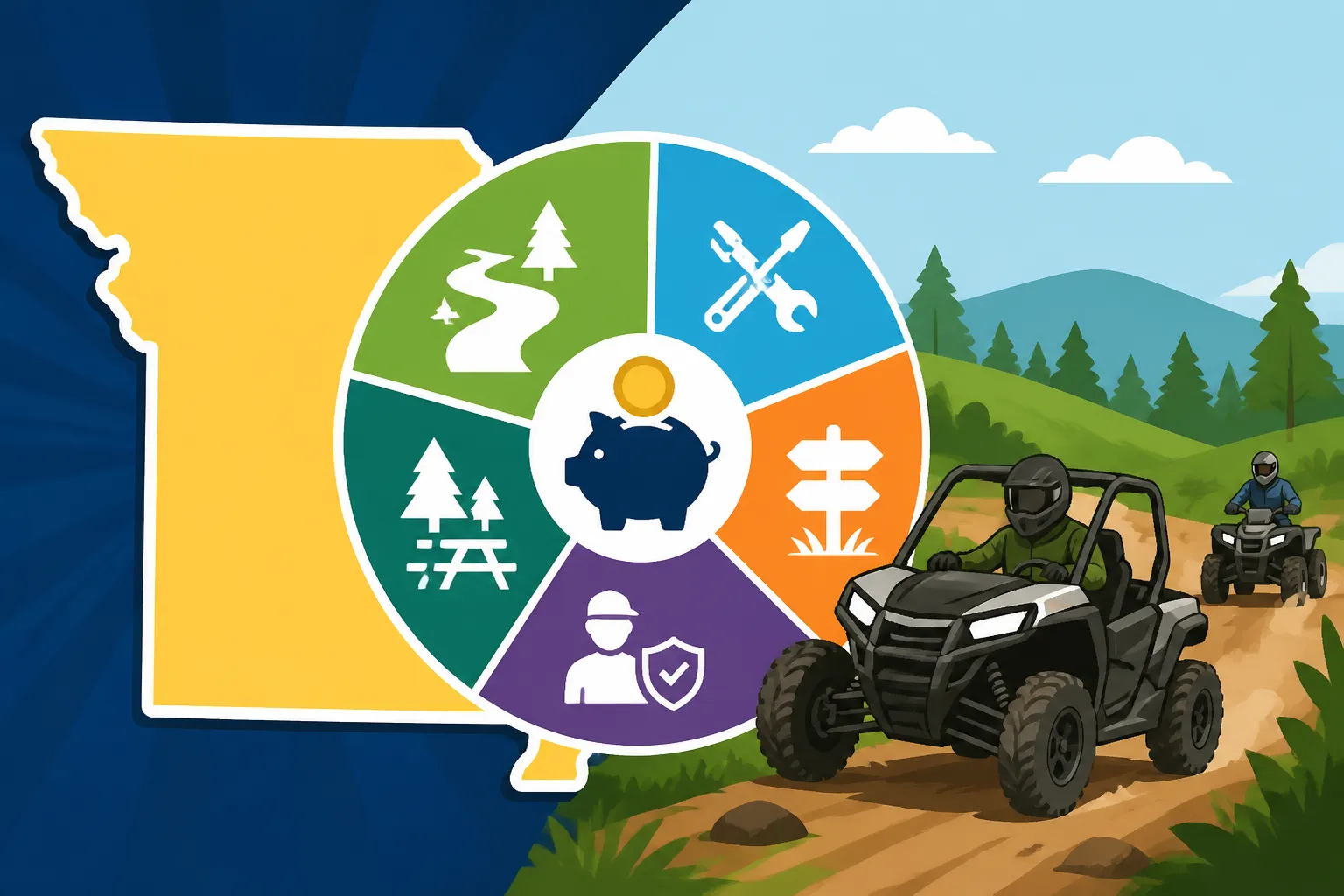
It's incredibly frustrating to fork over money for titles, decals, and permits for your ATV or UTV in Missouri and then wonder where all that hard-earned cash actually goes. You might be picturing it just disappearing into some black hole, but thankfully, much of it is actually channeled back into the very things that make our riding experiences better. This guide will break down the various fees you pay for your off-road machine in the Show-Me State and show you exactly how that money is put to work, ensuring that our trails and riding opportunities are sustained for years to come.
Understanding the Different Types of Fees You Pay in Missouri
Before we dive into where the money goes, it's crucial to understand that not all fees are created equal, and they don't all go to the same place. In Missouri, you'll encounter a few distinct categories of payments related to your ATV or UTV, each with its own purpose and destination. This can be a bit confusing at first glance because the Department of Revenue handles some, while state parks or federal agencies manage others. It's like having different piggy banks for different goals.
For instance, when you first bring your machine home, you're dealing with titling and registration. These are generally state-level transactions with specific fees attached. Later, if you want to hit a designated riding area, you'll purchase an ORV permit, which is a separate type of fee entirely. Then, there are local city or county permits if you plan to ride on certain public roads. Each of these financial contributions plays a part in the overall picture, but they serve different masters and fund different aspects of our off-road world. It's important not to lump them all together, as their destinations are quite varied.
State-Level Titling and Registration Fees
When you first title your ATV in Missouri, you'll pay an $8.50 fee to the Missouri Department of Revenue. This is essentially a one-time administrative charge to officially record your ownership of the machine. It's a fundamental step in proving your claim to the ATV, much like with a car. Then, when you register it, you'll pay a [Missouri's $10.25 Three-Year Registration] fee, which gets you that all-important decal for your right front fork. There's also a processing fee that goes to the local license office, which helps cover their operational costs for handling these transactions.
So, where does this money actually land? The titling fee itself usually goes into the state's general revenue fund. Think of this as the state's big checking account that covers a wide array of government services, from schools to roads to public safety. It’s not specifically earmarked for ATV trails, but it contributes to the overall functioning of the state government. The registration fee, however, is a bit different. While a portion might still contribute to general state funds, a significant amount of the [Missouri ATV Registration Cost] is designated to help fund the state's off-road vehicle programs, including trail development and maintenance. This is where you start to see a more direct connection to your passion. It’s this money that helps ensure there are places for you and your family to ride safely and legally.
Sales Tax on Your ATV Purchase
This is one of the biggest chunks of money you'll hand over, whether you buy from a dealer or a private seller (unless it’s under the [The $3,000 Sales Tax Line in Missouri] exemption for private sales). Missouri levies a state sales tax of 4.225 percent on vehicle purchases, and then your local city and county add their own rates on top of that. This tax is collected when you title the machine at the Department of Revenue.
So, where does this substantial sum go? Like most sales taxes, it primarily flows into the state's general revenue fund, and then the local portions go to their respective city and county general funds. While it's not directly dedicated to ATV trail systems, it's a vital part of state and local budgets, funding everything from libraries to law enforcement, and yes, even the infrastructure that gets you to the trails. It's important to remember that sales tax is a broad-based tax meant to support a wide range of public services, not just your specific hobby. It's often one of the largest fees you'll pay, so it significantly impacts overall state and local coffers.
Investing in Our Trails: Where Permit Fees Go
This is where your money often makes the most direct impact on the quality of your riding experience. When you pay for a permit to ride at a state park, national forest, or even a local city or county-run trail, that money is typically earmarked specifically for the maintenance, development, and operation of those riding areas. It's a user fee system designed to ensure that those who use the trails contribute to their upkeep.
It's a common misconception that all fees just vanish into a bureaucratic void. In reality, these permit fees are crucial for funding the actual dirt under your tires. Without them, it would be much harder for these public lands to offer and maintain the high-quality riding experiences we’ve come to expect. This direct link between your payment and the service provided is a powerful model for sustainable recreation, and it means your dollars are often working exactly where you want them to.
Missouri State Park ORV Permits
If you've ever planned a trip to a Missouri State Park like St. Joe State Park or Finger Lakes State Park, you know you need an ORV permit. You can get a day permit, or if you're a frequent visitor, you might consider an annual permit for places like Chadwick. [Missouri State Park ORV Permit Prices] vary based on the type of machine (ATV vs. UTV) and the duration of the permit. For example, a side-by-side often costs a little more than an ATV, reflecting the larger footprint and potential wear on trails.
The money collected from these permits is a lifesaver for our state parks. It directly funds the operation and maintenance of the ORV riding areas. This includes everything from grading and clearing trails, repairing damage from erosion or heavy use, maintaining facilities like restrooms and staging areas, and even paying the staff who manage these areas and ensure safety. This isn't money that goes into the state's general fund; it's explicitly dedicated to the parks' ORV programs. It's the primary way these parks can afford to keep those thrilling sand flats, rocky climbs, and muddy creek beds open and safe for us to enjoy. So, every time you buy a permit, you're directly contributing to the next generation of trail work and keeping the gates open.
Mark Twain National Forest Permits
Riding in the Mark Twain National Forest at areas like Sutton Bluff or Chadwick Motorcycle and ATV Use Area is a fantastic experience, but it also requires a permit. These aren't state park permits; they are federal permits. You typically purchase them through the National Forest Service system, often via Recreation.gov or at local vendor locations near the trailheads. [What the Mark Twain Forest ATV Permit Covers] is access to designated trails within the forest.
The fees collected here go into the federal treasury but are then specifically appropriated back to the National Forest Service for the management of their recreation areas. This means your money contributes to maintaining the vast network of trails within the Mark Twain National Forest, funding trail crews, signage, infrastructure improvements, and environmental protection efforts. It helps cover the costs of managing such a large and diverse natural resource, balancing recreation with conservation. For riders who love the challenge and beauty of forest riding, these permits are essential to keeping those experiences available and well-managed, ensuring that future generations can also explore the Ozark wilderness.
Local City and County Road Permits
Some forward-thinking Missouri cities and counties have enacted ordinances to allow UTVs (and sometimes ATVs, though less commonly) on certain public roads. To do this legally, you'll often need to obtain a special permit directly from the local municipality, such as a police department or sheriff's office. This could be in places like Lake Ozark or Harrisonville, where local permits facilitate controlled road access. [Missouri Special Permit Cost for ATVs] or UTVs will vary by jurisdiction.
The money collected from these local permits stays within that specific city or county. It's typically used to cover the administrative costs of issuing the permits, and sometimes, a portion may be directed toward local law enforcement for patrolling or ensuring compliance with the ordinance. It helps the local government manage the increased traffic of off-road vehicles on their streets and ensure everyone is operating safely and according to the rules. So, if you're riding a side-by-side through a town that has opened its streets, your permit fee is directly supporting that local program and the community's efforts to provide more riding opportunities.
General Impact and Long-Term Sustainability
Beyond the specific destinations of individual fees, it's important to understand the broader impact of your contributions. Every dollar spent on titling, registering, and permitting your ATV or UTV in Missouri contributes to a larger system that supports and regulates off-road recreation. This system is vital for ensuring that we continue to have legal and safe places to ride. Without these financial contributions, the political will and the actual resources needed to maintain and expand our riding opportunities would simply not exist.
Think about the bigger picture: the more participation there is in the regulated system, the stronger the argument for expanding and improving our trails. These fees help pay for environmental impact studies, secure grants for new trail construction, and fund educational programs for riders. [Where Missouri ATV Fees Go] often involves a complex interplay between various state agencies, local governments, and federal entities, all working (hopefully) towards enhancing the off-road experience. Keeping good records of these payments can be helpful for your own financial planning or if any questions arise later on. Tools like a properly organized digital file, or even forms from reputable sources like LawDepot for other related documents, can make managing your machine's paperwork easier.
Sustaining and Expanding Trail Systems
One of the most direct benefits of your fees, particularly the permit fees, is the direct contribution to trail sustainability and expansion. [Trail Money From Decal Sales] and park permits are often pooled to fund significant projects. This could mean acquiring new land for trails, building new bridges over creeks, installing improved signage, or implementing erosion control measures that protect the environment while preserving the riding surface.
Imagine a popular trail system that gets heavy use. Without dedicated funding from permits, that trail would quickly degrade, becoming unsafe or even unusable. Your fees allow park rangers and forest managers to bring in equipment, hire crews, and purchase materials to keep those trails in top condition. This ensures that the trails remain challenging, fun, and environmentally sound for current and future generations of riders. It's a continuous cycle: you pay, the trails are maintained, you enjoy, and the cycle continues, preserving the very essence of off-road adventure in Missouri.
Supporting Administrative and Enforcement Efforts
While we often focus on the trails themselves, a significant portion of fee money also supports the administrative and enforcement framework that makes legal riding possible. This includes the staff at the Department of Revenue who process your titles and registrations, the park rangers who patrol the trails and ensure compliance, and even the local law enforcement officers who manage road-legal UTV programs.
The bureaucracy, while sometimes frustrating, is necessary to keep things organized and safe. Your fees help pay salaries, cover office expenses, fund training for personnel, and purchase equipment used for enforcement, such as patrol vehicles or trail maintenance tools. If you ever have a question about your title or need a replacement decal, the staff funded by these fees are there to help. Keeping copies of all your official documents, perhaps organized in a digital folder alongside other important papers generated via services like LawDepot, can simplify any administrative interactions you might have. It's about ensuring there's a functional system behind the scenes to support our passion.
| Fee Type | Primary Destination | Direct Impact on Riding | Example |
|---|---|---|---|
| ATV Title Fee ($8.50) | Missouri General Revenue Fund | Indirect | Funds general state services (roads, schools, public safety) |
| 3-Year ATV Decal ($10.25) | Missouri General Revenue (part), State ORV Program | Direct | Contributes to state ATV trail development and maintenance |
| Processing Fee ($) | Local License Office Operations | Indirect | Covers costs of local offices handling transactions |
| Sales Tax (State & Local) | Missouri General Revenue, Local General Funds | Indirect | Funds broad state/local services (infrastructure, emergency services) |
| State Park ORV Permit ($) | Missouri State Parks ORV Programs | Direct | Trail maintenance, facility upgrades, staff at St. Joe State Park |
| National Forest Permit ($) | National Forest Recreation Programs | Direct | Trail maintenance, signage, conservation efforts in Mark Twain Forest |
| Local Road Permit ($) | Local City/County General Fund or Specific Program | Direct/Indirect | Covers permit administration, local enforcement in Lake Ozark |
Conclusion: Your Investment in Missouri's Off-Road Future
It's easy to feel like you're just writing checks without really knowing where the money goes, especially when dealing with government fees. However, when it comes to Missouri ATV and UTV fees, a substantial portion of what you pay is directly invested back into the very activities you love. From maintaining the thrilling trails at St. Joe State Park to supporting the vast networks of the Mark Twain National Forest, your contributions are crucial.
By understanding how these different fees are allocated, you can appreciate that your payments aren't just arbitrary charges. They are a vital part of a system designed to preserve and enhance off-road opportunities across the state. So, the next time you're paying for your decal or a park permit, know that you're playing an active role in ensuring Missouri remains a fantastic place for ATV and UTV enthusiasts for years to come.
Disclaimer
This article is for general informational purposes only and does not constitute professional advice. Laws, prices and regulations vary by location and change over time. Consult a qualified professional for guidance on your specific situation.