What the Law Calls a Utility Vehicle
It's incredibly frustrating when you're trying to figure out the rules for your off-road machine in Missouri, only to find yourself swimming in a sea of confusing terms like ATV, UTV, ROV, and God knows what else. You just want to know if you can take your side-by-side down the county road or what paperwork you actually need! This guide is here to cut through the jargon and explain exactly what Missouri law means when it refers to a "utility vehicle," helping you understand how your machine is classified and what that means for you as an owner.
Decoding Missouri's Utility Vehicle Definition
Let's get down to brass tacks: what exactly is a utility vehicle (UTV) in the eyes of Missouri law? It's not always what you might assume based on common usage or manufacturer marketing. Missouri has specific criteria that define these machines, and understanding them is absolutely crucial for knowing your rights and responsibilities. It affects everything from titling to whether you can even think about taking it on a road.
The Key Characteristics: What Makes a UTV a UTV in Missouri Law?
Missouri's Revised Statutes lay out pretty clear-cut characteristics for what constitutes a "utility vehicle." Unlike an all-terrain vehicle (ATV) that focuses on a straddle seat, UTVs are defined by a combination of factors. The legal definition typically describes a utility vehicle as a motorized vehicle that's not an ATV, is fifty inches or less in width, has an unladen dry weight of 1,500 pounds or less, and is designed to travel on four or more wheels. The key here is often the non-straddle seating. Think about it: most people picture a UTV as having side-by-side seating, like a small car, not a saddle to straddle like a motorcycle. That's a major giveaway in the legal sense. If your machine has a steering wheel and bucket seats or a bench seat, you're almost certainly looking at something Missouri would classify as a utility vehicle, or perhaps more specifically, a Recreational Off-Highway Vehicle (ROV), which we’ll get into. The width and weight limits are also important, though many of the larger, more powerful side-by-sides often exceed the strict 50-inch width or 1,500-pound dry weight. This is where the lines get blurry and why many common "UTVs" don't fit perfectly into just the utility vehicle definition. [What the Law Calls a Utility Vehicle] can be a narrow definition indeed.
Beyond the Common Name: How a UTV Differs from an ATV
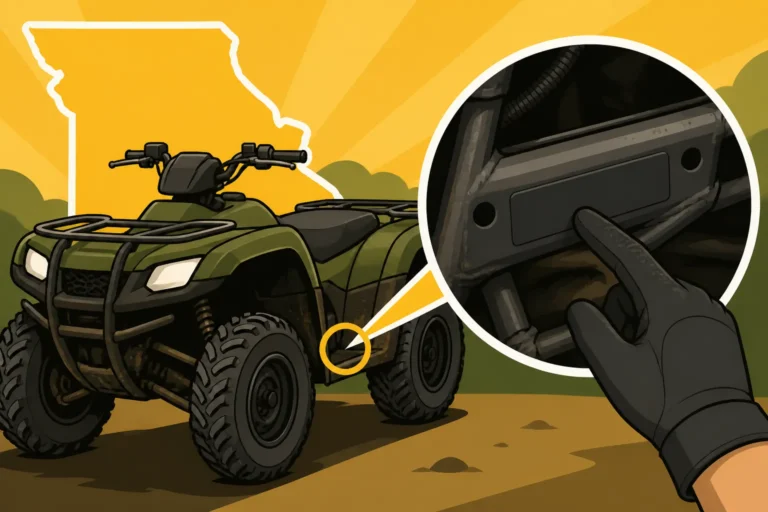
This is where many riders get tripped up. You might call your quad an ATV and your side-by-side a UTV, and while that's generally how we talk about them in conversation, the law draws very specific lines. For an ATV, Missouri law typically defines it as a motorized vehicle that has a straddle seat, three or more wheels, and handlebars for steering. So, if you're sitting on it like a horse and steering with handlebars, it's an ATV. No question. A utility vehicle, on the other hand, by its very definition, is not an ATV. The moment you have a steering wheel, foot pedals, and a bench or bucket seat where you sit in the vehicle, not on it, you've moved out of the ATV category. This distinction isn't just academic; it dictates whether you need a decal, whether you can even apply for a title in certain situations, and how you might operate it legally. For instance, [What Missouri Counts as an ATV] is a much more straightforward definition than the multi-layered one for UTVs or ROVs.
Why the Distinction Matters: Legal Implications for Titling, Registration, and Road Use
The difference between an ATV and what the law calls a "utility vehicle" (or more broadly, a "side-by-side" or "ROV") is absolutely critical for practical reasons. For ATVs, Missouri requires a title and a decal, which acts as your registration. [Titling an ATV in Missouri] and getting that decal is a pretty standard process. But for utility vehicles, it's a different story. If your machine fits the strict definition of a UTV (50 inches wide or less, under 1500 pounds, non-straddle seat), it still falls outside the ATV registration system. This means [Why Missouri Does Not Register Side-by-Sides] is a common question, and it's because these machines just don't fit the ATV mold. They don't get decals. For many side-by-sides that are wider or heavier, they are often classified as Recreational Off-Highway Vehicles (ROVs). While ROVs need a title, they too don't get a decal for general off-road use, making them "unregistered" in the way an ATV is. This lack of general registration means their road use is highly restricted and typically requires special local permits or adherence to very specific statutes. Understanding these classifications is your first step to staying legal and avoiding fines.
The "Recreational Off-Highway Vehicle" Overlap and Differences
This is where things get even more tangled for many people, because the term "UTV" is often used interchangeably with "side-by-side," and both of those often fall under Missouri's legal definition of a Recreational Off-Highway Vehicle (ROV). It’s like a nested doll situation, where a UTV might be an ROV, and many common side-by-sides are ROVs, but not all ROVs fit the narrow "utility vehicle" definition. Confused yet? You’re not alone.
ROVs and Their Unique Place: How ROVs are Defined and Where They Intersect or Diverge from UTVs
Missouri Revised Statutes define a Recreational Off-Highway Vehicle (ROV) as any motorized vehicle that is 64 inches or less in width, has an unladen dry weight of 2,000 pounds or less, travels on four or more wheels, is intended for use off public roads, and has a non-straddle seat, a steering wheel, and is not an ATV or golf cart. You can see the immediate overlap with the general description of a UTV: non-straddle seat, steering wheel, four wheels. However, the ROV definition is generally broader in terms of size and weight. A machine could be 60 inches wide and 1,800 pounds, fitting the ROV definition but exceeding the strict 50-inch/1,500-pound limits sometimes associated with the narrowest "utility vehicle" definition. Most modern side-by-sides, which we commonly call UTVs, actually fall squarely into the ROV category. So, while your machine might be a "utility vehicle" in common parlance, legally it's often more accurately an ROV, especially if it's wider or heavier than the narrowest definition of a UTV. The distinction between these specific terms is crucial for understanding how the rules apply to your machine, particularly regarding road access. For a deeper dive, check out [Telling a Utility Vehicle From an ROV in Missouri].
Side-by-Sides and the Legal Labels: Explaining How Common Side-by-Sides Fit into These Categories
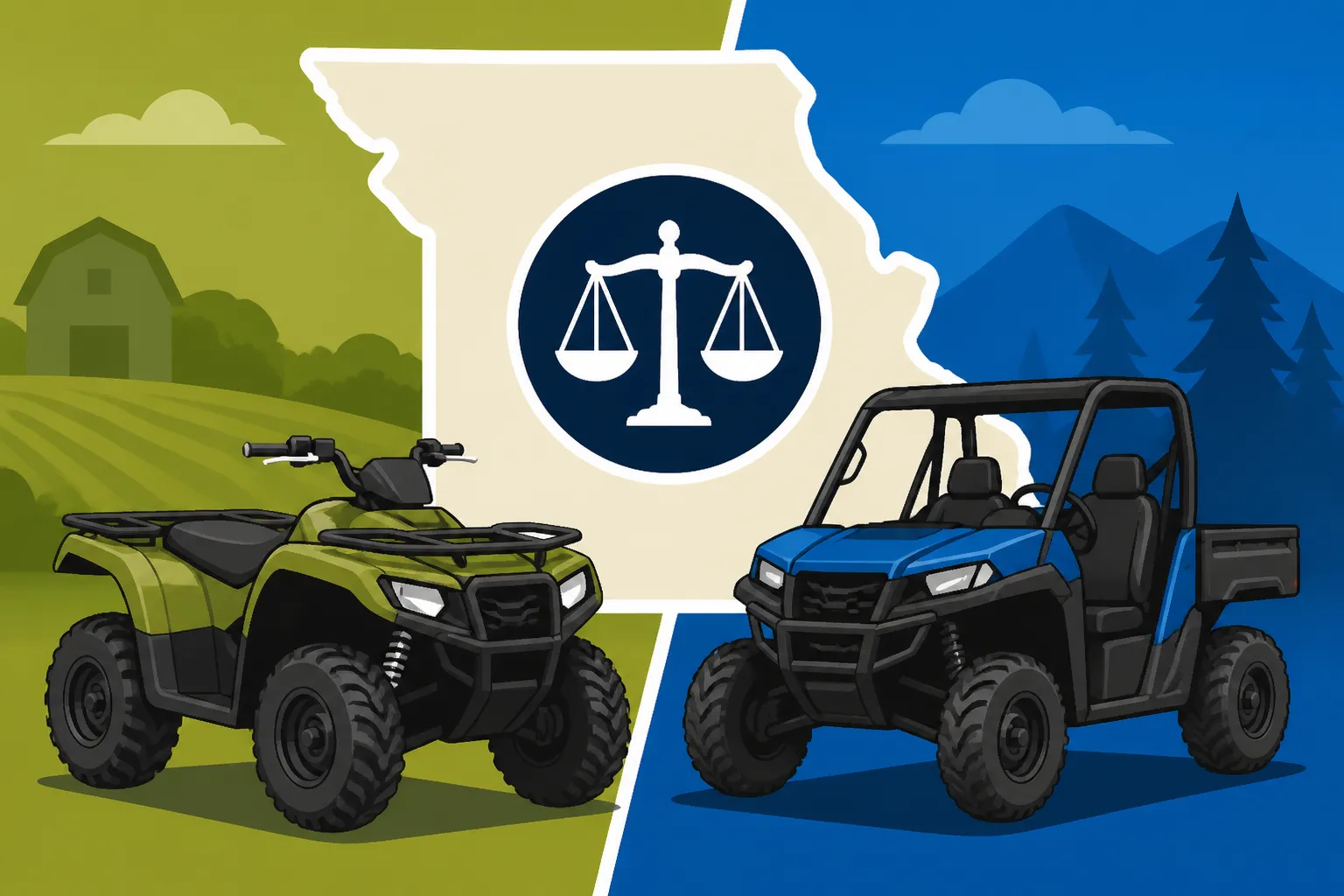
Okay, so let's talk about the machine many of us own or want to own: the side-by-side. These popular machines, like a Polaris RZR, a Can-Am Defender, or a Kawasaki Mule, are almost universally referred to as "UTVs" in the enthusiast community. However, legally in Missouri, they are most often categorized as Recreational Off-Highway Vehicles (ROVs). While some smaller, older, or purpose-built machines might technically fit the stricter "utility vehicle" definition of under 50 inches wide and 1,500 pounds, the vast majority of side-by-sides sold today, particularly the sportier models, exceed those narrower limits but still fall within the broader ROV definition of 64 inches wide and 2,000 pounds. This is why you won't find a standard state-issued "registration" or decal for your side-by-side like you would for an ATV. The legal framework around ROVs acknowledges their unique characteristics and intended use, differentiating them from ATVs and standard road vehicles. It's a key piece of information that [Do You Need to Register a UTV in Missouri?] directly addresses, often with a "no, not in the same way as an ATV" answer.
Missouri's Specific Exclusions: What Doesn't Count as a UTV or ROV
Just as important as knowing what is a UTV or ROV is knowing what isn't. Missouri law is pretty clear about this. Vehicles like golf carts and low-speed vehicles (LSVs) have their own distinct definitions and regulations, separate from UTVs and ROVs. For example, a golf cart typically has a top speed of no more than 20-25 mph and is primarily designed for golf courses, while an LSV is generally defined by its ability to go up to 25 mph and includes specific safety features like headlights, taillights, turn signals, and seatbelts, making it street-legal on certain roads. Your standard car or truck obviously doesn't count, nor do farm tractors or industrial equipment, which have their own classifications. Understanding these exclusions helps prevent misclassification, which could lead to you operating your vehicle illegally. It’s a good idea to ensure you understand these distinctions, especially if you're looking to acquire a machine and might be using a general legal document site like LawDepot to help draft a bill of sale or other documentation. Just make sure the terminology you use in any agreement aligns with Missouri's specific definitions. [Utility Vehicles Outside the Missouri System] can provide more detail on these other types of vehicles.
Here's a quick comparison of the legal definitions:
| Feature | All-Terrain Vehicle (ATV) | Utility Vehicle (Strict Definition) | Recreational Off-Highway Vehicle (ROV) |
|---|---|---|---|
| Seating | Straddle seat | Non-straddle seat (bench/bucket) | Non-straddle seat (bench/bucket) |
| Steering | Handlebars | Steering wheel | Steering wheel |
| Wheels | 3 or more | 4 or more | 4 or more |
| Width (max) | Varies (often less than 50") | 50 inches | 64 inches |
| Dry Weight (max) | Varies (often less than 1500 lbs) | 1,500 pounds | 2,000 pounds |
| Purpose | Off-road recreation/work | Off-road utility/work | Off-road recreation/work |
| Registration/Decal | Yes (State-issued decal) | No (No state-issued decal) | No (No state-issued decal) |
| Title | Yes | Yes | Yes |
| Common Names | Quad, 4-wheeler | UTV, Side-by-side (small) | UTV, Side-by-side, SxS |
Practical Implications for Owners
So, now that we've parsed through the confusing legal definitions, let's talk about what this actually means for you, the owner of a machine that Missouri calls a "utility vehicle" or, more likely, a "Recreational Off-Highway Vehicle" (ROV). Knowing these distinctions is more than just trivia; it directly impacts how you get your paperwork in order and where you can legally ride. [Why Missouri Splits ATVs, UTVs and ROVs] is really about applying different rules to different machines based on their design and typical use.
Titling and Registration Differences: What a UTV Owner Needs to Know About Official Paperwork
This is a big one, and it's a common source of confusion. If your machine is an ROV (which most modern side-by-sides are), Missouri does require you to title it. Just like a car or an ATV, you'll need to go through the process of getting a title from the Missouri Department of Revenue. This is typically done at your local license office, and you'll need proper documentation like a Manufacturer's Statement of Origin (MSO) for a new machine, or a properly assigned title for a used one. [Missouri ATV Title Paperwork] gives you an idea of the kind of documentation they look for, though for an ROV, the forms might be slightly different. You’ll pay a fee, and also sales tax based on the purchase price. However, here's the crucial difference: unlike ATVs, ROVs (and the narrow definition of UTVs) do not get a state-issued registration decal for general off-road use. This means you won't be paying the regular three-year registration fee that ATV owners do. This can be a relief for some, but it's often confusing because it leaves owners wondering how to show their machine is "legal" if it doesn't have a sticker. The title is your proof of ownership, but it doesn't grant you carte blanche to ride everywhere.
Road Use Restrictions and Permits: When and Where a UTV (Often as an ROV) Can Legally Hit the Pavement
Since ROVs don't have standard state registration, their legal use on public roads is highly restricted in Missouri. You can't just hop on your side-by-side and cruise down the highway or even most county roads without specific authorization. However, Missouri law does provide some limited exceptions and pathways for road use:
- Agricultural Use: If you're using your ROV for agricultural purposes between sunrise and sunset, you might be able to operate it on a highway for short distances. This is strictly for farm work and not for recreational rides. Think hauling feed or checking fences.
- Industrial Use: Similarly, industrial use on the premises, such as at a quarry or construction site, can be permitted.
- Disabled Riders: Special provisions exist for disabled persons to operate ROVs on public roads for short distances.
- Local Ordinances and Permits: This is the most common way side-by-side owners get street access. Missouri law allows cities and counties to pass ordinances that permit ROV (and sometimes ATV) operation on their roads. These ordinances usually come with specific requirements:
- Special Permit: You’ll likely need to obtain a special permit from the local municipality or county sheriff's department. There's usually a fee involved, and this permit will need to be displayed on your machine.
- Insurance: Most local ordinances require proof of liability insurance.
- Safety Equipment: Your ROV will need to meet certain safety standards, which often include headlights, taillights, brake lights, turn signals, a horn, a windshield, seatbelts, and a safety flag that flies 7 feet above the ground.
- Driver's License: The operator typically needs a valid driver's license.
- The 3-Mile Rule: Some ordinances implement the "3-mile rule," allowing an ROV to be operated on city streets within a three-mile radius of the owner's residence. This is not a statewide rule but something individual communities might adopt. [Missouri's 3-Mile Rule for Side-by-Sides] is a common area of confusion, remember it's not universal.
It's absolutely essential to check with your local city hall or county sheriff's office for their specific rules and to understand [Missouri's Special Permit for Road Use]. Never assume you can ride on the road without confirming the local laws; doing so could result in fines and even impoundment of your machine.
Insurance and Other Considerations: What Kind of Coverage You Might Need Based on Classification
Since ROVs and UTVs don't have a standard state registration, the state of Missouri doesn't generally require liability insurance for their off-road use, unlike street-legal vehicles. However, this absolutely does not mean you should skip it! From a practical and financial perspective, having insurance on your machine is a smart move. Accidents happen, and if you're involved in one where someone is injured or property is damaged, your personal assets could be at risk. Many insurance providers offer specific off-road vehicle policies that can cover:
- Liability: Protection if you're at fault for an accident that causes injury to others or damage to their property.
- Collision: Coverage for damage to your own ROV if you hit something or another vehicle.
- Comprehensive: Protection against theft, vandalism, fire, and other non-collision incidents.
Furthermore, as mentioned above, if you plan to operate your ROV on public roads under a local city or county permit, most of those ordinances will require proof of liability insurance as a condition of issuing the permit. So, even if the state doesn't mandate it for off-road, local rules for road use often will. It's always best to contact an insurance agent specializing in recreational vehicles to discuss your options and ensure you're adequately covered for your specific machine and intended usage. Understanding these implications, and perhaps looking into a service like LawDepot for documentation on shared ownership or liability waivers if you allow others to use your machine, can help protect you in various scenarios.
Disclaimer
This article is for general informational purposes only and does not constitute professional advice. Laws, prices and regulations vary by location and change over time. Consult a qualified professional for guidance on your specific situation.