Measuring a Machine Against 50 Inches
It's incredibly frustrating when you're trying to figure out what's what with your off-road machine in Missouri, and you keep running into these seemingly arbitrary numbers like "50 inches." You bought your ATV to ride, not to spend hours with a tape measure and a rulebook, right? This guide is here to untangle the mystery of the 50-inch rule in Missouri, helping you understand why it matters, how to measure your machine accurately, and what the implications are for your riding experience and legal compliance.
Understanding Missouri's 50-Inch Rule for ATVs
Missouri's approach to titling and registering off-road vehicles can feel like navigating a maze, and the 50-inch width limit is one of the key distinctions that can leave many riders scratching their heads. This isn't just some random number; it's a fundamental part of how the state legally defines an "All-Terrain Vehicle" (ATV), and that definition impacts everything from whether you get a decal to where you can legally ride.
Why 50 Inches Defines an ATV in Missouri
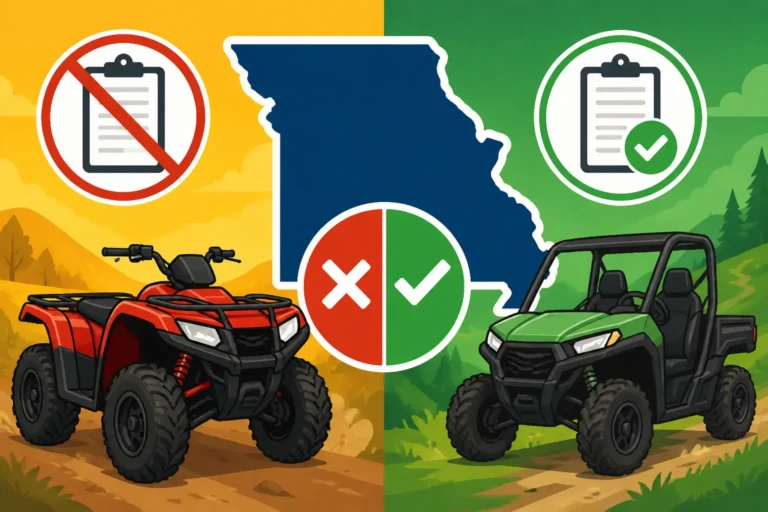
At its core, the 50-inch rule is part of Missouri's legal framework for distinguishing between different types of off-road machines. The state's statutes have specific criteria, and vehicle width is a primary one. If your machine is 50 inches wide or less, has a straddle seat, and is designed for off-highway use, it generally falls under the definition of an ATV in Missouri. This is a crucial detail because it determines whether your machine needs a state-issued decal. Side-by-sides and larger utility vehicles, which are almost always wider than 50 inches, don't meet this definition, and therefore aren't subject to the same titling and registration requirements for a decal. It’s not about judging your machine's power or capability, but purely its physical dimensions as specified by law. This distinction is often a source of confusion for new owners or those bringing machines from other states where definitions might differ.
When you go to get your machine legal for state-managed trails or even just to confirm its status for personal records, knowing this measurement is vital. It dictates whether you'll be applying for [Missouri's Three-Year ATV Decal] or learning why your particular machine doesn't qualify for one. Understanding [What Missouri Counts as an ATV] truly starts with this width criterion.
Decal Requirements and the Width Limit
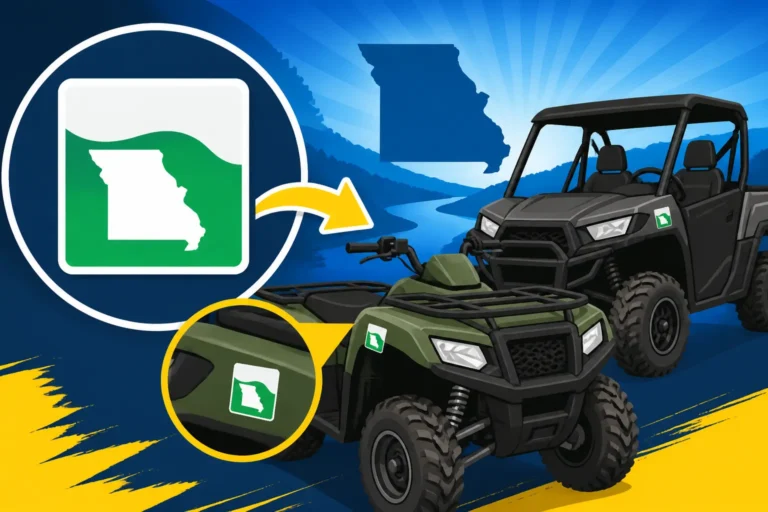
For those machines that fit the 50-inch or less width, the next step in Missouri is typically obtaining a three-year decal. This decal serves as your "registration" for an ATV in the state and is required for riding on state-managed lands and trails. If your ATV meets the width, straddle seat, and dry weight criteria, you'll need to go through the titling process and then apply for this decal.
However, if your machine is wider than 50 inches, it immediately falls outside the traditional ATV definition. This means you won't be getting a state-issued decal for it. This is particularly true for most side-by-sides, which are often 60 inches or more in width. Many people wonder [Why Missouri Does Not Register Side-by-Sides], and the 50-inch rule is a major part of that answer. While you still need to title these wider machines in Missouri, you won't be paying for a three-year decal because the state doesn't have a registration system for them in the same way it does for traditional ATVs. This can be a relief for some, but also a point of frustration for others who want a simple, clear registration for all their off-road toys.
The sticker price for a decal, such as the [Missouri's $10.25 Three-Year Registration] for an ATV, applies only if your machine fits within that narrow, legally defined box. If you're documenting your machine's specifications for sale or purchase, especially if its width is a borderline case, having clear records is key. Services like LawDepot can provide templates for bills of sale or other legal documents to ensure all parties understand the machine's stated characteristics and legal status in Missouri.
How to Precisely Measure Your ATV's Width
Getting an accurate measurement of your ATV's width might seem straightforward, but there are a few nuances that can make a big difference, especially when you're dealing with a specific legal limit like 50 inches. You want to make sure you're measuring correctly to avoid any issues down the line.
Tools and Preparation for Measuring
Before you grab your tape measure, ensure your ATV is on a flat, level surface. This helps prevent skewed measurements. You'll need a good quality, flexible tape measure – one that's long enough to span the entire width of your machine. A friend to help hold the tape steady can also be incredibly useful, especially if your machine is on the larger side.
It's a good idea to ensure your tires are properly inflated to their recommended pressure. Under-inflated tires can bulge out more, potentially giving you an inaccurate wider measurement. Similarly, over-inflated tires might give a slightly narrower reading. Consistency is key here. Clear any mud, debris, or accessories that might temporarily alter the width, though for a legal measurement, you usually need to account for permanent fixtures.
Step-by-Step Measuring Process
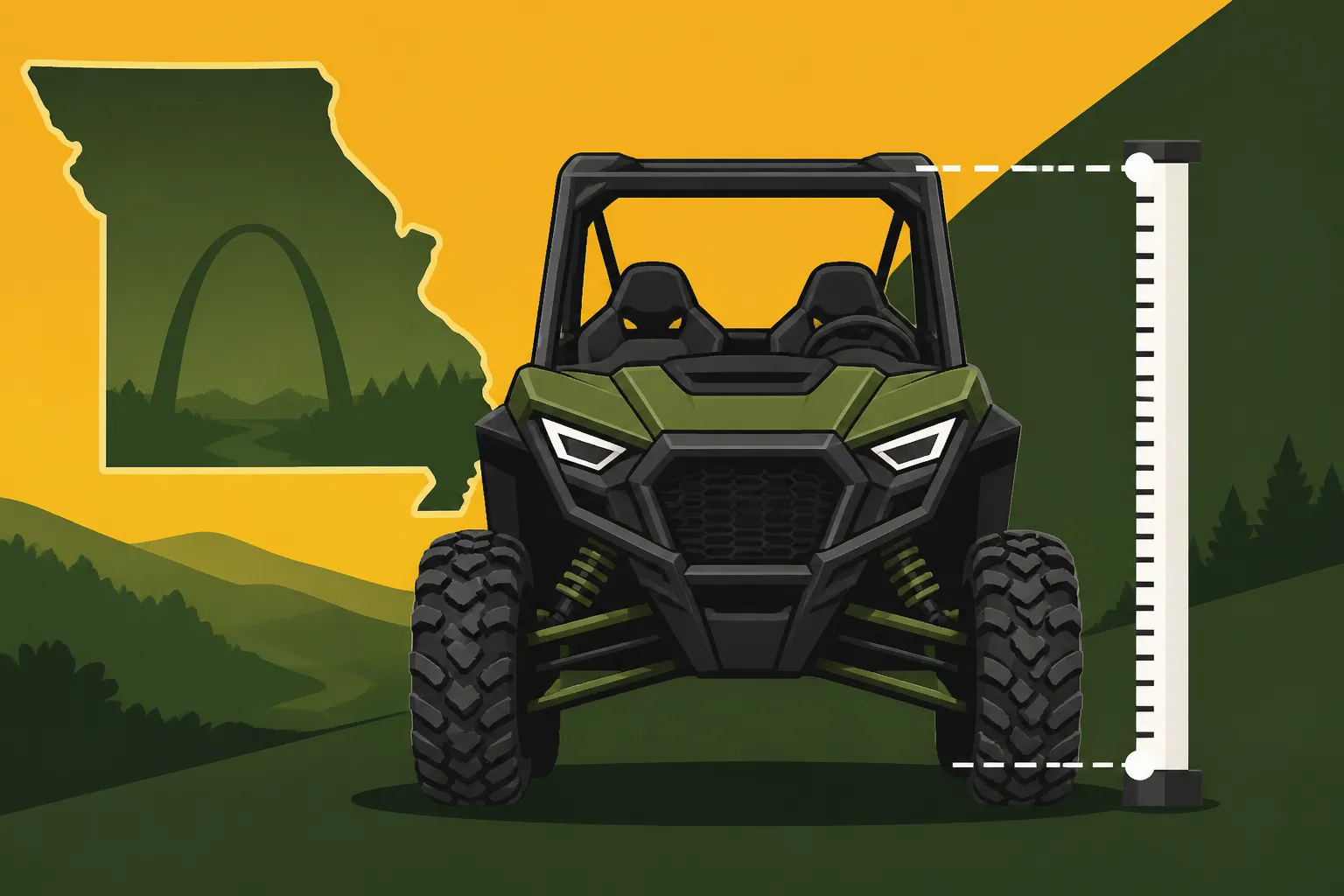
- Locate the Widest Points: The Missouri Department of Revenue, or any enforcement officer, will be looking for the widest point of your machine. This almost always means the outermost edge of your tires, including any sidewall bulge. However, don't forget to check if your fender flares, footwells, or any permanently mounted aftermarket accessories (like a brush guard or wheel spacers) extend beyond the tires.
- Position the Tape Measure: Have your helper hold one end of the tape measure firmly against the outermost edge of the widest point on one side of your ATV.
- Stretch Across: Extend the tape measure straight across the machine, ensuring it's level and taut. Don't let it dip or angle.
- Read the Measurement: Read the measurement at the outermost edge of the widest point on the opposite side of your ATV.
- Double-Check: Take the measurement a couple of times from different angles to ensure consistency. It's better to be sure now than to find out later you were off by an inch or two.
For example, if you have a quad with aggressive tires, those tire treads or sidewalls might be the widest part. For another machine, it could be the plastic fender flares. Always go by the absolute maximum width. Remember, the rule is [Measuring a Machine Against 50 Inches] from the furthest point on one side to the furthest point on the other.
The Impact of Exceeding 50 Inches in Missouri
So, you've measured your machine, and it comes in at 52 inches, 55 inches, or even 60 inches wide. What does that mean for you as a rider in Missouri? This isn't just a technicality; it has real-world consequences for how and where you can legally operate your off-road vehicle in the state.
Side-by-Sides and Utility Vehicles
If your machine is wider than 50 inches, it likely falls into the category of a side-by-side (SxS), Utility Vehicle (UTV), or Recreational Off-Highway Vehicle (ROV) in Missouri, depending on other factors like seating and steering. The most significant impact of being over 50 inches is that these machines are not considered ATVs under Missouri law for registration purposes. This is why [Why a Side-by-Side Has No Decal to Buy].
While you still need to title your side-by-side or UTV with the Missouri Department of Revenue, you will not be issued a three-year decal for it. This isn't a loophole or a penalty; it's simply how the state's legal definitions are structured. You'll pay an initial title fee, but you won't have the recurring "registration" cost that ATV owners do. This can sometimes lead to confusion, where owners of wider machines believe they are exempt from all paperwork, but titling is still mandatory. Neglecting to title your machine can lead to [Missouri Fines for an Untitled ATV]. When buying or selling one of these machines, make sure your bill of sale clearly identifies it by type and dimensions; LawDepot can assist with creating robust sales agreements.
Trail Access Limitations
One of the most immediate and tangible impacts of owning a machine wider than 50 inches relates to trail access, especially on public lands. Many state parks and designated ATV trails in Missouri have width restrictions, and 50 inches is a very common limit. For instance, while places like St. Joe State Park might accommodate wider machines in specific areas, many trails within Missouri's state parks and national forests are designed with the 50-inch ATV in mind.
If your machine exceeds this width, you might find yourself turned away at trailheads, or worse, cited for riding on restricted trails. These restrictions are put in place for various reasons, including trail maintenance, preventing erosion, and ensuring the safety of all users, as wider machines can cause more damage or pose a greater risk on narrower paths. Before you haul your wider machine to a new riding area, always check the specific rules and regulations. It's crucial to understand [Missouri Rules for a Machine Over 50 Inches] before you head out, as these rules are strictly enforced by park rangers and forest officers.
Road Use and Special Permits
The distinction between ATVs (50 inches or less) and wider machines (UTVs/ROVs) also plays a significant role in permissible road use in Missouri. While ATVs generally have very limited, specific exemptions for road use (often agricultural or emergency services related), wider ROVs and UTVs have slightly different provisions.
Some Missouri cities and counties have enacted ordinances that allow for the limited use of UTVs and ROVs on certain public roads, often requiring a special local permit, specific safety equipment (like seat belts, roll bars, lights, and sometimes a 7-foot safety flag), and proof of insurance. The 50-inch rule helps distinguish which type of machine can even consider applying for these local permits. An ATV, by definition, usually cannot. However, a wider recreational off-highway vehicle, as defined by the state as something like [What the Law Calls a Utility Vehicle], might be eligible for such a permit if local laws allow. This is why accurately measuring your machine and knowing its classification is paramount if you ever intend to take it on any public roadway, even for short distances or agricultural purposes.
| Machine Type | Max Width (Missouri ATV Definition) | Decal Required? | Common Trail Access | Typical Road Use |
|---|---|---|---|---|
| All-Terrain Vehicle | 50 inches or less | Yes | Often Permitted | Very Limited |
| Side-by-Side/UTV | Over 50 inches | No | Restricted on many | Limited/Local Permit Required |
Combining Factors: Width, Weight, and Seat Type
The 50-inch rule is significant, but it's not the only factor Missouri uses to define an ATV. The state's legal definition is actually a combination of several characteristics. For your machine to truly be considered an ATV in Missouri, it needs to meet all of these criteria. Ignoring one or two can lead to confusion and incorrect assumptions about your machine's legal status.
The Straddle Seat Requirement
One of the other critical components of Missouri's ATV definition is the straddle seat. An ATV, by definition, must be designed to be ridden by an operator straddling a seat. Think of a traditional quad, where you sit on it like a saddle. This is in direct contrast to side-by-sides or UTVs, which typically feature bucket seats or bench seats, along with a steering wheel, much like a small car.
Even if your machine is exactly 50 inches wide, if it has a bench seat and a steering wheel, it will not be classified as an ATV for registration purposes in Missouri. Instead, it would likely fall under the definition of a Recreational Off-Highway Vehicle (ROV) or Utility Vehicle (UTV). So, while the width is a major hurdle, don't overlook the seating arrangement. For more details, you might want to look into [How a Straddle Seat and Handlebars Define an ATV].
The 1,500-Pound Dry Weight Limit
Beyond width and seat type, Missouri also includes a dry weight limit in its ATV definition: 1,500 pounds or less. "Dry weight" typically refers to the weight of the vehicle without fuel, fluids, or passengers. Most traditional ATVs easily fall within this weight limit. However, some of the larger, more powerful "big bore" quads, especially those with extensive modifications or heavy-duty components, might push closer to this limit.
This weight factor, combined with the 50-inch width and straddle seat, creates the complete picture of what the Missouri Department of Revenue considers an ATV eligible for a decal. It's rare for a machine that meets the width and seat criteria to exceed the weight, but it's another piece of the puzzle that ensures the state is consistently classifying these machines. Understanding these combined definitions is key to knowing whether you'll receive a [Missouri's Three-Year ATV Decal] or if your machine is simply titled without registration.
It's a lot to keep track of, but knowing these details upfront can save you headaches and potential fines down the road. Keep your machine's documentation handy, including any bills of sale that confirm its specifications. Using a resource like LawDepot for any purchase or sale ensures you have professionally drafted documents to record these important details.
Disclaimer
This article is for general informational purposes only and does not constitute professional advice. Laws, prices and regulations vary by location and change over time. Consult a qualified professional for guidance on your specific situation.