Why a Side-by-Side Has No Decal to Buy
It's incredibly confusing, isn't it? You buy a shiny new side-by-side, eager to hit the trails or get some work done around the property, and then you head to the license office expecting to get it "registered" like an ATV. Only, they tell you there's no decal, no annual sticker, nothing quite like what your quad-riding friends have. This guide is here to untangle that very specific Missouri mystery and explain exactly why your side-by-side doesn't come with the same kind of decal as a traditional ATV.
Missouri's Definition of an All-Terrain Vehicle (ATV)
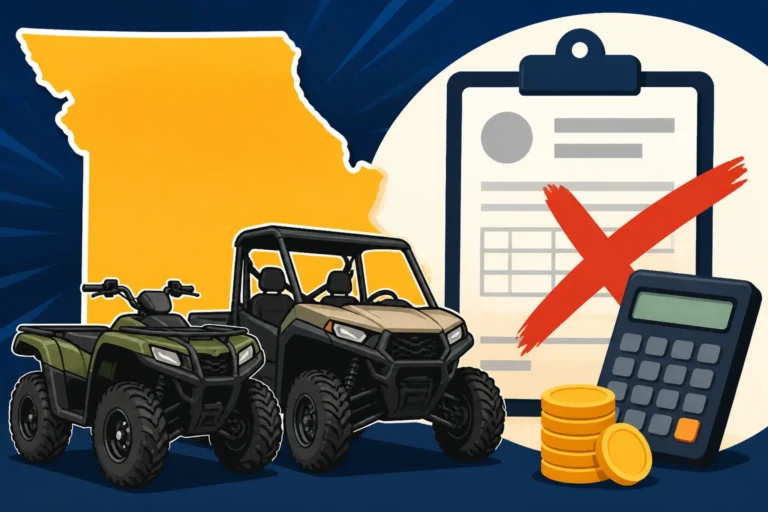
The core of this mystery lies in how Missouri law specifically defines an All-Terrain Vehicle, or ATV. Many states lump all off-road machines into one broad category, but Missouri carves out a clear distinction. This distinction dictates which machines receive a state decal for off-road use and which ones don't, and it’s the primary reason your side-by-side is treated differently.
The "Straddle Seat" and Handlebar Rule
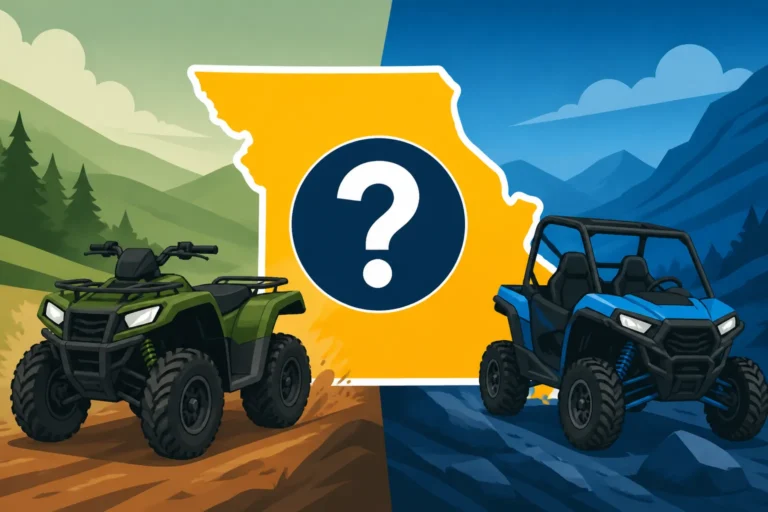
When the state looks at a machine to determine if it's an ATV, one of the first things it checks for is its seating and steering arrangement. An ATV, by Missouri's legal definition, is designed for a driver to sit on a "straddle seat." Think of how you sit on a motorcycle or a traditional four-wheeler; you straddle the machine. This seating position is inherently different from how you sit in a side-by-side, where you're typically seated in a bucket seat, much like a car.
Alongside the straddle seat, the law also specifies that an ATV must be steered by handlebars. Again, this points directly to the design of a conventional quad. You grip handlebars, turn them, and lean into turns. A side-by-side, on the other hand, almost universally features a steering wheel, a setup more akin to a car or truck than a motorcycle. These two characteristics—the straddle seat and handlebars—are foundational to how Missouri categorizes an ATV, and they immediately rule out most side-by-sides. You can dive deeper into this specific classification by reading [50 Inches Wide or a Straddle Seat].
The 50-Inch Width Limit and 1,500-Pound Dry Weight Test
Beyond the seating and steering, Missouri law adds further physical parameters to define an ATV. For a machine to qualify, it generally must not exceed 50 inches in width. This is a critical measurement. While some narrower, sport-oriented side-by-sides might push this limit, the vast majority of UTVs and ROVs are significantly wider than 50 inches. They are built for stability, often with multiple passengers in mind, and that requires a wider stance. Trying to squeeze a 60-inch wide side-by-side through a 50-inch gate on a public trail quickly illustrates this practical difference.
Additionally, an ATV must have a dry weight of 1,500 pounds or less. "Dry weight" refers to the machine's weight without fuel, oil, or coolant. Modern side-by-sides, particularly multi-passenger models or utility-focused machines with robust frames and larger engines, very frequently exceed this 1,500-pound limit. When you combine the width and weight restrictions with the seating and steering requirements, it becomes clear why most side-by-sides simply don't fit Missouri's definition of an ATV, which is the prerequisite for getting that state decal.
Why Engine Size Doesn't Factor In
It's interesting to note that Missouri's definition of an ATV, for the purpose of decal issuance, does not specify an engine size. You could have a 700cc quad or a 100cc youth model, and as long as it meets the straddle seat, handlebar, width, and weight criteria, it's considered an ATV. This often surprises people, as engine displacement is a common characteristic used in other vehicle classifications.
The focus instead remains entirely on the physical form and design of the machine. This is an important distinction because it means even a small, relatively low-powered side-by-side, if it has a steering wheel and bucket seats and is over 50 inches wide or 1,500 pounds dry weight, will still fall outside the ATV definition for decal purposes. For more details on this, check out [Why Missouri Uses No Engine Size].
What Side-by-Sides Are in Missouri's Eyes (and Why No Decal)
If a side-by-side isn't an ATV in Missouri, what is it? And why does that classification prevent it from receiving the coveted state decal? It all comes down to how the state categorizes these machines and the specific purpose of the ATV decal system.
Utility Vehicles (UTVs) and Recreational Off-Highway Vehicles (ROVs)
Missouri law generally classifies side-by-sides into two main categories: Utility Vehicles (UTVs) and Recreational Off-Highway Vehicles (ROVs). While the average rider might use these terms interchangeably, there are subtle legal differences, primarily around their intended use (work vs. recreation) and sometimes their speed capabilities. Both UTVs and ROVs feature the side-by-side seating, roll cages, and steering wheels that immediately set them apart from ATVs. Because they don't fit the ATV definition, they don't get an ATV decal.
This isn't to say Missouri doesn't recognize them. The state simply has different rules and expectations for them, especially concerning road use, given their multi-passenger capacity and often greater size. The key takeaway here is that these machines exist "outside the system" that governs ATV registration and decals. You can learn more about how the state views these machines in [Utility Vehicles Outside the Missouri System].
The Purpose of the ATV Decal
The ATV decal in Missouri isn't a general vehicle registration like a license plate on your car. Instead, it's a specific permit that allows All-Terrain Vehicles (as defined by the state) to be operated on state-managed lands, such as designated trails within Missouri State Parks or certain sections of National Forests. It's essentially an access permit, a user fee that contributes to the maintenance and development of off-road riding opportunities.
Since side-by-sides don't meet the physical definition of an ATV, they aren't part of this specific decal program. The fees collected from ATV decals go into a fund dedicated to ATV-related trail programs and safety initiatives. Because ROVs and UTVs have different operational characteristics and, in some cases, different access rules (for example, state parks often have different permit requirements for UTVs/ROVs than for ATVs, or even width restrictions), they are excluded from this particular decal system. [Why Missouri Issues a Decal and Not a Plate] further explains the nature of the decal.
No Statewide Registration for Side-by-Sides (But Other Rules Apply)
The absence of a statewide decal for side-by-sides often leads people to believe there are no rules for them at all, which couldn't be further from the truth. While there isn't a state-issued decal for off-road operation, side-by-sides are still subject to numerous regulations, especially if you plan to operate them anywhere beyond your own private property.
For instance, many Missouri State Parks and National Forests require their own specific permits for UTVs and ROVs to access designated trails, even if there's no state decal. Additionally, road use for side-by-sides is primarily governed by local city and county ordinances, not a blanket state registration. This means you might need a special permit from your local police department or sheriff's office to operate your UTV on certain public roads. The lack of a state decal simply means the state itself doesn't offer a unified "registration" for their off-road use, leaving those decisions to other authorities or specific park systems. This is a common point of confusion, and it's essential to understand that "no decal" doesn't mean "no rules."
What Side-by-Side Owners Do Need in Missouri
So, if you don't need an ATV decal for your side-by-side, what paperwork and legal requirements do you need to keep straight in Missouri? It's crucial to understand that while the decal isn't part of the picture, other important obligations remain. Many side-by-side owners mistakenly think that because there's no decal, there's less bureaucracy, but that's rarely the case.
Titling is Still Mandatory
This is perhaps the most critical point for any side-by-side owner in Missouri: your machine must be titled. Whether it's a UTV, ROV, or even a golf cart, if it's considered a motor vehicle by the state, it needs a title to prove ownership. This is separate from any registration or decal. The title is your legal document of ownership, and it's absolutely essential for buying, selling, or even insuring your side-by-side. You have a strict deadline to get this done.
When you purchase a side-by-side, whether new from a dealer or used from a private seller, you have 30 days from the date of purchase to apply for a title at a Missouri license office. Failing to do so can result in late titling penalties, which can be a real headache. Don't skip this step! It's how the state keeps track of ownership and ensures sales tax is paid. For a complete understanding, review [Titling an ATV in Missouri] and [Missouri's Thirty-Day Titling Deadline].
Sales Tax Obligations
Just like any other vehicle purchase in Missouri, you are responsible for paying sales tax on your side-by-side. This tax is typically collected at the time you apply for your title at the license office. The amount you pay is based on the purchase price of the machine, and it includes both state and any applicable local sales taxes based on your residence.
Even if you bought your side-by-side in a private sale, the sales tax is still due, unless the purchase price was under a specific threshold. Many people try to avoid this by undervaluing a used machine, but the state has ways of assessing fair market value. It's best to be honest about the transaction price to avoid potential issues down the road. Remember, even if there's no decal, the state is still interested in its sales tax revenue. You can find more specific information on this in [Missouri ATV Sales Tax at Titling] and [The $3,000 Sales Tax Line in Missouri].
Local Road Use Permits and Trail Permits
Since there's no statewide registration for side-by-sides, road use is largely left up to individual cities and counties. This means that if you want to operate your UTV or ROV on public roads, even for a short distance, you'll likely need a specific permit from the local municipality or county sheriff's department. These permits often come with their own set of rules, such as specific operating hours, safety equipment requirements (like flags, lights, or seatbelt use), and driver's license requirements.
Beyond road use, if you plan to ride your side-by-side at state parks, national forests, or other managed trail systems, you will almost certainly need to purchase a specific permit directly from that park or forest service. For example, Missouri State Parks have their own daily or multi-day permits for UTVs/ROVs that allow access to designated trails. These permits are separate from any local road permit or the state's ATV decal. Always check with the specific park or area before you load up and head out, as requirements can vary significantly. Articles like [Missouri's Special Permit for Road Use] and [Missouri Cities That Allow UTVs on Streets] can shed more light on these local requirements.
Importance of a Bill of Sale
Regardless of whether your machine gets a decal or not, a detailed and properly executed bill of sale is your best friend when buying or selling a side-by-side privately. This document serves as proof of the transaction, clearly stating the buyer, seller, date, purchase price, and a description of the machine (including the VIN). It's incredibly important for protecting both parties and for proving the purchase price when you go to title the machine.
Even if you're not getting a state decal, a bill of sale can prevent disputes later on, confirm the terms of the sale, and serve as crucial documentation for your tax obligations. When dealing with a private transaction, where official state forms might be minimal, a strong bill of sale fills a vital gap. Services like LawDepot can offer templates for these kinds of documents, ensuring all the important details are covered and providing a level of professionalism to your private transaction. It's a small step that can save a lot of headaches. For more information, see [A Missouri Bill of Sale for an ATV].
Why Missouri's System is Structured This Way
It might seem like an overly complicated system, especially when other states have more unified approaches to off-road vehicle registration. However, Missouri's distinct classification for ATVs versus UTVs/ROVs, and the lack of a decal for the latter, is rooted in historical context, regulatory differences, and a division of authority. Understanding these underlying reasons can help make sense of the current situation.
Historical Context of ATV Legislation
The legal framework for ATVs in Missouri, like in many other states, developed primarily in response to the rise of traditional four-wheelers. These early ATVs were typically single-rider machines with handlebars and straddle seats, designed for recreational off-road use. The initial legislation and the associated decal system were crafted with these specific machines in mind, aiming to regulate their use on public lands and generate funds for trail maintenance.
Side-by-sides, or UTVs and ROVs, became widely popular much later. When these machines started hitting the market, their design and operational characteristics were quite different from the ATVs that existing laws addressed. They were wider, heavier, often multi-passenger, and frequently had a more "vehicle-like" feel with steering wheels and roll cages. Rather than shoehorning them into the existing ATV definition, Missouri lawmakers chose to treat them as distinct categories, leading to separate rules or, in the case of the decal, no inclusion in the original ATV system.
Regulatory Differences for Larger Machines
The state's decision to treat side-by-sides differently also stems from practical regulatory considerations. A multi-passenger, often wider and heavier, machine with a roll cage and seatbelts presents different safety and operational challenges than a single-rider ATV. For instance, questions of passenger safety, vehicle stability on varied terrain, and integration with road traffic (even in limited scenarios) become more complex.
By not lumping them under the ATV decal system, Missouri allows for more tailored regulations to emerge for UTVs and ROVs. This is evident in how state parks might have different width limits or permit costs for side-by-sides, and how local governments craft specific ordinances for their road use. It enables a more nuanced approach to public safety and land management, recognizing that a utility vehicle used for farm work or an ROV carrying two people has different impacts and needs than a solo quad.
The Role of Local Ordinances
A significant consequence of Missouri not having a statewide registration or decal for UTVs and ROVs is that much of their regulation falls to local authorities. This means that if you want to ride your side-by-side on public roads, even a county gravel road, you need to check with the specific city or county where you intend to ride. What's perfectly legal in one town with a local permit might be strictly prohibited in the next.
This decentralized approach can be frustrating for riders seeking consistency, but it also allows local communities to decide what makes sense for their specific roads, traffic patterns, and public safety concerns. Without a state decal system for these machines, the responsibility and authority for regulating their on-road presence largely defaults to the municipal and county levels. When dealing with specific local requirements, especially regarding agreements for private land access or understanding local permit nuances, having clear documentation is paramount. Services like LawDepot can be quite helpful in drafting official documents like waivers or access agreements, which can strengthen your position and clarify terms when engaging with local authorities or private landowners.
| Feature | Missouri ATV (Decal Eligible) | Missouri Side-by-Side (UTV/ROV) (No Decal) |
|---|---|---|
| Seating | Designed for a straddle seat | Bucket seats, often multi-passenger |
| Steering | Handlebars | Steering wheel |
| Maximum Width | Generally 50 inches | Typically wider than 50 inches |
| Dry Weight | 1,500 pounds or less | Often exceeds 1,500 pounds |
| Engine Size Factor | No specific limit | No specific limit |
| State Decal | Required for public land use | Not issued by the state |
| Titling | Mandatory | Mandatory |
| Sales Tax | Mandatory | Mandatory |
| Road Use | Generally prohibited (few exceptions) | Often allowed with local permits |
| Public Trail Access | Requires state decal or park/forest permit | Requires park/forest specific permit |
So, while it might feel like your side-by-side is flying under the radar without a state-issued decal, that's simply not the case. Missouri has a very specific way of defining what an ATV is, and your side-by-side, with its steering wheel, bucket seats, and often larger size, just doesn't fit that mold. Instead of a decal, your focus should be squarely on ensuring you have a valid title, have paid all necessary sales taxes, and are fully aware of any local road-use permits or specific park/trail permits required for where you plan to ride. It's a different set of rules, but they are rules you still absolutely need to follow to enjoy your machine legally and safely across the Show-Me State.
Disclaimer
This article is for general informational purposes only and does not constitute professional advice. Laws, prices and regulations vary by location and change over time. Consult a qualified professional for guidance on your specific situation.