Missouri Seat Belt Rules in a Side-by-Side
Navigating the rules for driving your side-by-side on Missouri roads can feel like trying to solve a complicated puzzle, especially when it comes to specific safety gear like seat belts. It's frustrating when you just want to take your machine down the road to a neighbor's house or a local store, only to realize the legal landscape is far from clear. This guide is here to untangle the specific seat belt rules that apply to side-by-sides (what Missouri law calls Recreational Off-Highway Vehicles or ROVs) when you venture onto public roads in the Show-Me State.
Understanding Missouri's ATV vs. UTV Distinction on Roads
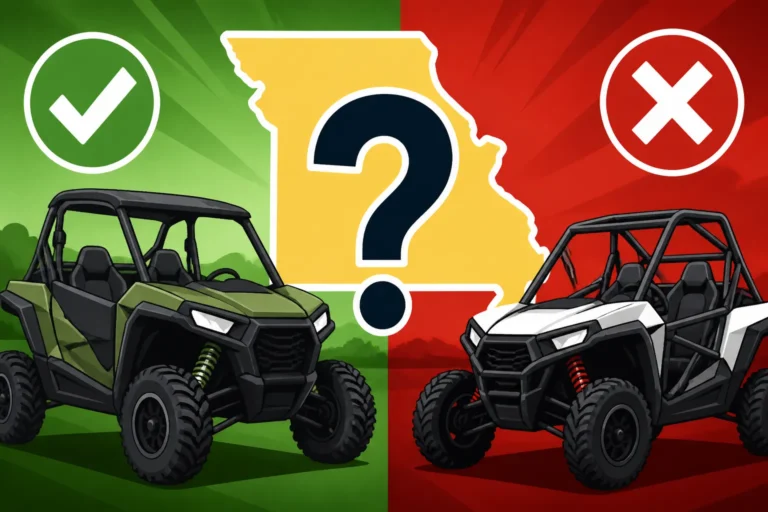
The biggest hurdle for many side-by-side owners in Missouri is understanding that the state government doesn't view all off-road vehicles the same way. What you might call an "ATV" and what the law calls an "ROV" (which includes most side-by-sides and UTVs) are treated with very different sets of rules, especially once you even think about touching a public road. This distinction is absolutely critical, because it directly impacts whether seat belts are even a consideration for your machine.
Why the Difference Matters for Seat Belts
It's genuinely confusing, isn't it? You have an off-road machine, your buddy has another, and somehow one needs a seat belt for road use and the other doesn't. Missouri law draws a bright line between "all-terrain vehicles" (ATVs), which are designed to be straddled by the operator, and "recreational off-highway vehicles" (ROVs), which are designed for side-by-side seating, steering wheels, and a roll bar. For traditional ATVs, the state doesn't have a broad mandate for seat belts because the rider is meant to shift their weight to control the machine, and seat belts could actually hinder that necessary movement, potentially increasing risk in a rollover by trapping the rider.
However, side-by-sides, with their automotive-style controls and seating, are fundamentally different. They are designed to contain occupants, and thus, seat belts become a crucial part of their safety system when operating on public roads. The frustration comes from this split application of rules, where common sense for one type of machine becomes dangerous or illegal for another. If you're pondering, [Can You Drive a UTV on a Missouri Road?], the answer is often "yes, but with strict conditions," and seat belts are definitely one of those conditions for ROVs.
What Missouri Considers a Recreational Off-Highway Vehicle (ROV)
To clear up any ambiguity, it's helpful to know how Missouri statutes actually define what we commonly call a side-by-side or UTV. An ROV is generally characterized as a motorized off-highway vehicle that is not an all-terrain vehicle and that is designed to travel on four or more wheels, to be used for recreational purposes, and to be operated by a steering wheel and non-straddle seating. Think about your Polaris Ranger, Can-Am Defender, or your Kawasaki Mule – these are typically classified as ROVs.
Crucially, an ROV, by its very design, usually includes a factory-installed roll-over protective structure (ROPS) and seat belts. This structural difference from a traditional ATV is why the state imposes specific seat belt requirements when these machines are allowed on public roads. Without the ROPS and seat belts, a side-by-side wouldn't even meet the basic safety criteria many local ordinances and state statutes outline for road access. This design philosophy is paramount to understanding why these specific safety measures are mandated for side-by-sides.
Specific Seat Belt Requirements for On-Road UTV Use in Missouri
When you decide to take your side-by-side from the trail to the street in Missouri, the rules around seat belts shift from optional to mandatory. This isn't just a suggestion; it's a legal requirement that carries consequences if ignored. It's about protecting yourself and your passengers in an environment that wasn't the machine's primary design intent.
Mandatory Seat Belts for Permitted Road Use
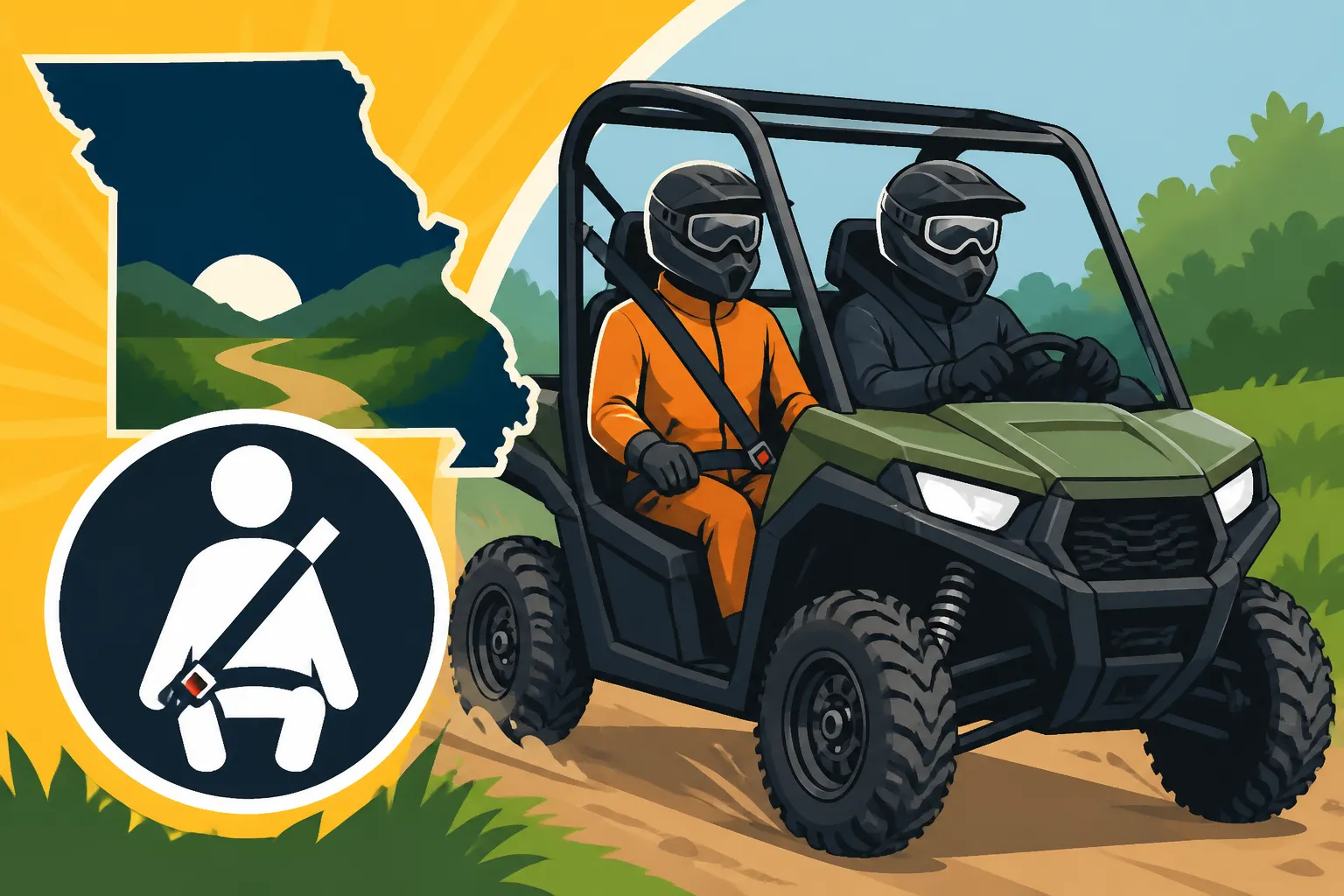
If you're operating your ROV on a public road in Missouri, whether under a specific county or municipal ordinance, or utilizing a [Missouri's Special Permit for Road Use], then wearing a seat belt is not optional; it's absolutely required for every occupant. This isn't a "sometimes" rule; it's a "always" rule when you're on paved or gravel public roads. The very act of obtaining one of these permits, or riding in an area covered by an ordinance, means you are agreeing to abide by a set of safety standards that often mirror those of conventional vehicles.
This requirement stems from the fact that ROVs, while robust off-road, can behave differently and expose occupants to different risks when mixed with conventional traffic. The seat belts, in conjunction with the machine's roll cage, are designed to keep you safely inside the vehicle in the event of a collision or rollover. Ignoring this mandate not only puts you and your passengers at significant risk but also leaves you vulnerable to citations if stopped by law enforcement. It's truly a critical component of being road-legal.
The Importance of Factory-Installed Restraints
Missouri law, in conjunction with most municipal ordinances for ROV road use, generally assumes and expects that you will be using the factory-installed seat belt system that came with your side-by-side. These systems are designed and tested by the manufacturer to work with the machine's specific frame and roll cage. While many riders consider upgrading their restraints for off-road performance or comfort, especially for more aggressive riding, it's crucial that any modifications meet or exceed the original safety intent for road use.
Aftermarket companies like SuperATV offer a range of replacement and upgrade seat belts, from standard lap belts to multi-point harnesses. If you're replacing a worn-out factory belt, ensure the new one is properly installed and provides equivalent, if not better, restraint. For road use, the focus is on functional, properly secured restraints for all occupants. A deputy checking your road-legal ROV will likely verify that each occupant is buckled up, and that the belts appear to be in good working order.
Who Must Wear a Seat Belt
The simple answer for permitted ROV road use in Missouri is: everyone. Every single occupant in a side-by-side that is being operated on a public road under a permit or local ordinance must be properly restrained by a seat belt. This applies equally to the driver and any passengers. This rule reflects the understanding that side-by-sides, unlike ATVs, are built with passenger seating and often carry multiple people. Ensuring everyone is buckled in is a fundamental safety measure.
This is particularly important when considering [Missouri Rules for a Passenger in a UTV]. Just because you're driving a UTV doesn't mean your passengers are exempt from the same safety precautions you are. Children, of course, must also be properly restrained. While Missouri's general helmet law primarily applies to riders under 18 on ATVs, the comprehensive safety approach for ROV road use means that all occupants are expected to use the available safety equipment.
Exceptions and Scenarios: When Seat Belt Rules Change
Like many aspects of Missouri's off-road vehicle laws, there are nuances and specific situations where the seat belt rules for side-by-sides might change or not apply. It's vital to understand these contexts to avoid misunderstandings and potential legal issues. Knowing when the rules bend, and when they absolutely do not, is key to responsible riding.
Agricultural and Industrial Exemptions
Missouri does provide some limited exemptions for ROVs used strictly for agricultural or industrial purposes. For instance, the [Missouri Agricultural Highway Exception] allows for the operation of certain farm-related vehicles, including some ROVs, on public roads for specific agricultural purposes. In these very specific scenarios, such as moving equipment between fields or performing farm duties, the strict permitting and safety flag requirements, and sometimes even seat belt mandates, might be less stringent or entirely absent.
However, these exemptions are often narrowly defined and come with their own set of rules, such as operating only from sunrise to sunset, for short distances, and often with signage like a slow-moving vehicle triangle. It's crucial not to mistake these specific work-related exemptions for a general waiver of safety rules for recreational road use. If you're just taking your side-by-side to get groceries, you're not operating under an agricultural exemption, and the seat belt rules for permitted road use would apply. It's a fine line that requires clear understanding.
Riding on Private Land or Designated Off-Road Trails
When you're riding your side-by-side on private property with permission, or within designated off-road riding areas like St. Joe State Park or the Chadwick Motorcycle and ATV Use Area, the state's public road laws regarding seat belts typically don't apply. On [Missouri Rules for Riding Private Land], the landowner's rules usually take precedence, though general liability and safety considerations still apply. Similarly, within an organized park or trail system, specific park rules or common sense safety guidelines dictate seat belt use, rather than state highway statutes.
Many riders, even in off-road environments, choose to wear their seat belts for safety, especially given the dynamic and unpredictable terrain. In fact, some park rules or organized events might even mandate them. However, you won't be cited by a state trooper for not wearing a seat belt in your side-by-side while riding a private trail, as you would be on a public road under permit. It's a different legal jurisdiction, emphasizing that the "road use" aspect is what triggers the strict seat belt requirements.
Consequences of Non-Compliance
Ignoring Missouri's seat belt rules when operating an ROV on a public road can lead to more than just a stern talking-to. Law enforcement, whether a local sheriff's deputy or a Missouri State Highway Patrol officer, can issue citations for non-compliance. These can result in fines and potentially even points on your driving record, especially if you hold a valid [Missouri Driver's License Rules for ROVs], which is required for on-road operation. The specific penalties can vary based on local ordinances and the discretion of the officer.
Beyond the legal ramifications, there are very real safety consequences. In the event of a collision, a rollover, or even a sudden stop, an unbelted occupant is at a significantly higher risk of serious injury or being ejected from the vehicle. The intent of these rules is genuinely to prevent harm. Ignoring them is a gamble, and the potential costs, both financial and personal, are simply not worth it. For more details on what might happen, you might want to look into [Missouri Fines for Illegal ATV Road Use].
Enhancing Safety Beyond the Basics
While Missouri's laws provide a baseline for safety when operating a side-by-side on public roads, smart riders often go above and beyond the minimum requirements. Think of seat belts as one crucial layer in a multi-layered approach to keeping safe. There's always more you can do to protect yourself and your passengers, especially given the varied terrain and conditions you might encounter in Missouri.
Upgrading or Replacing Seat Belts
For many side-by-side owners, the factory-installed seat belts are perfectly adequate for legal road use. However, for those who push their machines harder off-road, or simply want enhanced security and comfort, upgrading seat belts is a common modification. Companies like SuperATV offer a variety of aftermarket options, including 4-point and 5-point harnesses, which provide superior restraint compared to standard automotive-style lap and shoulder belts. These harnesses are designed to keep the occupant more securely planted in their seat, reducing movement during aggressive maneuvers or sudden impacts.
When considering an upgrade, always ensure that the new belts are properly installed according to manufacturer specifications and are compatible with your machine's roll cage and seating. While these upgraded harnesses offer greater safety, remember that for public road use in Missouri, the key legal requirement is simply that all occupants are restrained by a functional seat belt system. However, investing in a high-quality aftermarket harness can significantly boost confidence and safety in both on-road and off-road scenarios.
Roll Bars and Other Safety Features
Seat belts are just one part of the integrated safety system in an ROV. The roll-over protective structure (ROPS), or roll bar, is another foundational safety feature. In fact, by definition, an ROV must have a roll bar system. [Missouri Roll Bar Requirements] are implicitly met by the factory design of most side-by-sides. These structures are designed to prevent the vehicle from crushing occupants in a rollover incident, and seat belts work in conjunction with the ROPS to keep you contained within this protective envelope. Without both, the effectiveness of either is severely diminished.
Beyond seat belts and roll bars, side-by-sides often feature other integrated safety components like doors, safety nets, and even advanced braking systems. These all contribute to the overall safety profile of the machine. When operating on Missouri roads, understanding how these components work together is essential. You want to ensure all these systems are in good working order before you head out, as a deputy might also check some of these items as part of [What a Missouri Deputy Checks on a Road-Legal ROV].
Comprehensive Safety Practices
Beyond the specific mandate for seat belts, a holistic approach to safety is always the best practice. This means adhering to other Missouri rules for road-legal ROVs, such as carrying an operator's or chauffeur's license, ensuring your machine has proper lighting (headlamps and taillamps), and displaying a [Missouri Safety Flag Requirements] that flies at least seven feet above the ground. For younger riders, remember that [Missouri Helmet Law for Riders Under 18] still applies to many off-road situations and is generally a good practice even when not legally mandated.
Furthermore, proper maintenance of your side-by-side is a non-negotiable part of safety. Regularly check your brakes, tires, steering, and suspension. Always ride within your skill level and the capabilities of your machine. And, of course, never operate any vehicle, including an ROV, under the influence of alcohol or drugs. By combining proper equipment, adherence to the law, and good judgment, you can enjoy your side-by-side safely on Missouri's diverse roads and trails.
Here's a quick overview of seat belt requirements for different off-road vehicles on Missouri public roads:
| Vehicle Type | Road Legal Status in MO | Seat Belt Requirement (On-Road) | Typical Seating Arrangement | Primary Control Method |
|---|---|---|---|---|
| ATV (Quad) | Generally Not Road Legal | Not required (nor typically present) | Straddle Seat | Handlebars |
| ROV (Side-by-Side) | Conditional (Permit/Ordinance) | Mandatory for all occupants | Side-by-Side Seats | Steering Wheel |
| Farm Implement | Exemptions for Ag Use | Varies by specific exemption/vehicle | Varies | Varies |
| Golf Cart | Conditional (Local Ordinances) | Varies by local ordinance (often required) | Side-by-Side Seats | Steering Wheel |
Disclaimer
This article is for general informational purposes only and does not constitute professional advice. Laws, prices and regulations vary by location and change over time. Consult a qualified professional for guidance on your specific situation.