Measuring a Flag Mast to 7 Feet
Navigating the specific rules for riding your ATV or UTV on Missouri's public roads can feel like deciphering a secret code, and one of the most common head-scratchers involves the safety flag. It’s not just about having a flag; it's about having the right flag, at the right height, for the right purpose. Many riders get tripped up by the seemingly small detail of a flag mast's height, especially the often-cited seven-foot requirement. This guide is here to untangle that confusion, walking you through why this measurement matters and how to ensure your off-road machine is compliant when you hit the pavement.
The "Why" Behind Missouri's Seven-Foot Flag Rule
It’s easy to look at a seven-foot flag mast and think, "That's a bit much, isn't it?" But like most regulations, this one stems from a very real, very serious concern: safety. When you're operating an ATV or UTV, you're on a machine that sits much lower to the ground than the average car, pickup truck, or SUV. This low profile can create significant visibility challenges for other drivers, particularly in a state like Missouri with its rolling hills, winding roads, and a mix of rural and urban traffic. The seven-foot flag isn't just an arbitrary number; it's a critical tool in helping you be seen and stay safe.
Enhancing Visibility for Road Safety
Imagine you're driving your side-by-side down a county road, perhaps just a short distance from your property to a neighbor's, or to connect with a legal trail. Now imagine a large pickup truck or even a semi-truck approaching from the opposite direction, or perhaps pulling out from a hidden driveway. Your machine, while capable and exciting to ride, simply doesn't command the same visual presence as a full-sized vehicle. This is where the flag becomes your silent sentinel.
The height of a seven-foot flag mast ensures that even if your ATV or UTV is obscured by a slight rise in the road, a curve, or even the sun's glare, the top of that vibrant flag might still be visible. It acts as an early warning system for other motorists, signaling your presence long before they might spot the machine itself. This is especially crucial on two-lane roads where passing might occur, or in areas with limited sightlines. The extra height can literally be the difference between being noticed and being overlooked, preventing potentially dangerous close calls or even collisions. It’s about being proactive in a shared space where not everyone is expecting to see an off-road vehicle.
Meeting Specific Legal Requirements for On-Road Use
It's absolutely essential to understand that Missouri’s seven-foot flag rule isn't just a friendly suggestion from a safety advocate; it's a specific legal requirement for certain types of on-road operation. Unlike many off-road parks or private riding areas that might have their own flag guidelines – often designed more for group visibility within a trail system – the seven-foot rule applies when your machine transitions from the dirt to the pavement under specific conditions. For instance, if you're utilizing a special permit for road use, or operating under a local city or county ordinance that allows UTVs on public streets, you'll almost certainly find this flag requirement detailed in the regulations.
These specific legal requirements are often tied to the state's intent to regulate the safe integration of off-road vehicles into mixed traffic flows. Without such provisions, the risk to both ATV/UTV operators and other drivers would be significantly higher. Failing to meet this flag height, even if you have all your other permits in order, could still result in a citation from a law enforcement officer. They are looking for compliance with all aspects of the specific statute or ordinance you're operating under. It's not uncommon for riders to assume "a flag is a flag," only to learn the hard way that the exact specifications, particularly height and color, are what truly matter in the eyes of the law. You can dive deeper into these rules by checking out articles like [Missouri's Special Permit for Road Use] or [Missouri's 3-Mile Rule for Side-by-Sides].
What Constitutes a Seven-Foot Flag Mast in Missouri?
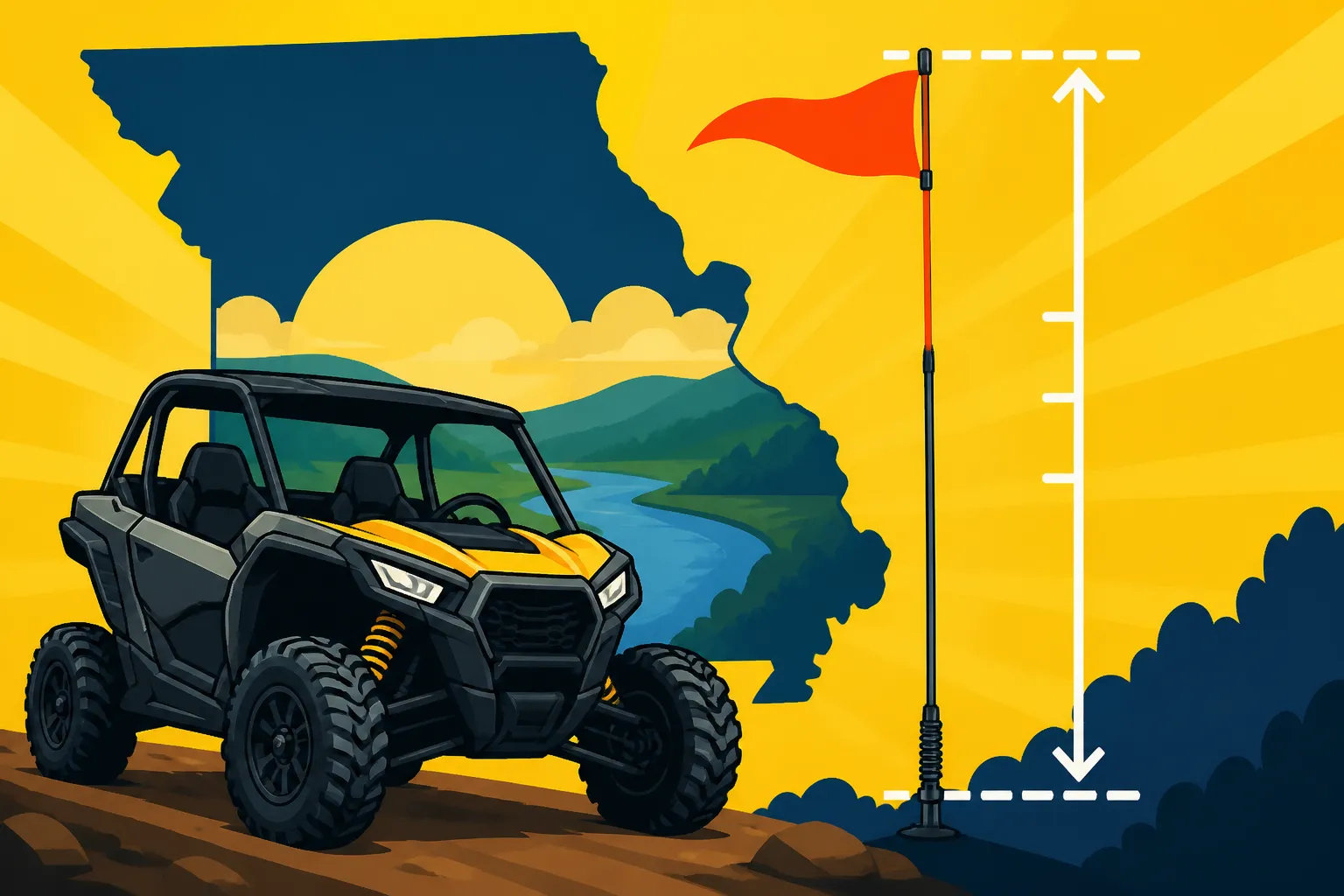
When the law says "seven feet," it's not talking about the length of the pole you buy off the shelf. It's about the total height from the ground to the very top of your flag mast when it's mounted on your machine and ready to roll. This distinction is crucial and often where riders get it wrong. It's not enough to simply purchase a seven-foot flag pole; you have to account for the height of your vehicle, the mounting bracket, and any other components that contribute to the overall elevation. Precision here is key, as being a few inches short could mean the difference between compliance and a potential ticket.
Understanding the Measurement Point
The measurement starts at the ground. Period. Not from the top of your roll cage, not from the bumper, but from the actual surface your tires are resting on. So, park your ATV or UTV on a flat, level surface – ideally concrete or asphalt, mirroring the roads you'll be riding on. Then, install your flag mounting bracket securely in its intended location. Once the bracket is on, insert the flag mast into the bracket. Now, take a tape measure and extend it from the ground directly upward to the highest point of the mast. This point is typically the very tip of the pole, or if you have a swivel top, the highest point of that mechanism.
It’s easy to eyeball it, but an eyeball doesn't cut it when it comes to legal compliance. Your machine's suspension might sag slightly, or your tires might be slightly deflated, all of which can affect the final measurement. That's why being on a level surface with properly inflated tires gives you the most accurate reading. If your total height is, say, six feet and ten inches, you're technically not meeting the seven-foot requirement. Those two inches could become a point of contention with law enforcement, so it’s always best to aim slightly above the minimum, rather than precisely at it or just under.
Flag Material and Design Considerations
While the focus here is primarily on the mast height, the flag itself also has specific requirements in Missouri for road use. Generally, the law specifies a blaze orange or neon safety flag that is at least 30 square inches. This means it needs to be brightly colored and large enough to be easily seen. It's not just a decorative streamer; it serves a vital safety function.
When it comes to the mast itself, durability and flexibility are key. Many riders opt for fiberglass or composite poles because they offer a good balance of strength and give. They can bend and flex under tree branches or in strong winds without snapping, which is especially important for a mast that's extending so high above your machine. Some choose metal poles, but these need to be robust enough to withstand vibrations and potential impacts without bending permanently or breaking. Companies like SuperATV offer a range of flag poles and mounting solutions designed to meet various riding needs, including those that prioritize road-legal height and durability. Regardless of the material, ensure the pole is securely attached to your machine. A flag mast flopping around or, worse, detaching while you're on the road, creates a new safety hazard. Quick-release bases are popular for convenience, allowing you to easily remove the flag when not needed, but make sure the locking mechanism is solid and won't vibrate loose during transit.
Practical Steps for Measuring and Installing Your Flag Mast
Alright, let's get down to the nitty-gritty of making sure your flag is up to snuff. This isn't rocket science, but it does require a bit of methodical thinking and a reliable tape measure. Don't rush this process; a few extra minutes spent now can save you hassle and potential fines down the road. This isn't just about avoiding a ticket; it's about making sure your safety equipment is actually doing its job effectively.
Step-by-Step Measurement Guide
Getting the measurement right is paramount. Here’s a simple process to follow:
- Park on Level Ground: This is your foundation. Find a flat, solid surface like a concrete driveway, garage floor, or paved parking lot. Avoid uneven ground, soft grass, or gravel, as these can give you inaccurate readings due to variations in tire sinkage or suspension compression.
- Mount the Bracket: Before you even think about the flag pole itself, securely attach the mounting bracket to your ATV or UTV. This bracket should be installed exactly where you intend it to be during normal operation. Common spots include the rear of the roll cage, a heavy-duty bumper, or a cargo rack. Make sure all bolts are tightened according to the manufacturer's specifications. The bracket's height off the ground contributes directly to the overall flag height, so it needs to be in place for an accurate measurement.
- Insert the Mast: Once the bracket is firm, insert your chosen flag mast into the mounting point. Make sure it's fully seated and locked into place if your bracket has a quick-release or locking mechanism. Your flag should also be attached at this point, as its presence might slightly affect the mast's vertical position or tip.
- Use a Tape Measure: Grab a long, sturdy tape measure. Extend it from the ground directly underneath your flag mast all the way up to the highest point of the mast itself. This means pulling the tape taut and ensuring it's perpendicular to the ground. Have a friend help you steady the tape and read the measurement if possible, as it can be tricky to do alone accurately.
- Adjust as Needed: If your measurement is shy of seven feet (84 inches), you’ll need to make adjustments. This might involve purchasing a longer flag pole, using an extension piece, or finding a mounting bracket that sits higher on your machine. If you’re well over seven feet, that’s usually fine for road use, as long as the mast isn't so tall it becomes unstable or poses a new hazard. Remember, it's about hitting or exceeding that 84-inch mark from the ground up.
Choosing the Right Mounting Location
Where you mount your flag mast isn't just a matter of convenience; it’s a critical decision that impacts visibility, stability, and practicality. The goal is to maximize the flag's effectiveness without creating new problems for your riding experience.
Most riders opt for a mounting point at the rear of their ATV or UTV, and for good reason. This location typically offers the clearest line of sight for approaching traffic, especially from behind. Mounting it too far forward might obstruct your own view or get caught on overhead obstacles more frequently. The rear also tends to be a more stable section of the machine, which is important for minimizing wobble and vibration, particularly at road speeds. A wobbly flag mast is less effective and can be distracting.
Consider the stability of your chosen mounting point. The roll cage on a UTV is a popular and usually sturdy option, offering a high anchor point. For ATVs, a rear cargo rack or a heavy-duty bumper might be more suitable. Whatever you choose, ensure the structure can handle the leverage created by a seven-foot mast, especially when facing wind resistance. You don't want your flag mount to bend or break the frame of your machine. Finally, think about practical considerations: Will the flag obstruct your rear lights, mirrors, or access to your cargo bed? A well-thought-out mounting location balances legal compliance with practical riding needs. For more details on what officials look for, check out [What a Missouri Deputy Checks on a Road-Legal ROV].
Differentiating Road Flags from Park Flags
This is where a lot of confusion crops up for Missouri riders. You might have a flag that’s perfectly compliant for your favorite state park, only to find it falls short – literally – of what’s required for public road use. It’s a common pitfall, and it stems from the different purposes these regulations serve. Understanding the distinct requirements for each scenario is key to staying safe and legal, whether you're navigating trails or crossing county lines.
Missouri Road Use Flag Requirements
When you're riding your UTV or ATV on a Missouri public road, even if it's just for a short distance or under a specific permit, the flag requirement is primarily about being highly visible to other, often faster-moving, traffic. As we've discussed, the key here is the seven-foot height from the ground to the top of the mast. This isn't negotiable; it's a specific dimension designed to elevate the flag above the average sightline of other vehicles.
Additionally, Missouri's road use laws generally specify that the flag itself must be "day-glow orange or an equivalent color that is easily seen" and measure at least 30 square inches. This isn't just about aesthetics; it's about high contrast and immediate recognition. You'll often find these requirements mentioned in the details of [Missouri's Special Permit for Road Use] or the local ordinances that allow [Missouri Cities That Allow UTVs on Streets]. The intention is clear: prevent accidents by making sure your off-road machine is impossible to miss. A deputy pulling you over to check compliance will specifically be looking for that 7-foot height and the appropriate flag color and size. They're not just glancing; they're verifying against the legal text.
Missouri State Park Flag Rules
Now, let's talk about state parks like St. Joe State Park or Finger Lakes. You’ll definitely need a safety flag there, but the specifications are often different from road rules. For state parks, the general requirement is typically a mast that is at least 72 inches (six feet) above the ground. Notice that's a full foot shorter than the road requirement! This difference exists because while visibility is still crucial within a park, the context is different. You're typically sharing trails with other off-road vehicles, not 18-wheelers. The speed limits are lower, and the types of hazards differ.
Furthermore, state park rules often specify a larger flag, sometimes requiring 64 square inches of orange or red flag material, which is more than double the size of the road-legal flag. This larger flag is often intended to enhance visibility within a group of riders or for park rangers patrolling the trails. It's a common mistake for riders to bring their road-legal flag to a park and discover it doesn't meet the park's specific size requirements, or vice-versa. Always check the specific park's regulations before you go, because [Why Missouri's Flag Rule Differs at a State Park] is a legitimate question with different answers for different riding environments.
To help you keep these distinctions clear, here's a quick comparison:
| Feature | Missouri Public Road Use (for Permitted Vehicles) | Missouri State Park Use (e.g., St. Joe, Finger Lakes) |
|---|---|---|
| Flag Mast Height | At least 7 feet (84 inches) from the ground | At least 6 feet (72 inches) from the ground |
| Flag Color | Day-glow orange or equivalent | Orange or red |
| Flag Size (Minimum) | 30 square inches | 64 square inches |
| Primary Purpose | Visibility to general traffic (cars, trucks) | Visibility to other ORV riders, park rangers |
| Regulatory Body | State statutes, local ordinances | MO Dept. of Natural Resources (State Parks) |
Knowing these differences is crucial for ensuring you're compliant wherever you choose to ride in Missouri. Don't assume one flag fits all scenarios; it simply doesn't. Always make sure you're geared up appropriately for the environment you're entering.
Disclaimer
This article is for general informational purposes only and does not constitute professional advice. Laws, prices and regulations vary by location and change over time. Consult a qualified professional for guidance on your specific situation.