Riding a Gravel Bar in Low Water
Many of us have felt the pull of those wide, inviting gravel bars along Missouri's rivers and creeks, especially when the water is low and clear. They look like open invitations for a unique kind of off-road adventure, a chance to explore a landscape that changes with every flood and drought. But before you unleash your ATV or UTV onto that seemingly endless expanse of rock and sand, it's absolutely crucial to understand the very specific challenges, legalities, and environmental responsibilities that come with riding these ephemeral terrains. This guide will walk you through everything you need to know to enjoy Missouri's gravel bars safely, legally, and responsibly, ensuring your ride is memorable for all the right reasons.
The Allure and Risks of Missouri's Gravel Bars
There's something undeniably captivating about a freshly exposed gravel bar, a temporary landscape sculpted by the powerful forces of the river. For many ATV and UTV enthusiasts in Missouri, these low-water havens offer a unique riding experience, different from the maintained trails of state parks or the dense woods of private land. However, this allure also masks significant risks and responsibilities that every rider must understand.
Why Gravel Bars Beckon Riders
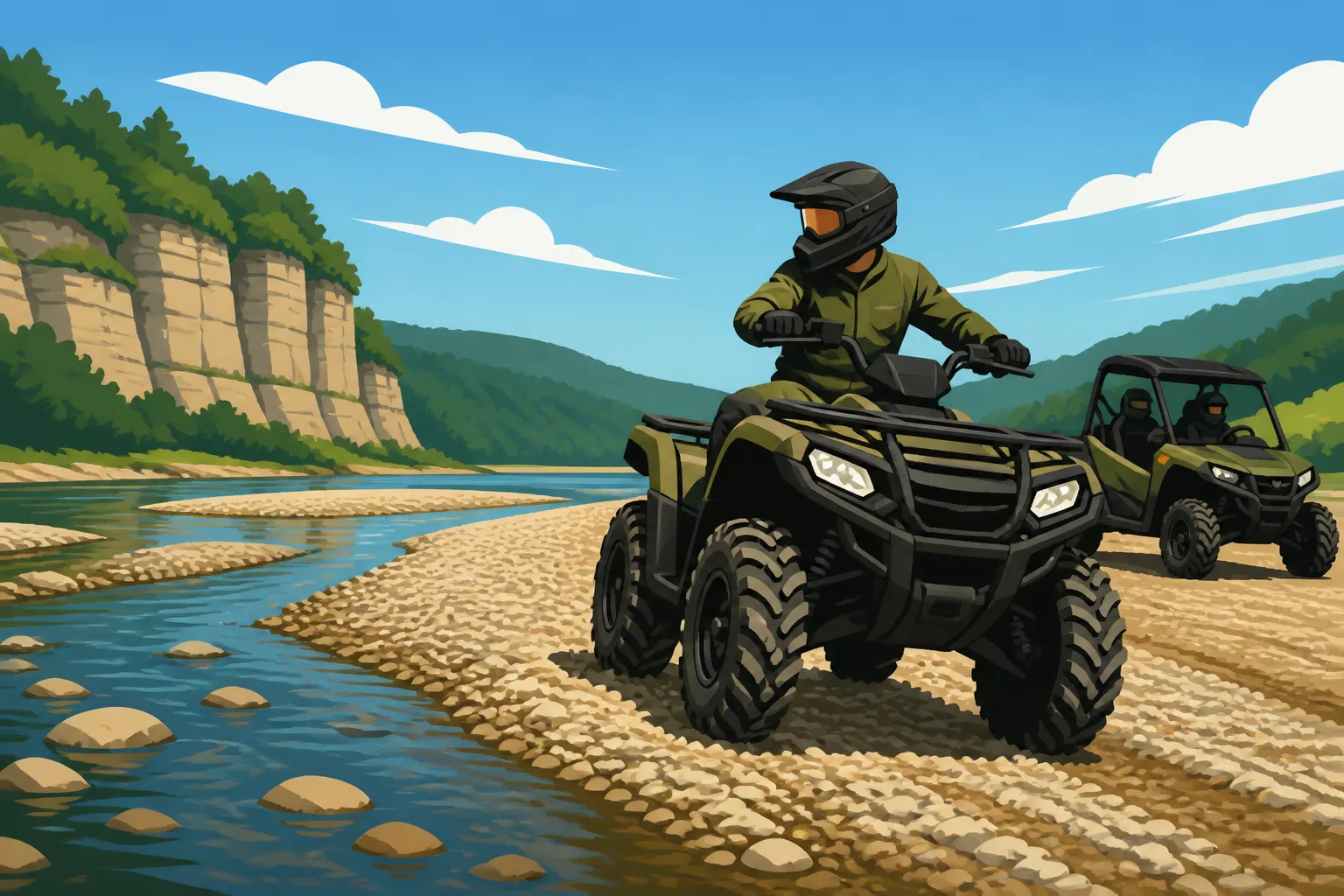
Imagine the freedom: miles of open space, the rhythmic crunch of tires on stones, and the cool spray from shallow crossings. Gravel bars, particularly along the Ozark streams and larger rivers like the Meramec or Gasconade when water levels drop, present a sprawling playground. They're often wide open, offering a sense of unrestricted exploration that's hard to find elsewhere. You can practice slow-speed technical maneuvers over varied terrain, from loose pea gravel to larger river rock. It's an ever-changing environment, too; what was smooth last week might be deeply rutted after a flash flood, keeping every ride fresh and challenging.
Many riders are drawn to gravel bars for more than just the thrill of the ride. They're often fantastic spots for fishing, camping, or just enjoying nature. Picture pulling up your side-by-side right next to a perfect fishing hole, or unloading gear for a riverside picnic without worrying about parking far away. For some, it's about accessibility to remote areas for hunting or collecting unique rocks. This convergence of utility and recreation makes gravel bars incredibly attractive. The sense of adventure, combined with the often stunning natural beauty of Missouri's waterways, creates a powerful draw for anyone with an off-road machine. It’s a chance to connect with the wild side of the state in a truly immersive way. You'll find yourself riding in places that feel truly untouched, offering a level of solitude and natural beauty that's hard to beat.
The Hidden Dangers in Low Water Conditions
While low water reveals these enticing landscapes, it doesn't eliminate dangers; it often reconfigures them. The most deceptive hazard is the water itself. What looks like a shallow, easy crossing can hide sudden drop-offs, deep pockets, or swift currents that can quickly overwhelm a machine, even a heavy UTV. The bottom can be incredibly uneven, shifting from solid rock to soft, silty mud without warning. I’ve seen more than one rider get confidently into what they thought was a foot of water, only to have their machine suddenly plunge into a three-foot hole, stalling out and leaving them stranded. The potential for hydrostatic lock on an engine if water gets into the intake is a very real, very expensive threat.
Beyond the water, the terrain itself holds perils. Loose, shifting gravel can make traction unpredictable, especially on inclines or during quick maneuvers. Large, submerged rocks, often polished smooth by years of current, can be nearly invisible until you hit them, causing damage to tires, suspension, or even breaking an axle. The edges of the gravel bar, where it meets deeper water or dense vegetation, can also be unstable, with undercut banks prone to collapsing. And let's not forget environmental hazards: sharp objects, downed trees carried by previous floods, and even venomous snakes seeking refuge among the rocks. Always remember that a gravel bar is an active part of a river system, and its conditions can change dramatically and rapidly, even during your ride. Always be aware of the weather, especially upstream, as a sudden rain shower far away can turn a gentle trickle into a raging torrent in mere hours, cutting off your escape. These rapid changes can quickly turn a fun outing into a serious emergency, underscoring the need for constant vigilance.
Legalities and Permissions for Gravel Bar Riding in Missouri
Navigating the legal landscape of gravel bar riding in Missouri can feel a lot like navigating the gravel bar itself – full of unexpected twists and unclear boundaries. It's not as straightforward as riding on a designated trail system, and misunderstanding the rules can lead to fines, confrontations, or worse. The key is understanding property lines and what constitutes a "navigable waterway."
Public Versus Private Land: Knowing the Difference
In Missouri, just because a piece of land looks open and unused doesn't mean it's public property. This is especially true along riverbanks and gravel bars. Many riverfront properties, even those that appear remote, are privately owned, and riding on them without explicit permission is trespassing. The property lines often extend to the ordinary low-water mark, or even to the center of the stream, depending on the specific deed and legal history of the land. It’s not uncommon for landowners to be incredibly protective of their river access, especially if they have livestock, crops near the bank, or are trying to preserve natural habitats. They might have invested considerable time and money into maintaining their river frontage and won't appreciate unauthorized vehicle traffic.
Before you even think about putting tires on a gravel bar, you absolutely need to know who owns the land. This often requires checking county plat maps or using online GIS (Geographic Information System) tools, which can show property boundaries and ownership. If you identify private land, the only legal way to ride there is to [Missouri Landowner Permission Rules]. A simple verbal "sure, go ahead" isn't always enough; ideally, you want written permission, especially if you're exploring a new area. Remember, just because someone else is riding there doesn't make it legal for you. Respect for private property is paramount, and ignoring it can not only get you into legal trouble but also give all off-road riders a bad name. A single negative encounter can lead to broader restrictions or animosity towards all ATV and UTV riders, impacting access for everyone.
Understanding "Navigable Waterways" and Riverbeds
Missouri law has some nuances regarding "navigable waterways" that can confuse riders. Generally, the state holds that the public has a right to use navigable streams for activities like floating, fishing, and hunting. However, this public right of passage usually applies to the water itself, not necessarily the exposed riverbed or banks, especially when those areas are adjacent to private land. Riding an ATV or UTV on a gravel bar is a very different activity than floating a canoe down the river. The legal definition of a "navigable" stream for property boundary purposes can also be complex and is often determined by whether it can support commercial traffic or has historically been used for such. This is not always a straightforward interpretation, and what constitutes a "navigable" stream for public use can be debated.
For the most part, unless a specific area has been designated as a public access riding area (which is rare for gravel bars in Missouri outside of certain state parks like St. Joe State Park or Finger Lakes State Park, where the terrain is engineered for riding), you should assume that the exposed gravel bar is either private land or falls under regulations that prohibit off-road vehicle use. This means that while you might have the right to float over a gravel bar in a boat, you generally do not have the inherent right to drive an ATV or UTV on it, especially if it's connected to private property. This distinction is critical. Always refer to [Missouri Rules for Riding a Sandbar] and [Missouri Rules for Riding a Creek Bed] to avoid potential violations. Ignorance of the law is not a defense, and a casual ride could quickly turn into a costly citation or a confrontation with an angry landowner. Understanding [Why Missouri Splits ATVs, UTVs and ROVs] can also help clarify which rules apply to your specific machine.
Preparing Your Machine and Yourself for Riverbed Riding
Riding on gravel bars, with their unique combination of water, loose rock, and unpredictable terrain, demands a different level of preparation than a typical trail ride. It's not just about having fun; it's about minimizing risks to your machine, yourself, and the environment. Skimping on preparation can lead to costly repairs, dangerous situations, or even getting stranded far from help.
Essential Gear and Machine Checks
Before you even load your machine, give it a thorough once-over. Water and abrasive grit are incredibly hard on mechanical components. Check all fluid levels, especially oil and coolant. Inspect your tires for cuts or wear, and ensure they're at the correct pressure for mixed terrain – you'll want good flotation over loose gravel but enough firmness to resist pinch flats from sharp rocks. I always recommend a quality set of tires designed for varied terrain; something like a SuperATV Intimidator or Terminator tire can make a huge difference in traction and puncture resistance on tricky riverbeds. Skid plates are non-negotiable for protecting your undercarriage from hidden rocks and logs; if you don't have them, consider adding a heavy-duty set from SuperATV. These can be the difference between a minor bump and a punctured oil pan.
Beyond your machine, consider your personal gear and recovery equipment. A helmet, eye protection, and sturdy riding boots are a must. Carry a fully charged cell phone (in a waterproof bag!), a first-aid kit, and enough water and snacks for longer than you anticipate being out. For recovery, a strong tow strap or kinetic rope, and ideally a winch, are invaluable. Many experienced gravel bar riders won't venture out without a reliable winch mounted on their machine, ready for those inevitable sticky situations. A shovel, small axe or saw, and a basic tool kit for minor repairs can also be lifesavers. It sounds like a lot, but being prepared means you can tackle challenges safely and keep the good times rolling. Having tools to address [Tires Cut by Ozark Rock] or [Choosing a Winch for an Ozark Creek Bank] makes you self-sufficient.
Safety Practices and Environmental Responsibility
Riding on gravel bars means you're operating in a sensitive ecosystem, and responsible riding is key to preserving these areas for everyone. First and foremost, never ride alone. Always have at least one other person with a capable machine who can assist in a recovery. Inform someone of your route and estimated return time. Ride within your limits and the limits of your machine, especially when assessing water crossings. If in doubt, walk the crossing first, checking for depth, current, and hidden obstacles. A submerged rock or a sudden drop-off can turn a fun splash into a submerged machine in seconds. This cautious approach is often what separates a successful ride from a disastrous one.
Environmental responsibility is not just a nice idea; it's a critical component of sustainable riding. Stick to established paths on the gravel bar where possible, and avoid creating new ruts, especially in vegetated areas along the banks, which help prevent erosion. Never, ever litter. Pack out everything you pack in, and if you see trash left by others, consider taking it out with you. Be mindful of wildlife; river environments are home to countless species, and disturbing them can have negative impacts. Avoid sensitive habitats like nesting areas or spawning beds. If you’re crossing shallow streams, keep your speed low to minimize disturbance to the streambed and aquatic life. Remember, we want these beautiful places to be available for future generations of riders and nature lovers, so let's treat them with the respect they deserve. This also extends to understanding specific rules like [Missouri Rules for Carrying a Firearm on an ATV] if you plan to hunt or fish, and always knowing [Missouri Trespass Rules for Riders].
Navigating the Gravel Bar Safely and Responsibly
Once you've done all your prep work and have confirmed legal access, the actual riding on a gravel bar offers a unique thrill. However, this isn't a groomed trail. It requires keen observation, a thoughtful approach, and an understanding of the dynamic environment you're in.
Reading the Water and Terrain
Successfully riding a gravel bar, especially with intermittent water crossings, is an art form that blends experience with careful observation. Think of yourself as a river navigator. Before any water crossing, stop and assess. Look at the entry and exit points. Are they steep and rocky, or gently sloped with firm ground? Observe the current: even in low water, strong currents can exist, especially around bends or obstacles. Look for ripples, eddies, or changes in water color that might indicate varying depths or submerged hazards. The clearer the water, the better, but even clear water can hide large rocks.
When you commit to a crossing, enter slowly and steadily. Maintain a constant, controlled speed to create a "bow wave" in front of your machine. This bow wave pushes water away from your engine and air intake, significantly reducing the risk of stalling or hydrostatic lock. Avoid sudden acceleration or braking in the water. Keep your feet on the pegs or floorboards and be ready to shift your weight to maintain balance if you hit an uneven spot. If you feel your machine losing traction or encountering unexpectedly deep water, resist the urge to panic. If it's safe to do so, back out slowly. If not, be prepared for a recovery. Pay attention to [Checking a Drive Belt After a Deep Creek Crossing] to understand potential maintenance after getting wet. The terrain on the exposed gravel bar itself also requires attention. Watch for loose, deep gravel that can cause your tires to dig in, especially when climbing small banks. Look for larger, embedded rocks that can grab a tire or damage your undercarriage. Sometimes the path of least resistance isn't the smoothest; it's the one that avoids the most significant hazards.
What to Do If Things Go Wrong
Even with the best preparation and caution, things can go sideways on a gravel bar. Your machine might get stuck in soft sand or deep mud, or you might encounter water deeper than anticipated and stall out. The first rule is: don't panic. If your machine is stuck, assess the situation calmly. If you have a winch, determine a solid anchor point – a large tree on the bank or another rider's machine. If you're winching from another machine, ensure it's properly braced and won't be pulled into the same predicament. If you're using a snatch block, make sure it's rated for the load. Products like SuperATV winches and recovery gear are designed for these tough situations, so having reliable equipment makes a huge difference.
If your machine stalls in water, resist the urge to immediately try and restart it, especially if the water level is high enough to enter the air intake or exhaust. Attempting to restart could cause severe engine damage (hydrostatic lock). Get the machine out of the water first, or at least to higher ground. Then, consult your owner's manual for specific instructions on what to do after water immersion. This usually involves checking the airbox for water, draining the crankcase, and inspecting spark plugs. Being stranded can be frustrating, but having the right recovery gear, a riding buddy, and a clear head are your best assets. Remember, safety always comes first, and sometimes that means calling for outside help if you're truly in over your head. It's always better to be safe than sorry, and waiting for assistance is a minor inconvenience compared to potential injury or catastrophic damage to your machine. Always be prepared for [Missouri Rules for Towing With a UTV] if you need to pull a friend out.
Gravel Bar Riding Checklist
| Item / Area | Pre-Ride Check | Action / Note |
|---|---|---|
| Machine | Tires, Fluids, Brakes, Lights, Skid Plates | Ensure proper inflation, levels, and function. Install skid plates. |
| Recovery Gear | Winch, Tow Strap, Shovel, Axle/Tire Repair Kit | Test winch, pack essential tools for self-recovery. |
| Personal Safety | Helmet, Goggles, Boots, Gloves, First-Aid Kit | Dress for protection; carry emergency supplies. |
| Navigation/Info | Map (digital/paper), GPS, Charged Phone, Permit | Confirm legal access, know your route, inform someone of your plans. |
| Environmental | Trash Bags, Fuel Spill Kit (optional) | Pack out all trash, be prepared for minor spills. |
| Water Assessment | Depth, Current, Obstacles, Entry/Exit Points | Visually inspect and, if necessary, walk crossings before riding. |
| Companionship | Ride with a buddy | Never ride alone in remote or challenging areas. |
Disclaimer
This article is for general informational purposes only and does not constitute professional advice. Laws, prices and regulations vary by location and change over time. Consult a qualified professional for guidance on your specific situation.