3,000 Acres Across Two Missouri Parks
The phrase “3,000 acres across two Missouri parks” sounds like one enormous riding area, but the acres are split between two very different destinations. St. Joe State Park and Finger Lakes State Park offer separate trail systems, landscapes, and trip logistics. This guide explains what each park is like, how to plan a ride at both, and what to check before unloading.
What the 3,000 Acres Actually Means
Two parks, not one connected trail system
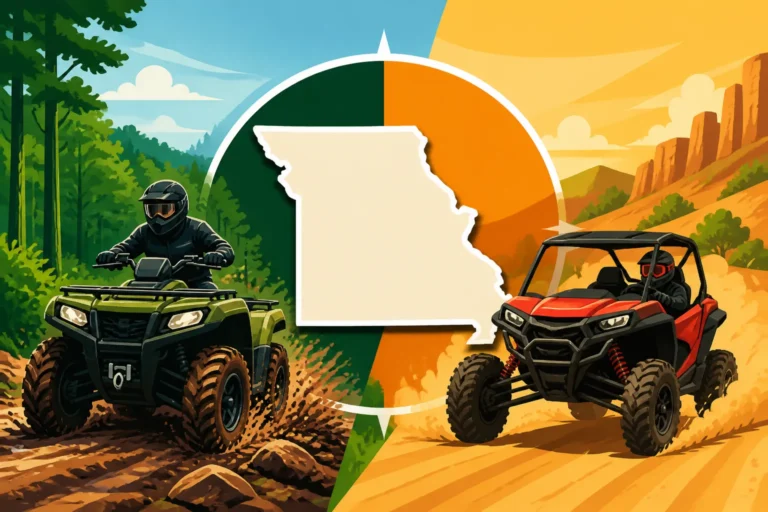
The roughly 3,000 acres refers to riding opportunities spread across two parks: St. Joe State Park in southeast Missouri and Finger Lakes State Park near Columbia. They are separate destinations, not neighboring sections of one trail network. You cannot ride between them, and a trip to both means trailering your machine from one location to the other.
That distinction matters when you’re planning a weekend. A map that shows the combined acreage can make the parks seem like one continuous riding experience, but each has its own entrances, riding areas, rules, and trip logistics. Give each park its own plan: where you’ll stage, what trails suit your machine, how long you want to ride, and where you’ll stay.
The acres also don’t mean that every part of either state park is open to motorized riding. Stay within designated riding areas and marked trails. If you’re researching the two destinations together, start with St. Joe State Park's Sand Flats in Missouri and Finger Lakes State Park in Missouri, then check each park’s own information before you leave.
Different histories created different riding landscapes
St. Joe State Park occupies a landscape shaped by past lead mining. The riding area is known for open sand and tailings, with wooded and more varied terrain mixed in. Its distinctive setting can feel quite different from a conventional wooded trail ride: the open areas give you room to see the terrain, while the surface can call for deliberate throttle control and attention to changing traction.
Finger Lakes State Park developed on land shaped by coal mining. Its trails wind through a mix of wooded ground, rolling terrain, and water features. That setting often feels more enclosed and varied than the wide-open sections at St. Joe. Expect the character of a ride to change as you move through the park rather than assuming every mile will feel the same.
These differences are a big part of the appeal of visiting both parks. St. Joe can scratch the itch for a ride with open, sandy stretches; Finger Lakes offers a different mix of trails and scenery. If you want to compare terrain before deciding where to go first, [Missouri Trails With Sand] and [Missouri Trails With Rock] offer useful context for thinking about what your machine and riding style are suited to.
Acreage is not the same as rideable mileage
Acreage describes the size of an area, not how many trail miles you can cover or how long a loop will take. A large riding area may include open spaces, terrain that riders navigate differently, and trails that branch or connect in ways that aren’t obvious from a quick glance. Your actual ride depends on the routes open to your machine, trail conditions, speed, stops, and your group’s comfort level.
A family with newer riders might spend much of the day on a small selection of manageable routes, stopping often and getting comfortable with the surface. A group of experienced riders may cover more ground, but even they can lose time if a trail is closed, conditions are poor, or someone needs a repair. Plan around the trail map and your group’s pace, not the acreage figure alone.
Before you go, check [Missouri Trail Conditions Before You Ride] and [Missouri Trail Closures to Check First]. A closure or weather-related change can reshape a day’s plan, so it’s worth looking for current park notices rather than relying on an old screenshot or a route someone shared months ago.
Comparing St. Joe State Park and Finger Lakes
| Planning detail | St. Joe State Park | Finger Lakes State Park |
|---|---|---|
| General location | Near Park Hills in southeast Missouri | Near Columbia in central Missouri |
| Riding character | Known for sand and open tailings, with wooded terrain too | A varied setting shaped by former coal-mining land |
| Best planning question | Is your group prepared for sandy, open riding? | Does your group want a more varied, wooded trail experience? |
| Trip style | A destination ride with its own staging and park plan | A separate destination that may suit a central Missouri trip |
| Before unloading | Confirm riding-area access, rules, and trail conditions | Confirm riding-area access, rules, and trail conditions |
St. Joe State Park and its open riding areas
St. Joe is often the park people picture when they hear about Missouri’s well-known ORV destinations. Its sand flats and reclaimed mining landscape give parts of the riding area a more open feel than a forest trail. That can be enjoyable if you like being able to read the ground ahead, but open space shouldn’t be mistaken for effortless riding. Loose material can affect steering and braking, and changing surfaces can catch a rider who is focused only on speed.
Take a little time to learn how your machine behaves on the surface before pushing your pace. A rider who is comfortable on packed dirt may find that sand asks for a different approach. Keep enough space between machines to manage dust and visibility, and avoid following another rider so closely that you can’t react if they slow down or turn.
St. Joe’s setting is also a reminder that the route you choose should fit the least-experienced person in your group. If one rider is new to off-road terrain, talk through the plan before the group spreads out. Decide where you’ll regroup and what to do if someone takes a wrong turn. For more about the park’s distinctive terrain, see Lead Mine Tailings at Missouri's St. Joe.
Finger Lakes State Park and its changing terrain
Finger Lakes offers a different feel, with routes through wooded areas and terrain shaped by the park’s mining history. That variety can make it a satisfying choice for riders who like a trail ride that changes as they go. It can also make it especially important to follow designated routes: the landscape may contain features that look tempting to explore but are not part of the authorized riding system.
For a group with mixed experience, avoid assuming that a wooded route is automatically easy. Turns, changing surfaces, dips, and limited sightlines can require more careful riding than a straight, open stretch. Keep a pace that allows everyone to see and respond to the trail ahead, and be patient when riders are navigating a section for the first time.
Finger Lakes can be a convenient option for a trip centered around Columbia, but convenience doesn’t replace preparation. Check where riding is permitted, how to reach the staging area, and what the park says about access before you load the trailer. The Finger Lakes and Missouri's Coal Mine Past provides more background on how the park’s setting came to be.
Which park should you ride first?
Choose based on the experience your group wants, not on which park sounds more impressive in a headline. Riders interested in open areas and sandy terrain may want to begin with St. Joe. Riders looking for a more varied, wooded ride may prefer Finger Lakes. If you have several days, visiting both gives you a useful contrast—but it also means planning two separate riding days rather than treating the parks as one big route.
Your machine, tires, and group experience matter too. A rider on a stock machine who wants a relaxed outing may have a different idea of a good day than a group looking for challenging terrain. Ask what everyone is comfortable riding, then choose routes that leave room to slow down or turn back without making anyone feel pressured to keep up.
If you’re travelling from outside the area, consider the drive as part of the decision. A park that looks like an easy addition on a statewide map may still require a substantial tow between destinations. Build in time for fuel, meals, unloading, and a proper break rather than trying to squeeze both parks into a rushed schedule.
Planning a Ride at Both Parks
Treat each stop as its own visit
The most common planning mistake is to book a trip around the combined acreage and sort out the details later. Instead, plan St. Joe and Finger Lakes separately. Identify the entrance and staging area for each visit, check trail access, and confirm which riding areas are open. Keep the relevant park information easy to reach so you’re not trying to find it while standing beside a loaded trailer.
If you’re using a digital map, onX Offroad can help with general route planning and keeping your group oriented. It’s still wise to compare what you see in an app with the park’s official maps and posted signs. A digital route line should never be treated as permission to ride somewhere, and a route that appeared on a map in the past may not match current access or closures.
A paper or saved copy of the park map can be handy if your phone battery runs low or reception is limited. Before the group sets off, point out the trailhead, planned route, and a place to regroup. That simple conversation can prevent a minor navigation mix-up from turning into a long search through unfamiliar terrain.
Check access rules and permits before leaving home
Riding in a state park is different from riding on private land or a public road. Each park may have specific requirements for where machines can go, what equipment riders need, and how access is handled. Confirm the rules for the park you are visiting and the type of machine you plan to bring. Don’t assume that a registration decal, permit, or rule that applies in one setting automatically covers another.
Park requirements can also differ from the rules that apply to public roads or other riding areas. A machine that is titled or registered for one purpose does not necessarily have every permit needed for a state park trail. Review [Missouri ORV Permits Explained] and verify the particular requirements for your planned visit. If you’re bringing a wider machine, check restrictions before you travel rather than discovering an access issue at the entrance.
Carry any required documentation in a secure, easy-to-reach place. Make sure everyone in your group understands where the permits or confirmations are kept and who is responsible for them. It’s a small detail, but it’s much easier to sort out at home than at the staging area with the trailer already unloaded.
Build a realistic day around the group
A ride plan should account for more than time on the machine. Loading, unloading, checking equipment, reviewing the map, and taking breaks all use daylight. If you’re visiting with children or newer riders, leave extra room for those pauses. A plan that looks short on a screen can feel much longer when the group is managing unfamiliar terrain or waiting for someone to get comfortable.
Before leaving, agree on a simple group routine. Decide how far apart riders should travel, what to do if someone needs to stop, and where the group will wait at trail junctions. If one machine has a mechanical issue, the rest of the group should know whether to stay together or return to the staging area. Clear expectations help keep the ride calm, especially when riders have different speeds and experience levels.
For a multi-park trip, avoid scheduling a long drive and a full riding day back-to-back without a cushion. You may want to spend one day at each park, with travel or rest time between them. That gives you a better chance to enjoy the differences between the destinations instead of arriving tired and rushing through the second one.
Matching Your Machine and Experience to the Trails
Think about width, handling, and trail access
Machine size is not only a matter of comfort. Width can affect whether a machine is allowed in a particular riding area or can fit through a designated trail. Check the applicable park rules and measurements for your vehicle before setting out. Don’t rely on a quick visual estimate, especially if your machine has added accessories that change its overall dimensions.
Handling matters just as much. A machine that feels stable and familiar on a wide path may feel different on a narrow, uneven, or sandy section. If you’ve recently bought or borrowed a machine, take time to learn its brakes, throttle response, and turning behavior on suitable ground before setting off on a longer ride.
A good match is one that works for both the trail and the least-confident rider in the group. If you’re unsure whether a route suits your machine, stop at posted information and ask park staff rather than pushing ahead. It’s better to adjust the plan early than to find out mid-ride that the route is a poor fit.
Pick a pace that fits the surface
Sand, loose dirt, rocks, and uneven ground each call for attention. At St. Joe, open sandy stretches may invite riders to accelerate, but loose material can make steering less predictable. At Finger Lakes, turns and changing terrain may limit how far ahead you can see. In either park, your safest speed is one that gives you room to respond to the trail and the riders around you.
Leave a sensible gap between machines. Dust can reduce visibility on a dry day, and a rider in front may brake or change direction without much warning. If the person behind you is close, slow down gradually and let them create more space rather than making a sudden move.
It can also help to talk about pace before the group starts. A faster rider may think they’re being helpful by moving ahead to scout, while a newer rider may interpret the distance as pressure to catch up. Agree on a pace and regular regroup points so nobody feels they have to ride beyond their comfort level.
Prepare for weather and changing conditions
Weather can change the way a familiar trail feels. Rain may make surfaces slick or create muddy sections; dry conditions can mean more dust and reduced visibility. A route that seemed straightforward during a previous visit may feel different after a storm or a stretch of hot, dry weather. Check the forecast, but also look for the park’s current trail notices because local conditions can differ from what you see in a general weather app.
onX Offroad may be useful for reviewing routes and helping your group stay oriented, but use it alongside park notices and trail signs. When the two don’t seem to match, follow posted rules and the park’s directions. Keep your phone protected and charged, and don’t rely on a single device as your only navigation plan.
Pack water, basic tools, and any personal items your group needs for a longer outing. On a hot day, take breaks before someone feels depleted, not after. If rain or poor visibility makes the planned ride uncomfortable, shorten the route or return to the staging area. Turning back is a sensible decision, not a failed trip.
Common Planning Mistakes to Avoid
Assuming the acreage means all trails are open
Acreage can create an impression of limitless riding, but park boundaries, designated riding zones, closures, and trail rules still apply. Stay on authorized routes and follow signs at junctions. If a path looks inviting but isn’t marked as an approved trail, don’t use it as a shortcut.
A saved route from a previous visitor can also be misleading. It may show a route that has since changed, or it may not distinguish between a public trail and a track someone recorded off-route. Use digital tools as aids, not as substitutes for official park information. onX Offroad can be one part of your planning, but posted signs and park guidance should shape where you ride.
If you’re uncertain about a trail connection, stop and check before continuing. It’s easier to correct your direction at a junction than after the group has travelled a long distance in the wrong direction. Keep your group together while you figure it out, especially if riders are unfamiliar with the area.
Treating the two parks as interchangeable
St. Joe and Finger Lakes both offer motorized riding, but they do not provide identical terrain or necessarily identical visitor experiences. A machine setup, ride plan, or expectation that worked well at one park may not be ideal at the other. Review each park separately, and give new terrain a little time before settling into a faster pace.
The same goes for trip logistics. Each park has its own approach, staging areas, and local information. Don’t assume that a note about operating hours or access at one destination answers the same question for the other. Check Missouri State Park ORV Hours and confirm details for the park and day you intend to visit.
You’ll get more from the trip if you treat each destination as its own ride rather than trying to compare them minute by minute. Notice what the landscape asks of you, adjust your pace, and let the contrast be part of the fun.
Leaving no time for basic preparation
A rushed departure is a familiar source of avoidable stress: a missing strap, a dead phone, an unclear meeting point, or a forgotten permit can turn the start of a good day into a scramble. Set out your riding gear, check the trailer and tie-downs, and confirm the route before leaving home. If you’re meeting another family at the park, agree on the entrance and a backup way to contact each other.
Check the machine itself too. Look for obvious tire or brake issues, confirm fuel plans, and make sure essential tools and water are packed. The goal isn’t to bring a full workshop; it’s to avoid being caught without the basics when a simple adjustment or a short break would help.
Finally, make sure the ride still feels enjoyable for everyone. If the day is too hot, the trail is rougher than expected, or a younger rider is tiring, shorten the plan. The combined acreage will still be there for another visit. A good day is one where everyone gets back safely and wants to ride again.
Disclaimer
This article is for general informational purposes only and does not constitute professional advice. Laws, prices and regulations vary by location and change over time. Consult a qualified professional for guidance on your specific situation.