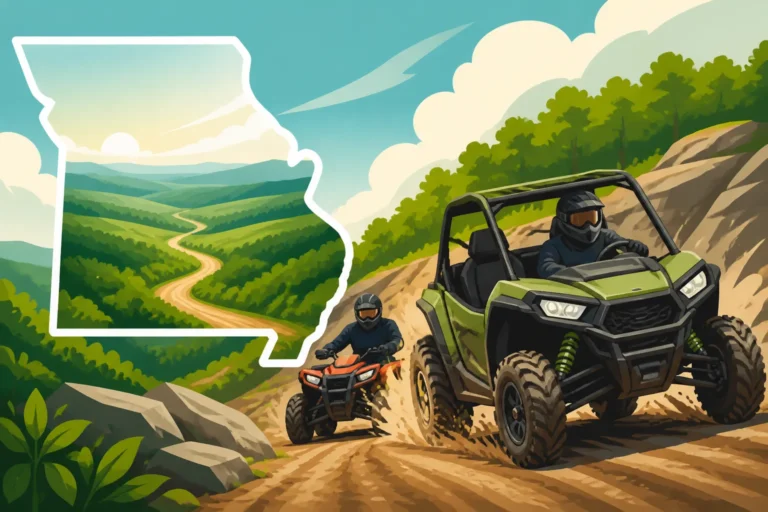
Missouri Multi-Day Trail Rides
A multi-day ATV ride in Missouri can turn frustrating fast when a trail is closed, your campsite is miles from the staging area, or you discover your permit doesn’t cover the next riding site. This guide helps you choose a practical base, plan each riding day, sort out permits and supplies, and leave enough flexibility for Ozark weather and trail conditions.
Choose a ride plan that fits your group
Stay at one riding area or travel between areas
For a first multi-day trip, staying near one riding area is often simpler than hauling your machine to a new trailhead every morning. You can unpack once, learn the local trail layout, and adjust the day’s route to match your group’s energy. It also reduces the chance of losing ride time to loading, navigation, and a long drive between sites.
Missouri has several distinct riding destinations, and they aren’t one connected trail network. St. Joe State Park, near Park Hills, is known for its sand and reclaimed-mining terrain. Finger Lakes State Park, near Columbia, has trails shaped by its coal-mining history. Chadwick and Sutton Bluff offer forest riding in the Ozarks, but each has its own access points, local conditions, and permit considerations. Pick one area as your base unless you deliberately want a road trip between systems.
A two-area itinerary can be rewarding, but treat it as two separate riding stops rather than one continuous trail ride. For example, you might spend one part of a vacation in the St. Joe area and another near Chadwick, with a planned drive and a fresh check of access rules in between. [Planning a Weekend Across Two Parks] can help you think through the extra logistics before you commit.
Match the destination to your riders and machines
A destination that sounds exciting online may not suit every rider in your group. Consider machine width, rider experience, trail surface, and how comfortable everyone is with uneven ground, loose rock, or water crossings. A newer rider may prefer shorter loops and an easy way back to the staging area; an experienced group may be happy to spend more time navigating forest trails.
Machine width can affect where you’re allowed to ride. Before towing to a national forest trail system, check the rules for your specific machine and intended route. The same applies at state parks, where access requirements can differ. Review [Missouri Trails for a Wide Machine] and [Missouri Trails for Beginners] if your group includes wider vehicles or first-time riders.
Children and mixed-ability groups need extra thought. A route that seems short on a map can feel long after a few hours of bumps, heat, and stops. Plan a conservative first day, agree on a regrouping point, and make sure every rider knows what to do if the group gets separated. For help narrowing down options, [Missouri Trails With Long Loops] offers a useful starting point for comparing the kind of riding day your group wants.
| Trip style | Best fit | Main planning consideration |
|---|---|---|
| One area for several days | Families, mixed-experience groups, riders who want less hauling | Choose lodging or camping with convenient trail access |
| Two nearby-area stops | Groups seeking variety with a manageable drive | Confirm each location’s permits, hours, and access separately |
| Multiple distant areas | Longer vacations and experienced planners | Allow time for towing, unloading, fuel, and changing conditions |
| One base with short daily rides | Riders who value a relaxed schedule | Identify shorter routes and a comfortable turnaround point |
Build a realistic multi-day itinerary
Plan ride days around energy, not just mileage
A common planning mistake is filling every day with a long route because the trip is short. That can leave riders tired, make small mechanical problems stressful, and turn a fun weekend into a race against daylight. Instead, think in terms of ride time, terrain, breaks, and the experience level of the slowest rider.
For a three-day trip, a practical rhythm might be a shorter arrival-day ride, a fuller second day, and a flexible final morning. The first ride gives everyone a chance to check equipment and get familiar with the area. The second day can be the main outing if the group feels good and conditions cooperate. Keep the last day adjustable so you can ride a little, pack up early, or skip the trail if weather or fatigue makes that the sensible choice.
Build in time for lunch, water breaks, trailhead checks, and small repairs. A group that stops often may cover less ground than a pair of experienced riders, and that is perfectly fine. Pick a turnaround time—not just a destination—so nobody has to push hard to get back before dark.
Use maps as a planning aid, not a promise
Download or save the maps you’ll need before leaving home, especially if your route passes through areas with unreliable cell service. onX Offroad can be useful for reviewing trail routes and preparing offline map access, but don’t treat any app as confirmation that a route is open, legal for your machine, or safe after recent weather.
Cross-check your plan against the managing agency’s current trail information and posted signs at the trailhead. A line on a digital map may not show a temporary closure, damaged crossing, changed access point, or restriction that applies to a particular vehicle type. [Missouri Trail Maps From State Parks] and [Missouri Trail Conditions Before You Ride] can help you build a more reliable pre-ride routine.
Before starting, make sure each rider can identify the staging area or return route. Agree on a simple regrouping plan: if riders get separated, where do they stop, and how long do they wait? Keep a paper map or written directions as a backup, and save key details such as the campground address and the nearest convenient fuel stop. onX Offroad may help with offline navigation, but a charged phone and a backup plan still matter.
Sort out permits, camping, and essential logistics
Check access rules for each riding location
A Missouri title or registration decal is not the same thing as a riding permit for a public trail system. Access requirements depend on where you ride, and a permit for one location should not be assumed to cover another. If your itinerary includes a state park and a national forest trail area, confirm the rules for both before you load the trailer.
Start with [Missouri ORV Permits Explained], then check the specific destination’s current requirements. Verify which machines are allowed, where permits are sold, whether the permit must be displayed, and whether there are operating-hour or seasonal restrictions. If you’re visiting multiple areas, list the requirements separately so you don’t accidentally rely on the wrong permit at the next trailhead.
Make a final check shortly before departure. Trail closures, storm damage, and temporary access changes can affect a trip even when you planned it carefully weeks earlier. [Missouri Trail Closures to Check First] is a useful reminder to verify the route before the tow vehicle leaves the driveway.
Choose camping or lodging based on the daily routine
The closest place to sleep is not always the easiest base. Look at how you’ll move between your campsite or lodging, the staging area, and fuel or food. A campground that accepts trailers may suit a group carrying several machines, while a motel can be appealing if you want a bed and a hot shower after a dusty ride. Confirm the details directly with the property, including trailer space, parking, and any rules about washing machines.
If you plan to camp, check what the site provides and what you need to bring. Don’t assume every campground has the same hookups, water access, or room for a long trailer. [Camping Near a Missouri Trailhead] can help you think through the distance and setup questions before choosing a site.
Fuel planning is especially important when your ride takes you through rural Ozark areas. Don’t count on finding a station right beside the trailhead or assume it will be open when you need it. Check your route, fill up when convenient, and carry only the fuel and equipment permitted where you’ll be riding. [Fuel Between Ozark Towns] and [Cell Dead Zones in the Ozarks] are worth reviewing when planning rides away from larger towns.
Prepare for the trail and adapt as conditions change
Pack for the terrain and the weather
Missouri trail conditions can change significantly with rain, heat, and the type of ground you’re riding. Loose rock, mud, ruts, and creek crossings place different demands on both riders and machines. Check your tires, brakes, lights, and basic controls before each day, and inspect the machine again after a hard ride. A small issue noticed at camp is easier to deal with than the same problem several miles into a route.
Bring water, food, basic first-aid supplies, a charged phone, and weather-appropriate layers. A compact tool kit and a few machine-specific spares can help with minor problems, but don’t carry gear you don’t know how to use. If your trip includes remote routes, tell someone outside the riding group where you expect to be and when you plan to return.
After a wet night or heavy rain, reconsider creek crossings and low areas rather than assuming the route is unchanged. Water can rise or move debris, while saturated ground can make a familiar trail more difficult. Check [Missouri Riding After Heavy Rain] before deciding whether to follow the original plan.
Keep the group organized and ride considerately
Before you set off, agree on a lead rider, a sweep rider, and a simple way to communicate stops or route changes. Make sure the group knows the intended pace and what to do if someone needs to pull over. Riders should leave enough space to react to dust, loose gravel, sudden stops, and unexpected trail features.
Stay on marked routes and respect gates, closures, and posted restrictions. Shared riding areas may bring you alongside other trail users, wildlife, or maintenance vehicles. Slow down when visibility is limited, give others room, and avoid creating avoidable noise or damage. [Missouri Trail Etiquette on Shared Ground] is helpful for setting expectations before a group ride.
End each day with a quick check-in: Did anyone notice a machine problem? Is tomorrow’s route still suitable? Are trail conditions or weather changing? onX Offroad can help you review the route you intended to take and prepare for the next day, but pair that review with official updates and what you observed on the ground. A flexible plan is usually more useful than trying to stick to a route that no longer makes sense.
Disclaimer
This article is for general informational purposes only and does not constitute professional advice. Laws, prices and regulations vary by location and change over time. Consult a qualified professional for guidance on your specific situation.