St. Joe’s October to March Hours
St. Joe State Park’s off-road riding day gets shorter in fall and winter, which can make arrival time matter more than riders expect. The October-to-March schedule generally means an earlier finish than the warm-season schedule. This guide explains how to plan around the seasonal hours, avoid losing ride time to permits or setup, and check conditions before hauling your machine to Park Hills.
St. Joe State Park’s October to March riding hours
The seasonal schedule and what it means for your ride
St. Joe State Park’s off-road vehicle area generally operates from 8 a.m. to 5 p.m. from October 1 through March 31. That is a shorter riding window than the warm-season schedule, so a plan that works in July may feel rushed in December. If you are traveling from St. Louis, Kansas City, or farther away, treat the closing time as part of your trip plan—not as a rough suggestion.
The important practical point is that the riding area’s schedule is not necessarily the same thing as every park facility’s hours. A park entrance, campground, or other amenity may have different access arrangements. Before leaving home, check the current information for the off-road area specifically, especially if you are making a long drive or arranging a group ride.
For a broader comparison between seasons, see [St. Joe's April to September Hours]. The warm-season article can help you understand why a familiar summer itinerary may need to change once the fall and winter schedule begins.
Plan to be riding before the afternoon gets away from you
A 5 p.m. closing time does not mean it is wise to arrive at 4 p.m. and expect a full outing. You still need to park, unload, secure your trailer, prepare your machine, sort out gear, and complete any required entry or permit steps. A late start can turn the ride into a hurried loop, particularly if the group includes children or riders who need more time to get comfortable.
Try working backward from the closing time. Decide when you want to be back at the staging area, then allow a buffer for a slow return, a mechanical issue, or someone needing a break. In autumn, it also helps to remember that daylight disappears earlier. The official closing time is one limit; fading light, cold hands, and tired riders can make your own practical stopping point earlier.
How to make the most of a shorter winter riding day
Arrive ready instead of building your plan at the trailhead
The easiest way to waste a short riding window is to reach the park without knowing where your group wants to start. Before the trip, agree on a realistic route, decide who is leading, and make sure everyone understands where to meet if the group gets separated. Keep the first loop manageable rather than assuming you can cover the same ground you do during a long summer day.
For example, a family driving in from Farmington might unload, spend a while helping a young rider settle in, and then discover that the group has less time on the trail than expected. A little preparation—packing gloves where they can be reached, checking tie-downs before arrival, and sorting helmets before unloading—can make that first hour feel much less frantic.
Mapping can help with orientation, but do not let a digital route plan replace park signs or posted directions. Some riders use onX Offroad to review an area and organize their route ideas before leaving home. If you use it, treat it as a planning aid and follow the park’s current rules and trail information on site.
Choose a ride that fits the season and the group
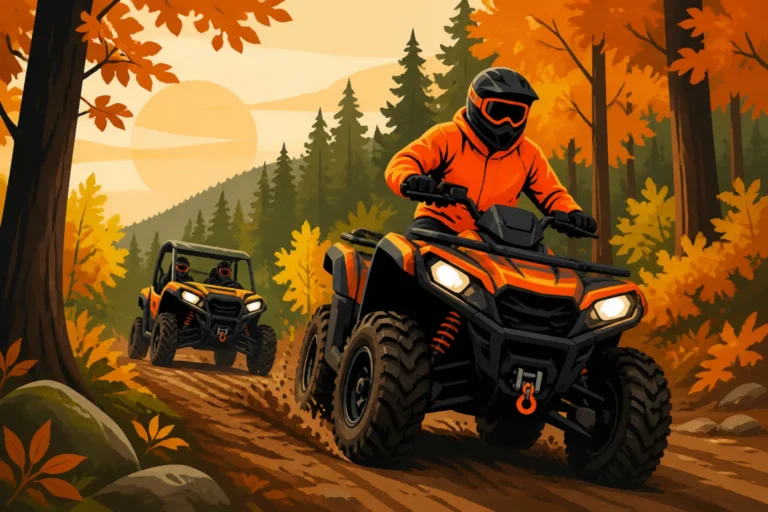
Winter riding can feel very different from riding on a warm, dry afternoon. Cold weather affects comfort, battery performance, and how long riders want to stay out. Mud, wet leaves, or other seasonal conditions can also change how quickly a route feels manageable. Rather than trying to squeeze in every trail, choose a route that matches the least experienced rider and the day’s conditions.
A simple plan might include one main loop, a familiar stopping point, and enough time to return without rushing. If everyone is comfortable and conditions are good, you can decide whether to add more. That approach is easier on a mixed group than setting an ambitious itinerary and asking slower riders to hurry as closing time approaches.
If you want to get a sense of the riding environment before you go, read [Riding the Sand Flats at St. Joe] and [Lead Mine Tailings at Missouri's St. Joe]. Knowing what kind of terrain and scenery to expect can help you choose appropriate tires, clothing, and a pace that feels enjoyable rather than stressful.
What to check before heading to Park Hills
Confirm operating details before you load the trailer
Seasonal hours are a useful planning baseline, but a posted schedule does not guarantee that every part of a riding area will be available on a particular day. Weather, maintenance, special notices, or other temporary conditions can affect access. Check the park’s current visitor information before you leave, and pay particular attention to notices about the off-road vehicle area rather than relying only on general park hours.
It is also worth checking when permit sales or entry processing stop. A rider who reaches the gate close to closing time may not have enough time to complete the entry process and enjoy a worthwhile ride. For details about timing that can affect an afternoon arrival, see [When ORV Permit Sales Stop at St. Joe]. Build your schedule around the time you need to be ready to ride, not just the time you expect to reach the park entrance.
A quick pre-trip check should include:
- Confirm the riding area is open on your planned date.
- Check the seasonal hours and any temporary closure notices.
- Find out whether you need to handle permits or other entry steps before riding.
- Make sure your machine meets the park’s requirements.
- Decide on a turnaround time that leaves a comfortable return buffer.
Check trail conditions and navigation options
A route that sounds straightforward on a map may feel different after rain, wind, or a stretch of freezing weather. Conditions can affect traction and visibility, while a closed or restricted section can change the route you intended to ride. Review [Missouri Trail Conditions Before You Ride] and [Missouri Trail Closures to Check First] as part of your planning, then pay attention to current notices at the park.
Navigation is especially useful when a group has different riding speeds or when someone is visiting for the first time. onX Offroad can help riders look over an area and think through a route before the trip. Download or save the information you intend to use ahead of time if you expect unreliable cell coverage, and carry a backup plan such as a paper map or a clear meeting point. A phone map is helpful, but it should not distract a rider or override park signage.
| Planning item | Why it matters in October through March | Helpful approach |
|---|---|---|
| Seasonal closing time | The riding window is shorter than in the warm season | Set a turnaround time before you start |
| Permit and entry process | Late arrival can leave little time to ride | Check requirements before loading |
| Weather and trail conditions | Cold, wet, or changing conditions affect comfort and traction | Review notices and dress in layers |
| Group pace | A mixed group may need more time for stops and regrouping | Choose a route for the least experienced rider |
| Navigation | Cell service or route assumptions may not be dependable | Save your plan and follow posted signs |
Getting ready for the terrain, weather, and shorter daylight
Pack for cold hands and changing conditions
A ride can feel fine while you are unloading and suddenly uncomfortable once you are moving through wind and shaded areas. Dress in layers that let you adjust without making a long stop. Bring gloves suited to the weather, dry clothing for after the ride, and enough water and snacks for the group. If the forecast looks changeable, pack for the colder possibility rather than hoping the afternoon warms up.
Cold weather also makes small problems more frustrating. A forgotten neck covering or a damp pair of gloves can become the main thing a rider remembers about the day. Check the basic gear before you leave the driveway, especially for children, who may not speak up until they are already cold. Keep extra layers accessible instead of burying them under cargo.
The shorter schedule makes comfort part of time management. If riders need frequent warming breaks, that is completely reasonable; simply plan fewer miles. A relaxed, shorter outing is usually more enjoyable than trying to ride at summer pace while everyone watches the clock.
Prepare the machine and trailer for the trip
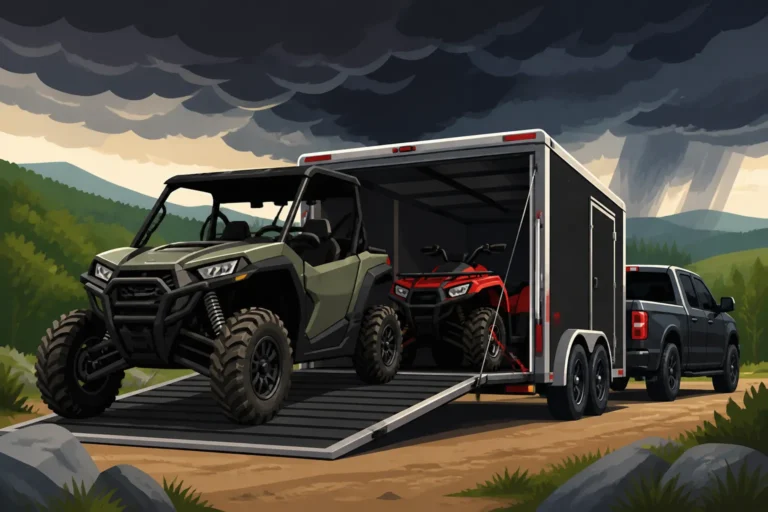
Before departure, inspect tires, controls, lights, brakes, and tie-downs. Make sure your machine is ready for the conditions you expect, and secure loose gear so it cannot shift during the drive. If you are carrying more than one machine, confirm that the loading arrangement still leaves access to essentials such as helmets, gloves, and straps when you reach the park.
At the staging area, take a moment to check the machine again before riding. Look for anything that may have shifted during transport, and make sure each rider understands the plan for regrouping. If a machine has been sitting since summer, do not assume it is ready just because it started in the driveway. A short pre-ride check can help catch a low tire or loose component before it becomes a trail problem.
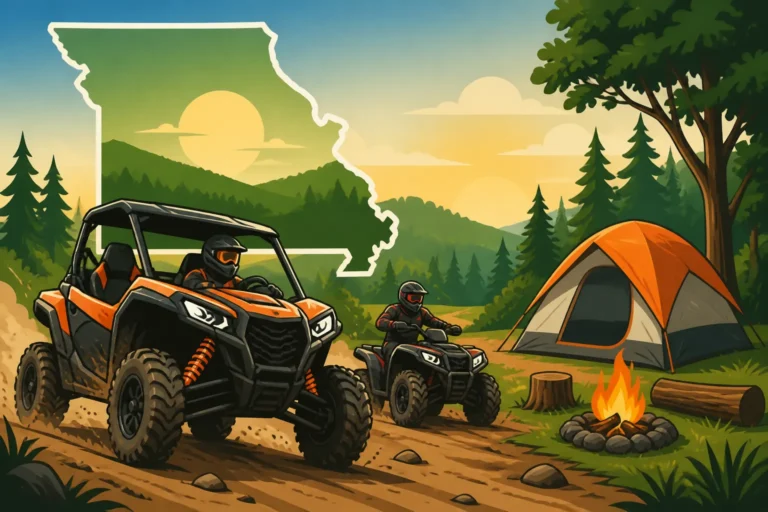
If you are staying overnight, think through where the trailer will be parked and how you will handle the next morning’s departure. [Camping With an ORV Trailer at St. Joe] can help you consider the camping side of a trip, while [Missouri ORV Park Hours] offers a wider look at how riding schedules can differ across Missouri areas.
Common scheduling mistakes to avoid
Treating the posted closing time as ride time
One common mistake is planning to ride until the final minute. That leaves little room for a slow return, regrouping, or a rider who needs help. The safer and less stressful plan is to be heading back early enough that the group can finish without rushing. Set that time before the first loop, and make sure everyone knows it.
Another trap is underestimating how long unloading takes. A trailer packed for several people can take longer to unpack than expected, especially if helmets, cold-weather gear, and tools are mixed together. Organizing those items before arrival saves time and helps prevent the familiar trailhead scramble of searching through bags while the clock is already moving.
Finally, do not assume that arriving at the park before closing guarantees that you can begin a full ride. Entry steps, current conditions, and the time needed to return all matter. When in doubt, choose a short outing or plan a different day rather than turning a late arrival into a hurried ride.
Assuming every route or facility is available
A map, a past visit, or a friend’s description may not reflect the conditions on the day you arrive. Avoid treating an old route plan as a promise that every trail is open. Check current notices, follow posted signs, and be willing to change your plan if an area is closed or conditions are not suitable.
It also helps to distinguish the riding area from nearby park facilities. Visitors sometimes assume that campground access, office services, and off-road riding all share one schedule. They may not. Confirm the details that matter to your trip, including where to enter, where to park, and what must be completed before riding.
Use onX Offroad or another navigation tool to prepare, but keep the park’s official information and signage in charge of decisions on the ground. If the map and posted instructions do not appear to match, stop and check rather than guessing. That small pause is better than losing time—or entering a place you should not ride.
A practical October-to-March trip plan
The day before you go
Start with the basics: confirm the seasonal hours, check for temporary notices, review the forecast, and choose a route that fits your group. Decide how long you are willing to drive for the outing and whether a late start is still worthwhile. If the travel time is long, leaving early usually buys you a more relaxed day than trying to make up for lost time once you arrive.
Pack gear and food in a way that makes the first hour simple. Put helmets and gloves where they are easy to reach, and keep a small tool kit or other essentials accessible. Make sure everyone knows the meeting point and understands that the group may shorten the ride if weather, trail conditions, or fatigue call for it.
For visitors unfamiliar with St. Joe State Park’s riding area, begin with [St. Joe State Park's Sand Flats in Missouri]. It offers useful context for what draws riders to the park. Then compare your plan with [Missouri Trail Conditions Before You Ride] so your expectations are grounded in the conditions you may encounter.
The morning of the ride
Before pulling out, check that the trailer is secure and the machines are ready for transport. Reconfirm the park information in case a notice has changed, and leave enough time to arrive, unload, and complete the steps required before riding. If the group is meeting at the park, share the arrival plan and a backup meeting point in case someone is delayed.
Once you arrive, take your time with the first few minutes. Get everyone organized, review the route, and make sure newer riders know how to signal or stop if they are uncomfortable. Choose a clear turnaround time and stick to it, even if the group is enjoying the ride. A good winter visit does not have to be an all-day marathon; it just needs enough room for a safe, enjoyable outing.
St. Joe’s October-to-March hours reward a little planning. Confirm the schedule, arrive with your gear and route sorted, and leave a buffer before closing. That way, the shorter day feels like a manageable seasonal change—not a race against the clock.
Disclaimer
This article is for general informational purposes only and does not constitute professional advice. Laws, prices and regulations vary by location and change over time. Consult a qualified professional for guidance on your specific situation.