Ticks and Copperheads on a Missouri Ozark Trail
Missouri’s Ozark trails can turn a great ride into an uncomfortable one when ticks are hiding in brush or a copperhead is tucked beside the trail. The best protection is practical preparation, steady attention, and knowing what to do after a bite. This guide covers prevention, trail awareness, and sensible next steps without letting wildlife worries take over your ride.
Why Ticks and Copperheads Deserve Attention on Ozark Trails
Where ticks tend to wait
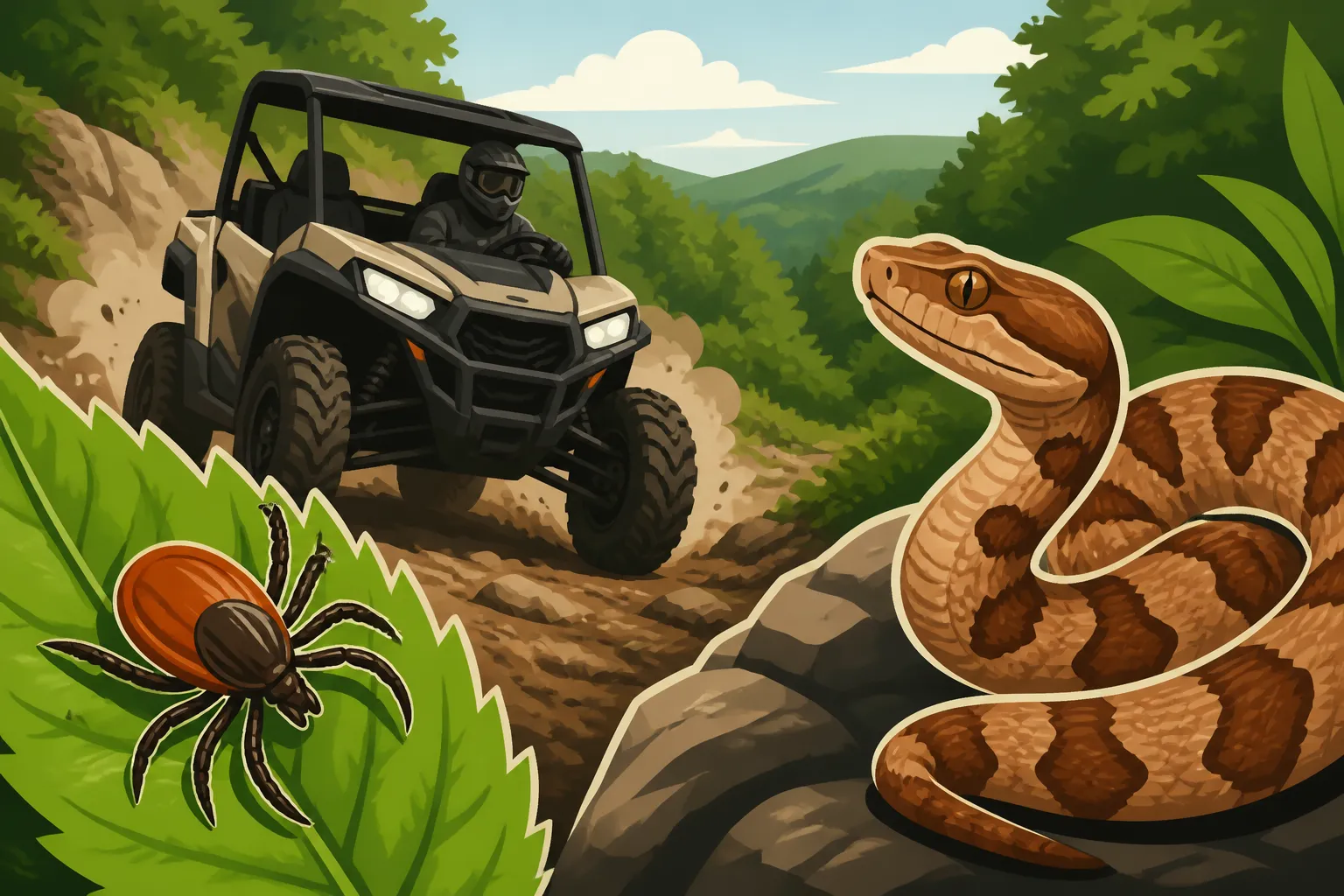
Ticks are often found in tall grass, brush, leaf litter, and along the edges of trails. A rider may never step off the trail and still brush against vegetation with a boot, pant leg, glove, or backpack. During a stop to adjust a helmet, help another rider, or check a map, contact with low plants can give ticks an easy route onto clothing.
Missouri has several tick species, and the risk is not limited to one kind of trail or one part of the riding season. Warm weather often brings more outdoor activity and more chances to encounter ticks, but conditions can vary. Shaded areas, overgrown trail margins, and places where people pause in vegetation are worth treating as potential exposure zones.
Ticks may be small and easy to miss, especially before they attach. That is why prevention should not depend on noticing one while you are riding. Long sleeves and pants, appropriate repellent, and a careful check after the ride work together. For broader seasonal planning, see [Missouri Trail Conditions Before You Ride] and [Riding an Ozark Trail After First Frost].
Where copperheads may be encountered
Copperheads are native to Missouri and may be encountered in wooded areas, rocky terrain, brush, and leaf-covered ground. Their colouring can blend into the landscape, which makes them difficult to spot when they are still. A rider moving at speed may pass close to a snake without seeing it, while someone walking around a parked machine or stepping over a log may come much nearer than expected.
The safest approach is to give any snake space and leave it alone. Do not try to pick it up, move it, corner it, or kill it. Snakes may bite when they feel threatened or are handled, and trying to identify one at close range creates unnecessary risk. If you see a snake on the trail, stop at a safe distance, let it move away if it can, and follow any posted guidance or ranger direction.
A copperhead sighting does not automatically mean a trail is unsafe for the rest of the day. It does mean riders should be mindful of where they place their feet and hands, especially during stops. Areas around logs, rocks, dense brush, and trail edges deserve a quick look before anyone dismounts or reaches into vegetation.
Preventing Tick Bites Before and After the Ride
Dress for vegetation, not just the weather
Lightweight long sleeves and long pants can reduce the amount of exposed skin that brushes against plants. Choose clothing that fits comfortably under your riding gear and does not interfere with safe machine operation. Tuck pants into boots or socks where practical, and consider gaiters if the trail is overgrown. Clothing should still allow you to move freely, stay cool, and use protective gear correctly.
Light-coloured clothing can make ticks easier to notice during a quick check, though it does not prevent them from climbing on. Gloves and tall boots help cover common contact areas, but ticks can still reach skin at clothing openings. Pay particular attention to cuffs, sock lines, waistbands, and the back of the neck after riding through brush.
Use insect repellent according to its label. Some products are intended for skin, while permethrin products are intended for clothing or gear and should not be applied directly to skin. Follow the product directions, including precautions for children and any washing or reapplication instructions. Repellent is one layer of protection, not a substitute for a full-body tick check later.
Make a tick check part of packing up
Build a check into your normal end-of-ride routine instead of waiting until you get home and forget. Before climbing into the truck or trailer, look over exposed skin and clothing. At home, change clothes and check your body carefully, including the scalp, behind the ears, under the arms, around the waist, behind the knees, and in other warm or hidden areas. A shower can help wash away unattached ticks and makes it easier to check your skin.
Check children and riding companions as well as yourself, especially if anyone spent time walking beside the trail or sitting on the ground. Put worn clothes in a separate bag until they can be handled or washed, and check riding gear, towels, and blankets. Pets can also bring ticks back to a vehicle or home, so inspect them and follow veterinary advice for prevention.
| Situation | Practical step |
|---|---|
| Riding through tall grass or brush | Wear covering clothing and use repellent as directed |
| Stopping beside an overgrown trail edge | Choose a clear spot and avoid sitting in vegetation |
| Finishing the ride | Check clothing, skin, and gear before settling in |
| Finding an attached tick | Remove it promptly with fine-tipped tweezers |
| Feeling unwell after a tick bite | Contact a healthcare professional and mention the bite |
A careful routine is more realistic than trying to make every trail perfectly tick-free. If you ride often, keep a small tick-removal tool or fine-tipped tweezers in your first-aid kit. For planning routes and keeping track of a riding area, an app such as onX Offroad can help you review your route before setting out; download any maps you may need before entering an area with weak service. For more on remote riding logistics, see [Cell Dead Zones in the Ozarks].
Remove an attached tick safely
If you find an attached tick, use fine-tipped tweezers to grasp it as close to the skin as possible. Pull upward with steady, even pressure. Avoid squeezing the tick’s body, twisting it sharply, burning it, or applying substances such as petroleum jelly. Those methods can make removal harder or irritate the skin.
After removal, clean the bite area and your hands. If a small part remains embedded and you cannot remove it easily, avoid digging aggressively into the skin; ask a healthcare professional what to do. Make a note of when and where the bite may have happened. If you keep the tick for identification, place it in a sealed container rather than handling it further.
A rash, fever, headache, muscle aches, or other unusual symptoms after a tick bite are reasons to contact a healthcare professional. Symptoms can vary, and not every tick bite leads to illness, but sharing the timing of the bite and your recent outdoor activity can help a clinician assess the situation. Do not wait for a particular rash pattern before asking for medical guidance.
Avoiding Close Encounters With Copperheads
Scan the trail and stop with care
A moving ATV or UTV can make it harder to notice a snake at the trail edge, particularly when the ground is covered in leaves or broken by rocks and roots. Ride at a speed that lets you respond to what is ahead, and look beyond the immediate front of the machine when conditions allow. If visibility is poor, slow down rather than assuming the route is clear.
Choose stopping places carefully. A broad, open area is generally easier to inspect than a patch of dense brush or a pile of leaves. Before stepping off, look around the machine and the ground where you intend to stand. Do not put hands into holes, under logs, or between rocks without being able to see what is there.
This is especially important when helping another rider. It is natural to hurry over if someone has a mechanical problem, but take a moment to check the footing and surroundings first. If the machine is stopped near thick vegetation, move to a clearer place if it is safe to do so before unloading tools or crouching beside it.
Give wildlife room instead of trying to manage it
If a snake is on or near the trail, do not try to drive close to it, push it with a stick, or make it move by throwing objects. Back away calmly and give it an opportunity to leave. If the route cannot be passed without approaching it closely, wait or turn around rather than forcing the encounter.
Never pick up a snake for a photograph. A phone camera with zoom is safer than approaching, and a photo is not necessary if taking it would bring you closer. Do not assume a snake is harmless because it is small, still, or difficult to identify. Treat an unknown snake as something to avoid.
Stay on designated routes and respect trail closures and posted instructions. Wandering into brush to get around a blocked section can create more wildlife encounters and may damage the riding area. Check [Missouri Trail Etiquette on Shared Ground] and [Missouri Trail Closures to Check First] when planning a ride, especially if weather or maintenance may have changed access.
What to Do After a Bite
If you are bitten by a tick
Remove the tick promptly and clean the area. Then keep an eye on how you feel in the days and weeks afterward. If you develop a rash, fever, chills, headache, unusual fatigue, muscle aches, or another concerning symptom, contact a healthcare professional and explain that you ride or spend time outdoors in Missouri. A clinician can advise whether evaluation or treatment is appropriate.
If you are riding with a group, tell someone about the bite instead of quietly hoping it will be fine. That person can help remember when symptoms began and where the exposure occurred, particularly if you become unwell later. Keep the information simple: approximate date, riding location, and when you noticed the tick.
A tick bite does not always cause illness, and symptoms can have many causes. Still, the outdoor exposure is useful information for a healthcare provider. Avoid relying on online identification or a home remedy as a substitute for professional advice when symptoms appear.
If someone is bitten by a snake
Treat a suspected venomous snakebite as an emergency. Call 911 or your local emergency number and follow the dispatcher’s instructions. Keep the bitten person as calm and still as possible while help is arranged. Move away from the snake without attempting to catch or kill it.
Do not cut the bite, try to suck out venom, apply ice, or use a tourniquet. Do not delay emergency care to take a close-up photograph or search for the snake. If it can be done safely from a distance, noting the snake’s appearance may be helpful, but the priority is getting medical care.
Remove rings, watches, or tight items near the affected area if this can be done without disturbing the bite. Keep the person with the group and avoid unnecessary walking or exertion. If you are in a remote area, share your location clearly with emergency services and follow their directions rather than improvising treatment.
Planning a Safer Ozark Ride
Prepare for the route and the group
Before leaving, check the riding area’s current access information, trail notices, and weather. Heavy rain can change trail surfaces, create slippery leaf litter, and make it harder to spot hazards. Consider whether the route matches the experience and stamina of everyone in the group, and identify a practical turnaround point. [Riding After a Week of Ozark Rain] offers a useful companion topic for thinking through wet-trail conditions.
Share your route and expected return time with someone who is not riding. Carry a first-aid kit, charged phone, water, and any navigation tools your group normally uses. Cell coverage can be unreliable in wooded and hilly areas, so do not treat a phone signal as your only plan. A downloaded map or a paper backup can help when the screen has no service.
onX Offroad may be useful for reviewing a route and saving mapping information before you leave, but do not assume an app replaces trail signs, official notices, or local land-management guidance. Check the area’s rules and closures directly, and make sure everyone understands the planned route. For location-specific preparation, see [Missouri Trail Maps From State Parks] and [Riding Chadwick in the Ava Ranger District].
Make the group routine simple and repeatable
Agree on a few habits before the ride: stop in clear areas when possible, look before stepping off, avoid reaching into vegetation, and tell the group if you see a snake or find a tick. A simple routine is easier to follow when riders are tired, dusty, or focused on getting home before dark.
If children or less-experienced riders are along, explain the rules in plain language. They should know not to touch snakes, not to wander into brush, and to tell an adult if they notice a tick or bite. Have an adult check them after the ride, even if they were seated on the machine most of the day.
A good wildlife-safety routine should make riders more prepared, not fearful. Ticks and copperheads are part of the Ozark outdoors, but thoughtful clothing, careful stops, and a clear response plan reduce avoidable risk. When the group knows what to look for and what not to do, it is easier to focus on the trail and enjoy the ride.
Disclaimer
This article is for general informational purposes only and does not constitute professional advice. Laws, prices and regulations vary by location and change over time. Consult a qualified professional for guidance on your specific situation.