Copperheads Near a Staging Area
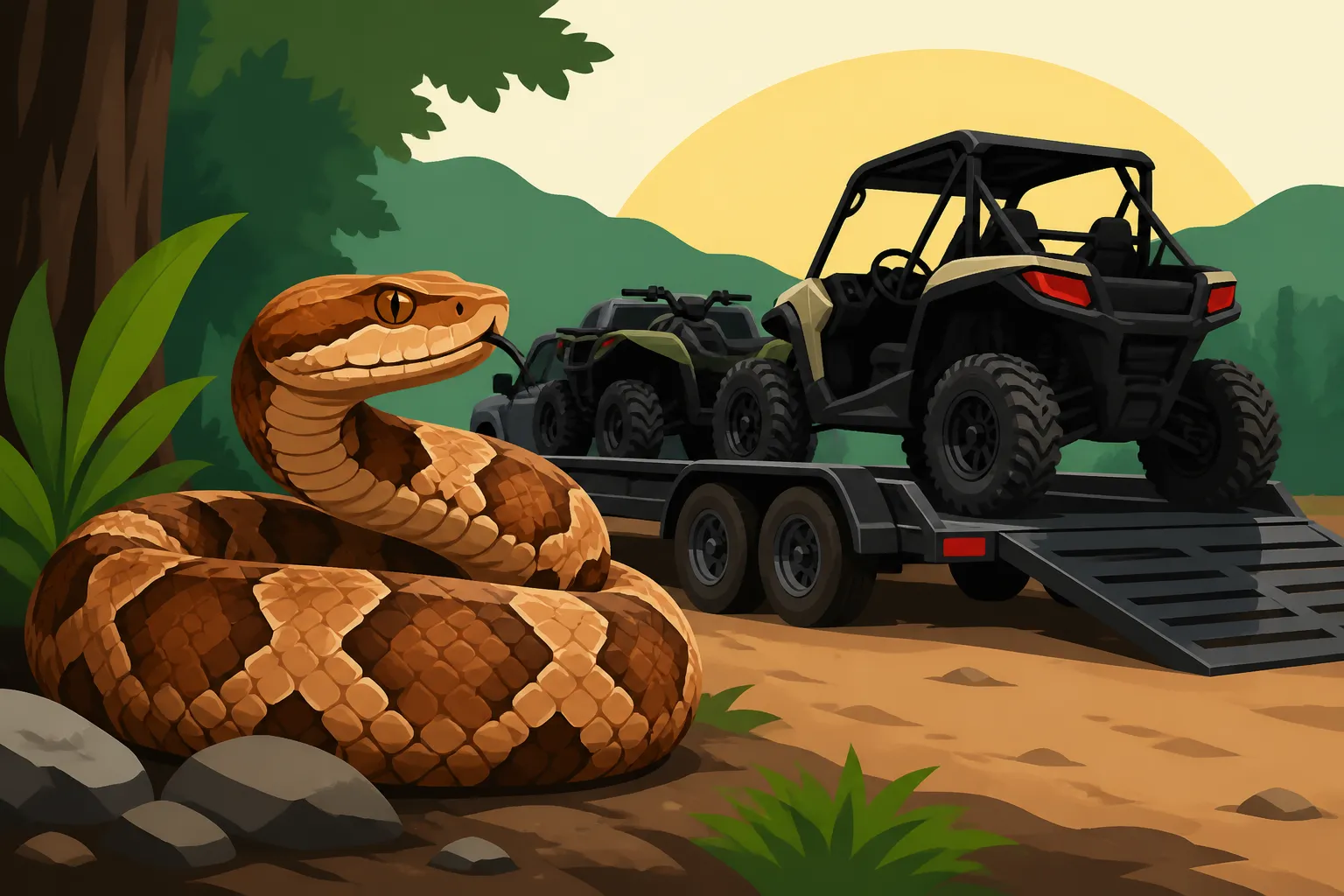
A copperhead near an ATV staging area can turn an ordinary stop into a stressful one, especially when riders are stepping around trailers, tall grass, and piles of gear. The safest response is simple: give the snake plenty of space, keep people and pets back, and alert park staff if it is where riders need to pass. This guide explains how to recognize the risk and prevent close encounters.
Why copperheads may be near a Missouri staging area
What makes staging areas attractive to snakes
A staging area can offer the same basic things copperheads look for elsewhere: cover, shade, and a chance to find prey. Rock edges, stacked logs, leaf litter, brush, and gaps beneath equipment can provide places to shelter. Mice and other small animals may also be drawn to food scraps or clutter, which can make the surrounding area more appealing to a snake.
That does not mean a copperhead is likely to be under every trailer or beside every trailhead sign. It means a busy gravel lot can sit beside habitat that looks very different from the open space where people park. A shaded edge, brushy ditch, or rocky slope may be only a few steps from a staging area.
In the Missouri Ozarks, riders may encounter wooded ground and rocky terrain around trail systems. Conditions vary by location and season, so treat the transition between open parking space and natural cover with care. For broader seasonal considerations, see Ticks and Copperheads on a Missouri Ozark Trail and Missouri Riding After Heavy Rain.
How to recognize a copperhead without getting closer
Copperheads are generally identified by a copper-colored head and darker, hourglass-shaped bands across a lighter body. But color and pattern can be hard to judge in shade, from a distance, or when a snake is partly hidden. A harmless snake may also be mistaken for a venomous one, so identification is not a reason to approach.
If you see a snake, the useful question is not “Can I get close enough to confirm what it is?” It is “Can everyone keep a safe distance while we choose another route?” Do not poke it with a stick, move it with a shovel, or try to photograph it at close range. A phone zoom is safer than stepping nearer, but taking a picture is optional; creating distance matters more.
Tell children that a snake is not something to touch, corner, or chase. Dogs should be leashed and moved away calmly. If the snake is near a walkway, restroom, unloading zone, or other place where people must pass, let a ranger, site employee, or other responsible staff member know rather than trying to relocate it yourself.
How to avoid a close encounter while unloading and gearing up
Check the ground before stepping out
The first few minutes at a trailhead are often hectic. Someone may open a trailer ramp, another person may reach for a helmet, and a dog may be eager to jump down. Pause before stepping into tall grass, leaf piles, or the shaded space beside a vehicle. Look at the ground and around the tires, ramp, and gear before placing your hands or feet.
Wear sturdy footwear when walking around a staging area, especially if you need to step off gravel. Use a flashlight to check dark spaces under a trailer or in a storage compartment, and avoid reaching blindly beneath a machine. Gloves are helpful for handling equipment, but they do not make it safe to handle a snake or put a hand where you cannot see.
Keep your riding gear and food organized instead of leaving bags open on the ground. A tidy unloading spot makes it easier to notice what is nearby and reduces the chance that a child or pet will start exploring brush while the adults are distracted. If the staging area is crowded, agree on a clear place for children to wait while machines are unloaded.
Choose routes and stopping points thoughtfully
Use established parking and walking areas rather than cutting through vegetation to reach a trailer or trail entrance. Before a ride, check local notices and trail conditions, and plan where your group will gather if someone needs a break. A mapping tool such as onX Offroad can help you review your route and understand where you are in relation to marked roads and trailheads; it cannot show whether a snake is present.
Keep the map as a navigation aid, not a substitute for looking around. On a group ride, share the intended route and a meeting point before leaving the staging area. That way, riders are less likely to wander into brush searching for one another if the group becomes separated.
Avoid parking directly against brush or a rock pile when there is a reasonable alternative. Give vegetation a wide berth while walking, and do not sit or place gear in a spot you have not checked. These habits also make the lot easier to navigate for other riders. For practical site awareness, review Missouri Trail Conditions Before You Ride, Missouri Trail Closures to Check First, and Missouri Trail Etiquette on Shared Ground.
| Staging-area situation | Safer choice | Avoid |
|---|---|---|
| Getting out of a truck or trailer | Look at the ground and step onto clear, visible space | Stepping into grass without checking |
| Reaching under a machine | Use a light and inspect from a safe position | Reaching blindly beneath equipment |
| Seeing a snake beside a walkway | Keep people back and notify site staff | Trying to move or kill it |
| Walking a dog | Keep it leashed and away from vegetation | Letting it investigate brush or rocks |
| Choosing a place to gather | Use a clear, established area | Sitting on logs, rocks, or leaf litter without checking |
What to do if you see a copperhead
Give it room and keep the group back
Stop moving toward the snake and calmly tell others where it is. Back away along the route you came from if that route is clear, and keep a generous distance. Do not surround it for a better look. A snake that has an escape route is less likely to be pressed into a defensive position.
If the snake is in the middle of a busy staging area, do not try to herd it toward the woods. People approaching from several directions can make the situation harder to manage. Instead, ask riders to avoid that section and contact the site staff. If you are at a public riding area, follow the posted instructions and use the local contact method provided at the trailhead.
A calm response matters because sudden movements and crowding can make people trip, step into brush, or lose track of where the snake is. Have one adult guide children and pets away while another alerts staff, if that can be done without anyone moving closer. When you use onX Offroad to help describe where your group is, share a trailhead or nearby route location—not a claim that the app can identify or track wildlife.
If someone is bitten
Treat a suspected venomous snakebite as an emergency. Move away from the snake, call 911, and follow the dispatcher’s instructions. Keep the person as calm and still as possible while help is arranged. If it is safe, remove rings, watches, or tight clothing near the bite before swelling increases. Do not delay emergency care to take photos, catch the snake, or drive around looking for a better identification.
Do not cut the wound, try to suck out venom, apply ice, or use a tourniquet. These actions can cause additional harm or delay appropriate care. Do not give the injured person alcohol or medication unless emergency professionals direct you to do so. If you can, note the time of the bite and the person’s symptoms, and tell responders what happened without handling the snake.
A bite can be frightening, but the best help is prompt professional care and a calm, safe trip away from the snake. In a remote riding area, give emergency responders a clear location and the best access route you know. A saved map or shared location from onX Offroad may help communicate where your group is, provided you can use it without delaying the emergency call.
Building a safer routine for every ride
Make a quick arrival check part of unloading
Before anyone gets busy, scan the area around the vehicle, trailer, and walking route. Choose a clear place to unload, keep children close, and leash pets. If you spot a snake, give it space and let staff know if it is near a high-traffic area. A short pause at arrival is easier than managing a surprise encounter while everyone is handling machines and equipment.
When leaving, check under and around your gear before loading. Shake out boots or gloves that have been left outside, and look before reaching into storage compartments. Do not leave food waste or clutter behind; a clean staging spot is more pleasant for the next group and less likely to attract small animals.
Some staging areas are busy and noisy, so set a simple family rule before the ride: if anyone sees a snake, they stop, move away, and tell an adult. Children should never try to identify one by getting closer. Adults can also agree on who will contact staff and who will keep the rest of the group back.
Plan for the place, not just the trail
A good ride plan includes the parking lot, unloading area, and walk to the trail—not only the route itself. Look for posted notices, stay on established paths, and avoid stepping through dense cover when a clear route is available. If you are riding in a forested area, be especially deliberate around shaded edges, rocks, logs, and tall vegetation.
The same attention that helps prevent snake encounters supports safer shared use of the area. Keep speeds low where people are unloading or crossing, and watch for other riders, children, and pets. Missouri Speed Limits at a Staging Area offers related guidance, while Parking a Rig at a Mark Twain Lot can help you think through the practicalities of choosing a parking spot. If a route or lot has a closure or posted restriction, respect it and use the designated alternative.
A copperhead sighting does not automatically mean a riding area is unsafe or that the snake should be harmed. The practical response is to create distance, avoid disturbing it, and report it when it creates a hazard for people. With a little attention before unloading and a clear plan for what to do, your group can handle a sighting without turning it into a risky encounter.
Disclaimer
This article is for general informational purposes only and does not constitute professional advice. Laws, prices and regulations vary by location and change over time. Consult a qualified professional for guidance on your specific situation.