Free Places to Ride an ATV in Missouri
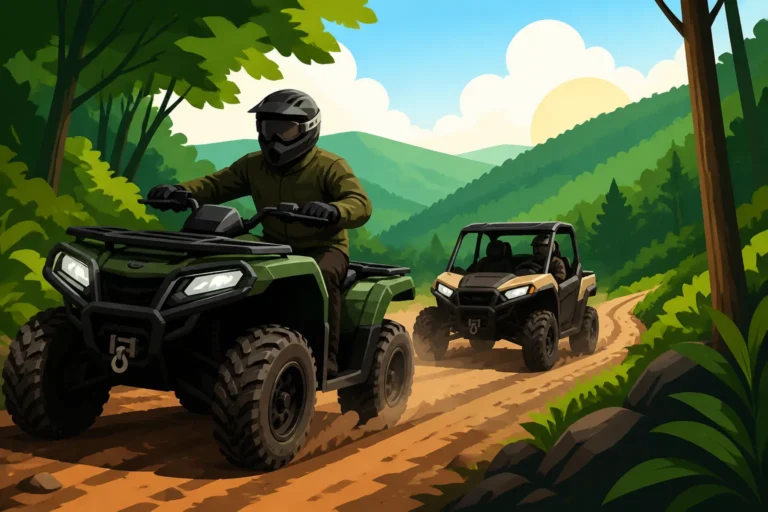
Finding a free place to ride an ATV in Missouri can be frustrating: popular public riding areas often require a permit, while a forest road or conservation area is not automatically open to off-road machines. The most dependable no-fee option is private land you own or have the owner’s clear permission to ride. Here’s how to find legal options and avoid confusing “free to enter” with “open to ATVs.”
Where you can ride an ATV for free in Missouri
Private land you own or have permission to use
Your own property can be the simplest place to ride without paying a park or trail fee. A friend’s farm, family acreage, or a neighbor’s woods may also work—but only if the landowner has explicitly agreed. A gate left open, tire tracks, or an old invitation from years ago is not reliable permission. Ask before unloading, and make sure the permission covers the areas and dates you plan to ride.
Be specific when you ask. Confirm whether you can use existing trails, cross a creek, bring other riders, park a trailer, or ride near livestock. A landowner might be comfortable with one ATV on a back field but not a group riding close to a house or pasture. Agreeing on boundaries beforehand can prevent the awkward—and potentially expensive—moment when someone discovers you riding somewhere they did not authorize.
Respect the land as if you were borrowing someone’s home. Close gates, avoid crops and wet ground that could rut, and pack out trash. If you damage a fence, culvert, or trail, tell the owner and discuss how to make it right. For a deeper look at the basics, see [Missouri Rules for Riding Private Property] and [Missouri Landowner Permission Requirements].
Family farms, hunting property, and rural acreage
A family farm or hunting camp can be a good free riding option when the owner has set clear boundaries. But owning or leasing land for one purpose does not automatically grant permission to ride an ATV across every part of it. A hunting lease, for example, may limit vehicle use to certain roads or dates. Ask the landowner or lease manager directly rather than assuming access comes with the property.
The terrain can be just as important as permission. Low spots and creek crossings may look firm from the trail but turn into deep mud after rain. In the Ozarks, loose rock, steep banks, and hidden washouts can make a short loop challenging. Walk unfamiliar sections first when you can, and do not ride into a flooded hollow or onto ground that is soft enough to leave deep ruts.
A simple agreement can help if you plan to return regularly. Write down the areas you may use, whether guests are allowed, and any restrictions on riding hours, fires, or overnight parking. It does not have to be complicated; the point is to avoid misunderstandings. Keep in mind that landowner permission is about access, not a blanket exemption from safety rules or local laws.
Public riding areas and what they really cost
Free entry does not always mean free ATV riding
Missouri has many public lands and outdoor destinations, but public access alone does not mean ATVs may ride there. Some areas allow off-highway riding only on designated trails, and those trails may require a permit or day-use payment. St. Joe State Park, Finger Lakes State Park, and the Chadwick Motorcycle and ATV Use Area are examples of places riders commonly consider, but you should check each location’s rules and fees before loading up.
There is also a difference between a place with no admission charge and a place where riding is authorized without a riding permit. A trailhead might be easy to access, or a nearby road might be open to ordinary traffic, while the ATV routes still have separate requirements. Review [Missouri ORV Permits Explained] before treating a public area as a free riding destination.
| Option | Can it be free? | What to confirm before riding |
|---|---|---|
| Your own property | Often, aside from your normal ownership and upkeep costs | Local restrictions, safe boundaries, and whether the machine is properly equipped |
| A friend’s or family member’s land | Yes, if the owner agrees | Written or clearly stated permission, permitted routes, guests, and dates |
| A public OHV trail | Sometimes access rules differ by site, but permits or fees may apply | Whether ATVs are allowed, where they may ride, and current permit requirements |
| A conservation area | Do not assume ATV use is allowed | The area’s specific vehicle rules and any designated route exceptions |
| A public road | It may not have an entry fee, but it is not an off-road trail | Road-use law, machine classification, permits, and local restrictions |
Many conservation areas are not ATV riding areas. A gravel access road, boat ramp, or parking lot does not establish permission to ride off-road. Before going, check the individual area’s rules and any posted notices. [Missouri Rules for Riding Conservation Areas] explains why it is important to verify the rules for the specific property rather than relying on a general assumption about public land.
National forest roads are not a free trail network
The Mark Twain National Forest offers a large landscape for outdoor recreation, but that does not mean an ATV can travel anywhere in the forest. Motorized use is generally limited to routes designated for the type of vehicle involved. A forest road open to cars or trucks is not automatically an ATV trail, and a route that looks passable may still be closed to motorized use.
Before heading to a forest riding area, identify the actual authorized route and check whether a permit is required. Also look for temporary closures, storm damage, and seasonal restrictions. Forest rules can differ from those at a state park, so an access pass or permit from one location does not necessarily cover another. See [Missouri Rules for Riding a National Forest] and [Missouri Trail Closures to Check First] when planning.
A mapping app such as onX Offroad can help you study route lines, access points, and nearby roads before a trip. Treat the map as a planning aid, not as permission to ride: posted signs and official land-manager rules take precedence. If the map and a trailhead sign appear to conflict, stop and confirm the route with the land manager rather than risking a citation or damaging a closed trail.
How to find a legitimate no-fee ride
Ask landowners the right questions
Start close to home. Family members, friends, local farmers, and people who own rural property may know of a suitable place, but make your request specific and respectful. Explain how many machines you’re bringing, the kind of riding you intend to do, and how long you plan to stay. If you are looking for a short practice loop rather than a full day of riding, say so.
Before you unload, agree on a few practical details:
- Where can you ride? Ask the owner to point out boundaries or mark permitted routes on a paper or digital map.
- When can you ride? Confirm the day and time, especially if the property is used for farming, hunting, or livestock.
- Who can come? Do not bring extra riders unless the owner has agreed.
- What should you avoid? Ask about gates, livestock, crops, wells, buildings, and sensitive or muddy areas.
- How should you leave the property? Confirm where to park and whether you should close gates or avoid certain entrances.
For a group ride or recurring access, a short written message confirming the arrangement can be helpful. It records the basics without turning a friendly invitation into a complicated negotiation. If access is conditional—such as “stay on the lane” or “don’t ride after rain”—follow those conditions exactly.
Use maps carefully and verify access on the ground
Digital maps are useful for planning, especially in areas where roads and trails can be difficult to distinguish. onX Offroad can help you review a route before leaving home, but a visible line on a map is not proof that ATVs are allowed there. Property boundaries, vehicle restrictions, and closures can be easy to miss when you are zoomed out or looking at an older route record.
Cross-check your planned route with the landowner or managing agency. On arrival, read posted signs at entrances and trailheads. If a road is marked closed, or a trail is identified for a different type of vehicle, do not assume your machine is covered just because the route appears in an app. You can also keep a paper map or saved offline map in case phone service drops in a remote area.
This matters particularly in wooded parts of southern Missouri, where cellular coverage can be unreliable and a quick online search may not work at the trailhead. Before the trip, save the contact details for the land manager or property owner and make sure everyone in your group understands the approved route. [Missouri Rules for Riding Public Land] is a useful starting point for distinguishing public access from authorized ATV use.
What to check before you unload
Confirm your machine and the route are both allowed
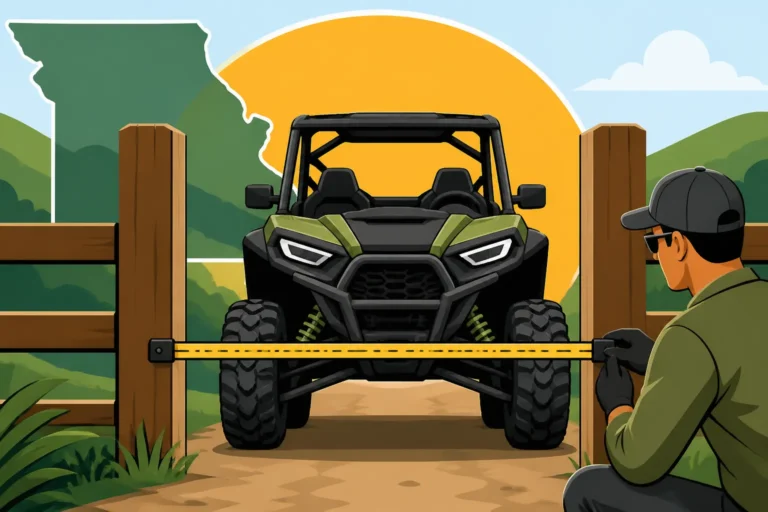
An ATV, utility terrain vehicle, and recreational off-highway vehicle may be treated differently under a site’s rules. Width limits, passenger rules, trail design, and permit requirements can vary by location. Do not assume a trail that fits a narrow quad is suitable for a wide side-by-side, or that a route open to one category of machine is open to every off-highway vehicle.
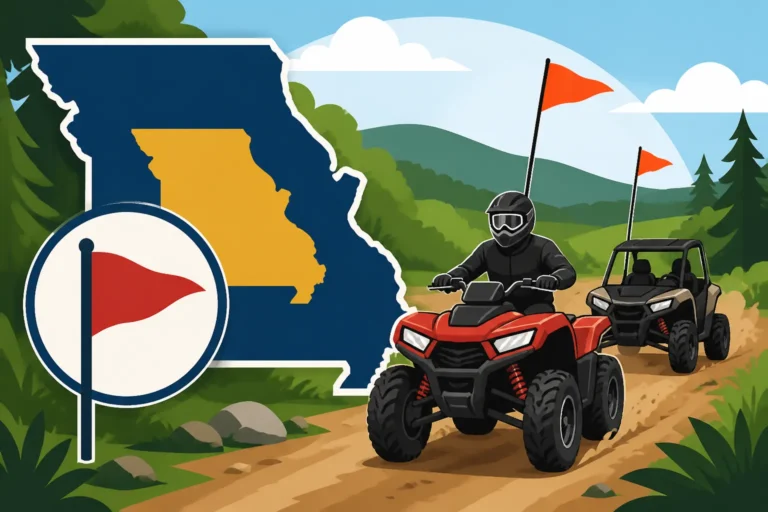
Check the requirements for the exact place and vehicle you plan to use. Confirm whether the trail is open, whether a permit is needed, and whether the site has rules for helmets, flags, lighting, noise, spark arresters, or passengers. If you are visiting a managed riding area, check its official information before leaving home and again before the trip if weather could affect access.
It also helps to make sure your machine’s paperwork and identifying information are in order. A riding location’s access rules are separate from the state’s title, decal, and registration requirements. Paying for access—or finding a free private place—does not replace any state requirement that applies to your machine.
Check weather, closures, and trail conditions
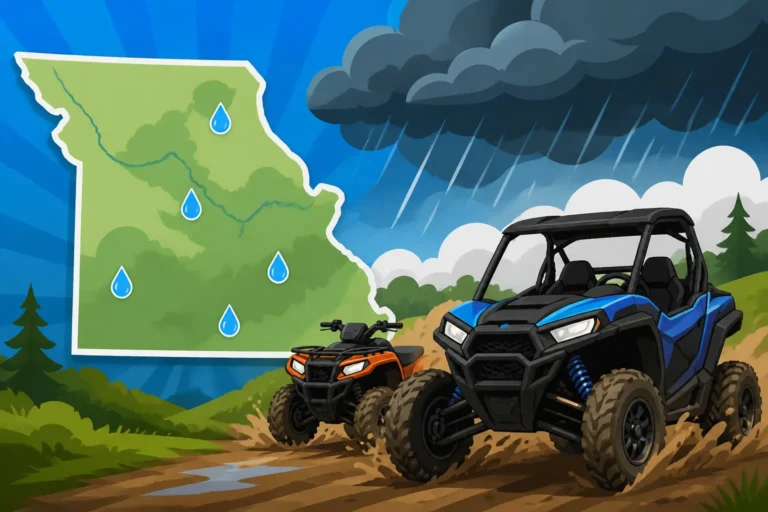
A free ride can become a costly one if a rain-softened track is damaged or a hidden washout catches a wheel. Check recent weather and ask the landowner or riding-area manager about conditions. If heavy rain has fallen, avoid steep slopes, stream crossings, and low-lying trails until you know they are safe and firm enough to ride.
If you are on private land, the owner has the final say about whether conditions are suitable. If you are on public land, follow closure signs and current instructions. Muddy tracks may be closed to protect the soil, and riding around a barrier can widen damage or create new ruts. For practical planning, [Missouri Trails Closed After Rain] covers why trail conditions deserve a check before you head out.
Finally, plan for the ride itself. Tell someone where you are going, bring water and basic tools, carry a first-aid kit, and agree on a turnaround time. If you are riding on private property, keep the owner’s number available in case you encounter a gate, injured animal, or unexpected problem. A little preparation makes a no-fee outing more enjoyable—and helps preserve the access that made it possible.
Free ATV riding in Missouri is most dependable on land you own or have clear permission to use. Public lands and trail systems can offer excellent riding, but rules and fees vary, so confirm the details before you go. A map can help you plan; only the landowner or managing agency can confirm that you are allowed to ride the route.
Disclaimer
This article is for general informational purposes only and does not constitute professional advice. Laws, prices and regulations vary by location and change over time. Consult a qualified professional for guidance on your specific situation.