Missouri Private Pay-to-Ride Parks
Finding a private ATV park in Missouri can be harder than it sounds: a place may have trails that suit your machine but not your riding style, schedule, or family. This guide explains how pay-to-ride parks differ from public trails, what to check before loading up, and how to plan a safer, less frustrating day on the trail.
What to expect at a private pay-to-ride park
Private parks generally charge for access to land and trails they manage. That can make them a useful option when you want a designated riding area rather than trying to piece together a route across public land. But “private park” does not automatically mean the same experience everywhere: terrain, permitted machines, operating hours, admission arrangements, and rules can vary.
A park’s website or direct contact should be your source for its current operating details. A map listing or an old social media post may not reflect a temporary closure, a special event, or a change in access.
Private parks and public riding areas are different
A pay-to-ride park sets its own access rules for its property. Public riding areas, such as Missouri state parks or national forest trails, have their own land-management rules and permit requirements. A private park’s admission does not replace a permit needed elsewhere, and a public-land permit does not grant access to private property.
That distinction matters if you’re planning a weekend with more than one destination. For instance, a private ride day near Seymour is not the same outing as riding a public trail system in the Mark Twain National Forest. Check the rules for each location separately, including where you’re allowed to unload and ride. [Choosing a Missouri Private Park Over a State Park] offers another way to think through the trade-offs.
Private land still comes with boundaries and rules. A park may specify which trails are open, where vehicles can be unloaded, whether passengers are allowed, and what equipment riders need. Don’t assume that a trail visible on a map is open to park visitors, or that permission to ride one section extends to neighboring land.
Terrain and riding style can vary widely
One park may be appealing for a relaxed outing on established routes, while another may be better suited to riders looking for more demanding obstacles. Missouri terrain can include Ozark rock, wooded slopes, muddy sections, and creek crossings. Conditions can change quickly after rain, so a trail described as manageable in dry weather may feel very different when it is slick.
Before committing to a destination, look for information about trail difficulty, vehicle-width limits, and whether the park has routes appropriate for beginners or younger riders. If your group has mixed experience, ask whether there are options that allow newer riders to enjoy the day without feeling pressured to tackle difficult terrain. [Missouri Trails for Beginners], [Missouri Trails With Rock], and [Missouri Trails With Creek Crossings] can help you think through the kind of terrain your group is seeking.
How to choose a Missouri private ATV park
The best park is not necessarily the closest one or the one with the most dramatic photos. It is the one that fits your machine, comfort level, group, and available time. A little research before you leave can prevent a long drive that ends with a closed gate or a trail system that doesn’t suit your vehicle.
Check the park’s current access and admission details
Confirm that the park is open to the kind of visitors you are planning to be. Some private properties may have limited public access, special event schedules, reservations, membership arrangements, or other conditions. Ask whether riders need to check in, what payment methods are accepted, and whether admission covers the whole group or is handled separately for each rider or machine. For a better sense of how to budget, see [A Day Rate at a Missouri Private Park].
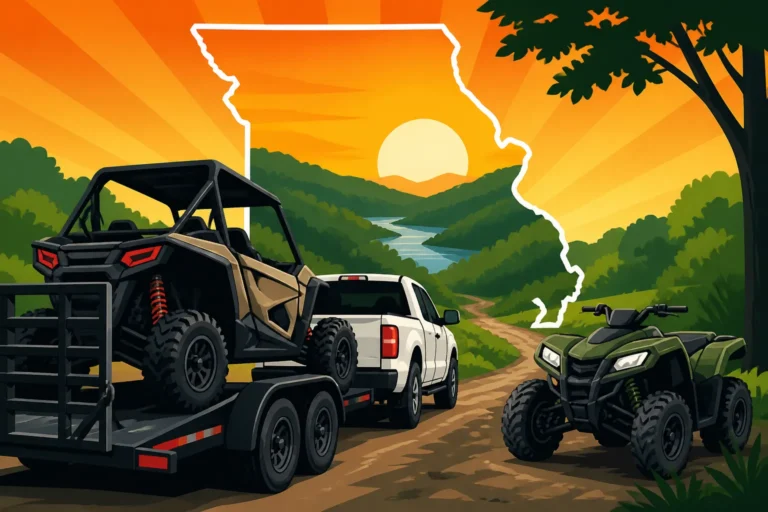
Also ask about arrival and departure procedures. A park may have a designated entrance, staging area, or unloading location. If you’re towing a trailer, find out whether there is enough room to turn around and park. These details are easy to overlook when you’re focused on trail maps, but they can make a big difference when you arrive with a full-size rig.
Missouri riders researching private options may come across Southern Missouri Off Road Ranch near Seymour or Brick’s Off Road Park near Poplar Bluff. Treat any park name you find as a starting point for checking current access, rules, and operating information directly. Conditions and visitor arrangements can change, and not every property is open to every rider at all times.
Match the park to your machine and your group
Before you go, confirm that your ATV or UTV is permitted and fits any vehicle restrictions. A trail system designed around narrow machines may not be suitable for a wider side-by-side. Ask about width limits, passenger rules, and any equipment requirements. If your machine has been modified, describe it accurately rather than assuming it will be treated like a stock model.
Be equally honest about the group’s experience. A confident rider on a familiar quad may be comfortable with steep, rocky trails, while a first-timer on a youth machine may need easier routes and frequent breaks. If children are riding, check the park’s age and supervision rules directly, and choose an area that matches their skills—not just their enthusiasm. [Missouri Riding With Children at a Park] is useful background when planning a family outing.
A map can help you orient yourself, but it cannot tell you everything about a trail’s current condition or whether a route is open. Tools such as onX Offroad can support route planning and help you review the surrounding area, but confirm access and closures with the park itself. Treat mapped lines as planning information, not proof that you have permission to ride every segment.
| What to check | Why it matters | A useful question to ask |
|---|---|---|
| Current access | A listing may be outdated or access may be limited | Is the park open to visitors on the day we plan to ride? |
| Machine type and width | Some routes may not accommodate every ATV or UTV | Are there restrictions on vehicle type, width, or passengers? |
| Trail difficulty | Your group may have a wide range of abilities | Are there beginner-friendly routes or alternate loops? |
| Admission and check-in | The process can differ between properties | How do we pay, check in, and receive park rules? |
| Weather and closures | Rain can affect trail conditions and access | Are any trails closed or conditions affected by recent weather? |
| Trailer and staging space | A tight entrance can make arrival difficult | Where can we unload, park, and turn around with a trailer? |
Plan the ride before you load the trailer
The simplest way to avoid a stressful start is to make a short checklist the day before. Confirm access, inspect the machine, and pack for the kind of terrain the park describes. That’s especially helpful when you’re traveling with children, towing a side-by-side, or making a longer drive from places such as St. Louis, Kansas City, or Springfield.
Prepare for the actual trail conditions
Check the forecast for the park area—not just the forecast where you live. Ozark rain can turn a rocky incline or creek crossing into a slick, muddy obstacle. If the park reports closures or advises against riding after heavy rain, take that seriously. Riding around a closure can damage trails, create hazards, and put you on land where you do not have permission to be.
Pack basic items suited to your machine and the day: water, food, protective riding gear, a first-aid kit, and a way to contact your group if riders become separated. Keep a phone charged, but don’t count on continuous service in wooded or hilly areas. Download or review useful maps ahead of time, and agree on a simple regrouping plan before anyone heads down a different trail. onX Offroad may help with pre-ride route planning, but a phone map is not a substitute for posted park directions or local instructions.
Give your machine a practical check before departure. Look at tires, brakes, lights, fuel, and tie-downs, and make sure your trailer is ready for the trip. After a muddy or wet ride, clean and inspect the machine before storing it. Creek crossings and repeated exposure to mud can leave grit where it is easy to miss, particularly around moving parts.
Make room for changes to the plan
A good riding day doesn’t require covering every mile. If a trail feels beyond your group’s ability, turn around where it is safe to do so. If weather worsens, a machine develops a problem, or someone is tired, stopping early can be the sensible choice—not a failed outing.
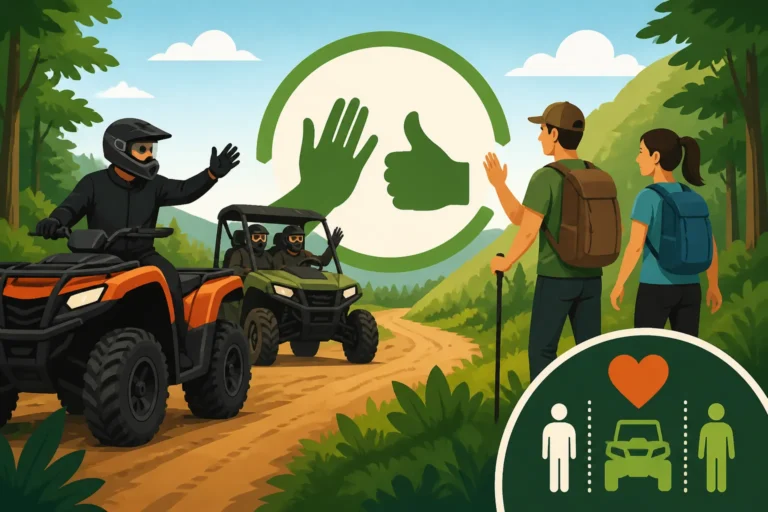
Agree in advance on how the group will handle different speeds. Experienced riders may want to move ahead, but beginners and children should not feel pushed to keep up. Pick meeting points, carry a basic repair kit, and keep riders together when the terrain or visibility makes it difficult to communicate. [Missouri Trail Conditions Before You Ride] and [Missouri Trails That Fill Up on Weekends] can help you prepare for conditions and busy-day logistics.
If your plan includes another riding destination after the private park, recheck the rules for that location rather than carrying assumptions from one property to another. Public-land permit requirements, trail closures, and vehicle rules are separate from the private park’s conditions of entry. Keeping the day’s plan flexible makes it easier to choose a safe alternative if a trail is closed or conditions are not what you expected.
Questions to ask before choosing a park
A quick phone call or message can resolve uncertainties that a map or search result cannot. It also gives you a chance to explain your setup—a two-seat UTV, a youth ATV, or a machine with a trailer—and find out whether the property is a practical fit.
Confirm rules that affect your specific ride
Ask whether your machine is allowed and whether any trails have width or vehicle-type restrictions. Check the rules for passengers, minors, helmets, and protective gear. Do not assume that rules at one park apply at another. If the park has a posted waiver or check-in process, ask who needs to complete it and whether a parent or guardian must be present for a young rider.
Ask about trail closures and weather policies, too. A park may close certain routes after heavy rain or during maintenance. If you have driven a long distance, learning about a closure before you leave home is far better than finding out at the entrance. Ask whether access is limited on event days and whether you need to reserve or register ahead.
If directions lead you onto a road or driveway that appears to cross private property, do not treat that as permission to ride beyond the park boundary. Confirm where park access begins and where visitors are allowed to travel. A route shown in a mapping app may pass through land that is not part of the riding area.
Ask about practical arrival details
Find out where to park and unload, whether the staging area can accommodate your trailer, and what facilities are available. Do not assume a park has fuel, food, repair supplies, restrooms, or overnight accommodations. If your group needs any of those, confirm before departure and make a backup plan.
You can also ask whether the park has a trail map, difficulty descriptions, or an orientation process for first-time visitors. onX Offroad can be part of your planning toolkit, while the park’s own information should guide decisions about access and on-site rules. Carrying both a plan and a willingness to adjust it is often what turns a potentially frustrating day into a good one.
Private pay-to-ride parks can be a practical way to enjoy Missouri’s off-road terrain, especially when you choose a property that fits your machine and your group. Verify access directly, understand the rules, and check conditions before setting out. For broader trail planning, explore [Missouri Trails With a Staging Lot] and [Missouri Trail Difficulty Ratings].
Disclaimer
This article is for general informational purposes only and does not constitute professional advice. Laws, prices and regulations vary by location and change over time. Consult a qualified professional for guidance on your specific situation.