Parking a Rig at a Mark Twain Lot
Arriving at a Mark Twain National Forest trailhead with a truck, trailer, and unloaded ATV can turn stressful fast if the lot is full, muddy, or too tight to maneuver. This guide explains how to choose a suitable staging area, park without blocking access, prepare for limited services, and check the rules before leaving your rig unattended.
Choose a suitable Mark Twain National Forest staging area
Match the lot to your machine and trailer
A parking area that works for a pickup may not be comfortable for a truck towing a long trailer. Before setting out, think about the whole rig: vehicle length, trailer length, turning radius, and whether you will need room to unload and secure your ATV or UTV. A narrow entrance or crowded turnaround can become a real headache when other riders are arriving at the same time.
Mark Twain National Forest riding areas include places such as Chadwick in the Ava Ranger District and Sutton Bluff in Reynolds County. The layout and available parking can differ from one trailhead to another, so don’t assume that a lot you used on a previous visit will suit every vehicle combination. If your trailer is wide or you are hauling more than one machine, look for a designated staging area with enough space to park fully clear of the roadway and maneuver without backing into trail traffic.
A map can help you plan the approach, but treat it as a planning aid rather than a promise about parking conditions. onX Offroad may help you inspect the route and identify mapped riding locations before you leave home. Still, the signed entrance, posted notices, and conditions on the ground should guide your final decision. A mapped trail or access point does not automatically mean there is room for a large truck and trailer.
If you are choosing between a few possible trailheads, compare the drive in, the likely space to turn around, and what you’ll do if the preferred lot is full. For a broader look at where forest riding is available, start with Missouri National Forest ATV Permit and Riding Chadwick From Sparta. For a different local trail system, Finding Your Way on Sutton Bluff’s Numbered Trails can help you plan around the area’s marked routes.
Read the signs and use the designated parking area
Once you arrive, take a moment to read the signs before unloading. Trailhead notices may explain where parking is allowed, which routes are open, whether a permit is required, and whether any temporary closure or restriction applies. Forest roads and trail access can change with weather, maintenance, or other local conditions. If a sign conflicts with an app or an older map, follow the current posted instruction and confirm details with the responsible ranger district when needed.
Park so your vehicle and trailer are completely out of travel lanes, gates, and access points. Don’t use a road shoulder, turnaround, or entrance apron as overflow parking if doing so could prevent a fire engine, maintenance vehicle, or other visitor from getting through. Avoid blocking another trailer’s exit, even if the lot looks quiet when you arrive. A rider may return from the trail while you’re away and need room to load.
If the designated area is full, don’t improvise by leaving the rig where it narrows the road or blocks a gate. Move to another authorized location or change your plan. Checking the trailhead board and local notices before unloading is part of the visit, not an optional step; Reading the Trailhead Board Before You Unload and Missouri Trail Closures to Check are useful reminders to build that pause into your arrival routine.
Plan for permits, closures, and changing conditions
Keep parking separate from riding authorization
Finding a place to park does not mean you have permission to ride every nearby road or trail. Parking access, trail access, and permit requirements are separate things to confirm. Review the rules for the specific riding area before you haul your machine there, including what permit applies and what it covers. A vehicle registration decal is not necessarily the same as a trail permit.
For Mark Twain National Forest riding, check the applicable forest permit information and the rules for the route you intend to use. What the Mark Twain Forest ATV Permit Covers is a helpful place to begin, and [Missouri Rules for Riding a National Forest] offers relevant context. Confirm any details that affect your trip directly with the appropriate forest office or posted trailhead information, especially if you are visiting a less familiar area.
Keep proof of any required permit accessible, whether you carry it on your person or store it safely in the vehicle as the rules allow. Don’t leave paperwork where it can blow away or get soaked while you unload. For a practical checklist on what to bring and where to keep it, see Showing a Forest Permit on Your Phone. A phone copy can be convenient, but don’t rely on your phone alone if you expect weak service or a drained battery.
Check weather, trail status, and access before loading up
Rain can make a trailhead approach muddy, wash out a low crossing, or contribute to temporary closures. A route that was easy to tow into during a dry spell may be uncomfortable for a heavy rig after sustained rain. Forest roads can also have rough sections, fallen limbs, or other obstacles that are not obvious from a broad map view. Check local updates before you leave, and be willing to switch destinations if access or riding conditions have changed.
A mapping app such as onX Offroad can help with advance route planning and understanding the general layout of an area. If you use it, review the map before you lose service and save any information the app allows you to access offline. Then check the official notices and signs when you arrive. App maps, community notes, and saved pins are useful aids, but they should not override a closure sign or establish that a road is open to your particular vehicle.
For a weekend trip, have a backup plan that doesn’t depend on squeezing into one popular lot. That might mean choosing another authorized trailhead, shifting your arrival time, or postponing the ride when severe weather has affected access. Use Missouri Riding After Heavy Rain to think through the risks of wet conditions, and Cell Dead Zones in the Ozarks to plan for areas where you may not be able to call for directions or help.
Park and unload without creating a hazard
Set up a safe unloading routine
After parking, take a quick look around before you lower ramps or unload machines. Check that you are not extending into a roadway, blocking a neighboring vehicle, or leaving equipment in a place where other riders need to walk or turn. Keep children close while trucks and trailers are moving through the lot, and don’t let anyone stand behind a vehicle that is backing up.
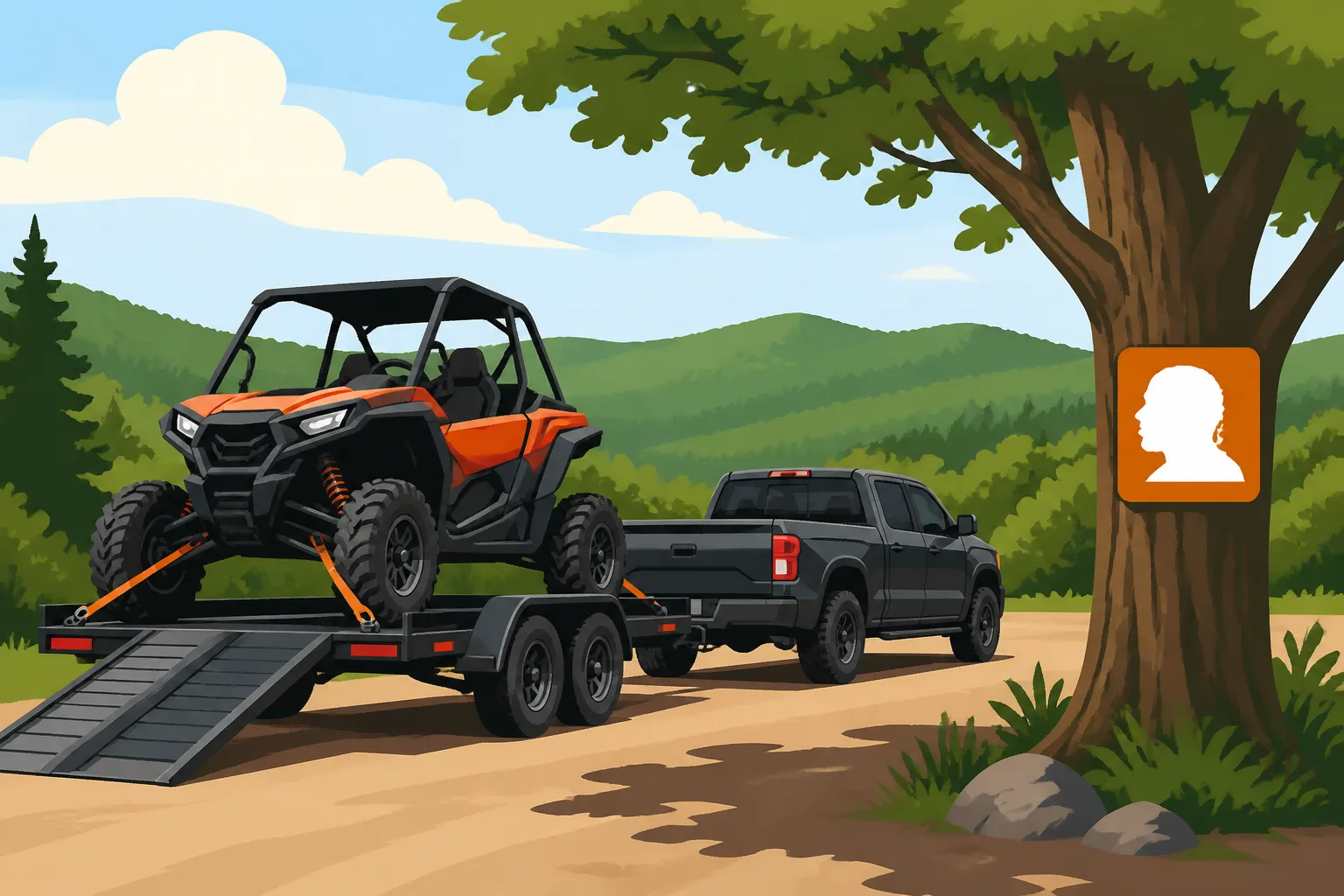
Unload in a controlled sequence. Set the parking brake, secure the trailer, and make sure the ramp is stable before a machine moves on it. Avoid leaving a ramp down while you step away to find a trail map or adjust gear. When several groups arrive together, communicate clearly about who is moving a machine and who is spotting. A crowded lot is a poor place to assume everyone can see you.
Before riding away, check that the truck and trailer are locked and that valuables are out of sight. Take your keys, phone, permit information, and essential safety gear with you. Store food and scented items securely rather than leaving them exposed in a vehicle. In a remote setting, it’s sensible to note where you parked and tell someone your riding plan and expected return time.
Leave enough room for other visitors
A trailer can occupy more space than expected, especially when it is parked at an angle or left connected to a truck. Use only the space you need, and don’t spread gear across neighboring spaces. If the lot is filling, pack up promptly after unloading rather than treating the parking area like a private staging yard. Keep ramps, tools, and tie-downs contained so they don’t become trip hazards.
Avoid parking in front of barriers, signs, gates, or trail entrances, even for a brief stop. Those areas need to remain clear for other visitors and authorized vehicles. Don’t drive around a closed gate to find a closer place to unload. If the lot is too tight for your rig, the safer response is to relocate to an appropriate parking area, not to force a maneuver that may damage the road edge or block access.
If you plan to leave the rig for several hours, make sure you understand whether the chosen location allows that kind of parking. A day-use staging lot is not automatically an overnight parking area. For a closer look at that distinction, read Overnight Parking at a Missouri Trailhead. When camping is part of the trip, confirm that the campsite and trailer arrangements are permitted rather than assuming the trailhead lot can serve as an informal campsite.
Prepare for limited services and the trip home
Don’t count on a trailhead having what you need
Many forest riding areas are remote compared with a city park. A trailhead may not have fuel, food, drinking water, restrooms, reliable phone service, or a nearby repair shop. Make those arrangements before you leave a larger town, and carry enough water and basic supplies for the group. Keep your fuel plan realistic: riding farther than expected or taking a wrong turn can use more fuel than a short loop suggests.
Before departure, check where the nearest fuel and services are along your route, not just near your destination. Fuel Between Ozark Towns can help frame that kind of planning. Save directions and key contact details before entering an area where cell service may be unreliable. onX Offroad can be one part of a navigation plan, but bring a charged phone and consider a separate backup such as a paper map or written route notes.
A simple pre-trip check can prevent avoidable problems: confirm your trailer lights, tire condition, hitch connection, tie-downs, spare tire, and roadside equipment. Secure loose cargo before driving forest roads, where rough surfaces can shift gear. After riding, check that the machine is properly loaded and tied down before heading out. A few extra minutes in the lot are preferable to discovering on the highway that a strap has loosened.
Confirm overnight arrangements rather than guessing
If you are staying overnight, distinguish between trailhead parking and an established campsite. A lot beside a trail may feel like a convenient place to sleep, but that does not establish that overnight use is allowed. Check the rules for the specific site, whether camping is permitted, and whether a trailer can be accommodated. Camping at Cobb Ridge is a useful starting point for riders considering that area, but confirm current site information before relying on it for a trip.
Also consider the practical side of an overnight stop. Is there a legal place to leave the trailer while you ride? Can you secure the machines? Is the campground entrance suitable for your rig? Do you need to reserve or use a particular site? These questions matter just as much as the trail plan, especially for families or groups carrying multiple machines.
Before leaving the lot for the ride, make one final check: the rig is parked where permitted, nothing blocks access, the trail is open, required permits are in order, and someone knows your plan. Good staging habits won’t guarantee an empty lot or perfect trail conditions, but they make it much easier to adapt calmly when a Mark Twain National Forest ride doesn’t go exactly as expected.
Disclaimer
This article is for general informational purposes only and does not constitute professional advice. Laws, prices and regulations vary by location and change over time. Consult a qualified professional for guidance on your specific situation.