Choosing a Missouri Private Park Over a State Park
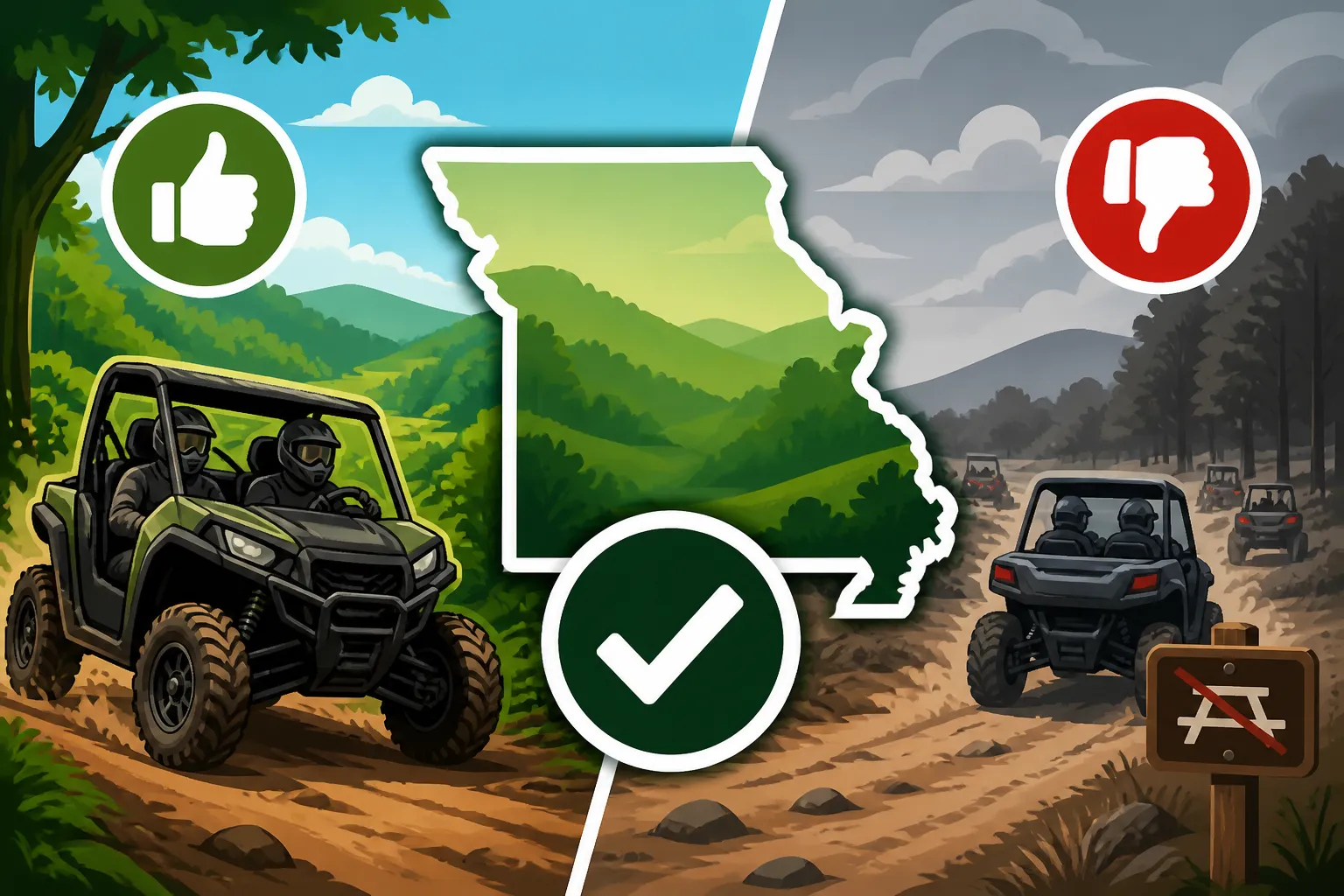
A private riding park can feel like the easier choice when you want a marked loop, a place to unload, and a full day on the machine. But private parks and Missouri state park riding areas may differ in terrain, access rules, permits, and amenities. This guide helps you compare them before you load the trailer, so you can choose a ride that fits your machine and your group.
How private parks and state park riding areas differ
Access, fees, and what your payment covers
A private park usually sets its own entry rules and charges for access according to its policies. Depending on the property, that may mean a day pass, a riding permit, a reservation, or an additional charge for camping or rentals. Ask what the payment covers before you go: a basic entry fee may not include every activity or amenity.
State park riding areas have their own access requirements. For example, St. Joe State Park and Finger Lakes State Park are well-known Missouri destinations for off-road riding, but a state park permit is not a universal pass for every trail system in the state. Forest riding areas and privately operated parks can have separate rules and permits. Do You Need a Permit for Missouri State Park Trails? and Missouri ORV Permits Explained are useful starting points when sorting out which access system applies.
The practical difference is that a private property’s rules come from its operator, while public riding areas follow the rules of the agency managing the land. Either way, don’t assume that a registration decal, an entry payment, or a permit from another riding area automatically covers your visit. Check the destination’s own instructions before leaving home.
Terrain, trail layout, and riding style
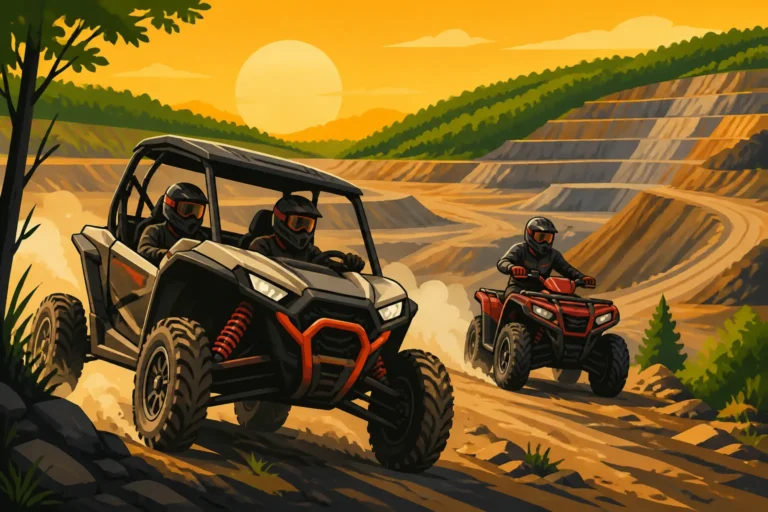
Private parks can be appealing when you want a particular kind of riding day. One property may emphasize mud, another may have wooded trails or open riding areas, and another may offer a mix. The variety is part of the appeal, but “private park” does not tell you what the riding will be like. Look for a current trail map or description, and ask about the difficulty and machine-width limits that matter for your vehicle.
State park areas also vary. A place that suits a family easing into off-road riding may feel very different from a rugged trail system with rocky sections, steep climbs, or water crossings. Think about your least-experienced rider as well as your most confident one. If the group includes a beginner, ask whether the property has an easy route or a separate practice area rather than assuming every trail is suitable.
A mapping app such as onX Offroad can help you review routes and plan how to reach a riding area, especially when you’re comparing unfamiliar destinations. Treat any map as a planning aid, not a substitute for the park’s current trail information or posted signs. Conditions, closures, and access rules can change, and a line shown on a map does not guarantee that a route is open to your machine.
Compare the ride with your machine and your group
Check width, rider experience, and trail difficulty
Before choosing a park, confirm that your machine is allowed and fits the property’s restrictions. A narrow ATV and a wide side-by-side may not have access to the same trails. Some public trail areas use width limits, while private parks set their own vehicle rules. Measure the machine as the property instructs, including any accessories that affect its overall width. Missouri Trails for a Wide Machine and Best Machine Width for Missouri Parks can help you think through how vehicle size affects your options.
It’s also worth checking whether the park accepts the full range of vehicles in your group. If one person is bringing an ATV and another is bringing a UTV, don’t assume they can ride every route together. Ask whether there are shared trails, separate routes, or restrictions on passengers. A mismatch between a machine and the available trail system can turn an eagerly planned outing into a day spent waiting at the staging area.
For families, ask about age rules and supervision requirements before arrival. Some properties may have dedicated areas for younger riders or may restrict which routes they can use. State park rules and private park rules can be different, so confirm directly with the destination. The articles Riding With Children at a Park and [Missouri Supervision Rules Under Sixteen] offer helpful questions to consider when planning with younger riders.
Decide how much structure you want
Some riders prefer a clearly organized facility with check-in instructions, posted routes, and staff or park rules to follow. Others are comfortable with a less structured day, as long as access and trail conditions are clear. When comparing a private property with a public riding area, ask how trails are marked, where riders should unload, and what to do if they encounter a closure or need assistance.
A group with mixed skill levels may benefit from an area with distinct routes or a beginner-friendly section. On the other hand, experienced riders looking for a longer or more challenging day may care more about trail mileage, terrain variety, and whether the loops connect. Don’t rely only on broad descriptions such as “family-friendly” or “challenging.” Ask what those labels mean on the ground: rocky climbs, deep mud, narrow wooded trails, or something else.
If you use onX Offroad to compare route options, cross-check the route against the park’s own map and riding rules. This can help you spot practical questions before the trip, such as whether a trail appears to suit your machine or whether the route might be longer than your group wants. It cannot confirm that the park will allow your vehicle on every mapped path, so the property’s current guidance should be the final word.
Compare amenities, logistics, and riding rules
Look beyond the trail itself
A good riding day depends on more than terrain. Consider the drive, parking or staging setup, restroom access, food and fuel options nearby, and whether the property offers camping. Private parks may offer amenities that are important to your group, but what’s available varies by operator. State park riding areas also differ in their facilities and nearby services. Check the details for the specific destination rather than generalizing from another park you’ve visited.
Think through the day from the moment you leave home. Will you arrive with a full tank? Is there room to turn around with a trailer? Does the park require you to unload in a particular area? If you are camping, can you bring your trailer to the site, or will you need to arrange a separate place to stay? Those details can matter more than a small difference in trail length.
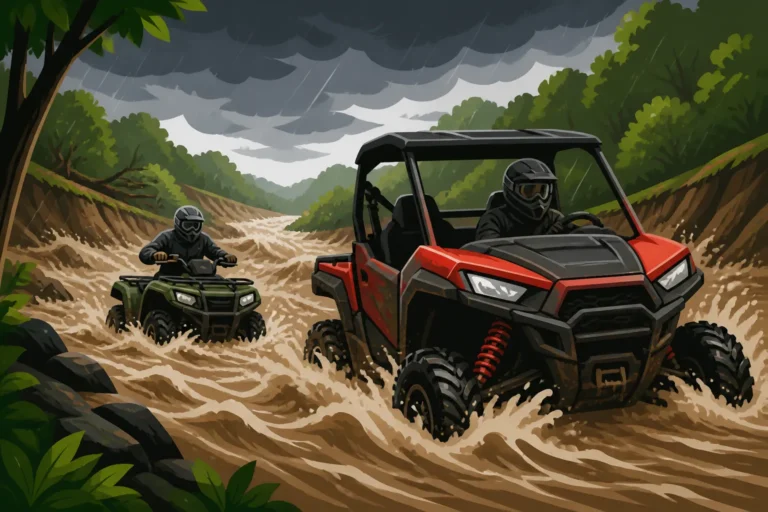
Weather and recent conditions deserve attention, too. Missouri rain can make some routes slippery, muddy, or temporarily unsuitable, and dry spells can change the feel of dusty trails. Check for closures and condition updates before loading up. Missouri Trail Conditions Before You Ride and Missouri Trails Closed After Rain can help you build a pre-trip check into your routine.
Understand permits, equipment rules, and trail etiquette
Before you go, confirm what permits or entry documents are required, where to buy them, and whether they need to be displayed or carried. A state park permit may not cover a private park, and a private park’s admission does not replace any separate requirements that apply to public land. If you’re visiting a forest trail system as part of the same trip, check that system’s permit rules separately. What the Mark Twain Forest ATV Permit Covers explains why it’s important to distinguish one riding area’s requirements from another’s.
Ask about equipment rules, including helmets, flags, spark arresters, noise limits, and passenger restrictions. Requirements may vary by land manager and by the type of machine. Even when a rule sounds familiar, confirm it for the destination you plan to ride. Showing up with the wrong safety equipment or an ineligible vehicle can mean losing the day before you reach the trails.
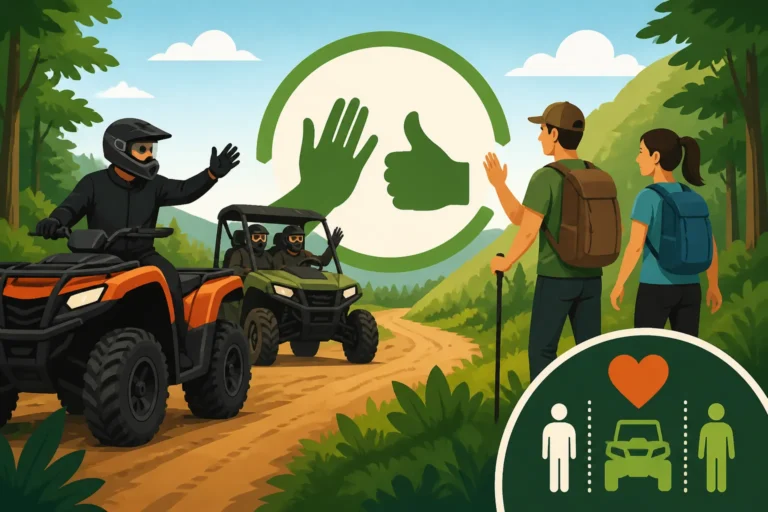
Good etiquette matters in private and public riding areas alike. Stay on marked routes, slow down near staging areas, give other riders room, and follow instructions from staff or posted signs. If you meet hikers, horseback riders, or other trail users, reduce speed and pass carefully when the route allows. Pack out litter, avoid spinning tires unnecessarily, and respect closed gates and barriers. A considerate rider helps keep access open for everyone.
| What to compare | Private riding park | State park riding area |
|---|---|---|
| Access and payment | Check the operator’s entry, reservation, and amenity policies | Check the relevant public-land permit and access rules |
| Trail selection | Varies by property; ask for a map and difficulty details | Varies by riding area; check the land manager’s trail information |
| Machine restrictions | Set by the property and may differ from other parks | Set by the managing agency and may include width or equipment rules |
| Amenities | Vary; confirm camping, restrooms, rentals, and staging details | Vary by location; check the specific park’s facilities |
| Closures and conditions | Ask the operator for current information | Check the managing agency’s notices and trail updates |
| Best next step | Contact the property directly before traveling | Confirm permits, rules, and conditions for that exact riding area |
Choose the destination that fits your day
When a private park may be the better fit
A private park may make sense if you want a specific style of riding, prefer a single operator to answer access questions, or are looking for amenities that suit your group. It can also be a practical option when you want to visit a destination that offers routes or facilities not found at the public riding area you were considering. The important part is to verify that the park actually offers what you need rather than choosing based on its name or a few photos.
For example, imagine a family bringing a novice rider and a more experienced adult. The novice may need an easy practice area, while the adult wants a longer route. A private park could be a good choice if it confirms that both options are available and allowed for the machines they’re bringing. If the property cannot answer those questions clearly, another destination may be a more comfortable choice.
Private does not automatically mean easier, safer, or less crowded. A park can be busy, have challenging terrain, or impose strict equipment requirements. Check the operator’s current rules, ask about the busiest periods, and make sure everyone in the group understands where they may ride. A quick call can prevent a long drive followed by an awkward conversation at the gate.
When a state park riding area may suit you better
A state park may be the better fit if you’re interested in a public riding destination such as St. Joe State Park or Finger Lakes State Park and are comfortable following that area’s access procedures. Public sites can be a good match for riders who want to explore a recognized destination and plan around its posted trail information, permit system, and facilities.
But don’t choose a state park simply because you expect it to be free, open to every vehicle, or covered by a permit you already have. Confirm the rules for the exact location and machine. If you’re weighing a state park against a forest trail system, compare their permit and route requirements separately. Missouri National Forest ATV Permit is relevant if a Mark Twain National Forest ride is part of your decision.
Use onX Offroad as one part of your planning when you’re comparing distances, routes, and nearby riding opportunities. Then confirm access with the park or land manager, check the trail map, and review current conditions. That combination is more dependable than relying on a single app, a dated forum post, or an assumption based on a previous visit.
A useful final check is to write down the details before loading: destination, entry or permit requirements, machine limits, rider rules, open trails, and where you’ll unload. If any answer is unclear, contact the operator or managing agency. The right choice is the one that matches your vehicle, your group’s experience, and the kind of day you actually want—not simply the place with the most appealing description.
Disclaimer
This article is for general informational purposes only and does not constitute professional advice. Laws, prices and regulations vary by location and change over time. Consult a qualified professional for guidance on your specific situation.