Trailering Across the State
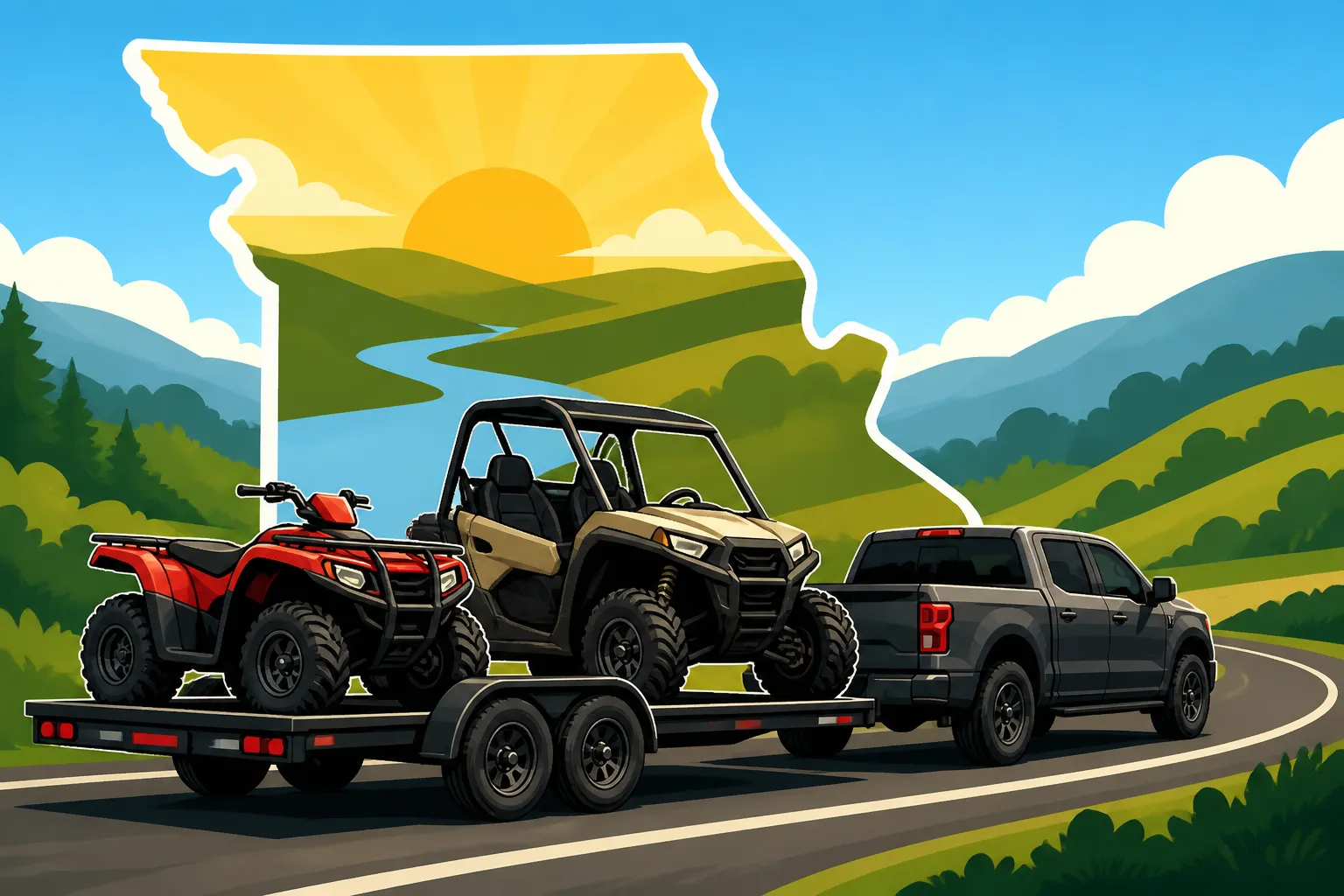
A long drive to a Missouri riding area can go sideways before the first trail ride: a trailer may not fit the campsite, the route may include roads that are awkward to tow on, or the trail system may be closed after rain. This guide helps you plan the haul, choose practical stops, protect your machine in transit, and arrive ready to ride.
Plan your route around the riding area
Pick the destination before choosing the highway
Missouri’s riding areas are spread across the state, and the best route depends on more than the distance on a map. A trip to St. Joe State Park near Park Hills is different from a haul to Finger Lakes State Park outside Columbia or a weekend in the Ozarks around Chadwick. Consider the roads you’ll tow on, the time you expect to arrive, and whether you’ll need to fuel or stay overnight along the way.
A route that looks shortest on a phone may lead through tight town streets, steep grades, or turns that are uncomfortable with a long trailer. Before leaving, review the route with your vehicle and trailer in mind. If you’re not used to towing, favor a straightforward route over a small time saving, especially when you’re driving an unfamiliar stretch after dark.
Also decide whether you’re going to one riding area or combining several. A two-park trip can sound efficient, but moving camp and loading machines between destinations takes time. Planning a Weekend Across Two Parks can help you think through that kind of itinerary before you commit to it.
Mapping tools such as onX Offroad can help you explore the area and keep your planned route organized. Treat any app as a planning aid rather than the final word on access: confirm trail access, operating details, and closures with the park or land manager before you tow all the way there.
Check trail conditions and access before loading
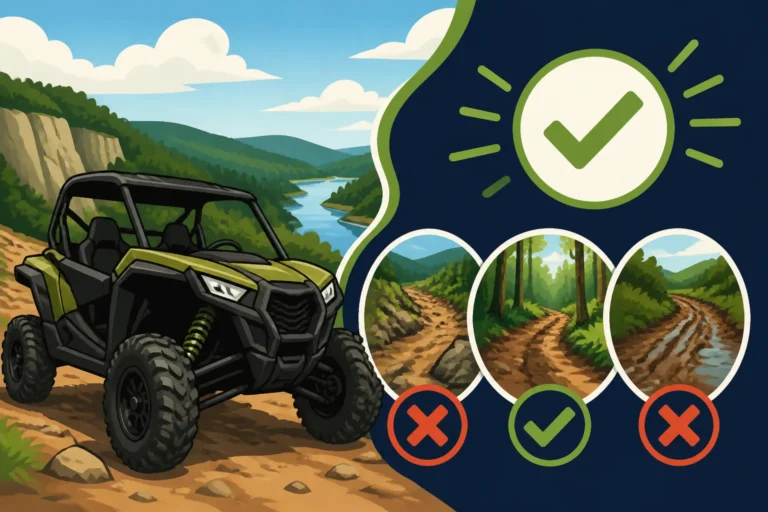
A trail system’s normal schedule does not guarantee that every trail will be open on the day you arrive. Heavy rain can leave muddy sections, wash out approaches, or prompt temporary closures. In the Ozarks, a route that was manageable in dry weather can become a poor choice after a wet spell. Check Missouri Trail Conditions Before You Ride and Missouri Trail Closures to Check First as part of your trip preparation.
Make a quick call or check the official notice from the place you plan to ride, especially after storms or before a holiday weekend. Ask whether the riding area is open, whether the machine you’re bringing is allowed, and whether there are any special entry or staging instructions. A map may show a road or trail line without telling you whether it is currently open to your vehicle.
This is also when to check your planned arrival time against access arrangements. If the trip runs late, you don’t want to discover that you’ve reached a closed gate or a full staging area with a trailer behind you. Save the destination details and the relevant notice on your phone, and keep the address or directions somewhere you can access if reception drops.
Match your trailer and overnight plans to the destination
Confirm the staging area can handle your rig
A riding area can be open while its staging area is crowded, muddy, or difficult to maneuver through with a trailer. Before departure, find out where riders unload, whether trailers can remain parked during the ride, and whether the lot has room for your tow vehicle and trailer together. Missouri Trails With a Staging Lot is a useful starting point when comparing destinations.
Think about the whole rig, not just the ATV or UTV. A long truck-and-trailer combination needs more turning room than a solo vehicle. If you arrive during a busy weekend, a tight lot can make backing and unloading stressful, especially when other riders are moving through the same space. Arriving earlier can give you more room to park and unload without feeling rushed.
Use onX Offroad or another mapping tool to get familiar with the area, but verify the actual parking and unloading setup with the riding area. Satellite imagery can be old, and a visible clearing is not necessarily an approved place to park. If you’re uncertain, ask the land manager where trailers are expected to go.
Choose a campsite that fits the trailer
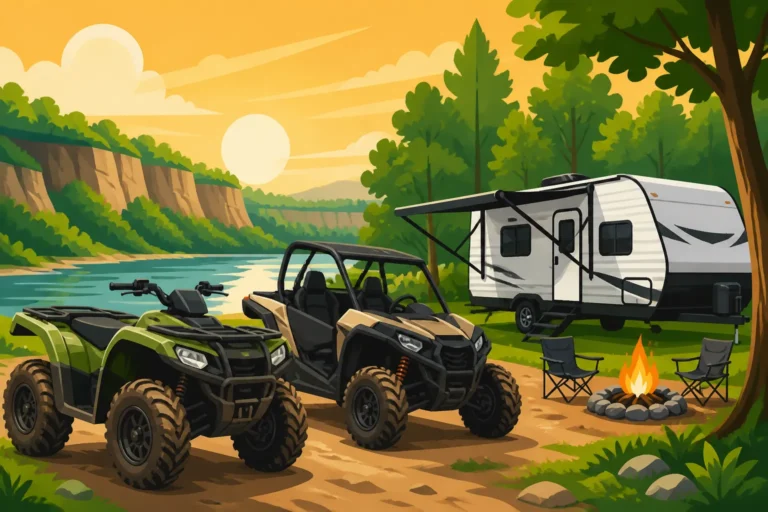
If you’re staying overnight, confirm the campsite can accommodate your tow vehicle and trailer before you reserve or arrive. A site that fits a tent or a small car may not have a level, usable space for a truck, trailer, and camping gear. Ask about site length, turning room, surface, and whether you can keep the trailer with you.
Some riders prefer a campground near the riding area; others want to camp where they can unload and ride with minimal extra driving. Either way, make sure the plan works for the trailer, not just the people. Finding a Campsite That Takes Trailers covers the details worth checking before you set out.
If the campground cannot fit your rig, look for a legal, designated place to stay and park rather than assuming you can leave a trailer in a nearby lot. Confirm any parking rules directly with the property or campground. A little time spent checking can prevent a late-night search for somewhere safe to turn around or leave your equipment.
| Trip detail | What to confirm before departure | Why it matters |
|---|---|---|
| Route | Road conditions, turns, grades, and suitable places to stop | A tow-friendly route can be easier than the shortest route |
| Riding access | Operating status, closures, and machine access rules | A mapped trail is not proof that it is open |
| Staging lot | Trailer parking, unloading space, and busy-period conditions | Crowded or tight lots can make arrival difficult |
| Campground | Site dimensions, trailer parking, and surface | Not every site can fit a full tow rig |
| Fuel stops | Fuel availability along the route and near the destination | Remote stretches can leave fewer convenient options |
| Backup plan | An alternate destination or overnight stop | Useful if weather or a closure changes the trip |
Prepare the machine and trailer for the haul
Inspect the trailer before loading
A long haul puts steady stress on trailer tires, lights, couplers, and tie-down points. Before loading, check that the tires look sound and are properly inflated for the trailer, the lights work, and the coupler is secured to the tow vehicle. Inspect the safety chains and breakaway equipment if your trailer has it, and make sure the ramps are firmly stored for travel.
Look over the deck for loose boards, damaged tie-down loops, or anything that could shift under load. If the trailer has been sitting for a while, don’t assume it is ready just because it was fine on the last trip. A quick check in the driveway is much easier than dealing with a problem on a narrow shoulder.
Confirm that your tow vehicle is suitable for the loaded trailer and that the load is within the limits shown in the vehicle and trailer documentation. Keep the load balanced and secure; a machine that shifts during travel can make the trailer harder to control and may damage the ATV, UTV, or trailer. If you’re unsure about the setup, ask a qualified trailer or vehicle professional before setting off.
Secure machines and pack for the return trip
Use appropriate tie-downs at secure points on the machine and trailer. Tighten them so the ATV or UTV cannot roll, bounce, or slide, but avoid attaching straps to fragile parts that can bend or break. After the first short stretch of driving, stop somewhere safe and recheck the straps, hitch, and load. Repeat the check after longer stops or if the road was rough.
Pack the gear you’ll need where it can be reached without unloading the machines. Useful items may include gloves, basic tools, a tire gauge, spare straps, a flashlight, drinking water, and any paperwork or access information you need for the riding area. Keep anything that could roll or slide secured inside the tow vehicle or a closed storage compartment.
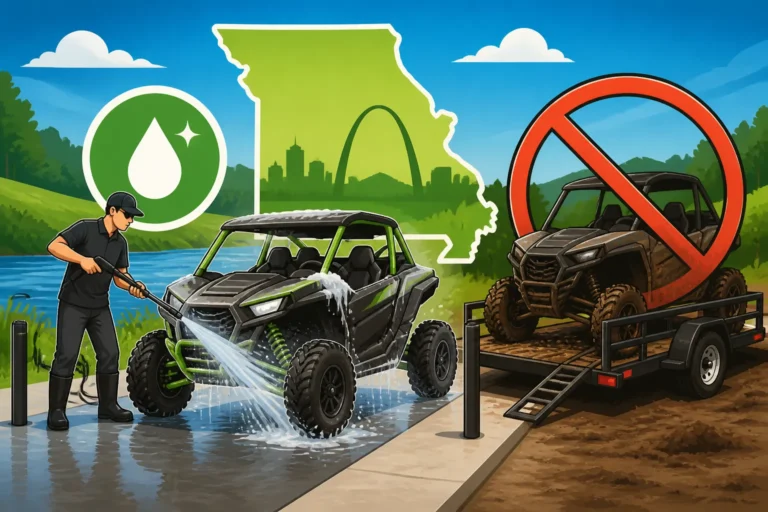
Plan for a muddy return. Bring a tarp or other suitable way to keep mud and debris from spreading through the trailer or vehicle, and leave enough room to clean and secure the machines without blocking other people. If you’re riding in the Ozarks, check the machines and tie-downs after the ride; wet, gritty equipment can make straps harder to handle and may hide damage.
Make the drive and arrival less stressful
Build in fuel and rest stops
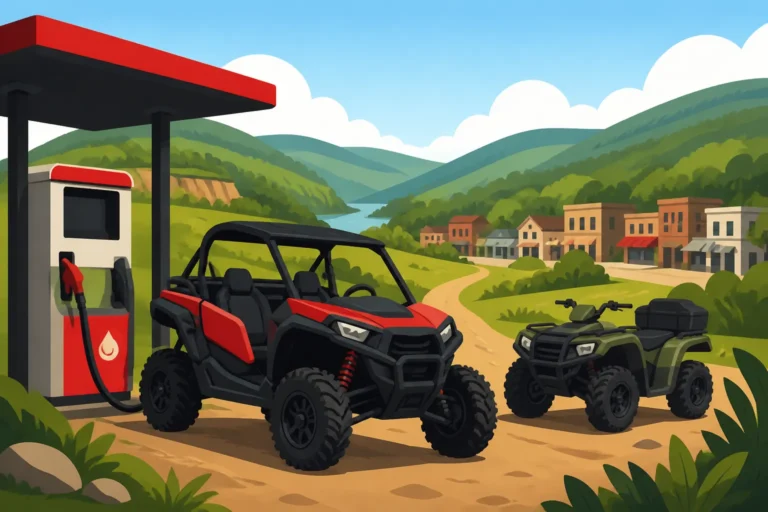
A loaded tow rig may need more frequent fuel stops than your everyday vehicle, and it can be harder to pull into small stations with a trailer. Look ahead for practical stops with enough room to enter, fuel, and exit without a tight maneuver. In parts of the Ozarks, the distance between convenient services can feel longer than it does on a city commute. Fuel Between Ozark Towns is worth reviewing when you’re planning a route through that region.
Choose a stop before the tank is nearly empty rather than relying on the next town to have an easy station. Keep a little flexibility in the schedule for traffic, weather, and slower travel on unfamiliar roads. If you’re traveling with children or a group, agreed-upon rest stops can also prevent last-minute decisions that are difficult with a trailer.
If you use onX Offroad to organize maps or destination information, save what you’ll need before you leave areas with reliable service. Still keep the destination address and important access details in a separate, easy-to-find place. A backup plan matters when the phone battery is low or mobile reception is unreliable.
Arrive with a parking plan
When you reach the riding area, slow down and follow posted signs rather than turning into the first open-looking space. Look for the designated staging or trailer area, and avoid blocking gates, roads, or other vehicles. If the lot is busy, pause somewhere safe and ask staff or a ranger where a trailer should go rather than attempting a tight turn in traffic.
At a Mark Twain National Forest riding area, check the trailhead and parking information for the specific location you’re visiting. Conditions and facilities can vary by site, so don’t assume the setup at one trailhead applies to another. Parking a Rig at a Mark Twain Lot is a helpful topic to review when planning a forest ride.
Before unloading, check the local rules and trailhead notices. Confirm that your intended route is open and suitable for your machine, and make sure you understand any permit or equipment requirements that apply at that location. A calm, careful arrival gives you time to sort out a question before the machine is off the trailer.
If your plans change and you decide to ride closer to home instead, Missouri Riding Areas Reachable Without a Trailer may help you consider options that avoid a long tow altogether. The best trip is not always the longest one; sometimes a simpler drive makes for a better day on the trail.
Disclaimer
This article is for general informational purposes only and does not constitute professional advice. Laws, prices and regulations vary by location and change over time. Consult a qualified professional for guidance on your specific situation.