Missouri State Park ORV Permit Prices
Missouri State Park ORV Permit Prices
Planning an off-road ride in Missouri means budgeting for more than fuel and food. State park ORV permits are generally priced by machine type and the length of your visit, and the rules differ from other public-land permit systems. This guide explains how to compare the costs, where to verify the current price, and what else can affect your total.
How Missouri State Park ORV Permit Prices Work
Missouri State Parks uses a separate permit system for riding designated ORV areas. The price is not the same as the cost of titling or registering a machine, and a permit for a state park does not automatically cover riding on a national forest trail.
For state park ORV use, the key price distinctions are usually:
- Machine category: An ATV and a larger utility vehicle may have different permit prices.
- Length of visit: A short visit is generally handled differently from multiple days of riding.
- Riding location: A state park permit applies to the state park system and location specified by its terms, not every Missouri riding area.
- Number of machines: Plan on checking permit requirements for every machine you bring. Do not assume one permit covers your whole group.
Missouri State Parks has offered different daily permit prices for ATVs and UTVs. The commonly referenced categories are an ATV day permit and a higher-priced UTV day permit, but fees and permit details can change. Before you load, verify the current price and conditions with the official state park information for the location you plan to visit.
If you have seen old figures shared online, treat them as a starting point for questions, not as a quote you can rely on. Confirm the current ATV rate, UTV rate, how the permit period is counted, and where you can buy it. A park office or the official Missouri State Parks information is the best place to settle those details.
The permit is an access charge for riding in the authorized area. It is separate from the cost of owning the machine. A registration decal, title, insurance policy, or permit from another agency does not replace a state park ORV permit when one is required. For a broader explanation of the state’s off-road permit system, see Missouri ORV Permits Explained.
| What affects the price | What to check before riding |
|---|---|
| Machine type | Whether the park classifies your vehicle as an ATV or UTV |
| Visit length | Whether you need a day permit or permits for multiple riding days |
| Number of machines | Whether each machine needs its own permit |
| Riding location | Whether the permit covers the specific state park area |
| Current fee schedule | The current rate and any purchase or display instructions |
| Other requirements | Park-specific rules for equipment, age, supervision, and trail use |
A common mistake is to focus on the permit amount but overlook the machine category. A side-by-side can be treated differently from a straddle-seat ATV, even if both are used for the same kind of recreational ride. If you are unsure how your machine is classified, check the park’s current guidance rather than guessing from its brand name or engine size. See Why Missouri Charges More for a Side-by-Side for more on why the categories can matter.
ATV and UTV Rates Are Not Always the Same
The price question starts with identifying the machine correctly. In everyday conversation, riders may call nearly any recreational off-road vehicle an ATV. For permit purposes, however, a utility vehicle or side-by-side can fall into a separate category and have a different fee.
ATVs
A conventional ATV is typically a machine ridden astride, steered with handlebars, and designed for off-road use. State park permit information may list an ATV-specific day permit. If your trip spans more than one day, confirm whether permits are sold by individual day, whether a multi-day option is available, and exactly when the permit expires.
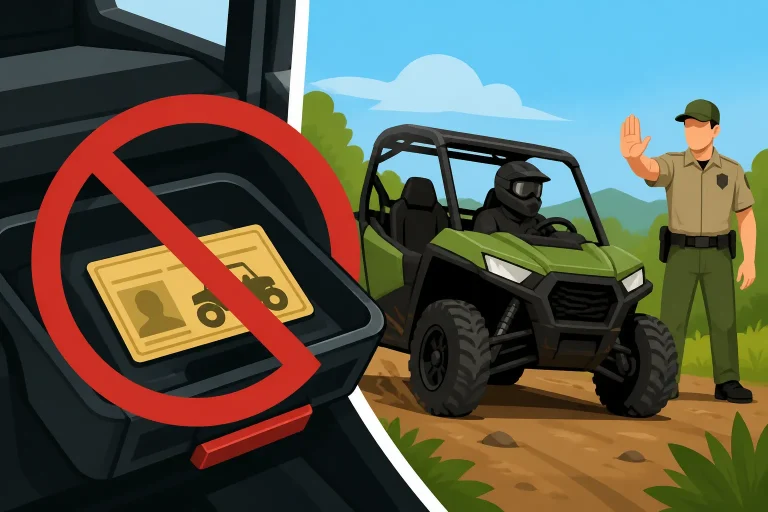
Do not assume that a registration decal on your ATV is the state park trail permit. The decal and trail permit serve different purposes. Registration rules concern the machine’s status under Missouri law; the park permit concerns permission to ride in a particular public riding area.
For an explanation of the state park ATV day-permit category and the amount associated with it in the relevant fee schedule, see The $6 Missouri ATV Day Permit. Because the fee may change, use the official current schedule before making a trip budget.
UTVs and side-by-sides
A UTV, often called a side-by-side, has a different seating and control layout from a typical ATV. Parks may charge a different day-permit amount for it, so do not apply the ATV rate automatically. The relevant fee category may depend on the park’s definitions and the machine’s design.
For details about the UTV permit category, see The $10 Missouri UTV Day Permit. Treat any figure in an older article, forum post, or saved screenshot as something to verify, not as a guaranteed current charge.
If the machine is an unusual configuration, a youth model, or a modified vehicle, ask the park staff how it should be categorized. The label in a sales listing is not always enough to determine how a riding area will treat it.
What if you have more than one kind of machine?
A family or group may bring an ATV and a UTV together. Budget each machine under its own category rather than applying one group-wide rate. Also ask whether permits are tied to an individual machine, a rider, or another identifying detail, and whether proof must be displayed on the machine or kept available during the ride.
Make that call before the trip if you are bringing a machine that does not fit neatly into a standard category. Sorting it out at the gate can delay your group and may leave you unable to ride until the park confirms the right permit.
How Many Days You Need to Pay For
The term “day permit” sounds simple, but the details matter when you arrive late, stay overnight, or ride on separate days. Check how the park defines a permit day and whether its permit covers a calendar day, a riding session, or another period specified in the current rules. Do not assume that buying a permit near closing time gives you a full day of riding the next morning.
If you are going for one day, confirm the current daily rate for your machine class and the purchase process. If you are riding across several days, ask whether the park offers a multi-day permit or requires separate daily permits. A permit that covers consecutive days may be convenient, but only if it is actually offered and fits your itinerary.
Use this process to work out how many permits to budget for:
- List every machine. Write down the type of each ATV, UTV, or other off-road vehicle in your group.
- Identify the riding days. Include each day you intend to use the designated ORV area, not just the day you arrive at the campground.
- Check how the permit period works. Confirm start and end times, whether days must be consecutive, and what happens if you arrive late.
- Ask about group purchasing. Find out whether permits are issued separately for each machine and whether one person can buy permits for the group.
- Confirm what must be shown. Ask whether you need to display a permit, carry a receipt, or do both.
- Recheck before departure. A saved price or old email may no longer reflect the current schedule or operating instructions.
If the park allows permits for multiple days, buying the right period in advance can simplify the trip. But do not buy extra days just because they sound convenient. Permits may be nonrefundable, and plans can change due to weather, trail closures, mechanical trouble, or a family member getting sick. Confirm the refund and transfer rules before paying. For more on that issue, see Why Missouri Permits Are Nonrefundable.
When you build a weekend budget, include the riding days rather than only the nights spent at a campground. Staying two nights does not necessarily mean you will ride on two days, and arriving the evening before your first riding day does not necessarily mean you need a permit for that arrival date. Follow the park’s actual permit period and instructions.
Where to Buy a Permit and What to Confirm
The park’s official information should tell you whether permits are available online, at the park, or through another authorized sales channel. The process can vary by location, so confirm it for the specific riding area rather than assuming the same arrangement applies throughout the state.
Before you pay, check the following:
- The current permit price for your machine category.
- The dates or duration covered by the permit.
- Whether the permit must be associated with a specific machine.
- Whether you need to show a confirmation, receipt, or permit on the vehicle.
- Whether the park requires a particular method of displaying it.
- Whether permits are available at the time you expect to arrive.
- What happens if the trail area closes after you buy.
If you are buying online, save the confirmation where you can reach it without a reliable cell connection. A screenshot or downloaded receipt may help, but follow the park’s instructions about what counts as proof. Keep a backup copy in the tow vehicle or with another adult in your group. A simple document sleeve can protect printed paperwork from mud and rain; if you shop for one on Amazon, choose a durable, sealable option that fits the documents you actually need to carry.
A permit purchase is only one part of arriving prepared. Check the park’s hours, trail status, equipment rules, and any restrictions that could affect your machine. A permit is not a promise that every trail will be open when you get there. Weather, maintenance, land conditions, or safety concerns can affect access. Before you leave, review Missouri State Park ORV Hours and Missouri Trail Closures to Check First.
If you plan to visit a park with more than one riding area or staging point, verify where you must enter and whether your permit applies there. Keep the permit information with your group rather than assuming the driver who purchased it will always be nearby. If a rider is separated from the main group, that person should know how to show the relevant proof and where to find the park’s posted rules.
Permit purchase is not a general riding pass
A state park ORV permit is not a statewide license to ride. It does not authorize riding on private land without permission, on a closed trail, or on public land managed under a different permit system.
For example, a state park permit should not be assumed to cover the Chadwick area in the Mark Twain National Forest. That area has its own permit arrangements. Learn the distinction in Does a State Park Permit Work at Chadwick? before planning a trip that includes both locations.
Likewise, a machine’s Missouri registration decal is not a substitute for a park ORV permit. A visitor’s out-of-state registration or decal may also be separate from the access permit required by a riding area. If your group is traveling in from another state, verify the permit requirements for the park itself rather than relying on reciprocity assumptions.
What Can Add to Your Total Trip Cost
A permit price is just one line in an ORV trip budget. The total depends on how many machines you bring, how many days you ride, and what else your trip involves. Separating the costs makes it easier to compare a one-day visit with a longer weekend.
The main cost categories
Permits: Calculate the current rate for each machine and each riding day or permit period. If you have both ATVs and UTVs, budget them separately.
Transport: Fuel for the tow vehicle, trailer-related expenses, and travel time can matter more than the permit itself, particularly for a long drive. Check that your trailer, tie-downs, lights, tires, and hitch are ready before leaving.
Camping or lodging: A campsite or room is not necessarily part of the ORV permit. Check the reservation and payment terms separately, including any requirements for trailers or larger rigs.
Food and supplies: Bring water, food, weather-appropriate clothing, and basic repair supplies. A ride can last longer than planned if a group stops for trail conditions or a mechanical problem.
Protective equipment: Helmets, eye protection, gloves, boots, and other protective gear are separate purchases from park access. If you are comparing helmets on Amazon, check sizing, fit, safety labeling, and the return policy instead of choosing by appearance alone.
Machine maintenance: Tires, brakes, batteries, fluids, belts, and air filters may need attention before a demanding ride. An inexpensive permit does not make a neglected machine safe or trail-ready.
A simple budgeting worksheet
You can estimate your permit total without relying on a stale price:
- Number of ATVs: ___
- Number of UTVs: ___
- Riding days or permit periods: ___
- Current ATV permit amount: confirm with the park
- Current UTV permit amount: confirm with the park
- Camping or lodging: confirm separately
- Transportation and fuel: estimate for your route
- Food, water, and supplies: estimate for the group
- Equipment or repairs needed before departure: inspect and price separately
The useful result is not just a single total. It is a clear estimate that shows which costs change if a friend cancels or you shorten the trip. If one machine is dropped from the trip, for instance, your permit budget may change, but lodging or towing costs may not.
When shopping for accessories, keep the purchase separate from the permit decision. A flag, tie-downs, or a storage pouch may be useful, but buying an item does not guarantee it meets park specifications. Check the park’s equipment rules first. If you use Amazon to compare a flag or mounting hardware, verify the required dimensions and attachment method against the park’s instructions before ordering.
Requirements That Can Affect Whether You Can Ride
Paying the permit fee does not automatically make a machine or rider eligible for every trail. Parks can set safety and equipment requirements that apply in addition to the permit. These may include rules for helmets, flags, sound levels, spark arresters, passengers, machine width, youth riders, and supervision.
Do not rely on a highway rule or a rule from a different trail system. State park requirements can differ from the rules for roads, private property, or national forest trails. Review the specific location’s posted conditions and ask staff if your machine or equipment is close to a limit.
Youth riders and supervision
If children are riding, confirm the park’s age and supervision rules before buying permits. A permit for the machine is not proof that a young rider can use every trail. Some parks may have designated areas or additional limits for younger riders. Bring appropriate protective equipment and make sure the youth machine is suited to the rider’s ability, not just their age or height.
For related guidance, see [Missouri Park Access for Riders Under 16]. Check the individual park’s current instructions as well, since the practical riding area available to a child may differ from what an adult in the group can ride.
Equipment and machine fit
The machine should fit the trail system as well as the rider. A wide UTV may face different access limits from a narrower ATV. A park permit does not override trail restrictions or authorize a machine that exceeds posted limits.
Before you buy a permit, check:
- The width and other machine restrictions for the riding area.
- Whether passengers are allowed on that type of machine.
- Required safety equipment for both the operator and passengers.
- Any noise or exhaust requirements.
- Whether particular trails have separate limits.
- Whether the vehicle must be inspected or display identification.
If a machine is close to a posted width limit, measure it using the method the park specifies. A brochure listing a model’s width may not reflect accessories, tires, or modifications. Keep in mind that trail-width restrictions and permit price categories are different questions: a machine can fit a fee category and still be too large for a particular trail.
How to Plan a Visit Without a Permit Surprise
A few checks before departure can prevent the most common permit and access problems. The goal is to arrive with the right permit for the right machine, for the right dates, and with enough time to complete any required purchase or check-in.
- Choose the riding area first. Do not buy a permit based only on a nearby park name. Confirm the specific place where you intend to ride.
- Classify each machine. Decide whether each one falls under the ATV, UTV, or another category in the park’s terminology.
- Check the official fee schedule. Confirm current prices and permit periods directly with Missouri State Parks or the park office.
- Confirm purchase options. Find out whether you can buy ahead, must buy on arrival, or need to use a particular sales channel.
- Check hours and closures. Confirm that the riding area will be open on your planned dates and that there are no trail notices affecting access.
- Read the equipment rules. Make sure each machine and rider meets the park’s requirements.
- Keep proof available. Follow instructions for displaying or carrying the permit, and keep your confirmation accessible.
- Keep another permit system separate. If your trip includes Chadwick or another public-land area, check that location’s separate rules and fees.
If you are planning a multi-park trip, do not assume that a permit bought for one place will transfer to another. For example, a state park permit and a national forest permit are separate access arrangements. Add each one to the budget, and verify whether each permit is valid for the specific dates and machines you plan to use.
When an online page and an on-site notice appear to conflict, ask park staff before riding. Keep a record of the answer if you made a phone call, but follow current posted instructions at the location. Permit price is only one detail; the allowed dates, purchase process, machine category, and trail status all matter.
For gear and paperwork, use a short checklist rather than packing at the last minute. Include permit confirmation, identification, required safety equipment, water, basic tools, and the items needed to secure the machine for transport. If you buy replacement tie-downs through Amazon, inspect their condition and working load information before relying on them to haul a machine. Good transport preparation does not replace the riding permit, but it can prevent an avoidable delay before you get to the park.
Disclaimer
This article is for general informational purposes only and does not constitute professional advice. Laws, prices and regulations vary by location and change over time. Consult a qualified professional for guidance on your specific situation.