Getting a Road Permit From a County Sheriff
It can be incredibly frustrating when you're just trying to get from your house to the back forty, or even to the gas station down the gravel road, on your ATV or UTV, only to realize the rules about riding on public roads are a tangled mess. Missouri's approach to allowing off-highway vehicles on its public roadways isn't a simple "yes" or "no," and navigating the patchwork of state laws and local ordinances can feel like you need a law degree just to take your machine to the mailbox. This guide will walk you through the specifics of obtaining a road permit from your local county sheriff, helping you understand when and how you can legally use your UTV on county roads in Missouri.
Understanding Missouri's Road Rules for ATVs and UTVs
Missouri's stance on off-highway vehicles (OHVs) on public roads is often a source of confusion and even a little heartache for owners. You bought your machine for utility or recreation, and sometimes, the most direct path to where you need to go involves a stretch of road. However, the state has some very specific definitions and restrictions that make simply hopping on a public road largely illegal without specific local provisions.
Why the Rules Are So Confusing
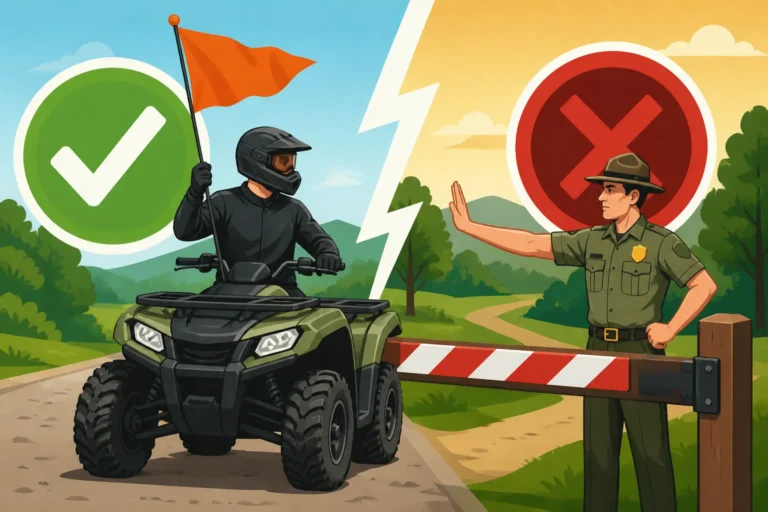
One of the biggest reasons for the confusion is that Missouri doesn't treat all off-highway vehicles the same way under the law. ATVs, or all-terrain vehicles, are generally defined as machines designed to travel on four low-pressure tires, with a seat designed to be straddled by the operator, and handlebars for steering. Utility Vehicles (UVs) and Recreational Off-Highway Vehicles (ROVs), often referred to as side-by-sides, are different. These typically have side-by-side seating, a steering wheel, and roll-over protection. The state laws address these categories distinctly, which means what might be permissible for one type of machine isn't for another. This creates a really complicated legal landscape, leading many to ask, [Are ATVs Street Legal in Missouri?]. For the most part, the answer is a resounding "no" for traditional ATVs, especially on state-maintained roads, but there are exceptions for side-by-sides.
This distinction is crucial because when local governments create ordinances to allow OHVs on their roads, they almost exclusively focus on ROVs/UTVs, not ATVs. The design of UTVs—with their roll cages, seatbelts, and more car-like controls—is generally considered safer for road use than a straddle-seat ATV. It's truly a headache trying to figure out which set of rules applies to your specific machine, and why your buddy with a side-by-side might be able to ride legally where your quad cannot. Many folks just want to know, [Can You Drive a UTV on a Missouri Road?], and thankfully, for UTVs, there's a path forward.
The Role of Local Ordinances and Permits
While state law generally restricts OHV use on public roads, it does grant individual cities and counties the authority to pass their own ordinances allowing these vehicles on their local streets and county roads. This is where the county sheriff's permit comes into play. It's not a blanket state permit; instead, it's a specific authorization issued by a local authority for use within their jurisdiction. Think of it like a special pass that unlocks local roads.
This local control means that the rules, application process, and even the types of machines allowed can vary dramatically from one county to the next, and even from one city to an adjacent one. One county might be very open to UTVs on its gravel roads, while the neighboring county might have never bothered to pass an ordinance, leaving all their roads closed to OHVs. This creates a genuine logistical challenge for riders, who might live on the border of two counties and need to understand two completely different sets of rules. It highlights the importance of understanding the concept of a [Missouri's Special Permit for Road Use] because without it, you're pretty much restricted to private land or dedicated trail systems.
When to Seek a County Sheriff's Permit
Understanding when you need a county sheriff's permit is key to avoiding legal trouble and ensuring you're riding within the boundaries of the law. It's not a "one-size-fits-all" solution, and its applicability depends heavily on where you intend to ride and the type of machine you operate.
Riding on County Roads vs. City Streets
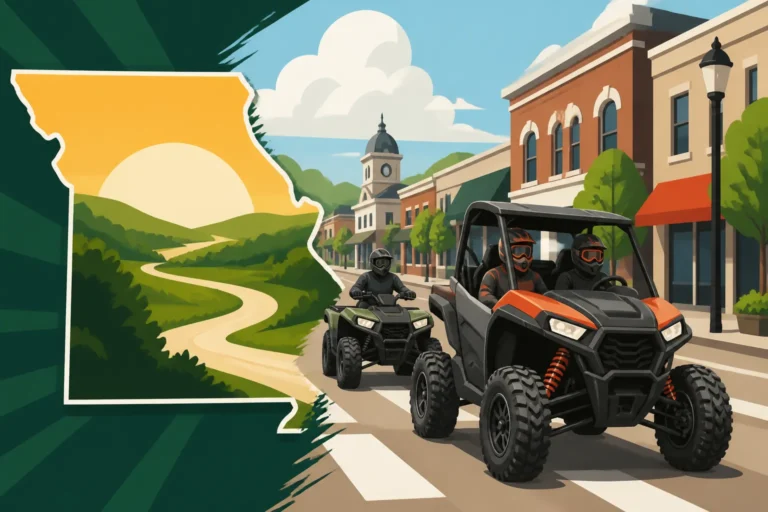
A permit issued by your county sheriff's office is specifically for riding on county roads. These are typically the gravel or less-traveled paved roads that connect rural areas, small towns, and agricultural properties within the unincorporated parts of a county. If you live out in the country and need to travel a short distance down a county road to get to a neighbor's property, your fishing spot, or even the general store, this is the permit you'll be looking for.
However, it's critical to understand that a county sheriff's permit generally does not grant you permission to ride on city streets. Cities are separate municipal entities and, if they allow OHV use, typically issue their own permits through their city police department or city hall. So, if your destination is within city limits, even if that city is within the county that issued your permit, you'll likely need a separate city permit. This is a common point of confusion for riders, and it's essential to figure out [Which Permit You Need to Ride a County Road] depending on your exact route. You might have a county permit in your pocket, but crossing into a town without its own ordinance or permit could still land you a ticket. Furthermore, neither a city nor a county permit will typically allow you to ride on state highways or federal routes; those are almost universally off-limits, requiring you to understand [Missouri Rules for Crossing a Highway] at designated spots, not riding on them.
What Kinds of Machines Qualify
When it comes to road permits, the state of Missouri and most counties primarily focus on Utility Vehicles (UVs) and Recreational Off-Highway Vehicles (ROVs), which are your typical side-by-sides. These machines, defined by their steering wheels, bench or bucket seats, and roll-over protection, are seen as more suitable for limited road use than traditional ATVs, which require the operator to straddle the machine. The law defines [What the Law Calls a Recreational Off-Highway Vehicle] very specifically, differentiating it from an ATV.
For a UTV or ROV to qualify for a county road permit, it typically needs to be outfitted with specific safety equipment to make it more visible and controllable on public roads. These requirements often include working headlights and tail lights (which must be on even during the day, in many cases), brake lights, a horn, a rear-view mirror (and often side mirrors), seatbelts for all occupants, and a safety flag extending at least seven feet above the ground. You might even need a DOT-approved windshield in some areas. Many riders turn to aftermarket accessory companies like SuperATV to ensure their machines meet these stringent safety requirements, especially for items like turn signal kits, mirrors, or specific lighting upgrades. It's not enough to just have a UTV; it needs to be equipped to handle the demands of road traffic, even if it's just a quiet gravel lane.
The Process of Getting a Permit From Your County Sheriff
The idea of getting a permit might sound daunting, but breaking it down into manageable steps makes the process much clearer. It primarily involves research, contact, and ensuring your machine is up to snuff.
Initial Research and Local Contact
The very first step is to confirm that your county actually has an ordinance in place that allows OHVs on its roads and issues permits. As mentioned, not all counties do. You can usually find this information by checking your county's official website (look under county ordinances or sheriff's department sections), or by simply calling the county clerk's office or the sheriff's department directly. Don't just assume; always verify.
When you contact the sheriff's office, be prepared to ask specific questions:
- Does the county issue permits for UTVs/ROVs on county roads? (Remember, ATVs are typically excluded).
- What is the specific application process?
- What documentation do I need (proof of ownership, insurance, driver's license)?
- What are the safety equipment requirements for the machine? Will there be an inspection?
- What are the associated fees, and how often do I need to renew the permit?
- Are there any specific roads or areas where the permit is not valid (e.g., state routes, specific county parks)?
- Are there any time-of-day restrictions for riding?
Getting these answers upfront will save you a lot of time and frustration later. It’s a good idea to write down the name of the person you spoke with and the date.
What to Expect in the Application Process
Once you've confirmed your county issues permits and you understand the requirements, the actual application process will usually involve a few key components:
- Application Form: You'll likely fill out a form provided by the sheriff's office, detailing your personal information, your machine's VIN, make, model, and year.
- Proof of Ownership: You'll need to show proof that you own the UTV, usually through its title or a certificate of origin if it's new.
- Proof of Insurance: Most counties will require you to carry liability insurance on your UTV, similar to an automobile. You'll need to provide proof of this coverage. Make sure your policy explicitly covers road use, even if it's just county roads.
- Valid Driver's License: The operator of the UTV on public roads will need to possess a valid Missouri operator's or chauffeur's license. [Missouri Driver's License Rules for ROVs] are clear on this point; you can't just have a learner's permit or no license at all.
- Machine Inspection: Many counties will require an inspection of your UTV to ensure it meets all the safety equipment requirements. This might happen at the sheriff's office, or they might send an officer to your residence. Ensure your machine has working headlights, tail lights, brake lights, a horn, mirrors, seatbelts, and the necessary safety flag. This is where those accessories from companies like SuperATV really come in handy, ensuring you pass with flying colors.
- Permit Fee: There will typically be a fee associated with the permit. This fee helps cover the administrative costs of issuing the permit and, in some cases, contributes to local road maintenance. It's often a modest amount, and it's important to remember [Why the Permit Money Stays Local]; it doesn't go to the state. While the specific figure can't be stated here, consider it part of your annual riding budget, similar to what you might pay for [Missouri Special Permit Cost for ATVs] if your city permitted them.
- Processing Time: Depending on the county and how busy they are, it might take anywhere from a few days to a couple of weeks to process your application and issue the permit. Plan ahead, especially if you have a specific date you want to start riding.
Essential Safety Equipment for Road Use
To ensure your UTV is compliant and passes any required inspection, you'll need specific safety equipment. These items are designed to increase your visibility and control on the road, making you safer and less of a hazard to other traffic.
- Headlights and Tail Lights: Your UTV must have at least two working headlights that emit white light, visible from at least 500 feet, and at least one red tail light visible from 500 feet. They must be on during operation on public roads, day or night. [Missouri Lighting Requirements for ROVs] are quite specific.
- Brake Lights: A red brake light must illuminate when the brakes are applied, visible from 500 feet.
- Turn Signals: While not always explicitly required by state law for local permits, many county ordinances will mandate front and rear turn signals. It's a smart safety upgrade even if not required, and SuperATV offers great kits for this.
- Horn: A working horn or warning device that can be heard from at least 200 feet away.
- Mirrors: At least one rear-view mirror is typically required, allowing the operator to see at least 200 feet behind the vehicle. Many counties will require both a left and right side mirror for better visibility.
- Seatbelts: If your UTV is equipped with seatbelts, they must be worn by all occupants. Most ROVs come standard with seatbelts, and [Missouri Seat Belt Rules in a Side-by-Side] reinforce their importance.
- Roll Bar/Roll Cage: Your UTV must have a factory-installed or equivalently strong aftermarket roll-over protective structure (ROPS) or roll cage.
- Safety Flag: This is a big one for visibility. A red or orange safety flag, at least 30 square inches in size, must be displayed on a pole or mast that extends at least seven feet above the ground level of the machine. This is crucial for being seen by drivers of larger vehicles. Check out [Missouri Safety Flag Requirements] for more details on this. Again, many riders find aftermarket flag mounts and flags from brands like SuperATV to be indispensable for meeting this rule.
- DOT-Approved Tires: While not always explicitly checked, using tires that are not specifically designed for off-road use and carry a DOT stamp (like car tires) can sometimes be a requirement or a point of contention for inspectors.
Remember, the goal of all this equipment is to ensure that when you're on a public road, you're as visible and controllable as any other vehicle.
Riding Legally With Your County Permit
Once you have that coveted county permit in hand, it's not a free pass to ignore all other rules. Riding legally means respecting the conditions of your permit and understanding the limitations.
Carrying Your Permit and Following Conditions
Always, always carry your physical county permit with you whenever you're operating your UTV on public roads. It's just like carrying your driver's license and proof of insurance for your car. A photocopy might not be accepted, so keep the original safe, perhaps in a waterproof bag on your machine. Along with the permit, always have your valid driver's license and proof of insurance. If a law enforcement officer pulls you over, these are the first things they'll ask for.
Your county permit will likely come with specific conditions and restrictions. These commonly include:
- Designated Roads: The permit may only be valid for county roads within that specific county and often explicitly excludes state or federal highways.
- Time of Day: Some permits restrict riding to daylight hours, or specific hours like "sunrise to sunset."
- Speed Limits: You'll be expected to observe the posted speed limits, or a lower maximum speed limit specified by the ordinance (e.g., 30 mph, even if the road is posted for 55 mph).
- Operator Age: You must be a licensed driver, typically 16 years or older.
- Passengers: Adhere to rules regarding the number of passengers, ensuring everyone has a seat and is wearing a seatbelt.
- Safe Operation: Operate your UTV safely, obeying all traffic laws, including stop signs, yield signs, and hand signals where applicable.
It’s crucial to understand that a permit from one county almost certainly won't be valid in another. [Does a City Permit Work in the Next Town?] No, and the same applies to county permits. Each jurisdiction acts independently.
Common Pitfalls and Enforcement
Ignoring the conditions of your permit or attempting to ride on roads where your permit isn't valid can lead to serious consequences. Law enforcement officers, whether from the county sheriff's department or Missouri State Highway Patrol, can issue citations for non-compliance.
Common pitfalls include:
- Riding on Prohibited Roads: Venturing onto state highways, even for a short distance, or into an adjacent city or county that doesn't permit OHVs, is a quick way to get a ticket.
- Missing or Improper Equipment: If your safety flag isn't seven feet high, your lights aren't working, or you're missing a mirror during an inspection or stop, you could face fines.
- Expired Permit or No Permit: Riding with an expired permit is the same as riding without one. Forgetting to apply or renew can result in significant penalties.
- Unsafe Operation: Reckless driving, speeding, or operating while impaired carries the same, if not harsher, penalties as in a car.
The fines for illegal ATV or UTV road use can vary but are often substantial. You could be charged with a misdemeanor, and repeated offenses could lead to more severe penalties. [Missouri Fines for Illegal ATV Road Use] can quickly add up, making the cost of a permit seem trivial by comparison. Always be respectful to law enforcement and be prepared to show your permit and identification. Your permit is there to protect you and allow you to enjoy your machine responsibly, so use it wisely.
Comparing Permit Requirements: County vs. City
While this guide focuses on county sheriff permits, it's helpful to understand how they might compare to city permits, as you might need both depending on your travel plans.
| Feature | County Sheriff's Permit (Typical) | City Police/Clerk Permit (Typical) |
|---|---|---|
| Jurisdiction | Unincorporated county roads, rural areas | Streets within city limits |
| Issuing Authority | County Sheriff's Department | City Police Department or City Hall |
| Machine Focus | Primarily UTVs/ROVs; ATVs generally excluded | Primarily UTVs/ROVs; ATVs generally excluded |
| Safety Equipment | Headlights, tail lights, brake lights, horn, mirrors, seatbelts, 7-foot safety flag, (often turn signals) | Headlights, tail lights, brake lights, horn, mirrors, seatbelts, (often turn signals, specific lighting requirements) |
| Driver's License | Required: Valid Missouri Operator's or Chauffeur's License | Required: Valid Missouri Operator's or Chauffeur's License |
| Insurance | Required: Proof of liability insurance | Required: Proof of liability insurance |
| Application | Forms, proof of ownership, inspection | Forms, proof of ownership, inspection |
| Fee | Varies by county, typically annual or multi-year | Varies by city, typically annual |
| Road Restrictions | Often excludes state highways, federal routes, and city streets | Often excludes state highways, federal routes, and connecting county roads |
| Validity | Only within the issuing county's jurisdiction | Only within the issuing city's jurisdiction |
Remember, these are typical scenarios, and always check with your specific county and city offices for their precise, up-to-date requirements. The only way to be truly compliant is to go straight to the source.
Disclaimer
This article is for general informational purposes only and does not constitute professional advice. Laws, prices and regulations vary by location and change over time. Consult a qualified professional for guidance on your specific situation.