How Often a Missouri Decal Comes Due
It can feel like a real head-scratcher when you’re trying to figure out all the ins and outs of owning an ATV here in Missouri. Unlike cars, which have clear annual registration, the rules for off-road vehicles sometimes seem a little less straightforward. If you’ve been wondering exactly how often you need to update that decal on your quad, you’re in the right place. This guide will demystify the Missouri ATV decal system, explaining its duration, renewal process, and everything you need to know to stay legal on the trails.
The Unique Nature of Missouri's ATV Decal System
Let's be honest, trying to understand ATV regulations can sometimes feel like you're learning a whole new language. You hear "registration" for cars and trucks, but for ATVs in Missouri, it's a bit different. We don't have traditional annual registration plates for ATVs in the same way you might for a street-legal vehicle. Instead, the Show-Me State uses a decal system that serves a similar purpose: proving your machine is recognized by the state and that you've paid your dues for trail access.
This system can catch folks off guard, especially if they've owned ATVs in other states with different rules, or if they're used to the simple annual tag renewal for their car. The key difference is that while it feels like a registration, it's specifically a decal issued by the [Missouri Department of Revenue and ATVs] that signifies your machine is properly documented and ready for off-highway recreational use. This also explains [Why Missouri Does Not Register Side-by-Sides] in the same manner; UTVs and ROVs often fall under different classifications and rules entirely. It's really about ensuring that your quad, which Missouri defines by characteristics like its width and straddle seat, is on the books.
You might be thinking, "Why a decal and not a plate?" Well, for an off-road machine, a durable decal that can withstand the elements and tight trails often makes more sense than a flimsy metal plate that could easily get bent, torn off by brush, or covered in mud. The decal’s placement is also specific, typically going on the right front fork, which we'll touch on later. This system is designed for the unique environment ATVs operate in, recognizing that they aren't meant for public roads (with very few, specific exceptions).
Decal vs. Standard Vehicle Registration
One of the biggest points of confusion for new ATV owners, or those new to Missouri, is mistaking the ATV decal process for standard vehicle registration. When you buy a car, you get a title, and then you register it annually, receiving license plates and a sticker for those plates. For an ATV, you still need to title it, and that title is absolutely crucial for proving ownership, especially if you ever decide to sell the machine. [Do You Need a Title for an ATV in Missouri?] The title is a one-time process when you first acquire the ATV.
The decal, however, is your ongoing proof that your ATV is ready for action on designated trails and public lands that require it. It's essentially your "permission slip" to ride where a decal is required. The fees associated with the decal go towards maintaining and improving our state's recreational trails, so in a way, you're directly contributing to the very places you love to ride. Understanding this distinction – title for ownership, decal for trail access and state recognition – is fundamental to staying compliant. It's a system tailored to the specific world of off-road recreation, not highway travel.
What Missouri Counts as an ATV
Before we dive deeper into the decal's lifespan, it's important to quickly clarify what kind of machine Missouri is even talking about when it references an "ATV" in this context. The state has specific criteria that determine if your off-highway vehicle requires this decal. Generally, an ATV is defined as any motorized vehicle manufactured and used exclusively for off-highway use, weighing 1,500 pounds or less, 50 inches wide or less, and having a non-straddle seat with handlebars, or a straddle seat with handlebars.
This definition is key because it clearly separates true ATVs from other off-road vehicles like utility vehicles (UTVs) and recreational off-highway vehicles (ROVs), which often exceed the width or weight limits, or have side-by-side seating and steering wheels. For instance, most side-by-sides, commonly known as UTVs, are wider than 50 inches and do not have a straddle seat, meaning they don't fall under the ATV decal system. This is why [Why a Side-by-Side Has No Decal to Buy] and [Do You Need to Register a UTV in Missouri?] lead to different answers than for a traditional quad. So, if you've got a quad with handlebars and a straddle seat, this decal system very likely applies to you.
The Three-Year Cycle: How Long Your Decal Lasts
Now for the main event: how often does that Missouri ATV decal come due? The good news is, it’s not an annual affair that you have to stress about every single year. Missouri’s ATV decal is valid for a generous three-year period. This means you get a bit of a break between renewals, which is certainly a welcome change from the yearly hustle of car tags!
When you first title your ATV in Missouri, you'll go through the process of obtaining your initial decal. This involves paying the title fee and the initial three-year decal fee. [Titling and Registering a Quad in One Visit] is often the most convenient way to handle this. The decal you receive will be valid for three full years from the month it's issued. For example, if you get your decal in June 2024, it will be valid until June 2027.
This three-year cycle is a consistent feature of the Missouri system, designed to reduce the administrative burden on both ATV owners and the state. It allows riders to enjoy their machines for an extended period without constant paperwork, as long as they remember that crucial renewal date. It's definitely something to mark on your calendar or set a reminder for, because like all good things, the three years eventually come to an end.
Initial Decal vs. Renewal Decal Costs
While the three-year validity period remains constant, there can be a slight difference in the initial cost versus subsequent renewals. When you first title and obtain a decal for your ATV, you'll be paying for the initial three-year registration. [Missouri's $10.25 Three-Year Registration] covers the cost of the decal itself for that period. However, there are also processing fees involved with the initial titling and registration process at the license office. [Missouri's $18 Processing Fee] is typically added on top of the title and decal fees for the transaction.
When it comes time to renew your decal, the process is generally simpler and usually involves just the decal fee itself, plus a smaller processing fee. The good news here is that [Why a First Decal Costs More Than a Renewal] is often due to those initial titling and setup costs that aren't present during a straightforward renewal. For a renewal, you're primarily concerned with the [Missouri's $9 Renewal Fee] for the new three-year decal, plus any associated license office processing fees, which are usually less than the initial set of charges. So, renewing is often a bit kinder to your wallet than that first trip to get everything squared away.
When Your Decal Expires
Your ATV decal doesn't just suddenly become invalid on an arbitrary day. It typically expires on the last day of the month, three years after it was issued. So, if your decal was issued in June 2024, it expires on June 30, 2027. This gives you a clear window to plan for renewal and avoid any lapse in validity.
It's tempting to think you have until the very last minute, but waiting until the eleventh hour to renew can sometimes lead to issues, like if the license office is unexpectedly busy or if you run into an unforeseen paperwork snag. It's always a good idea to aim to renew a bit before the actual expiration date to give yourself some breathing room. Thinking about it a month or two ahead of time can save you a lot of potential headaches and ensure your riding plans aren't suddenly put on hold because of an expired decal.
Here's a quick look at the typical costs and duration:
| Item | Validity Period | Typical Cost (Decal Fee Only) | Additional Initial Fees |
|---|---|---|---|
| Initial Decal | 3 Years | Around $10.25 | Title Fee, Processing Fee |
| Renewal Decal | 3 Years | Around $9.00 | Processing Fee |
Note: These are typical decal fees; always check with the Missouri Department of Revenue or a local license office for current exact figures and total transaction costs, as processing fees can vary.
What Happens When Your Decal Expires
So, your three years are up. What's next? First and foremost, an expired decal means your ATV is no longer legally recognized by the state for recreational use on designated trails that require a decal. Riding with an expired decal could lead to citations or fines if encountered by law enforcement or park rangers. Just like driving a car with expired tags, it's best to avoid it.
The good news is that renewing your decal is usually a straightforward process. You'll typically head to your local Missouri license office with your ATV title or previous registration papers. They'll process your renewal, you'll pay the [Missouri's $9 Renewal Fee] along with any processing charges, and they'll issue you a brand-new decal. It's pretty quick and painless, ensuring you're back on the trails in no time.
The Importance of Timely Renewal
It might seem like a small thing, but keeping your decal current is really important. Beyond the legal implications, it ensures you’re contributing to the system that supports our state’s riding areas. Riding with an expired decal isn't just a technicality; it’s a violation that can result in penalties. While [Late Renewal Costs Less Than a Late Title], there’s still a financial ding you’d rather avoid. [Missouri's $5 Late Renewal Penalty] might not sound like a lot, but it's an unnecessary expense that can easily be avoided by simply renewing on time.
Imagine planning a big weekend trip to St. Joe State Park or Chadwick, loading up your rig, driving for hours, only to be turned away at the gate or cited on a trail because your decal is expired. It’s a frustrating scenario that’s easily preventable. Many riders keep their vehicle information in a dry bag on their machine, or at least a photo on their phone, but the physical, current decal is what really matters. When in doubt about whether you're good to go, it's always better to check beforehand.
Renewing Your Missouri ATV Decal
Renewing your decal is fairly simple. Here's a general idea of the steps:
- Gather Your Documents: You'll typically need your current ATV title or your previous three-year decal registration receipt. Having your personal identification (like a driver's license) is also a good idea.
- Visit a License Office: Head to any Missouri Department of Revenue contract office. These are the same places you’d go to renew your car tags.
- Complete the Form: There will be a short form to fill out for ATV decal renewal.
- Pay the Fees: You'll pay the [Missouri's $9 Renewal Fee] and any applicable processing fees.
- Receive Your New Decal: The office will issue you a new decal right there on the spot. Make sure to double-check the expiration date on the new decal to ensure it’s correct!
It's a process designed to be quick and efficient, getting you back to thinking about your next ride rather than paperwork.
Staying on Track: Tips for Decal Management
Keeping up with your ATV decal’s expiration doesn’t have to be a chore. With a little planning, you can ensure your machine is always ready for legal use without any last-minute stress. One of the best tips is to treat your ATV decal renewal like you would any other important date.
First, when you get your new decal, immediately make a note of the expiration month and year. Put it on your digital calendar with a reminder a month or two before it's due. Or, if you're old-school, write it on a physical calendar you check regularly. Because it's a three-year cycle, it's easy for it to slip your mind amidst all the other things happening in life.
Secondly, keep all your ATV paperwork organized and in a safe place at home. This includes your title, your certificate of origin if it's a new machine, and your previous decal receipts. Having these documents readily available makes the renewal process much smoother. While [Is a Phone Photo of Your Title Good Enough?] for quick reference, having the originals for official transactions is always best. Tools like those found on LawDepot can even help you create organized files for your important vehicle documents, ensuring you have everything you need, should you ever need to create a bill of sale or other legal paperwork for your ATV down the line.
Where the Decal Mounts
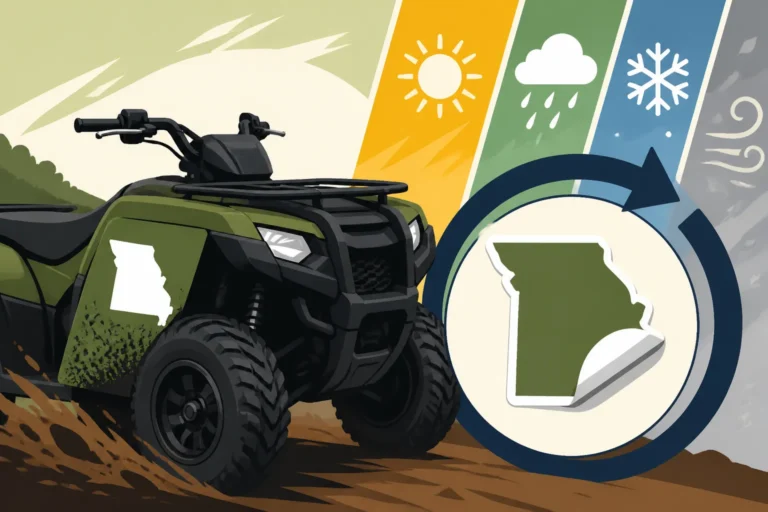
Once you have that shiny new decal in hand, knowing [Where the Missouri Decal Mounts] is crucial. For ATVs, Missouri law specifies that the decal should be displayed on the right front fork of the machine. This is important not just for compliance, but also for visibility. It allows law enforcement or park personnel to easily spot and verify the decal without having to search for it.
Mounting it correctly means it will be less likely to get snagged by brush or fall off during a ride. Make sure the surface is clean and dry before applying the decal for maximum adhesion. If, for some reason, your decal gets damaged or lost – maybe it was scraped off by a low-hanging branch or simply peeled off over time – you can always get a replacement. [Replacing a Lost Missouri Decal] is a process available at your local license office, ensuring you can quickly get a new one without going through the full renewal cycle again. This is a common issue for off-road riders, so don't feel bad if it happens!
Planning Ahead for Permits and Park Access
Beyond the state decal, remember that specific riding areas or parks might have their own permit requirements. For example, Missouri State Parks like St. Joe State Park often require a separate daily or multi-day ORV permit to access their trails. Your state-issued decal proves your ATV is properly recognized, but the park permit grants you access to their specific riding areas.
It's a good habit to check the requirements of any riding area you plan to visit before you load up the trailer. Sometimes, there are specific rules for machine width (like [Machines Under 64 Inches for Missouri Parks]) or other regulations that differ from general state law. Knowing these details in advance, and ensuring both your state decal and any necessary park permits are current, will help ensure your riding adventures are free from unexpected hassles. Keep a small envelope or Ziploc bag with your essential permits and any printed proof of permission (if riding private land) with you on every ride, perhaps in your storage box or a backpack.
Disclaimer
This article is for general informational purposes only and does not constitute professional advice. Laws, prices and regulations vary by location and change over time. Consult a qualified professional for guidance on your specific situation.