Why Missouri Issues a Decal and Not a Plate
One of the most common questions and points of frustration for new ATV owners in Missouri is why their shiny new off-road machine doesn't get a traditional license plate like a car or truck. It can feel like a strange anomaly, especially when you're used to every other vehicle you own having a distinct metal plate. This guide is here to unravel that mystery, explaining exactly why Missouri opts for a decal system for ATVs and what that means for you as a rider.
Understanding Missouri's Definition of an ATV
Before we can really dig into why Missouri uses a decal, it’s crucial to understand what the state actually considers an ATV in the first place. This isn't just bureaucratic red tape; it's the very foundation of how these machines are classified and, subsequently, how they're regulated. Without this clear distinction, the whole system wouldn't make much sense.
The "Straddle Seat" and Handlebar Test
When the Missouri Department of Revenue looks at your machine, one of the first things it considers is how you operate it. An ATV, by definition here, is designed to be ridden by the operator straddling a seat, much like a motorcycle or horse, and steered with handlebars. This isn't just a casual observation; it's a legal characteristic that separates an ATV from other types of off-road vehicles. If you sit in a seat like a car, with a steering wheel, then it's generally not classified as an ATV for registration purposes.
This straddle-seat, handlebar configuration immediately signals to the state that this is a machine primarily designed for dynamic, off-road maneuvering. It's built for agility, for shifting your body weight, and for tackling varied terrain where a traditional steering wheel might be less effective or safe. This fundamental design choice is a key indicator that the machine isn't intended for highway use, and thus, doesn't fit the mold for a standard license plate.
The Weight and Width Limits
Beyond the seating position, Missouri law also considers the physical dimensions of the machine. An ATV is generally defined as having a dry weight of 1,500 pounds or less, and a width of 50 inches or less. These numbers aren't pulled out of thin air; they reflect a typical ATV's footprint, designed for navigating narrower trails, wooded areas, and rugged terrain where larger, heavier vehicles might struggle or cause excessive environmental impact. You can find more details on these measurements in our guide on [The 1,500-Pound Dry Weight Test in Missouri] and [50 Inches Wide or a Straddle Seat].
These dimensional constraints further reinforce the off-road nature of the ATV. A vehicle designed for public roads typically has different weight and width considerations, needing to adhere to lane sizes, bridge capacities, and general highway safety standards. An ATV's compact size, dictated by these limits, makes it perfectly suited for its intended environment but less so for sharing pavement with cars and trucks. This distinction is critical to understanding why a traditional plate, meant for road-legal vehicles, doesn't apply.
The Core Purpose of the ATV Decal
So, if it doesn't get a plate, what is the decal for? It's easy to assume it's just a less-important piece of paper, but that's far from the truth. The decal serves several vital functions in Missouri, primarily ensuring proper identification and contributing to the very trails and resources that off-road enthusiasts enjoy. It's more than just a sticker; it's your machine's official badge of approval for responsible off-road use.
Proof of Ownership and Identification
The most fundamental purpose of the decal, much like a license plate, is to provide official proof that your ATV has been properly titled and registered with the state. While the physical title document is the ultimate proof of ownership, the decal serves as a readily visible indicator that the machine is legally recognized. When a law enforcement officer or a park ranger sees your decal, they know your machine isn't unregistered or stolen. This helps deter theft and ensures accountability for riders on public and authorized private lands.
Think of it this way: your title is your birth certificate, while your decal is your ID card. Both are crucial, but one is always visible. [Titling an ATV in Missouri] is a separate, mandatory process, but the decal signifies that you've completed the [Registering an ATV in Missouri] step, tying your machine to you, the owner. If you ever need to create a bill of sale or other legal documents, services like LawDepot can help you generate templates that accurately reflect your machine's identification details, which are confirmed by the decal and title.
Funding Off-Road Trails and Programs
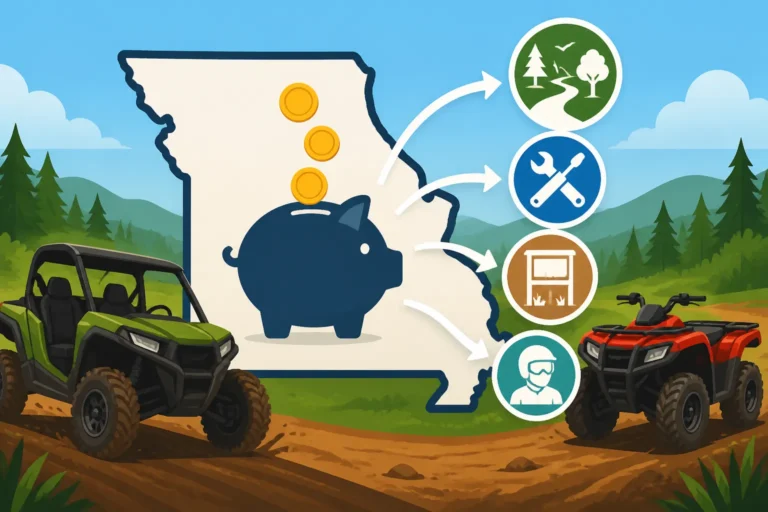
Perhaps the most impactful, though often overlooked, purpose of the decal is its role in funding the very infrastructure that makes ATV riding possible in Missouri. A significant portion of the fees collected when you register your ATV and receive your decal goes directly into a special fund dedicated to off-road recreational programs. This money is used for things like maintaining existing ATV trails, developing new riding areas, promoting rider safety education, and supporting law enforcement efforts specific to off-road recreation.
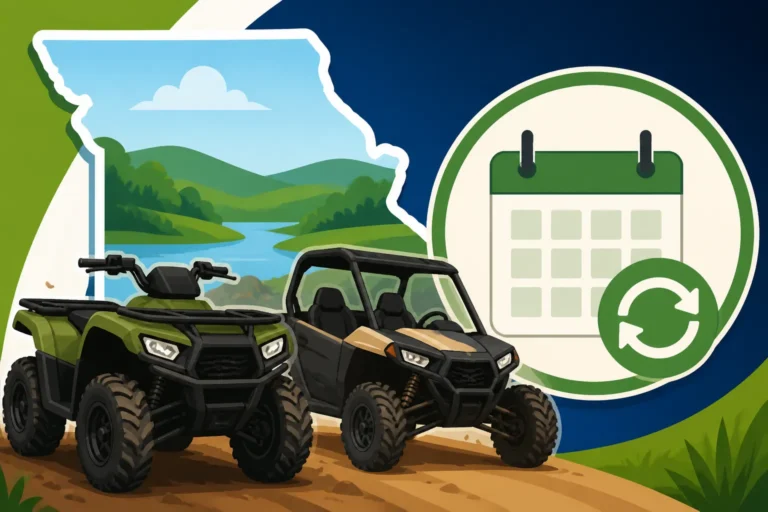
When you pay the fee for your [Missouri's Three-Year ATV Decal], you're not just buying a sticker; you're investing in the future of off-road riding in the state. It's a user-pay, user-benefit system. Without these funds, many of the fantastic places we ride, like parts of St. Joe State Park or Chadwick, might not be as well-maintained or even exist. Understanding [Where Missouri ATV Fees Go] really highlights the community benefit behind that little sticker on your fork.
Why Plates Are Reserved for On-Road Vehicles
The distinction between a decal and a plate boils down to the fundamental difference in how Missouri categorizes and intends for vehicles to be used. Plates are for public road use, period. The moment a vehicle is designed or primarily used for off-road purposes, it moves into a different regulatory framework.
The Fundamental Difference: Road Legal vs. Off-Road Only
Missouri's legal framework clearly separates vehicles intended for operation on public roadways from those designed exclusively for off-road environments. A traditional license plate is the universal symbol that a vehicle has met all the stringent requirements for street legality, including safety inspections, emissions standards (where applicable), and appropriate lighting and signaling equipment. ATVs, by their very design, generally do not meet these standards. They lack turn signals, often have limited suspension travel for sustained highway speeds, and their tires are designed for traction on dirt, not durability on pavement.
Because ATVs are inherently off-road machines, they do not receive a license plate. While there are a few very specific, limited exceptions for ATVs or UTVs to operate on certain public roads under strict conditions or local ordinances, the default position in Missouri is that ATVs are not street-legal. Our article [Street Legal ATVs in Missouri: The Short Answer] delves deeper into these specific exceptions, but the core truth remains: no plate means no general road use. The decal confirms its off-road status, rather than granting road privileges.
Enforcement and Visibility Concerns for Off-Road Use
Imagine trying to enforce a traditional metal license plate system on ATVs bouncing through muddy trails, dense brush, or rocky creek beds. It simply wouldn't be practical or effective. Metal plates are prone to bending, breaking, or getting completely caked in mud, making them unreadable. The mounting points on an ATV, often the handlebars or the frame, are also vulnerable in an off-road environment.
A decal, placed directly on a visible part of the machine like the front fork, is far more resilient and practical for its intended purpose. It's less likely to be damaged beyond recognition and easier for officials to spot in various riding conditions. This practical consideration for enforcement and visibility in an off-road setting is a significant factor in Missouri's choice of a decal over a plate. It’s about fitting the identification method to the vehicle's primary operational environment.
The Practicalities of Decal Placement and Maintenance
Once you've navigated the process of getting your ATV titled and registered, you'll receive that all-important decal. But where does it go? And what happens if it gets damaged or lost? These are common, practical questions that every ATV owner faces, and understanding the rules ensures you stay compliant and avoid unnecessary headaches or fines.
Where the Decal Must Go
Missouri law is quite specific about where your ATV decal needs to be displayed. It's not a suggestion; it's a requirement. The decal must be affixed to the right front fork of the ATV. This spot is chosen for maximum visibility, ensuring that law enforcement or park rangers can easily spot it without having to contort themselves or ask you to move your machine. The right front fork is generally unobstructed and relatively flat, making it an ideal place for the sticker to adhere properly and remain visible. Our guide on [Why the Decal Goes on the Right Front Fork] offers more insight into this specific placement.
Adhering the decal correctly is important. Make sure the surface is clean, dry, and free of grease or dirt before applying it. A poorly attached decal that peels off could lead to questions from authorities. While it might seem like a small detail, proper placement is a key part of showing you're a responsible rider who understands and respects the regulations.
Replacing Lost or Damaged Decals
Let's be realistic: ATVs are used in rugged conditions. Decals can get scratched, torn by brush, faded by the sun, or even completely peel off. It happens! If your decal becomes unreadable or goes missing, you can't just ignore it. Operating an ATV without a current, visible decal is the same as operating an unregistered machine, and it could lead to citations. Luckily, replacing a lost or damaged decal is a straightforward process in Missouri.
You'll need to contact your local Missouri Department of Revenue licensing office or a contract license fee agent. They can guide you through the process of obtaining a replacement. There will likely be a small fee associated with issuing a new decal, but it's far less troublesome than dealing with a ticket. Always make sure you're riding with a clear, valid decal, and if yours is compromised, take steps to get a replacement quickly, as detailed in [Replacing a Lost Missouri Decal].
Comparing ATV Decals to UTV/ROV Situations
It's easy to lump all off-road vehicles into one category, but Missouri law actually makes distinctions between ATVs, UTVs (Utility Vehicles), and ROVs (Recreational Off-Highway Vehicles). This differentiation is important because it dictates whether a decal is issued, or if other, sometimes more complex, regulations apply. Understanding these nuances can save you a lot of confusion, especially if you own more than one type of machine.
UTVs and ROVs: No Decal, Different Rules
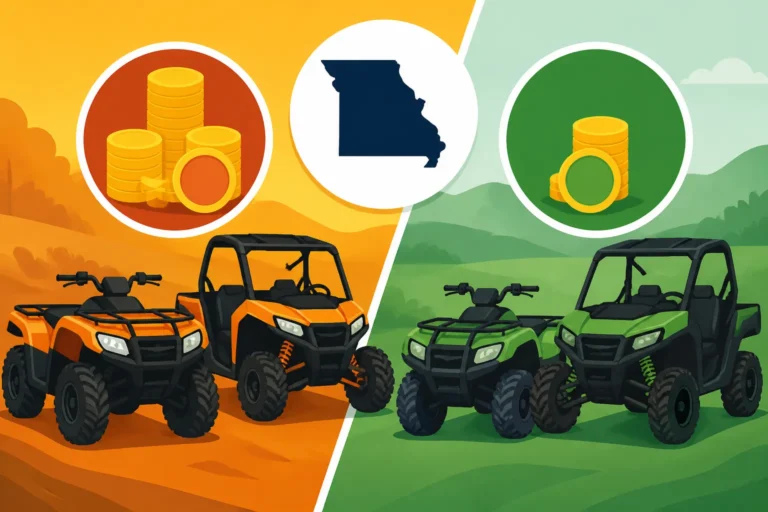
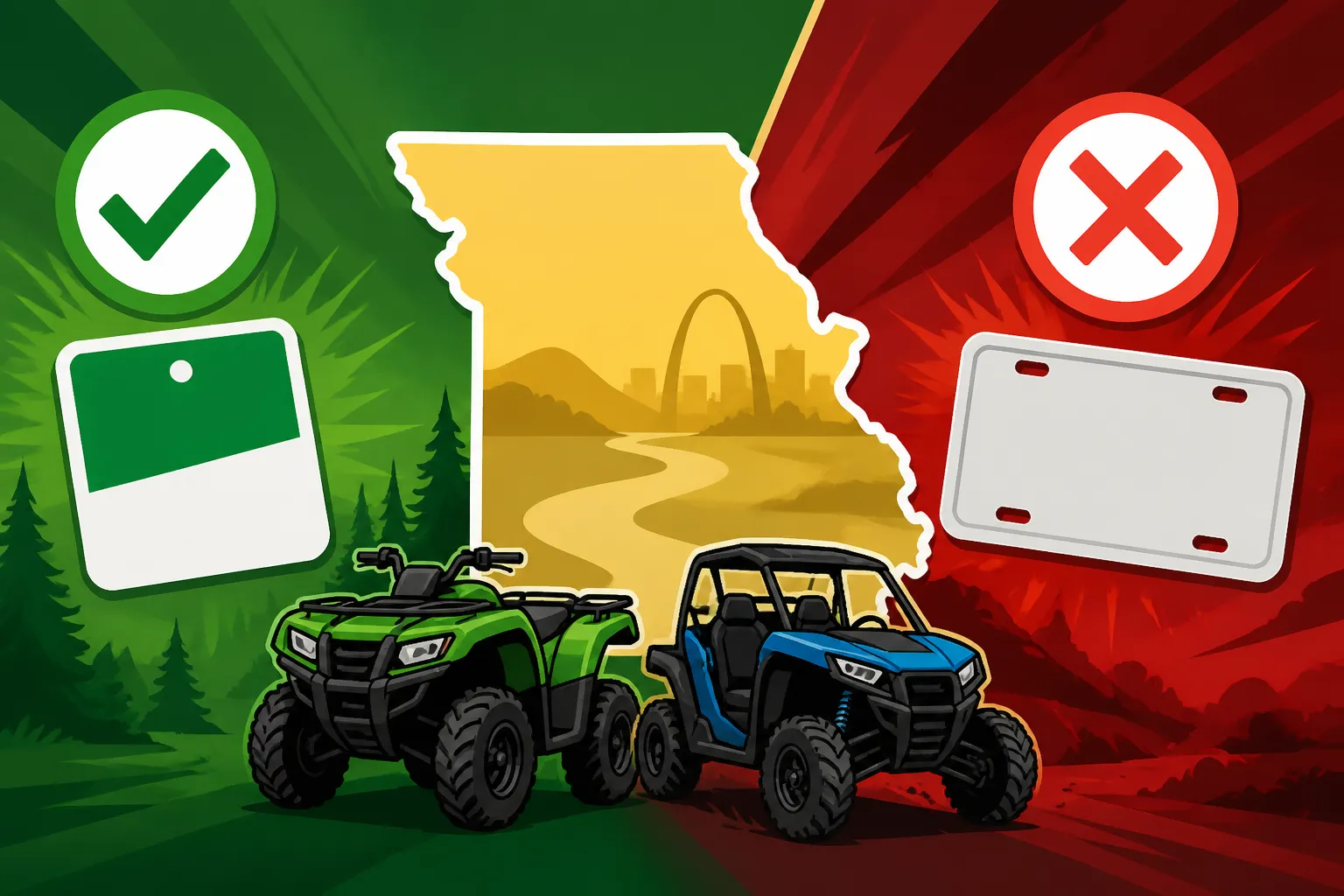
Here's where it gets interesting and can cause a lot of head-scratching: UTVs and ROVs—which most people commonly refer to as side-by-sides—do not receive a decal or registration in Missouri in the same way an ATV does. This is a significant difference. Because of their differing design, typically featuring side-by-side seating, a roll cage, and often a steering wheel, the state classifies them differently. They are not defined as ATVs under the registration statutes. Therefore, you won't be paying a registration fee for them or receiving a decal for off-road use. This is explicitly covered in our article [Why Missouri Does Not Register Side-by-Sides].
This doesn't mean side-by-sides are unregulated; it simply means the primary state system for off-road vehicles (the decal system) doesn't apply to them. Instead, owners often wonder [What a Side-by-Side Owner Does Instead in Missouri]. For off-road trail riding in state parks or national forests, specific park or forest permits are usually required, similar to ATVs, but without the underlying state registration decal. This distinction highlights that while both are off-road machines, their legal treatment can vary significantly.
Limited On-Road Exceptions for UTVs/ROVs
While ATVs are largely restricted from public roads, some UTVs and ROVs have limited exceptions for on-road use, usually through local city or county ordinances or under specific state statutes. These exceptions might allow them on certain roads for agricultural purposes, for a limited distance from the owner's residence, or with a special permit. For example, some jurisdictions might utilize [Missouri's 3-Mile Rule for Side-by-Sides] or issue a [Missouri's Special Permit for Road Use].
It's crucial to understand that these limited on-road provisions for UTVs/ROVs are separate from any ATV decal system. They don't grant full street-legal status, and they often come with their own set of requirements, such as minimum safety equipment, insurance, and specific operating hours. The absence of a state registration decal for UTVs/ROVs further underscores that their permitted road use is conditional and not based on the standard vehicle registration process that applies to cars or even registered ATVs. Always check local ordinances, as these rules can vary wildly from one town or county to the next.
Beyond the Decal: Other ATV Requirements in Missouri
While the decal is a central piece of the ATV puzzle in Missouri, it's not the only requirement you need to be aware of. Owning and operating an ATV responsibly involves several other obligations that ensure your machine is legally compliant and that you're prepared for the costs and paperwork involved.
Titling Is Still Mandatory
Even though your ATV gets a decal instead of a plate, don't for a second think that you can skip the titling process. Titling is absolutely mandatory for all ATVs in Missouri, just like it is for cars, trucks, and motorcycles. The title is the legal document that establishes ownership, and without it, you can't legitimately sell your machine, prove it's yours if it's stolen, or even get that all-important decal. Our comprehensive guide on [Titling an ATV in Missouri] walks you through every step of this essential process.
When you purchase an ATV, whether new from a dealer or used from a private seller, you have a deadline to get that title transferred into your name. Failing to do so can result in penalties. The title document provides the vehicle identification number (VIN) and other crucial details that link you to your machine legally. This is where resources like LawDepot can be invaluable, especially if you're engaging in a private sale and need a solid bill of sale to document the transaction and prove transfer of ownership for titling purposes.
Sales Tax and Other Fees
Buying an ATV involves more than just the sticker price. When you title your ATV in Missouri, you'll also be responsible for paying sales tax. This isn't a surprise fee; it's a standard tax applied to vehicle purchases. The amount you pay will depend on the purchase price of your ATV and the sales tax rate in your specific county of residence, plus the state sales tax. For a deep dive into this, check out [Missouri ATV Sales Tax at Titling].
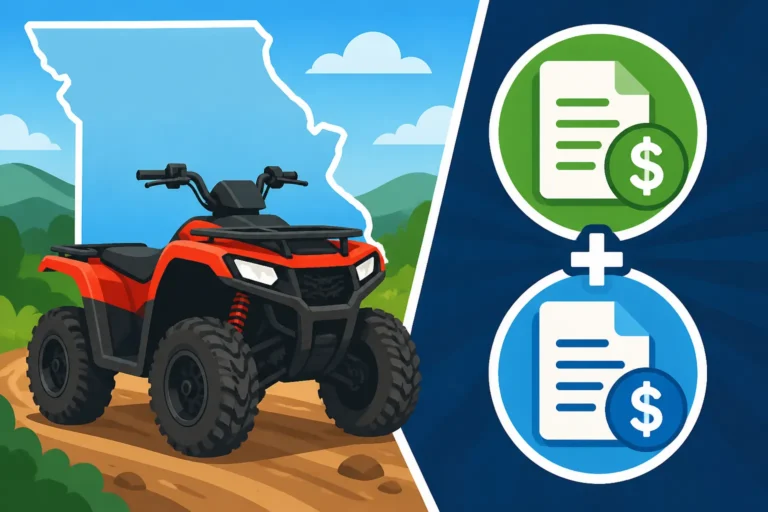
Beyond sales tax, you'll encounter other fees during the titling and registration process. There's the actual title fee, the three-year registration fee (which gets you the decal), and usually a processing fee charged by the license office. While these individual fees might seem small on their own, they add up, so it's wise to budget for them when planning your ATV purchase. Understanding [Missouri ATV Title Cost] and [Missouri ATV Registration Cost] will give you a clearer picture of the total financial commitment. It's all part of ensuring your ATV is fully legitimate and ready for the trails.
Here’s a quick overview of how Missouri handles identification for different types of off-road vehicles:
| Vehicle Type | Primary State Identification | On-Road Status (General) | Key Identifying Features (Missouri) |
|---|---|---|---|
| ATV (All-Terrain Vehicle) | Decal (3-Year Registration) | Off-road only; limited exceptions | Straddle seat, handlebars, ≤ 1500 lbs dry, ≤ 50" wide |
| UTV (Utility Vehicle) | No State Decal/Registration | Off-road; local road exceptions possible | Side-by-side seating, steering wheel, roll cage, often wider/heavier |
| ROV (Recreational Off-Highway Vehicle) | No State Decal/Registration | Off-road; local road exceptions possible | Side-by-side seating, steering wheel, roll cage, often wider/heavier |
| Motorcycle | License Plate | Road Legal; specific off-road models exist | Straddle seat, handlebars, two wheels (generally) |
This article is for general informational purposes only and does not constitute professional advice. Laws, prices and regulations vary by location and change over time. Consult a qualified professional for guidance on your specific situation.