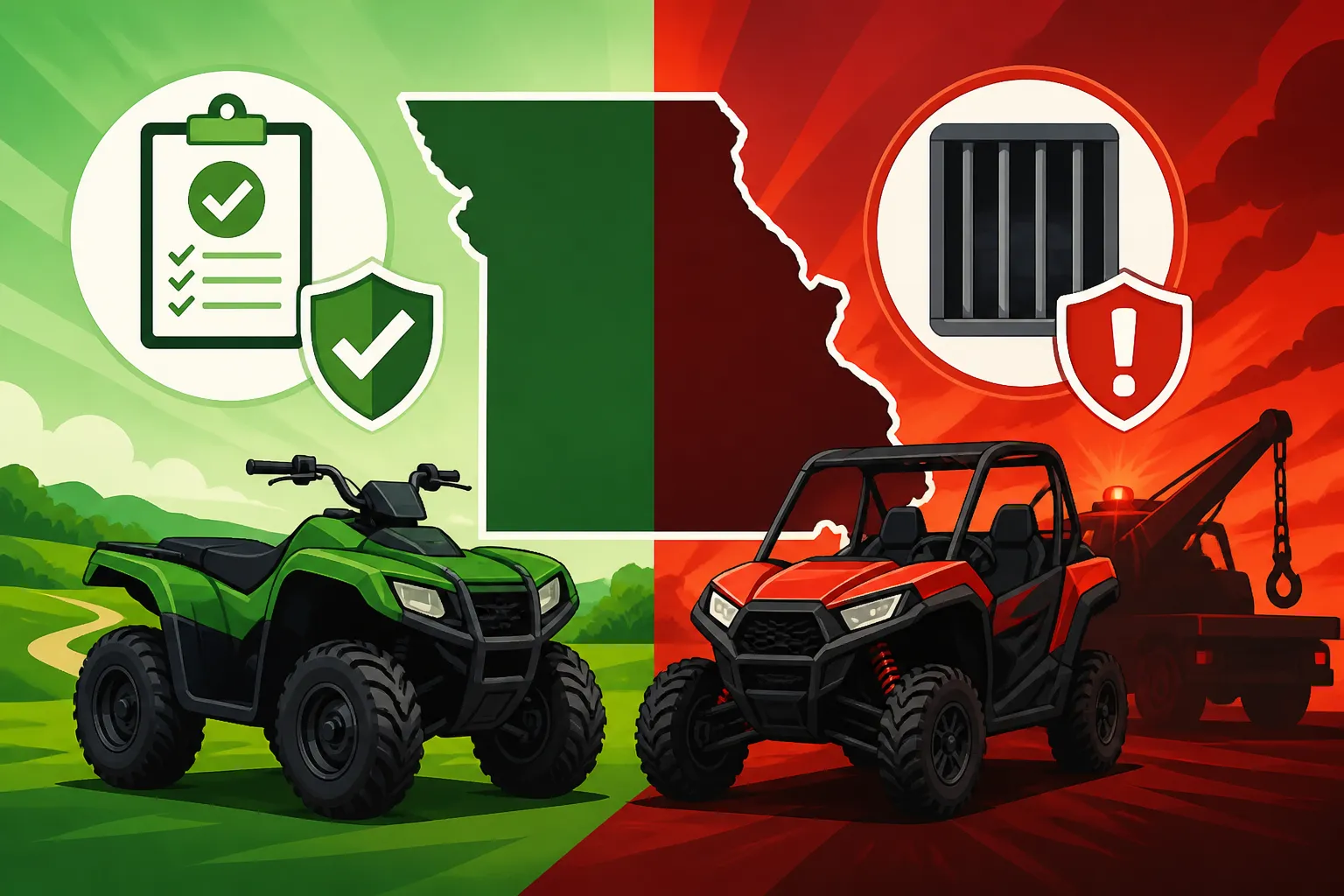
Late Renewal Costs Less Than a Late Title
We've all been there: that sinking feeling when you realize a deadline for something official has passed, and your mind immediately jumps to "how much is this going to cost me?" When it comes to your Missouri ATV, missing a deadline can certainly come with a price, but there's a significant difference between the financial sting of a late title and the relatively milder pinch of a late decal renewal. This guide will walk you through why those two situations are treated so differently by the state and what you can expect if you find yourself behind schedule on either.
Understanding Missouri's ATV Titling Process and Penalties
Getting your ATV titled is arguably the most fundamental step after you bring a new machine home, or after a private purchase. It's about establishing legal ownership, and Missouri takes this very seriously. Overlooking this initial step or delaying it can lead to more substantial financial consequences.
The Initial Titling Requirement and Deadline
When you buy an ATV in Missouri, whether it's brand new from a dealer or a pre-loved machine from a private seller, the state requires you to title it in your name. This isn't just a suggestion; it's a legal obligation that confirms you are the rightful owner. The clock starts ticking the moment you take possession: you have a firm 30-day deadline from the date of purchase to submit your application for a title to the Missouri Department of Revenue. This timeframe is crucial, and it’s one that catches many riders off guard, especially if they’re new to ATV ownership or purchasing from out of state. It's a critical piece of paperwork, and without it, you're essentially driving around with an unregistered asset.
Falling outside of this 30-day window can create a cascade of headaches and, more directly, a financial penalty. Think of it as the state's way of encouraging prompt record-keeping and ensuring that every ATV operating within its borders has a clear chain of ownership. If you buy a used machine privately, make sure you have a proper [Missouri Bill of Sale for an ATV] to document the date of sale accurately, as this is what the state will use to calculate your deadline.
The Cost of a Late Title in Missouri
So, what happens if you miss that 30-day titling deadline? Missouri imposes a specific late titling penalty, and it’s designed to be a deterrent. The penalty starts small but accumulates quickly. For every 30-day period, or any portion thereof, that your title application is late, you’ll incur a penalty. This isn't a one-time flat fee; it compounds. Imagine you bought your ATV on January 1st. If you don't submit your title application by January 31st, you're already looking at the first penalty. If you wait until March 5th, you've crossed into a second 30-day period, and thus, another penalty is added.
The good news, if you can call it that, is that there is an upper limit. The [Missouri's Late Titling Penalty] is capped, so it won't go on indefinitely, but it can still add up to a significant amount if you let too many months slip by. This structure reflects the state's emphasis on legal ownership; the longer an ATV remains untitled in the correct owner's name, the murkier its status becomes, and the harder it is to track for things like sales tax or even stolen property. You pay this penalty right at the license office when you finally get around to titling your machine. For more on the specifics of how this penalty accrues and its cap, you can look into [Why the Penalty Caps at Two Hundred].
Why Titling is a Critical First Step
Titling isn't just about avoiding penalties; it's about securing your legal rights and responsibilities as an ATV owner. Without a title in your name, you don't have indisputable proof of ownership. This can cause immense problems down the line. For instance, if your ATV is ever stolen, law enforcement will have a much harder time recovering it and proving it's yours without a clear title. Selling the machine in the future also becomes a nightmare; most buyers, especially private ones, will be hesitant or outright refuse to purchase an ATV without a clean title signed over by the legal owner.
Furthermore, titling is often the gateway to other necessary steps, such as obtaining a decal for riding on designated public lands. While Missouri does not technically "register" ATVs in the traditional sense like cars (meaning no license plate), the title is the foundational document. Neglecting it means you're operating in a legal gray area, which can expose you to complications far beyond just a late fee. Understanding [What Missouri Counts as an ATV] is also crucial here, as only certain machines require this specific titling process.
Navigating Missouri's ATV Decal Renewal and Penalties
Once your ATV is titled, you then move into the realm of operating privileges, which is where the decal comes into play. This is a separate, though related, process with its own deadlines and, thankfully, less severe penalties for late action.
The Three-Year Decal and Its Purpose
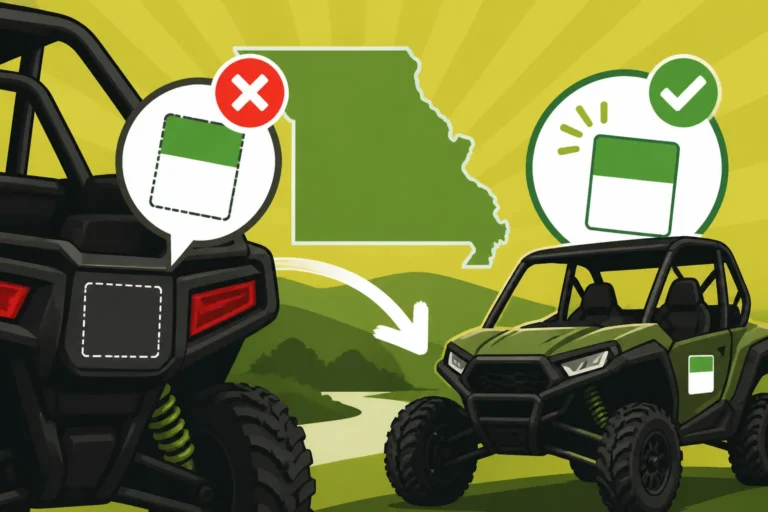
Instead of an annual registration, Missouri issues a unique three-year decal for ATVs. This decal serves a different purpose than a title; it signifies that your machine is authorized to be operated on designated off-road riding areas within the state, such as state parks and national forests that allow ATVs. It’s not a license plate, and you won't be using it on public roads in most cases, but it's essential for legal off-highway riding. The decal is typically mounted prominently on the right front fork of your ATV, ensuring it's visible to park rangers or law enforcement. You can learn more about its duration and purpose by reading [Missouri's Three-Year ATV Decal] and [How Long a Missouri ATV Decal Lasts].
Unlike the title, which is about ownership, the decal is about permission to operate. It helps fund the maintenance and development of Missouri's trails, contributing to the very places you want to ride. So, while it's still a requirement, its nature is more about managing access and contributing to the riding infrastructure rather than establishing who legally owns the machine.
The Cost of a Late Decal Renewal
If you miss the expiration date on your three-year ATV decal, the financial penalty is significantly less burdensome than a late title. Missouri imposes a relatively small, flat late renewal penalty. This isn't a compounding fee that grows over time like the late titling penalty. Whether you're a day late or a year late, the fee remains the same. This makes it far less punitive than the late title fee, reflecting the state's distinction between owning a vehicle and simply renewing the privilege to operate it on certain lands.
While you'll still have to pay the regular renewal fee for the decal itself, that additional late penalty is a minor inconvenience compared to the hundreds of dollars a severely late title can rack up. It's still best to renew on time, of course, but knowing the penalty is manageable can ease the stress if you inadvertently let it slip. For specific details on the cost, check out [Missouri's $5 Late Renewal Penalty].
Why Renewal is Simpler Than Titling
Renewing your decal is generally a much more straightforward process than the initial titling. When you renew, you're simply confirming that the same ATV, already titled in your name, still exists and you want to continue operating it on designated trails. You typically won't need to provide extensive documentation like a bill of sale or a certificate of origin again. Often, it's a matter of filling out a simple form, paying the fee, and receiving your new decal in the mail or directly from a license office.
This simplicity contrasts sharply with the initial titling process, which demands proof of ownership, sales tax payments, and often a notarized application. The state already has your machine's information on file from the original titling, making renewal an administrative update rather than a foundational registration. This distinction in complexity is another reason why the penalties for tardiness differ so much. For a deeper dive into the renewal process, you can refer to [Renewing a Missouri ATV Decal].
The Core Difference: Ownership vs. Operating Privilege
At the heart of why late titling costs more than late decal renewal is a fundamental legal distinction: one concerns the very essence of property ownership, while the other relates to a temporary permission to use.
Titling Confirms Ownership
When you title an ATV, you are essentially creating a legal record that irrevocably links you as the owner to that specific machine. This document, the title, is the ultimate proof that you bought it, paid for it (including any applicable sales tax, often collected at the time of titling, as explained in [Missouri ATV Sales Tax at Titling]), and are responsible for it. It's how the state keeps track of vehicles and prevents fraud, theft, and disputes over who truly owns a piece of property. The stakes are much higher here. If titles weren't properly handled and enforced, it would be chaotic trying to track ownership, especially for high-value items like ATVs. The significant late penalty underscores the importance the state places on establishing and maintaining clear ownership records.
Imagine trying to sell a house without a deed, or a car without a title. It’s nearly impossible and fraught with risk. An ATV title functions similarly in the legal framework. It's the permanent record, and delays in establishing that record create administrative burdens and potential legal ambiguities, hence the more severe penalties.
Renewal Grants Operating Privilege
The ATV decal, on the other hand, grants you a time-limited privilege to operate your machine on specific public lands and trails. It's akin to a park pass or a fishing license. It doesn't confer ownership; it simply states that for a set period, your already-owned ATV is cleared for specific types of use. The state uses these fees to maintain the trails and facilities for riders, so it's a user-pays system for shared resources.
Since the ownership has already been established and recorded via the title, a late decal renewal is seen as a lesser offense. You're not jeopardizing the fundamental ownership record; you're just delaying your contribution to the trail system and your permission to ride. The consequences are primarily that you can't legally ride on those designated public lands until your decal is current. You can certainly still own your ATV without a current decal, but your riding options will be limited to private land where you have permission.
Practical Implications for Riders
This distinction has significant practical implications. If your title is late, you might not only face the penalty but also encounter difficulties if you need to sell your ATV quickly or if there's any legal dispute regarding its ownership. You might also run into issues with your insurance company if they require proof of ownership, though [Missouri ATV Insurance Requirement] doesn't typically tie directly to the decal.
If your decal renewal is late, the immediate consequence is that you cannot legally ride your ATV on public lands that require the decal. If you're caught, you could face a citation. However, your ownership of the machine remains intact, and the process to rectify the situation is usually much simpler and cheaper. Knowing this difference can help you prioritize your paperwork. Always make sure your title is squared away first and foremost, and then keep a close eye on your decal expiration date to avoid even the smaller renewal penalty. Always remember to check [When a Missouri ATV Decal Expires] to avoid any unpleasant surprises.
Avoiding Both Late Penalties
Nobody wants to pay extra fees or deal with unnecessary bureaucracy. A little proactive planning can save you money and stress when it comes to Missouri ATV paperwork.
Best Practices for New Purchases
The 30-day deadline for titling a new or newly acquired ATV can sneak up on you, especially if you're excited about your new machine. The absolute best practice is to address the titling process as soon as possible after purchase. If you're buying from a dealer, they will often handle much of the paperwork for you, but it's still your responsibility to ensure it's completed. For private sales, the onus is entirely on you. Get the signed-over title from the seller, along with a bill of sale, and head to your local Missouri license office within that first month.
Don't wait until day 29! Life happens, and you might encounter an unexpected delay, like missing a piece of paperwork or the office being closed. Being prompt reduces the risk of falling into the late penalty trap. If you're buying a used machine privately, ensure the seller provides you with a clear, properly assigned title. If they can't, it might be a red flag. [Buying a Used ATV Privately in Missouri] can offer more guidance on this.
Setting Reminders for Renewals
The three-year decal cycle means it's easy to forget when your renewal is due. Unlike annual renewals that might align with other yearly tasks, a triennial renewal can slip through the cracks. Set multiple reminders for yourself: on your phone, in your calendar, or even a physical note near your ATV. Many people prefer to use digital reminders that pop up a month or two before the expiration date, giving them ample time to handle the renewal.
Also, keep your eye on the mail. The state sometimes sends out renewal notices, but don't rely solely on these. It's ultimately your responsibility to know when your decal expires and to initiate the renewal. Knowing [How Often a Missouri Decal Comes Due] is a good first step to staying organized.
Using Tools for Documentation
Proper documentation is your best friend in avoiding late penalties, especially for titling. When buying or selling privately, a clear, dated bill of sale is invaluable. It serves as proof of the transaction date, which is critical for determining your 30-day titling window. Services like LawDepot can be incredibly helpful for generating professional and legally sound documents such as a bill of sale or other necessary forms, ensuring all required information is included and properly dated. This can prevent misunderstandings or disputes that might delay your titling process. Having all your paperwork in order from the start can make the process smooth and hassle-free, saving you both time and money in the long run.
Having a clean bill of sale from a reputable source, or a clearly signed-over title, is your strongest defense against penalties. When you visit the Department of Revenue, clear and accurate paperwork will speed up the process and help prevent any misinterpretations of your purchase date, which is key to avoiding late fees.
Comparing Missouri ATV Late Penalties
To help you visualize the difference in costs and implications, here’s a quick comparison of the two types of late fees we've discussed.
| Feature | Late ATV Title Penalty | Late ATV Decal Renewal Penalty |
|---|---|---|
| Purpose | Penalty for delayed establishment of legal ownership | Penalty for delayed renewal of operating privilege |
| Cost Structure | Accumulates for each 30-day period late | Flat fee, regardless of how long it's late |
| Maximum Penalty | Capped at a specific amount (can be significant) | Much smaller, fixed amount |
| Impact of Delay | Impedes legal ownership, resale, and recovery | Restricts legal riding on designated public trails |
| Required Documents | Original title, bill of sale, application, tax | Renewal notice or existing decal info, payment |
| Ease of Correction | More complex, requires full titling process | Simpler, often just a form and payment |
| Legal Importance | High: pertains to fundamental property rights | Moderate: pertains to temporary usage rights |
This table clearly illustrates why the state imposes stricter penalties for delays in titling versus delays in decal renewal. One is about securing your asset, the other about temporary access.
Disclaimer
This article is for general informational purposes only and does not constitute professional advice. Laws, prices and regulations vary by location and change over time. Consult a qualified professional for guidance on your specific situation.