Missouri Rules for Filming on a Trail
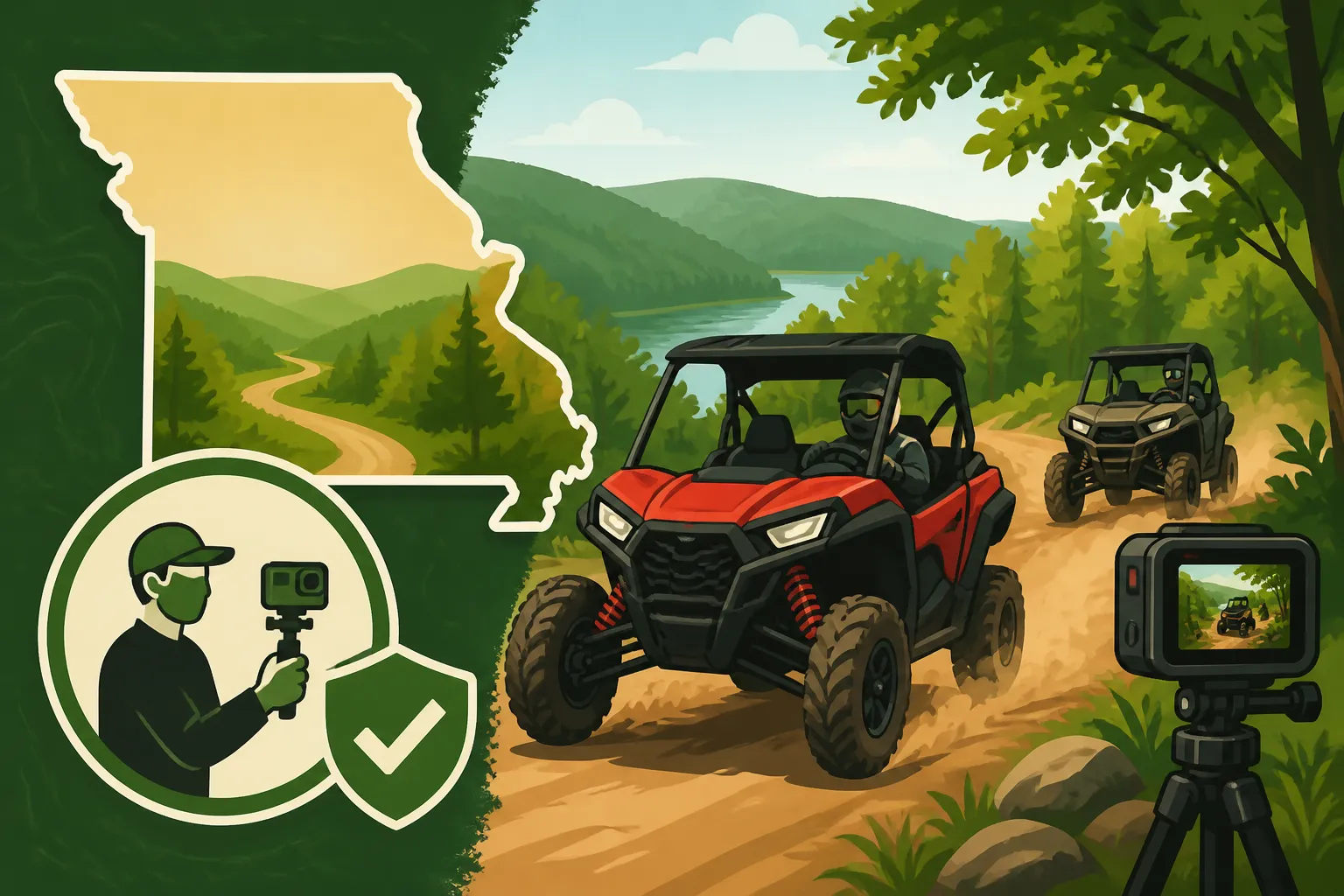
Filming an ATV or UTV ride in Missouri can be as simple as mounting a camera for personal footage, or it can become a permission issue if you are producing content for a business or organizing a shoot. The key is to separate riding access from filming authorization, then check the rules for the specific trail, land manager, and activity.
Start by identifying what kind of filming you are doing
A camera recording your own ride for personal use is different from a planned production with a crew, promotional purpose, paid participants, or equipment that affects other trail users. The word “filming” alone does not determine whether you need approval; the location and the impact of the activity matter.
Before heading out, clarify these points:
- Is the footage personal or commercial? Recording memories or sharing a casual ride is different from making a paid advertisement, sponsored production, or business video.
- Are you filming alone or organizing a group? A gathering planned around cameras, timed runs, or coordinated staging may be treated differently from several friends casually riding together.
- Will you bring extra equipment? Tripods, lighting, sound gear, vehicles, or a crew can create impacts beyond an ordinary trail visit.
- Where will you film? A state park, national forest, private riding park, and private land can have different rules.
- Will filming block or change trail use? Stopping on a narrow trail, setting up in a staging area, or asking other riders to wait can create safety and access problems.
Do not assume that paying for trail access also grants permission to conduct a production. A riding permit, where required, covers the access described by that permit; it may not cover commercial filming, a planned event, or exclusive use of an area. For a broader explanation of riding access, see Missouri ORV Permits Explained and Missouri Rules for Riding Public Land.
| Filming situation | What to check before riding |
|---|---|
| Personal camera mounted on your machine | Trail access rules, riding rules, safe mounting, and any restrictions on stopping |
| Casual group ride with cameras | Whether the gathering is considered an organized ride and whether group activity needs approval |
| Sponsored or business video | Land manager’s filming or special-use requirements, plus trail and permit rules |
| Crew, props, or equipment setup | Permission for equipment, vehicles, staging, and any area use beyond normal riding |
| Filming on private property | The owner’s permission and any park operator’s rules |
| Drone footage | Land manager restrictions, applicable aviation rules, and whether launching or landing is allowed |
This is a practical screening table, not a promise that one category is always permit-free. Land managers can set rules for their property, and conditions may vary by location. If the answer is unclear, contact the office responsible for the trail before you arrive.
Check the land manager’s rules before planning a shoot
Missouri riding areas are not all governed by one filming policy. A trail may be on state park land, national forest land, private property, or another type of public land. Identify the land manager first, then ask about filming specifically rather than asking only whether ATVs are allowed.
Missouri state parks
For a shoot on a state park trail, contact the park or the state agency responsible for the site before building your plan. Explain whether the footage is personal, sponsored, or commercial; how many riders and crew members will attend; what equipment you intend to bring; and whether you want to reserve or control any space. Ask whether an application, written authorization, fee, insurance documentation, or scheduling arrangement applies.
Do not rely on a general trail permit or an answer about ordinary riding as approval for a production. The state park’s filming requirements may depend on what you plan to do and how your activity affects the park. For details focused on that setting, see Filming on a State Park Trail.
Mark Twain National Forest
For filming on national forest land, contact the relevant Forest Service office early. Commercial productions and activities that use public land in a way beyond ordinary recreation may need a special-use authorization. Whether that applies can depend on the purpose, equipment, location, and likely impacts of the proposed activity. Ask the office to assess your particular plan rather than assuming that a small crew or a short shoot is automatically exempt.
A filming authorization is also not a substitute for following trail restrictions or holding any riding permit that applies to your visit. Check the trail’s current access conditions and ask about filming, staging, and equipment in the same conversation. The process is covered further in Applying for a Forest Service Special Use Permit.
Private parks and private land
A private riding park may set its own rules for cameras, commercial content, group visits, and equipment. Ask the operator whether filming is allowed and whether separate written permission is required. If the land is not an established riding park, get the landowner’s permission before entering or recording there. For the access side of that question, see Missouri Landowner Permission Requirements.
Permission from a landowner does not automatically settle every other issue. You still need to consider road travel, riding safety, other applicable rules, and any separate restrictions on drones or equipment. Keep permission in writing when the project is planned or commercial, and make sure it covers the date, location, people, and activities involved.
Keep riding permits, event approval, and filming permission separate
A common source of confusion is treating every form of approval as interchangeable. They are not. You may need to satisfy several separate requirements, depending on your plan:
- Permission to ride: Check whether the machine and rider need a permit for that property or trail. Review Missouri ORV Permits Explained for the general permit context.
- Permission to film: Ask the land manager whether the purpose or setup requires a filming authorization or other written approval.
- Permission to organize an activity: If you are coordinating a group, reserving a staging area, inviting participants, or structuring the ride around a production, ask whether event rules apply. Missouri Rules for an Organized Ride explains why a group activity can raise a different question from ordinary riding.
- Permission to use private property: Obtain consent from the owner or operator, including permission for any crew, vehicles, or equipment.
- Permission to capture aerial footage: Check the land manager’s rules for takeoff, landing, and drone use, as well as applicable aviation requirements. Do not assume a drone is permitted just because the trail is open to riders.
When you contact an agency or park operator, give a clear description instead of asking a vague question such as “Can I film there?” Include the proposed date or date range, number of riders, number of crew members, machine types, camera and drone equipment, planned locations, whether the footage is commercial, and whether you need to stop traffic or control a space. Ask what approval is needed and how far ahead to apply.
Save the response and any authorization where you can access it on the ride. Keep in mind that a permit or written approval may apply only to the location, date, and activity it describes. If your plan changes, such as adding a drone, expanding the crew, or turning a casual ride into a sponsored shoot, confirm that the approval still covers the new activity.
Film without creating a trail hazard
Even when filming is allowed, the camera setup should not make riding less safe or interfere with other visitors. Missouri’s riding rules and the trail operator’s rules still apply while the camera is on. A camera does not give a rider permission to stop in a blind corner, block a trail, or leave a marked route to get a better shot. Review [Missouri Rules for Riding Off the Trail] before planning any shot that might tempt a rider to leave the trail.
Practical habits help keep filming manageable:
- Mount the camera securely and check that the mount cannot obstruct steering, controls, visibility, or safe entry and exit from the machine.
- Use a tether where appropriate so a loose camera does not become trail debris.
- Set the camera before moving. Do not handle a phone or adjust recording equipment while operating the ATV or UTV.
- Choose a safe, permitted place to stop. Make room for other riders and avoid stopping where sightlines are poor.
- Do not ask another rider to perform a maneuver, ride faster, or take a route they would not otherwise choose for the camera.
- Keep crew, tripods, and spare equipment out of the riding line and away from areas where machines are turning or unloading.
- Follow posted speed, sound, access, and staging rules. Recording does not make a restricted area available for filming.
- Tell participants what the shoot involves and get their agreement before recording or publishing identifiable footage.
For a simple personal ride, a compact camera and a secure mount may be enough. If you are buying an accessory, compare how it attaches, whether it can be tethered, and whether it stays clear of the rider’s controls; retailers such as Amazon may carry mounts and tethers, but a product listing does not confirm that a setup is safe for your machine.
The simplest plan is usually the least disruptive one: confirm access, ask the land manager about filming, keep the camera setup modest, and ride as though the camera were not there. If the project needs a crew, special equipment, controlled space, or commercial use, get the requirements in writing before traveling. That prevents a valid riding permit from being mistaken for approval to conduct a production.
Disclaimer
This article is for general informational purposes only and does not constitute professional advice. Laws, prices and regulations vary by location and change over time. Consult a qualified professional for guidance on your specific situation.