Missouri Fines for No ORV Permit
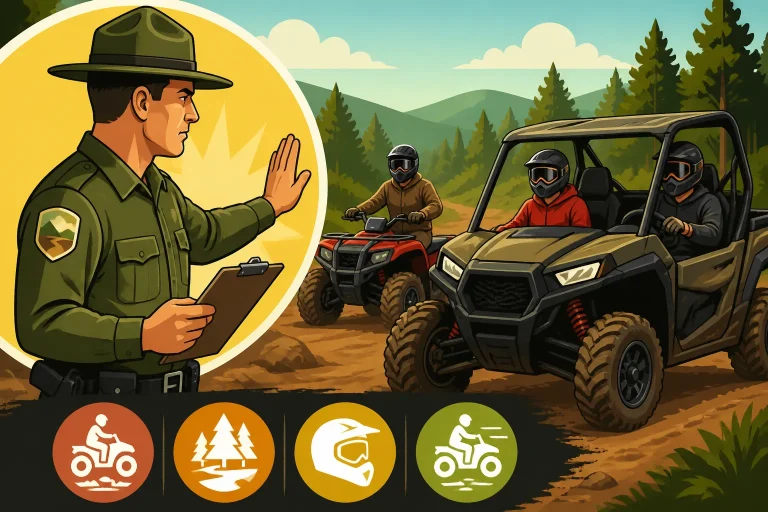
A missing ORV permit can turn a ride into a citation, but Missouri does not have one universal permit or one standard fine for every trail. The consequences depend on who manages the land, what permit was required, and what the citation says. Knowing how those systems differ can help you avoid a surprise at the trailhead—and respond sensibly if you receive a ticket.
Why there is no single Missouri fine for riding without an ORV permit
“ORV permit” can mean different things in Missouri. A state park riding area, a national forest trail system, and a private park may each have separate access rules. A permit from one place does not automatically cover another, and having a vehicle registration decal does not necessarily satisfy a trail or park permit requirement.
That is why a question like “What is the fine for no ORV permit?” has no reliable statewide dollar answer. The important details are where you were riding, which land manager controlled the area, and what rule the officer or ranger says you violated. The citation itself should identify the alleged violation or tell you how to find that information.
| Where you ride | What to check before unloading | Why the penalty can differ |
|---|---|---|
| Missouri state park riding area | Whether the area is open to ORVs and which permit applies to your machine | State park rules and permit requirements apply at that site |
| Mark Twain National Forest trail system | Whether the specific trail is open and what forest permit is required | Forest access rules are separate from state park rules |
| Private riding park | The operator’s admission, permit, and safety rules | The property owner sets access terms, while other laws may also apply |
| Other public land | Whether ORV use is allowed at all, and whether a permit is required | Some land is not open to general ATV or UTV riding |
For a broad explanation of the systems, see Missouri ORV Permits Explained. Before a specific trip, use the relevant land manager’s current instructions rather than assuming a permit from a previous ride is still valid.
A vehicle decal is not automatically a trail permit
Missouri’s vehicle registration and trail-access requirements are separate questions. A registration decal may be required for a machine under the state’s registration rules, but it does not necessarily buy entry to a public riding area. Conversely, a trail permit does not resolve every registration or road-use requirement that may apply to the vehicle.
This distinction catches riders who see a decal on their machine and assume they are cleared to ride any public trail. The decal may address one state requirement; the riding area can still require its own permit. Does Your Decal Cover the Park Trail Permit? explains why it is useful to check both systems instead of treating them as interchangeable.
What can happen if you ride without the required permit
The practical risk is receiving a citation or being told to leave the riding area. Depending on the land manager and the specific circumstances, the matter may involve a monetary penalty, a required court appearance, or other consequences under the rules that apply at that location. There is no safe way to estimate the amount from the phrase “no ORV permit” alone.
A rider may also face a separate issue if the machine is on a closed trail, outside a designated riding area, or being operated in a way that violates another rule. Those are not necessarily the same violation as failing to display or buy a permit. A citation can allege more than one offense, so read the stated violation carefully rather than assuming the ticket is only about the permit.
For example, a rider who has not obtained the required access permit may also be riding on a trail that is closed, using an area outside the authorized boundary, or ignoring a posted restriction. The additional facts can change how the land manager handles the incident. Information about a trail closure is covered in [Missouri Fines for Riding a Closed Trail], but a closure citation and a missing-permit citation should not be treated as interchangeable.
Do not assume buying a permit afterward cancels a citation
If an officer or ranger has already issued a citation, purchasing a permit later may not undo it. A permit generally authorizes access under the applicable rules; it does not necessarily erase an alleged violation that occurred before the permit was obtained. Follow the instructions on the citation and ask the issuing agency or court how to handle the matter.
Likewise, do not rely on another rider’s permit, an old receipt, or a screenshot that belongs to a different vehicle or person. Permits may be tied to particular conditions, dates, machines, or users. If you are unsure what your permit covers, confirm that before riding rather than trying to explain it after a stop.
How to check the permit rules before you ride
The most reliable way to avoid a permit citation is to identify the land manager before the trip. A trail’s name or location on a map is not enough by itself; neighboring land can be controlled by different agencies, and an access rule can change when you cross a boundary.
Use this process for each riding area:
- Confirm who manages the land. Check whether the area is a state park, national forest, private facility, or another type of property. Do not assume the rules are the same across nearby trails.
- Confirm that ORV riding is allowed. A permit does not make a closed or unauthorized route legal to ride. Check for designated trails, seasonal restrictions, and closures.
- Identify the permit for your machine and visit. Check whether the permit is for an ATV, UTV, or another category, and whether it covers the day or period you plan to ride.
- Check how to obtain and show it. Follow the land manager’s current instructions on purchasing, displaying, or carrying proof of the permit.
- Keep proof accessible. Save the receipt or permit confirmation where you can retrieve it at the trailhead, but do not assume a phone image is accepted unless the site says it is.
- Recheck close to departure. A trail may close or access conditions may change after you first made plans.
For state park riding areas, start with Do You Need a Permit for Missouri State Park Trails?. For forest riding, check What the Mark Twain Forest ATV Permit Covers and the current information for the specific trail system. If you need to find a permitted sales channel, Where to Buy a Missouri ORV Permit is a useful next step.
A permit for a state park does not necessarily cover a forest trail, and a forest permit does not necessarily cover a state park. There may also be machine-width or other site-specific limits. Check the machine requirements as well as the permit category; paying for a permit will not make an ineligible machine acceptable at a trail gate.
Visitors should check their home-state registration separately
If you are visiting Missouri, do not assume that an out-of-state registration or decal replaces a local riding-area permit. Reciprocity and trail access are different questions. A state may recognize a visitor’s vehicle paperwork for one purpose while still requiring a separate permit to ride a particular public trail.
Review the rules for the site you plan to visit and the visitor guidance in Missouri ORV Permit for a Visitor. If you are crossing state lines during a trip, check each riding area separately. A valid permit in one state does not automatically transfer to another.
What to do if you receive a no-permit citation
A citation can be stressful, especially if you thought your machine or paperwork was covered. Take a moment to understand what the document actually says. Do not rely only on a verbal description of the issue, and do not assume that a permit purchase made after the stop changes the deadline or process.
Use these steps:
- Read the citation from top to bottom. Note the alleged violation, issuing agency, required response, and any listed court or contact information.
- Write down what happened while it is fresh. Record the trail or area, where you entered, what signs you saw, what permit or receipt you had, and what the officer or ranger told you.
- Keep relevant documents together. Save receipts, permit confirmations, registration records, photos of signs, and any trail information you relied on.
- Contact the issuing authority with specific questions. Ask what rule the citation refers to and how to respond. If the citation directs you to a court, follow that process rather than treating the agency call as a substitute.
- Meet every response deadline. Ignoring a citation can create a separate problem. If you do not understand the legal consequences, consider getting advice from a qualified attorney.
- Do not keep riding in the same area without clearing up access. Confirm the permit and trail status before returning.
If you believe the location was open, the permit was valid, or the citation identifies the wrong issue, keep your records and use the formal response process listed on the citation. Be precise and factual. A receipt can help show what you purchased, but it may not establish that the permit covered that trail, date, machine, or rider.
It also helps to separate the permit question from other land-use rules. Missouri Rules for Riding Public Land can help you think through whether the area is open to riding in the first place. For a site-specific trip, check Missouri Trail Closures to Check First before loading the machine. Confirming both access and permit requirements is more reliable than focusing only on the possible fine.
The bottom line: Missouri does not have one universal fine that answers every no-permit situation. The land manager, location, permit type, and alleged conduct matter. Check the rules for the exact riding area, keep proof of the permit you obtain, and treat any citation as a separate matter that requires a timely response.
Disclaimer
This article is for general informational purposes only and does not constitute professional advice. Laws, prices and regulations vary by location and change over time. Consult a qualified professional for guidance on your specific situation.