A Side-by-Side Still Pays at the Park Gate
A side-by-side can look like an ATV to a rider, but Missouri state park gates may treat the two machine types differently. That means a state registration decal does not necessarily cover your trail access, and the permit charge can depend on how the vehicle is classified. Here’s what to check before loading up and heading to a park.
Why a side-by-side still needs a park permit
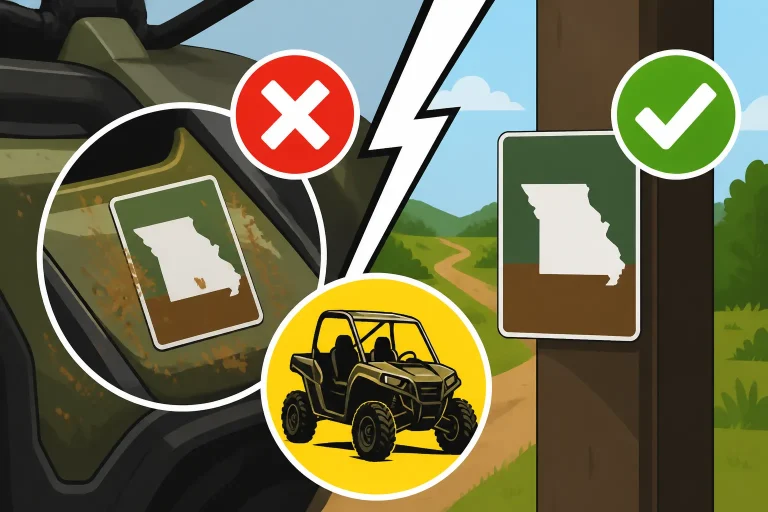
Missouri’s state registration system and its off-road riding permit system serve different purposes. A registration decal is not a general pass to ride every public trail. When a park requires an off-road vehicle permit, riders need to follow that park’s permit rules even if the machine is registered elsewhere.
That distinction catches side-by-side owners off guard. A UTV may have a state decal, or its owner may assume the machine is exempt from Missouri’s ATV registration system. Neither fact automatically makes riding free at a state park. The park’s access rules and permit requirements are separate from the rules for registering a machine with the state.
The permit is tied to the riding opportunity at a specific public riding area, not simply to owning or registering a vehicle. State park rules can specify which machines may use designated off-road areas, what permit is required, and what equipment or operating conditions apply. A permit does not give permission to ride outside the areas where off-road use is allowed.
It helps to think of the paperwork in two layers:
| Question | What it concerns | What it does not automatically provide |
|---|---|---|
| Is the machine registered or covered by a state decal? | State-level registration requirements for a machine | Access to every park trail |
| Does the park require an ORV permit? | Permission to ride in a designated park off-road area | Permission to ride on roads or trails outside that area |
| Does the machine meet the park’s limits? | Whether its class, width, equipment, and use fit park rules | An exception from those rules because a permit was purchased |
The short version: if a park requires an ORV permit for the machine you bring, plan to buy the applicable permit even if you already have a decal. For a broader overview, see Missouri ORV Permits Explained and Does Your Decal Cover the Park Trail Permit?.
Why the gate may charge more for a side-by-side
State park permit charges may differ by vehicle class. A side-by-side can cost more to permit than an ATV because the park system distinguishes between the machine types, rather than charging every off-road vehicle the same amount. The exact charge and available permit options can change, so check the park’s current official information before you travel.
The distinction is not necessarily a judgment about how carefully you ride or how often you use the trails. A side-by-side is a different kind of vehicle, and the park’s fee schedule may assign it a separate category. That is why an owner should not assume the ATV permit amount applies just because the vehicle is used for recreation off-road.
The classification question matters at the gate. A side-by-side is generally a vehicle with a steering wheel and side-by-side seating, while an ATV is generally designed to be straddled and steered with handlebars. The machine’s name in an advertisement or the owner’s everyday description does not necessarily settle how a park classifies it. Check the park’s definitions or ask the park directly if the vehicle is unusual, modified, or close to a stated size limit.
A wider machine can also face different access limits from a smaller ATV. Some riding areas set a maximum vehicle width, so paying for a permit does not guarantee that every trail is open to every permitted machine. Review 64 Inches at a Missouri State Park and Why Missouri Charges More for a Side-by-Side when you are checking how the park treats vehicle class and dimensions.
Before you travel, confirm the following with the specific park:
- Whether the riding area is open to side-by-sides.
- Which permit category applies to your machine.
- The current charge and whether permits are sold for a day or another period.
- Any maximum width or other vehicle restrictions.
- Required safety equipment and operating rules.
- Where and how to obtain the permit.
If the park lists separate ATV and UTV permit categories, choose the one that matches your machine. If the classification is not clear, ask before paying or unloading. A mistaken purchase may not be transferable or refundable, depending on the permit rules. See Missouri State Park UTV Permit Cost for the UTV-specific cost question, and verify current terms with the park.
What to check before unloading
A permit is only one part of a successful park visit. It is worth checking both the vehicle rules and the site’s current riding status before you leave home. Conditions, closures, and access details can vary by location, and a permit cannot override a temporary closure or a restriction on a specific trail.
Start with the machine itself. Measure its width using the method the park specifies, especially if it is near a posted limit. Accessories such as wider tires, wheel spacers, or other modifications may affect the overall measurement. Do not rely only on the manufacturer’s advertised width if the vehicle has been changed. The gate’s concern is whether the machine you actually bring meets the access rule.
Then review the park’s equipment requirements. Parks may have rules for helmets, flags, sound levels, spark arresters, or passengers. Requirements can vary between public riding areas, so do not assume that a rule from a forest trail or road permit applies in the same way at a state park. The relevant park’s current instructions are the best guide.
Check where the permit is sold and what proof you need to show. Some permit processes may involve an online purchase or a sales location; others may have different arrangements. Keep the confirmation or permit accessible, and read the instructions for displaying it. If a ranger or gate attendant needs to verify it, having it ready can make check-in easier.
Also check whether the park is open to riding on the day you plan to visit. Severe weather, trail work, maintenance, or other operating conditions can affect access. A permit purchase does not guarantee that all trails will be open, and some permits may have restrictions on refunds. Review Missouri Trail Closures to Check First and Reading the Trailhead Board Before You Unload as part of your trip planning.
For a practical pre-trip checklist:
- Confirm that the specific park allows side-by-sides in the area you plan to ride.
- Check the current UTV permit category and charge.
- Verify the vehicle’s measured width against park limits.
- Read the park’s equipment and passenger rules.
- Confirm the riding area is open and check for closures.
- Follow the park’s instructions for buying and displaying the permit.
- Keep a copy of your purchase confirmation available.
This can prevent a frustrating surprise: reaching the gate with a valid state decal but no park permit, discovering that the machine is too wide for the trail, or arriving during a closure.
Keep park access separate from road access
A state park ORV permit is not a road-use permit. It does not make a side-by-side street legal, authorize travel on a highway, or replace local requirements for riding on public roads. Likewise, a city or county road permit does not automatically grant access to state park off-road trails.
That difference matters when planning the route to a riding area. A machine may be permitted on a designated trail but prohibited from using nearby public roads to get there. Transporting it on a trailer avoids confusing trail access with road privileges. If your plan involves riding on a road, check the separate rules that apply to the vehicle, the road, and the jurisdiction.
Missouri’s state system also does not mean every public property is open to off-road vehicles. State parks, national forest land, conservation areas, and private property can have different access rules. A permit bought for one system should not be assumed to work in another. For a wider look at public-land requirements, see Missouri Rules for Riding Public Land and Missouri National Forest ATV Permit.
The practical takeaway is simple: identify the exact riding area, classify the machine correctly, and confirm the current permit and vehicle limits before the trip. A side-by-side may be welcome on a designated park trail, but its owner should expect the park’s UTV rules and permit category to apply. The state decal and park permit solve different problems, and having one does not necessarily replace the other.
Disclaimer
This article is for general informational purposes only and does not constitute professional advice. Laws, prices and regulations vary by location and change over time. Consult a qualified professional for guidance on your specific situation.