Why the 3-Mile Rule Is ROVs Only
Many of us living in Missouri love the freedom of hitting the trails on our ATVs and UTVs. But when it comes to riding on public roads, the rules can feel like a tangled mess, especially when you hear about the "3-mile rule" and realize it doesn't apply to every machine. It's frustrating when you just want to get from point A to point B without trailering, only to find out your quad is treated differently than your buddy's side-by-side. This guide will demystify why Missouri's 3-mile rule specifically targets Recreational Off-Highway Vehicles (ROVs) and why your traditional ATV usually won't qualify, helping you understand your options for street legal riding.
Understanding Missouri's 3-Mile Rule for Off-Road Vehicles
The idea of being able to hop on your off-road machine and legally cruise down the street, even for a short distance, sounds like a dream for many riders. In Missouri, that dream exists, but it comes with some very specific conditions and, crucially, only applies to a particular type of off-road vehicle. It's not a blanket pass for anything with four wheels and an engine, and misunderstanding this can lead to a roadside chat with a local deputy that you'd rather avoid.
What the Rule Allows and Limits
Missouri's 3-mile rule is designed to offer a limited convenience for owners of a specific class of vehicles, allowing them to travel a short distance on public roads. The intent is often for riders to access nearby trails, gas stations, or agricultural fields without the hassle of loading their machine onto a trailer for such a brief journey. However, this isn't free rein. The law states that a qualifying vehicle can operate on streets and highways within three miles of the operator's residence or a farm. This means you can't just be anywhere in the state and decide to take your machine for a spin on the road if you're more than three miles from your starting point. It's strictly about proximity to your home base or a designated farm operation.
The rule also carries requirements for how the vehicle must be equipped. It's not enough to simply be within the distance; your machine must have proper lighting, a safety flag, and other features that make it somewhat more visible and predictable in a road environment. These stipulations are there for public safety, recognizing that even a short trip on a road needs to minimize risk for both the off-road vehicle operator and other motorists. It's a careful balance between rider convenience and ensuring everyone on the road is as safe as possible.
Defining a "Recreational Off-Highway Vehicle" (ROV)
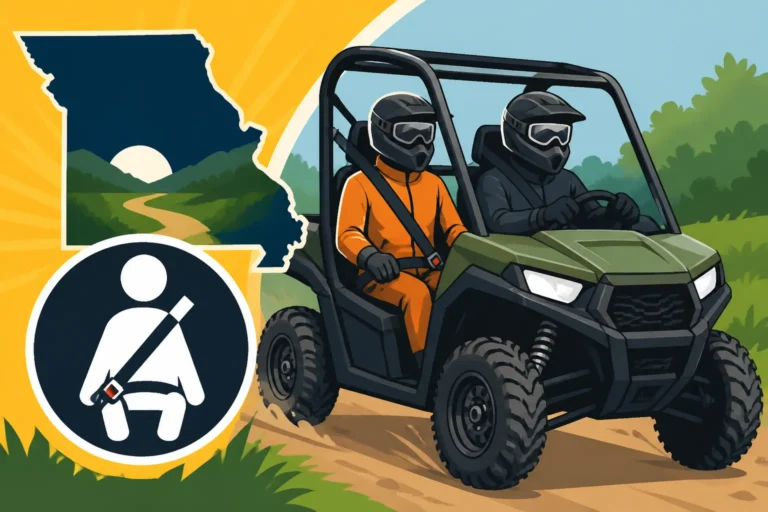
This is where the rubber meets the road, so to speak, in understanding why your traditional ATV might not qualify. The 3-mile rule in Missouri specifically applies to a "Recreational Off-Highway Vehicle," or ROV. So, what exactly is an ROV in the eyes of Missouri law? Think side-by-sides, those machines that look more like mini-jeeps with a steering wheel and bucket seats, often seating two or more passengers side-by-side.
Legally, an ROV is defined by several characteristics that set it apart from an ATV. These typically include a steering wheel for control, non-straddle seating (like bucket seats), a roll bar or cage, and seatbelts for occupants. These design features contribute to the perception of greater stability and occupant protection on a paved surface compared to a straddle-seat ATV. It's these fundamental design differences that Missouri's legislators focused on when crafting the road-use rules. You can dive deeper into how these vehicles are recognized by the state with articles like [Recreational Off-Highway Vehicles and Missouri Titles] and [What the Law Calls a Recreational Off-Highway Vehicle]. Because of these design elements, accessories from companies like SuperATV, which enhance safety or road-readiness like full windshields or street-legal light kits, are often geared towards these types of machines.
The Importance of Your Starting Point
One of the most crucial, and often overlooked, aspects of Missouri's 3-mile rule is the explicit requirement that your travel must originate from, and remain within three miles of, your "residence" or a "farm." This isn't a general three-mile radius from anywhere you might be, or simply from where you unload your machine. This distinction is vital because it means you can't trailer your ROV to a distant trailhead, unload it, and then expect to use the 3-mile rule to zip to a convenience store nearby. The clock, or rather, the odometer, starts ticking from your home address or an established agricultural property.
This rule is designed to offer limited utility for local travel, not to facilitate widespread road use for recreational purposes across the state. For instance, if you live in a rural area and need to take your ROV a couple of miles down the county road to check on livestock in a back pasture, or to run a quick errand to a neighbor's house, this rule could apply. It's about serving the immediate needs of a resident or farmer within their own local sphere, rather than opening up all public roads to these vehicles.
The Core Distinction: Why ATVs Are Different in Missouri Law
For many quad riders, the idea that their machine doesn't qualify for the same road-use privileges as a side-by-side can be a real head-scratcher. Both are off-road vehicles, both have engines and four wheels, so why the disparity? The answer lies in the very specific legal definitions Missouri uses, which are rooted in vehicle design and perceived safety on public roadways. It's not an arbitrary distinction; it's based on how the state classifies and regulates different types of off-highway equipment.
Straddle Seat Versus Side-by-Side Seating
Perhaps the most fundamental difference, and the one that Missouri law repeatedly emphasizes, is the seating arrangement. An All-Terrain Vehicle (ATV) is, by definition, designed to be ridden by an operator straddling a seat, much like a motorcycle. This design, combined with handlebars for steering, gives the rider a direct, athletic control over the machine, shifting their weight to navigate terrain. While some ATVs are built for two riders with an extended seat (a "two-up" model), the core straddle-seat concept remains. If you've ever spent time on one, you know it's a very active riding experience.
In contrast, a Recreational Off-Highway Vehicle (ROV) features non-straddle seating, often in the form of bucket seats, arranged side-by-side. This setup is much more akin to a car or small truck, complete with a steering wheel. This seating style fundamentally changes the ergonomics and control dynamics of the vehicle. For the state, this difference translates into a perceived variance in stability and operator protection on paved roads. To understand more about these crucial characteristics, check out [50 Inches Wide or a Straddle Seat] and [How a Straddle Seat and Handlebars Define an ATV].
Weight and Width: Key Legal Separators
Beyond seating, Missouri's legal definitions also hinge on physical dimensions like dry weight and overall width. For many years, the quintessential ATV was generally characterized as having a dry weight of under 1,500 pounds and a width of 50 inches or less. These parameters were established partly because they allowed the machines to fit on narrower trails and navigate tighter spaces.
However, many modern ROVs, or side-by-sides, often exceed these dimensions significantly. It's common for an ROV to weigh well over 1,500 pounds dry and stretch to 60, 64, or even 72 inches wide. These larger footprints naturally lead to different handling characteristics, especially on paved surfaces designed for conventional automobiles. Missouri's law makers saw these physical differences as important factors in determining which types of off-road vehicles could safely share public roads, even for short distances. Articles like [The 1,500-Pound Dry Weight Test in Missouri] and [Measuring a Machine Against 50 Inches] offer more insight into how these measurements play a role.
Beyond the Basics: Other Defining Characteristics
While the straddle seat, weight, and width are primary differentiators, other design elements further separate ATVs from ROVs in the eyes of the law. ATVs are controlled with handlebars, requiring a more direct physical input from the rider to steer and balance. ROVs, conversely, are operated with a steering wheel, providing a more familiar and less physically demanding control interface for those accustomed to driving cars. Additionally, ATVs typically have foot pegs for the rider's feet, whereas ROVs offer floorboards, enclosing the footwell more completely.
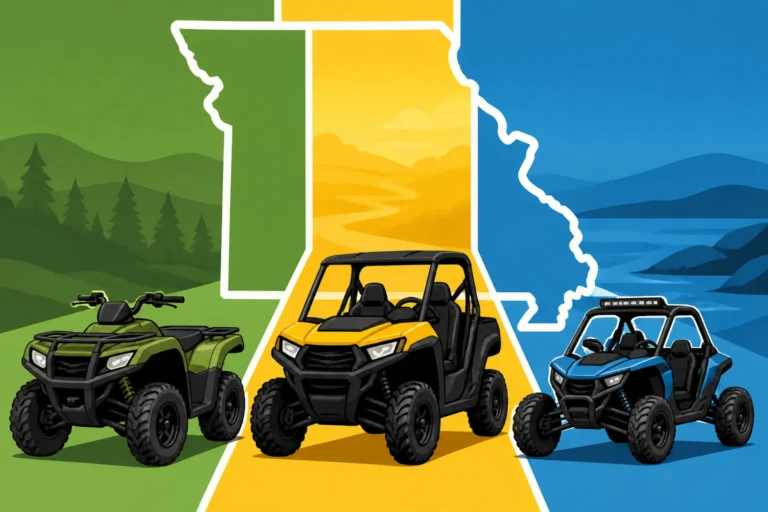
These seemingly small details collectively paint a picture of two distinct classes of vehicles, each designed for a different type of interaction with its environment and operator. Missouri's legal framework recognizes these distinctions, creating separate categories for registration, titling, and crucially, road use. It's why Missouri has a specific approach to these vehicles, clearly articulated in regulations like [Why Missouri Splits ATVs, UTVs and ROVs]. When considering upgrades for either type of machine, reputable brands like SuperATV offer a wide range of accessories, from lift kits to armor, but it's essential to remember that even the best aftermarket parts won't change your vehicle's fundamental legal classification for road use.
Unpacking the "Why": Legislative Intent Behind the Rule
It can feel a bit arbitrary when you're a proud ATV owner in Missouri, looking at a neighbor cruise down the road in their side-by-side under the 3-mile rule, while your quad is stuck on the trailer. However, these regulations aren't usually put in place just to make things difficult. They often stem from a complex interplay of safety concerns, how vehicle technology has evolved, and a state's overall philosophy on public road access. Understanding this background can help demystify why the rules are structured the way they are.
Safety Concerns and Public Roads
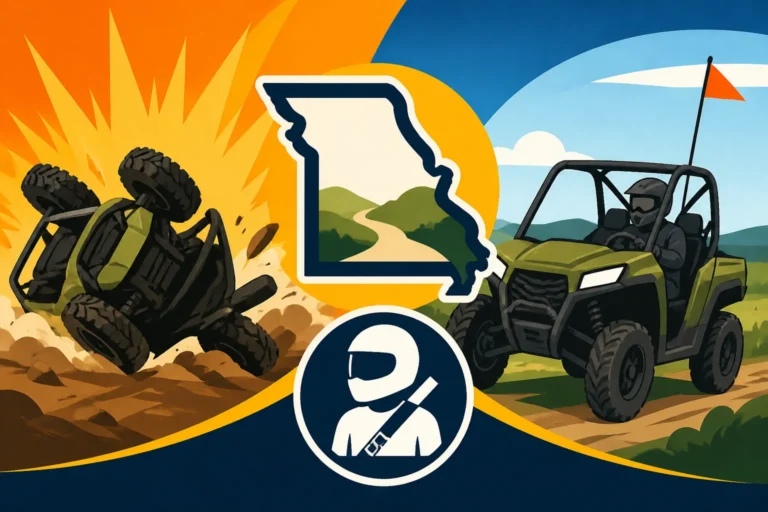
At the heart of many off-road vehicle regulations, particularly concerning public roads, are safety concerns. Lawmakers look at the design and operational characteristics of different vehicles and assess their inherent risks when mixing with traditional automobiles. An ROV, with its steering wheel, bucket seats, roll cage, and seatbelts, is often perceived as having a higher degree of passive safety for its occupants in the event of an accident on a paved surface. It's also seen as having more predictable handling on asphalt or gravel, similar to a small car.
An ATV, designed for aggressive off-road performance, balance-based control, and quick maneuvers over uneven terrain, presents a different profile. The straddle-seat design and handlebar steering, while perfect for trails, are seen by many as less forgiving or stable on high-speed, paved roads where sudden turns or braking might be required in traffic. The risk of rollover and ejection is also a significant consideration. From a legislative standpoint, these perceived differences directly influence which vehicles are granted limited road access and under what conditions.
The Evolution of Off-Road Vehicle Definitions
The landscape of off-road vehicles has changed dramatically over the decades. What started primarily as three-wheelers, then four-wheel ATVs (quads), has now expanded to include a huge variety of side-by-sides, utility vehicles (UTVs), and dedicated recreational off-highway vehicles (ROVs). Each new generation of machine brought different capabilities, sizes, and design philosophies. State laws, including Missouri's, have had to play catch-up, creating new definitions and categories as these vehicles became more popular.
This evolution often leads to distinct legal classifications, even for vehicles that seem similar to the casual observer. The creation of separate statutes for ATVs, UTVs, and ROVs reflects this attempt to categorize and regulate based on their distinct features and intended uses. This is why you often see nuanced legal language that specifically defines each type, as explored in [Why Three Statutes Instead of One in Missouri]. The 3-mile rule specifically calling out ROVs is a direct result of this ongoing process of legislative adaptation.
Missouri's Approach to Road Legalization
Missouri, compared to some other states, generally takes a more conservative stance on allowing off-road vehicles onto public roads. While it's not impossible to ride an ROV on certain roads under the 3-mile rule or for specific agricultural purposes, and local ordinances do exist, the state hasn't embraced widespread "street legal" conversions for all off-road machines. The philosophy seems to be that public roads are primarily for vehicles designed and built to meet federal highway safety standards, and off-road machines are, by their very nature, not in that category.
The limited exceptions, like the 3-mile ROV rule and agricultural exemptions, are carefully carved out for specific, often practical, needs rather than promoting general recreational road riding. This approach means that if you own an ATV, your primary avenues for road use will be through very specific local ordinances or narrow agricultural exceptions, rather than a broad state-level allowance like the ROV 3-mile rule. It's a pragmatic, if sometimes frustrating, reality for many Missouri riders.
Road Use for ATVs in Missouri: What Are Your Options?
If you're an ATV owner in Missouri and feel left out by the 3-mile rule for ROVs, don't despair entirely. While that specific convenience might not apply to your quad, there are still a few, albeit limited, avenues for legal road use in the state. It's crucial to understand these distinctions because mistakenly believing your ATV qualifies for something it doesn't can lead to citations and fines. Knowledge is power here, and knowing your options can save you a lot of trouble.
Limited Agricultural Exemptions
One of the most common and longest-standing exceptions for off-road vehicles on Missouri roads is for agricultural purposes. If you're using your ATV directly for farm-related work, the state allows for its operation on public roads under specific conditions. This means hauling feed, checking fences, moving equipment between fields, or other essential farming tasks. The key here is "agricultural purpose"—it's not a loophole for recreational joyrides.
Furthermore, this exemption typically comes with time constraints, often limiting operation to "sunrise to sunset." This is partly due to visibility concerns during darker hours, as farm ATVs might not have the full lighting packages of road-legal vehicles. This exemption recognizes the practical needs of farmers to manage their land efficiently. However, it's not a carte blanche; you still need to operate safely and be mindful of other traffic. More details on this can be found in resources like [Missouri's Agricultural Highway Exception] and [Missouri Agricultural Use From Sunrise to Sunset].
Specific City and County Ordinances
While the state's 3-mile rule specifically targets ROVs, individual cities and counties in Missouri have the authority to enact their own ordinances regarding the use of ATVs (and UTVs/ROVs) on local streets. This is a significant pathway for ATV owners to gain limited road access. Some municipalities, especially in more rural areas or those with a strong recreational tourism presence, have chosen to permit off-road vehicles on certain roads, often with specific requirements.
These local ordinances can vary widely from one jurisdiction to another. They might require a special permit (which often comes with a fee), proof of insurance, a valid driver's license, specific safety equipment (like flags, mirrors, or lighting), and adherence to speed limits or designated routes. You might also find differences in which types of vehicles are allowed (e.g., only UTVs, or ATVs up to a certain width). It is absolutely critical that you check with the local city hall or county sheriff's department for the specific rules in the area you intend to ride. What's legal in Lake Ozark might not be in Harrisonville, for instance. A good starting point is researching [Missouri Cities That Allow UTVs on Streets] to see if your area has adopted such rules.
Crossing Highways and Short Distances
Even without a specific permit or the 3-mile ROV rule, there are very limited scenarios where an ATV might legally interact with a public road. The most common is the allowance to cross a highway. This must be done at a 90-degree angle, after coming to a complete stop, yielding to all traffic, and only when it is safe to do so. This is typically for moving between private properties divided by a road. It is not an invitation to ride down the road, even for a short stretch.
There's also a common, though less explicitly codified, understanding that very short distances on lesser-trafficked county or gravel roads might be tolerated in certain rural contexts to access adjacent private land. This is less a legal "rule" and more a matter of practical application and local discretion, and it is always risky. It's not a legal right, and you could still be cited. For clearer guidelines on interaction with main roads, see [Missouri Rules for Crossing a Highway]. When in doubt, always trailer your ATV rather than risk a fine or, worse, an accident on a public road where your machine might not be expected or easily seen by other drivers.
Navigating the Rules: Practical Advice for Riders
Understanding the complex web of Missouri's ATV and ROV road-use rules can be a headache, but getting it right is crucial for your safety and to avoid legal trouble. As a rider, you want to maximize your enjoyment without unnecessary stress or expense. So, let's talk about what you need to know and do to stay on the right side of the law, whether you're riding an ROV under the 3-mile rule or exploring other limited options for your ATV.
Essential Gear for Road-Legal ROVs
If your side-by-side (ROV) qualifies for the 3-mile rule or if you're riding under a local ordinance, your machine needs to be equipped properly. This isn't just about good intentions; it's about meeting specific safety standards to make your vehicle visible and controllable in a road environment. You'll typically need working headlights and taillights, brake lights, and often turn signals, similar to a regular vehicle. A horn is usually required too, for obvious safety reasons.
Beyond lighting and signaling, a safety flag is often mandated. Missouri law specifies a highly visible flag, usually orange, mounted at least seven feet above the ground. This ensures your smaller ROV is seen over obstacles and other vehicles, especially on hilly terrain or when approaching blind spots. Many riders turn to aftermarket solutions, and companies like SuperATV offer excellent street-legal accessory kits, including turn signal setups, mirrors, and safety flags, designed to help you meet these requirements. Remember, safety isn't just about avoiding a ticket; it's about making sure you get home safely after every ride. Check out [Missouri's 7-Foot Safety Flag], [Missouri Safety Flag Height], and [Missouri Lighting Requirements for ROVs] for more specifics.
Permits, Licenses, and Proof of Insurance
Even if your ROV fits the 3-mile rule's criteria or you're operating under a local ordinance, there's administrative paperwork involved. First, the operator of the vehicle on a public road typically needs a valid Missouri driver's license (or a chauffeur's license, depending on specific local rules). It's not enough to simply be an experienced off-road rider; you need a state-issued license for operating motor vehicles on public ways. This is clearly stated in [An Operator's or Chauffeur's License in Missouri].
Secondly, many local ordinances will require you to obtain a special permit from the city or county. This usually involves a fee and an application process. This permit acts as your official permission to use specific roads within that jurisdiction, and it will often stipulate what equipment you need. Finally, proof of liability insurance is almost always a requirement for road use. Just like with your car, this protects you and others in case of an accident. Always carry your driver's license, permit, and proof of insurance with you when riding on public roads, as deputies will check for these. More on permit costs can be found at [Missouri Special Permit Cost for ATVs] and [Proof of Insurance Under a Missouri Ordinance].
Common Misconceptions and Penalties
One of the biggest pitfalls for riders is operating under common misconceptions. The idea that "all UTVs are street legal" or that "farm use means I can go anywhere" are widespread but inaccurate. The most dangerous misconception for ATV owners is believing the 3-mile rule applies to their quad, which, as we've discussed, it generally does not. The distinctions in Missouri law are specific, and ignoring them can lead to serious consequences.
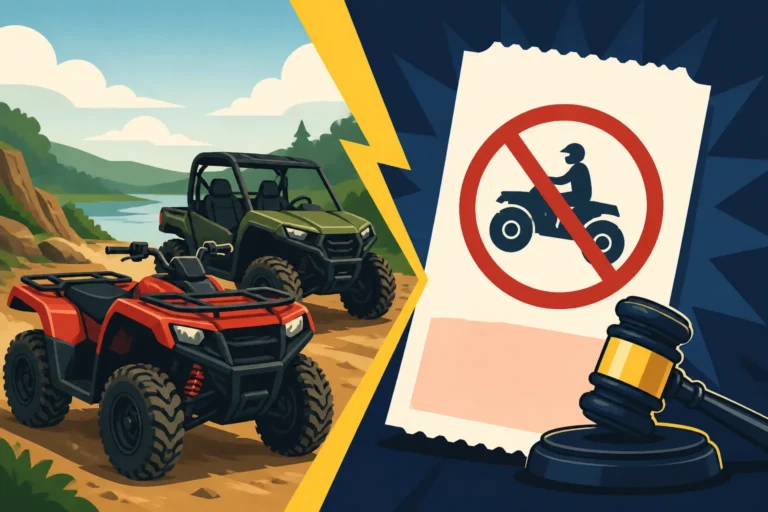
Penalties for illegal road use of an ATV or ROV in Missouri can range from a simple traffic citation with a fine to more serious misdemeanors, depending on the circumstances and the jurisdiction. Fines can add up quickly, especially if you're cited for multiple violations (e.g., no permit, no insurance, improper equipment). In some cases, your machine could even be impounded. The cost of a ticket and potential legal fees far outweighs the convenience of skipping the trailer. Always err on the side of caution and ensure you are absolutely certain of the local rules before taking your off-road machine onto public roads. Further details on fines can be found in [Missouri Fines for Illegal ATV Road Use].
Comparison of ATV vs. ROV in Missouri Law
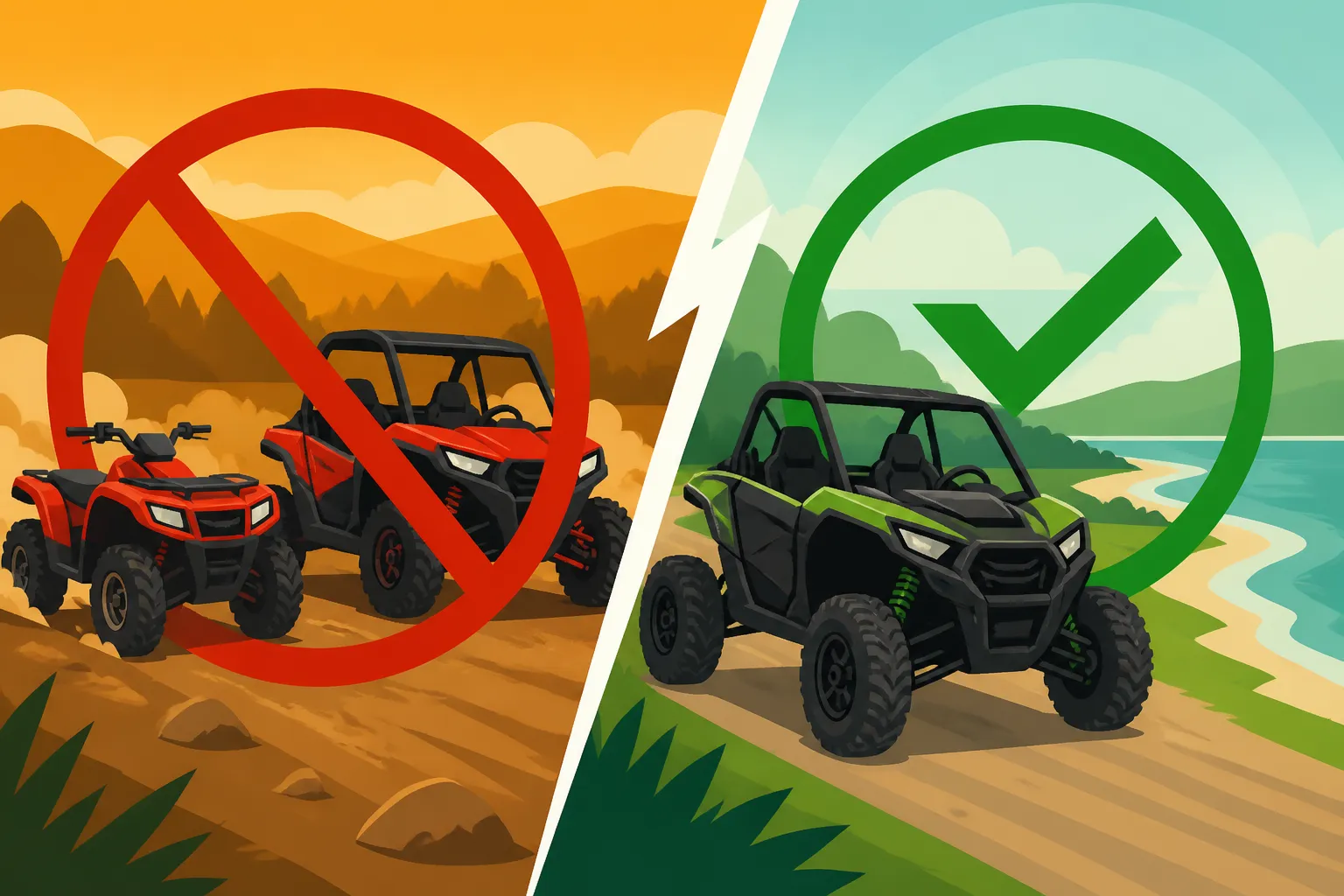
When you're trying to figure out what you can and can't do with your off-road machine on Missouri roads, it really boils down to how the state legally defines it. Here’s a quick overview of the key differences between an All-Terrain Vehicle (ATV) and a Recreational Off-Highway Vehicle (ROV) in Missouri, particularly regarding road use. This table should help clarify why the 3-mile rule is specific to ROVs.
| Feature | All-Terrain Vehicle (ATV) | Recreational Off-Highway Vehicle (ROV) |
|---|---|---|
| Common Name | Quad, four-wheeler | Side-by-side, UTV (often used interchangeably with ROV for road rules) |
| Seating Arrangement | Straddle seat, designed for one operator (sometimes two-up) | Side-by-side seating, bucket seats for operator and passenger(s) |
| Steering Control | Handlebars | Steering wheel |
| Typical Width | Generally 50 inches or less (per legal definition) | Often exceeds 50 inches (60", 64", 72" common) |
| Typical Dry Weight | Generally under 1,500 lbs (per legal definition) | Often exceeds 1,500 lbs |
| Roll Bar/Cage | Not typically factory-equipped | Factory-equipped with protective roll bar/cage |
| Seatbelts | Not typically factory-equipped | Factory-equipped for all occupants |
| Missouri's 3-Mile Rule | Generally does not apply | Applies under specific conditions (within 3 miles of residence/farm, properly equipped) |
| Primary Design Focus | Sport riding, tight trails, active body input | Utility, recreation, passenger comfort, wider trails, more stable feel |
Disclaimer
This article is for general informational purposes only and does not constitute professional advice. Laws, prices and regulations vary by location and change over time. Consult a qualified professional for guidance on your specific situation.