Missouri Rules for Towing With a UTV
Navigating the rules for driving your UTV on Missouri roads can feel like trying to untangle a ball of yarn after your cat got to it – it's confusing, frustrating, and you're never quite sure if you've got it right. Many of us use our utility vehicles not just for fun, but for serious work, and being able to tow gear, trailers, or implements on county roads is often essential. This guide will cut through the confusion, helping you understand precisely when and how you can legally use your UTV to tow on public thoroughfares in the Show-Me State, what equipment you'll need, and what to absolutely avoid to stay safe and out of trouble.
Understanding Missouri's UTV Definitions and Road Rules
Before you even think about hooking up a trailer to your UTV and hitting the pavement, it's absolutely crucial to understand how Missouri law defines these machines and where they're allowed to operate. This isn't just bureaucratic red tape; it's the foundation for whether you can legally tow anything at all.
What Missouri Considers a UTV for Road Use
In Missouri, the term "UTV" isn't a single, catch-all definition when it comes to road legality. The state actually distinguishes between what it calls a "utility vehicle" (UV) and a "recreational off-highway vehicle" (ROV). While both are often colloquially referred to as UTVs, the legal nuances are huge.
A "utility vehicle" is generally defined by characteristics like a dry weight of less than 1,500 pounds and a width of 50 inches or less, often with a straddle seat and handlebars, much like an ATV. However, the term "utility vehicle" also covers machines that are not ATVs, but are designed for off-road utility work. The distinction starts to blur here, but the critical point for road use often hinges on whether your machine fits the ROV definition.
A "recreational off-highway vehicle" (ROV) is distinct and is the category that has specific, albeit limited, provisions for road use. These are typically what most people envision as a side-by-side: they have a steering wheel, non-straddle seating (like bucket seats or a bench seat), and often a roll bar or cage. Most modern side-by-sides, like those from Polaris Ranger or Can-Am Defender, fall squarely into the ROV category. It’s this classification that dictates much of the "street legal" conversation and, consequently, your ability to tow. You can read more about [What the Law Calls a Utility Vehicle] and [What the Law Calls a Recreational Off-Highway Vehicle] to help clarify.
The reason this distinction is so vital for towing is that different sets of rules apply to each. Generally, "utility vehicles" (those that are not ROVs and don't fit the ATV definition) have even fewer specific road-use provisions, often relying solely on agricultural or industrial exemptions. ROVs, however, have specific sections of law that might permit them on certain roads under strict conditions, which then opens the door (or not) for towing.
The Limited Road Access for UTVs in Missouri
Let's be blunt: Missouri is not a free-for-all when it comes to riding your UTV on public roads. The general rule of thumb is that these machines are designed for off-road use, and that's where they belong. Trying to treat your UTV like a regular car on a state highway is a surefire way to get a ticket or worse. The frustrations of having a capable machine that you can't easily get from one field to another, or from your house to the local gas station, are very real for many owners. You bought a UTV for its utility and versatility, and then you're told it's mostly restricted to private land. It's a tough pill to swallow.
However, there are very specific exceptions to this general prohibition, primarily for ROVs, and certain use-case exemptions that allow some UTVs on public roads. These exceptions are critical because if your UTV isn't legally on the road in the first place, then any towing you do is automatically illegal, regardless of the trailer or load.
The most commonly discussed exception for ROVs is the "3-mile rule," which allows ROVs to operate on highways within three miles of the owner's residence for specific purposes. Then there are the vital agricultural and industrial exemptions, which recognize the practical necessity of using these machines for farm work or on private industrial premises. Lastly, some cities and counties have taken matters into their own hands, passing local ordinances that create their own specific permit systems for UTVs to operate on certain roads within their jurisdiction. We'll dive into these specifics next, but always remember that these are exceptions to a general rule of restriction.
Legal Considerations for Towing on Missouri Roads
So, you've got your UTV, and you need to haul something. Whether it's a small utility trailer for firewood, an implement to the back forty, or a cooler to a friend's house just down the gravel road, knowing the precise legal framework for towing is paramount. Missouri's laws aren't always crystal clear, and misinterpreting them can lead to fines, accidents, and serious liability.
The 3-Mile Rule and Towing with ROVs
For owners of Recreational Off-Highway Vehicles (ROVs), Missouri offers a very narrow window of opportunity to operate on public roads, known as the "3-mile rule." This rule allows an ROV to be driven on state highways for a distance not to exceed three miles from the operator's residence, and only between the hours of sunrise and sunset. This isn't a free pass to drive anywhere; it's specifically for getting to and from places related to the ROV's intended use, like accessing private property or a nearby trail system. You can learn more about [Missouri's 3-Mile Rule for Side-by-Sides].
But here's the kicker: does this rule explicitly allow towing? The statute itself doesn't specifically mention towing capacity or legality within this 3-mile radius. However, if the ROV is legally on the road under this exception, and the towing is done safely, within the vehicle's capacity, and complies with general trailer laws (like proper lighting for the trailer, if applicable), it's generally understood to be permissible for light, incidental utility. For example, pulling a small, unladen utility trailer to pick up a bag of feed or to move some tools would likely fall within this grey area of practicality.
Key requirements under the 3-mile rule that impact towing:
- Operator's License: You must possess a valid operator's or chauffeur's license. No temporary permits or learning permits will suffice. This means the person behind the wheel needs to be a fully licensed driver, ready to handle a potentially loaded machine. You can find more details on [Missouri Driver's License Rules for ROVs].
- Insurance: The ROV must be covered by liability insurance. Just like your car, if you're on the road, you need to be insured.
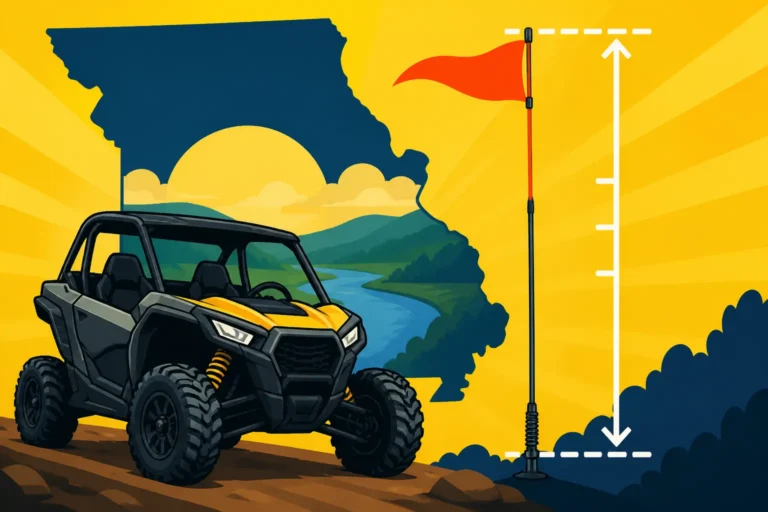
- Safety Flag: A safety flag, at least seven feet above the ground, with at least 30 square inches of solid blaze orange material, is required. This is for visibility, especially crucial if you're pulling a trailer that might obscure your ROV. Check out [Missouri's 7-Foot Safety Flag] for specifics.
- Lighting: Headlamps and tail lamps must be on. This isn't just for night; it's required during the day under this rule to enhance visibility. Learn more about [Missouri Lighting Requirements for ROVs].
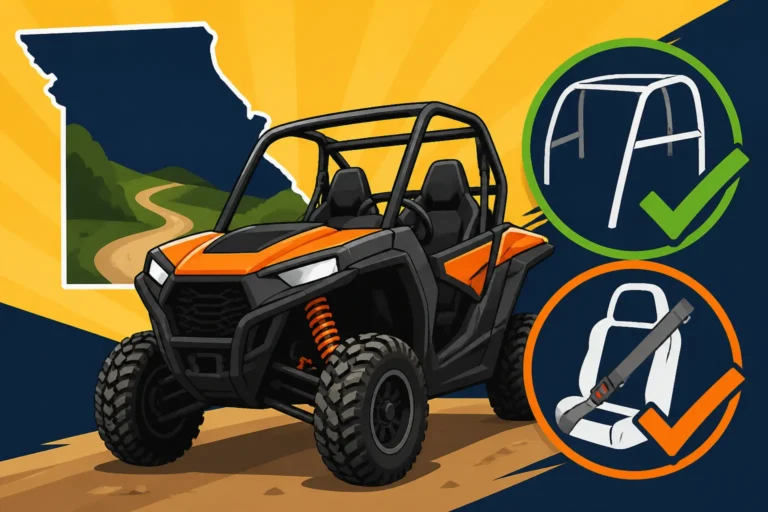
- Seat Belts and Roll Bar: If your ROV is equipped with seat belts and a roll bar or cage (which most side-by-sides are), they must be utilized. This is a basic safety measure that doesn't change just because you're towing. Read up on [Missouri Seat Belt Rules in a Side-by-Side] and [Missouri Roll Bar Requirements].
When towing under this rule, you must exercise extreme caution. Your ROV might be capable of pulling a substantial load off-road, but road conditions, higher speeds (even at the limited speeds you'll travel), and shared public spaces demand a different level of awareness. Overloading, poor visibility due to your trailer, or unsafe driving will quickly turn a permissible act into a dangerous and illegal one.
Agricultural and Industrial Exemptions for Towing
Beyond the specific ROV rules, Missouri law also provides broad exemptions for the use of utility vehicles (including ATVs and ROVs) when engaged in bonafide agricultural or industrial work. This is where a lot of farmers and landowners find their practical justification for using their machines on public roads, and it often extends naturally to towing.
Agricultural Use:
The law states that "any person may operate an all-terrain vehicle or utility vehicle on the highways of this state in the course of operating a farm or a business during the hours of sunrise to sunset." This is a significant exemption for anyone actively farming. If you're using your UTV to haul feed to livestock in another pasture, spray weeds along a fence line that borders a county road, or move a small trailer of tools from one part of your property to another, and that operation requires a brief stint on a public road, you are likely covered. For more information, see [Missouri's Agricultural Highway Exception] and [Missouri Rules for Agricultural Road Use].
Key aspects of agricultural towing:
- Purpose: The operation must be in the course of operating a farm or business. You can't just be going for a joyride or running errands unrelated to the farm.
- Hours: Strictly sunrise to sunset. No driving after dark, even if you have lights, unless it's an emergency directly related to the farming operation.
- Implied Towing: While not explicitly stating "you may tow a trailer," the nature of farm work inherently involves towing implements, small wagons, or utility trailers. As long as the towed equipment is appropriate for the UTV and the farm task, and done safely, it's generally understood to be allowed under this exemption. Think of hauling a small sprayer, a fence stretcher, or a post-hole digger.
- Safety: Even with this exemption, general safety laws still apply. If you're towing equipment that obscures your taillights, you'll need auxiliary lighting on the trailer. If it's a wider implement, flags might be necessary. Common sense and safe operation are always paramount.
Industrial Use:
Similar to agricultural use, UTVs can be operated on highways for "industrial purposes" on the premises of the industrial facility. This typically applies to situations where a UTV is used for maintenance, security, or transportation within a large industrial complex, even if portions of that complex might involve crossing or briefly using a public road. Towing within this context would involve moving tools, parts, or small equipment trailers pertinent to the industrial operations. Again, the same rules of safety and appropriateness for the task would apply.
It's important to differentiate these exemptions from general recreational use. An ROV owned by a farmer, used to check fence lines and pull a small trailer of repairs, would fall under the agricultural exemption. The same ROV, driven on the same road by the same farmer to go pick up a pizza, would not.
Local Ordinances and Special Permits for Towing
Perhaps the most variable and often overlooked avenue for legal UTV road use, and thus towing, comes from local control. Missouri law allows cities and counties to enact their own ordinances permitting the operation of UTVs on public streets or highways within their jurisdictions. This is where things get truly local, and what's allowed in one town might be strictly prohibited just a few miles down the road. You can check out [Missouri's Special Permit for Road Use] for more on this.
Many towns, especially in rural areas, have recognized the utility of side-by-sides for their residents and have decided to create a local permit system. These permits are typically issued by the local police department or county sheriff's office and come with their own set of rules and requirements.
Common requirements for local permits that might impact towing:
- Application & Fee: There's usually an application process and a small annual fee.
- Proof of Insurance: Just like state laws, local ordinances almost always require proof of liability insurance for the UTV.
- Driver's License: The operator must hold a valid driver's license.
- Safety Equipment: Most ordinances will mandate specific safety equipment, which can include:
- Headlights, taillights, and brake lights (often needing to be DOT-approved, even if factory UTV lights aren't).
- Turn signals.
- A rearview mirror.
- A windshield.
- A safety flag (sometimes 7-feet high, similar to state park rules, or just a bright flag).
- A horn.
- Inspection: Some jurisdictions require an annual safety inspection by the local police department to ensure the UTV meets all safety criteria.
- Operating Hours & Areas: The ordinance will specify hours of operation (often sunrise to sunset, but some may extend this) and which roads are permitted (e.g., all city streets except state highways passing through town).
- Speed Limits: UTVs are typically restricted to lower speeds, often 25 mph or less, regardless of the posted speed limit.
Towing under local ordinances:
If a city or county permits UTVs on its roads, it is generally with the implicit understanding that they will be used for light utility tasks, which includes towing. If you’ve got a permit from your local authorities, and your UTV has the proper hitch, you're likely fine to pull a small, appropriately sized trailer within the permitted areas. For instance, if your town allows UTVs to go to the hardware store, then pulling a small flatbed trailer with a few bags of mulch should be acceptable, provided you follow all safety and capacity guidelines.
However, always check the specific language of your local ordinance or ask the permitting authority. Some ordinances might explicitly address towing, while others might simply regulate the UTV itself. For example, if you're using aftermarket parts from a company like SuperATV to enhance your UTV's towing capabilities, ensure those upgrades are still compliant with any local safety inspections or equipment requirements. It's frustrating to think you're covered, only to find out a specific detail in the ordinance prohibits your intended use.
Practical Safety and Equipment for Towing with a UTV
Legal permission to tow is only half the battle. The other, equally crucial half, is ensuring you're doing it safely and responsibly. UTVs are powerful machines, but they aren't designed to tow heavy loads at highway speeds like a pickup truck. Ignoring the practical realities of towing can lead to serious accidents, damage to your machine, or even injury.
Essential Towing Equipment for UTVs
Before you even think about attaching a trailer, make sure your UTV is properly equipped for the task. This isn't just about having a ball hitch; it's about the right hitch for your machine and the load, and ensuring your entire setup is ready for the demands of towing.
- Hitch Receiver and Ball Mount: Most modern UTVs come with a standard 2-inch receiver hitch, but some may have a smaller 1.25-inch receiver or even just a pin-style hitch. Ensure your hitch receiver matches your ball mount. You'll need the right size hitch ball for your trailer's coupler. Always use a hitch pin or lock to secure the ball mount in the receiver. If your UTV didn't come with one, or if you need to upgrade for heavier duty use, companies like SuperATV offer a range of robust hitches and towing accessories designed specifically for UTVs.
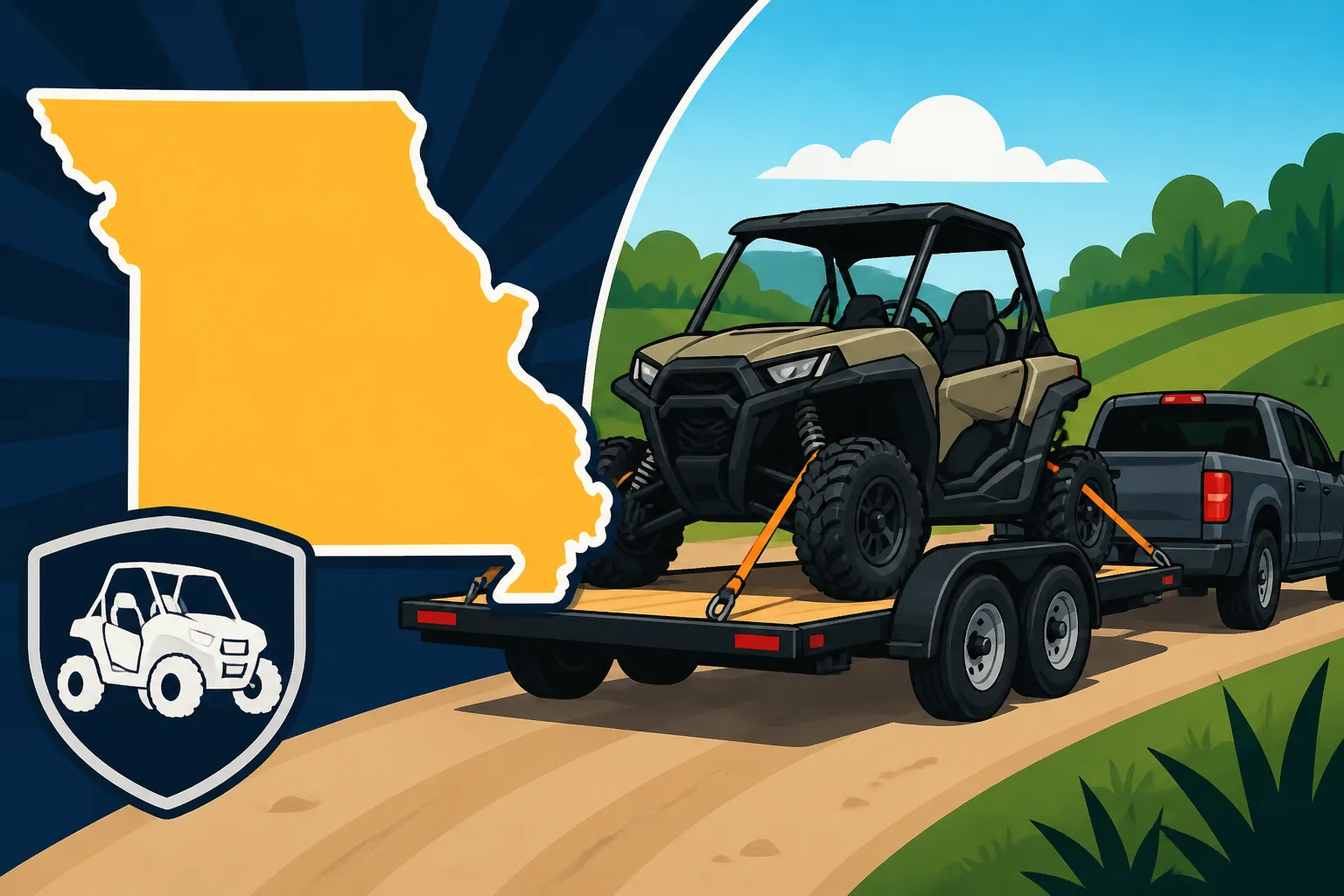
- Appropriate Trailer: This is perhaps the most critical piece of equipment. You need a trailer that is sized and weighted appropriately for your UTV's towing capacity. Don't try to pull a car-hauler with your side-by-side. Small utility trailers, log splitters, lawn care equipment trailers, or specialized ATV/UTV trailers are typically what UTVs are designed to handle.
- Safety Chains: Just like with any vehicle towing a trailer, safety chains are mandatory. These should be crossed under the trailer tongue to create a cradle, preventing the tongue from dropping to the ground if the primary hitch connection fails.
- Trailer Lighting: If your trailer (or its load) obstructs your UTV's taillights, turn signals, or brake lights, or if you're towing during hours that require lighting (like sunrise/sunset or in local ordinance areas), your trailer must have its own functioning lights. This usually means a standard 4-pin flat connector for basic running lights, turn signals, and brake lights. Always double-check that your UTV's electrical system can handle the additional load from trailer lights.
- Brakes (Trailer): For heavier loads, trailers with their own braking systems are incredibly important. Your UTV's brakes are designed to stop just the UTV, not the UTV plus a loaded trailer. If your trailer has surge brakes or electric brakes, ensure they are in good working order and properly connected. While not always legally required for smaller trailers, it's a huge safety upgrade.
Remember, the goal is not just to be able to pull the load, but to be able to control and stop it safely.
Safe Towing Practices and Capacity Limits
Even with the best equipment, poor towing practices can lead to disaster. Understanding your UTV's capabilities and respecting its limits are key to safe and successful towing.
- Know Your UTV's Towing Capacity: Every UTV has a manufacturer-specified towing capacity, which typically includes a gross trailer weight (GTW) and a tongue weight limit. The GTW is the maximum total weight of the trailer and its cargo. The tongue weight is the downward force exerted by the trailer tongue on your hitch receiver. Exceeding these limits can damage your UTV's frame, transmission, suspension, and brakes, and critically, it can make the UTV unstable and difficult to control. Always consult your owner's manual for these crucial figures.
- Proper Weight Distribution: When loading your trailer, aim for about 10-15% of the total trailer weight to be on the tongue. Too much tongue weight can overload your UTV's rear suspension and make the steering light. Too little tongue weight can cause the trailer to sway violently, leading to a loss of control. Distribute heavy items over the trailer's axle(s) and secure everything to prevent shifting during transit.
- Secure Your Load: This cannot be stressed enough. Use straps, chains, or netting to ensure everything on your trailer is tied down tightly. A shifting load can alter weight distribution, cause instability, or even fall off, creating a hazard for others.
- Adjust Your Driving: When towing, everything takes longer and requires more space.
- Acceleration: Be gentle and smooth.
- Braking: Start braking earlier and allow more distance. Remember your UTV is stopping more weight.
- Turns: Take wider turns to avoid clipping curbs or obstacles with your trailer.
- Speed: Keep your speed down. Most UTVs are not designed for high speeds, and adding a trailer significantly reduces stability at any speed. Even if the road allows 55 mph, you should be traveling much slower, especially on gravel or uneven surfaces.
- Visibility: Your trailer might block your rearview. Be extra vigilant with mirror checks and be aware of your surroundings, especially when backing up. Consider adding additional mirrors if your view is obstructed.
- Pre-Trip Inspection: Before every tow, quickly check:
- Tire pressure on both the UTV and trailer.
- Hitch connection and safety chains.
- Trailer lights functionality.
- Load security.
- Brake operation.
The Risks of Overloading and Unsafe Towing
Ignoring these guidelines isn't just about potentially damaging your UTV; it's about risking safety, incurring legal penalties, and facing significant liability.
- Increased Accident Risk: An overloaded or improperly loaded trailer can cause your UTV to become unstable, leading to rollovers, jackknifing, or loss of control, especially on hills, bumps, or during emergency maneuvers. The added weight also dramatically increases your stopping distance.
- Damage to Your UTV: Exceeding towing capacity puts excessive strain on your UTV's engine, transmission, brakes, suspension, and frame. This can lead to premature wear, overheating, and costly repairs. Imagine burning out your clutch or blowing a transmission because you decided to tow a load too heavy.
- Legal Consequences: If you're caught towing illegally (e.g., on a prohibited road, without proper lights, or with an unsafe setup), you could face fines for various infractions, including operating a non-registered vehicle on the road (if your ROV isn't properly handled under an exception or permit), unsafe equipment, or reckless driving.
- Liability in an Accident: In the unfortunate event of an accident while towing, if it's determined you were operating outside of legal parameters or with an unsafe setup, your liability could be enormous. Your insurance company might deny a claim if you were acting illegally, leaving you personally responsible for damages, injuries, and legal fees. This is a very real concern for anyone considering road use.
Towing with a UTV in Missouri can be a hugely useful capability, but it must be approached with a thorough understanding of the law, a commitment to proper equipment, and an unwavering dedication to safe practices. Always prioritize safety and legality over convenience.
| Aspect | Missouri 3-Mile Rule (ROVs Only) | Agricultural/Industrial Exemption (UTVs & ROVs) | Local Ordinance/Permit (UTVs & ROVs) |
|---|---|---|---|
| Primary Purpose | Limited access to nearby property/trails | Farm or business operations | General use within local jurisdiction, often utility-focused |
| Legal Basis for UTV on Road | Specific state statute (MO Rev Stat § 304.032) | State statute (MO Rev Stat § 304.032) | Local city/county ordinances |
| Hours of Operation | Sunrise to sunset | Sunrise to sunset | Varies by ordinance, often sunrise to sunset |
| Distance Restriction | 3 miles from residence | No specific distance, but must be "in the course of operating a farm or business" | Within the specified local jurisdiction |
| Driver's License Required | Yes, valid operator's/chauffeur's license ([Missouri Driver's License Rules for ROVs]) | Yes, generally implied for safety | Yes, valid driver's license |
| Insurance Required | Yes | Yes, generally implied for liability | Yes, typically proof of liability insurance |
| Safety Flag Required | Yes, 7-foot, blaze orange ([Missouri's 7-Foot Safety Flag]) | Not explicitly stated, but highly recommended for visibility | Varies by ordinance, often required |
| Lights Required | Yes, headlamps & taillamps on ([Missouri Lighting Requirements for ROVs]) | Yes, for night (if applicable) and general visibility | Yes, usually head, tail, brake, sometimes turn signals |
| Seat Belts/Roll Bar | Required if equipped ([Missouri Seat Belt Rules in a Side-by-Side], [Missouri Roll Bar Requirements]) | Recommended if equipped | Required if equipped, may have specific standards |
| Towing Legality | Implicitly allowed for light utility, within UTV capacity | Generally allowed for farm/industrial implements/trailers | Implicitly allowed for light utility, within UTV capacity and ordinance rules |
| Examples of Towing | Small utility trailer for tools, firewood, small repairs | Feed wagon, sprayer, post-hole digger, equipment trailer | Small utility trailer for yard work, errands within town |
| Penalty for Violation | Class C Misdemeanor, fines | Class C Misdemeanor, fines | Fines, permit revocation, local citations |
Disclaimer
This article is for general informational purposes only and does not constitute professional advice. Laws, prices and regulations vary by location and change over time. Consult a qualified professional for guidance on your specific situation.