Leaving the 3-Mile Circle
Navigating the winding roads and diverse regulations for ATVs and UTVs in Missouri can feel like trying to hit a moving target, especially when you're trying to figure out if you can legally get your machine from point A to point B without a trailer. Many riders in the Show-Me State feel the pinch of restrictions, often finding themselves scratching their heads over what's allowed and, more importantly, what happens when you need to go just a little further than you thought was permitted. This guide aims to clear up the confusion, specifically tackling the nuances of Missouri's "3-mile rule" for UTVs and exploring what your options are when your journey takes you beyond that specific, often misunderstood, radius.
Understanding Missouri's Limited Road Access for Off-Road Vehicles
Let's be honest, the dream for many of us is to hop on our ATV or UTV and simply ride from our driveway straight to the trails or our favorite fishing spot. But in Missouri, the reality is often more complex, with a patchwork of state laws and local ordinances that dictate where your off-road machine can, and cannot, legally travel on public roads. It's a source of real frustration for many riders who just want a straightforward answer.
The Core Distinction: ATVs Versus ROVs on Missouri Roads
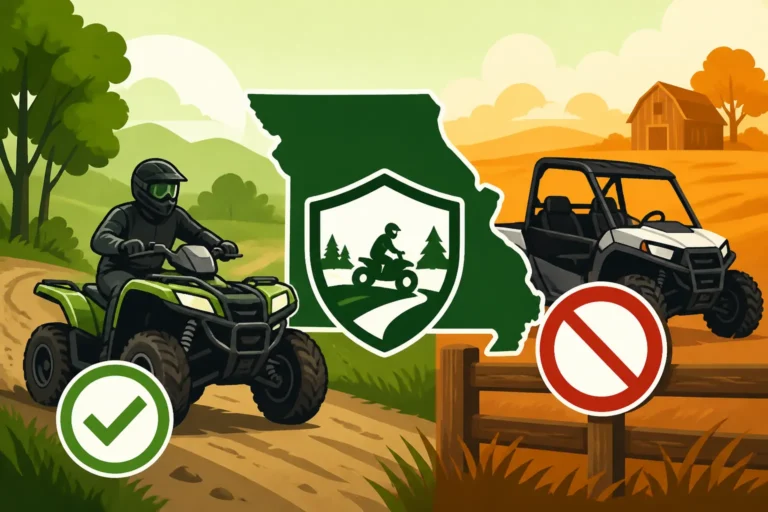
One of the first hurdles to overcome in understanding Missouri's road rules is the state's legal distinction between different types of off-road vehicles. While many folks use "ATV" as a catch-all term, the law often differentiates. ATVs, traditionally designed for a single operator to straddle, generally face much stricter limitations when it comes to public road use. The state essentially sees them as machines built for off-road environments, not for navigating traffic alongside cars and trucks.
This often means that while your quad might be perfectly legal and fun on trails, bringing it onto a public road for anything more than crossing (and even that comes with strict conditions) is often a no-go. The general state stance is that ATVs are not street-legal vehicles. This can be incredibly frustrating if your local trails are just a mile or two down a county road, forcing you to load up a trailer for what feels like a stone's throw away. It’s a common complaint we hear from riders all over Missouri, from the Bootheel to the Iowa border.
Recreational Off-Highway Vehicles (ROVs), which most of us call UTVs or side-by-sides, are treated a bit differently under Missouri law. These are typically machines designed to carry one or more passengers side-by-side, often with a steering wheel and roll cage, like popular models from Polaris or Can-Am. While they are still primarily off-road machines, Missouri statutes provide a few specific, albeit limited, exceptions for their operation on public roads. This distinction is crucial because the famous "3-mile rule" almost exclusively applies to these ROVs, leaving traditional ATVs out of the equation for regular road use.
The "3-Mile Rule" for Recreational Off-Highway Vehicles ROVs
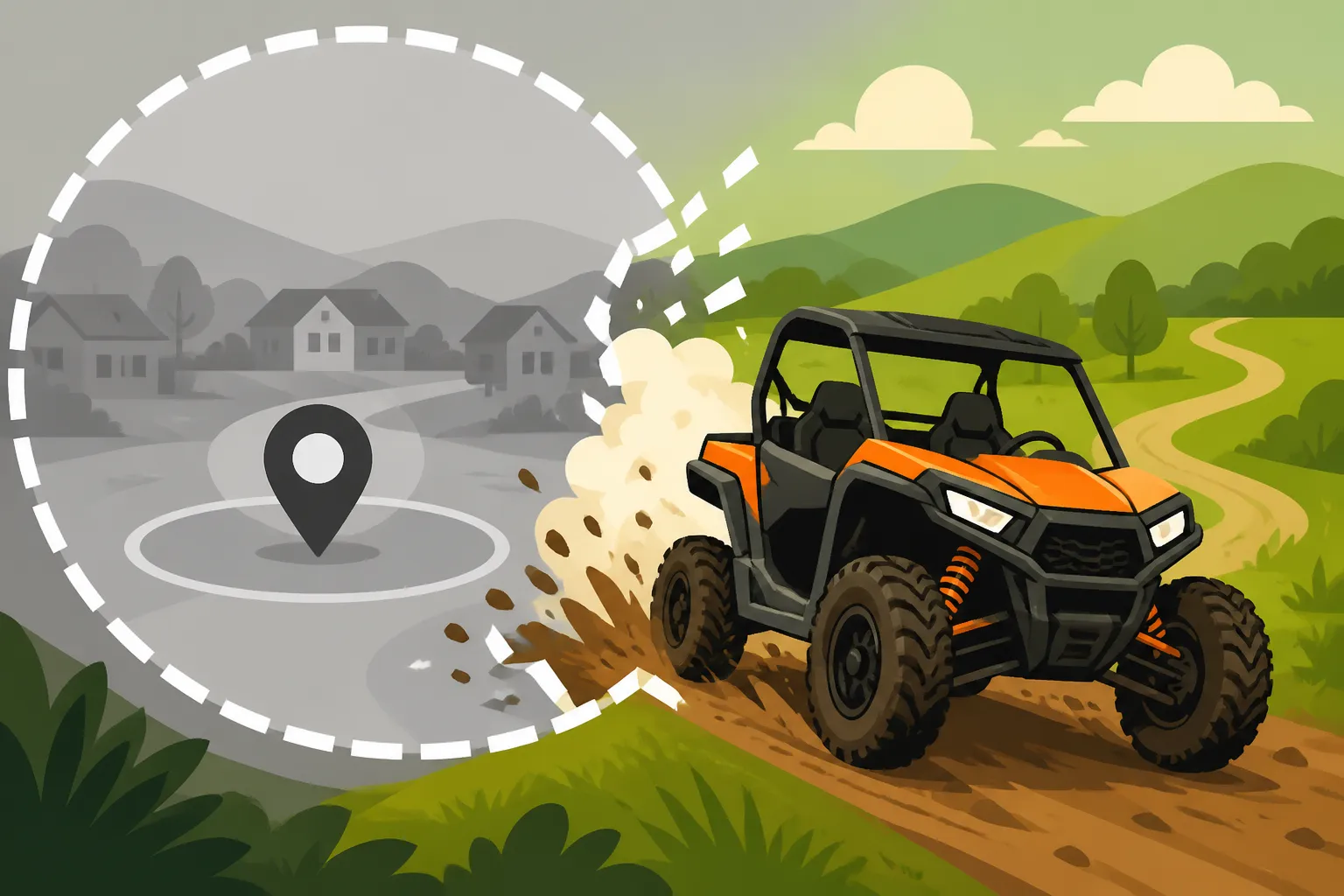
Ah, the "3-mile rule." This is probably one of the most talked-about, and often misunderstood, aspects of Missouri ATV and UTV law. For many UTV owners, it represents a glimmer of hope for some limited road access, but it's vital to understand its specific parameters. The rule allows an ROV to be operated on a street or highway within three miles of the operator's residence, under very specific circumstances.
This isn't a blanket permission to cruise around town. First and foremost, you must be operating in accordance with a local ordinance – meaning your city or county must have specifically passed a law allowing this. Without that local ordinance, the 3-mile rule simply doesn't apply. Secondly, the operation must be for a defined purpose: for agricultural purposes, for hunting, fishing, or trapping purposes, for access to state-approved trails, or for utility purposes. It's not for joyriding to the local convenience store for a soda, unless that store happens to be on your route to one of those approved activities.
On top of requiring a local ordinance and a specific purpose, the ROV must meet certain equipment requirements for this limited road use. These typically include having headlamps and tail lamps that are on, even during daylight hours, and an illuminated safety flag that extends at least seven feet above the ground and is at least 30 square inches of day-glow orange. You'll also need a valid operator's or chauffeur's license to drive the ROV on these public roads. Many riders turn to aftermarket providers like SuperATV for their safety flags and robust lighting kits to ensure they meet these visibility standards. It’s important to remember that this rule is a narrow exception, not a broad permission, and is subject to local interpretation and enforcement. [Missouri's 3-Mile Rule for Side-by-Sides] further details these specifics.
When Your Ride Takes You Beyond the 3-Mile Limit
So, what happens when your destination, whether it's a trailhead, a friend's farm, or a favorite fishing spot, is more than three miles from your home? Or what if your local municipality hasn't adopted the 3-mile rule ordinance? This is where the landscape of Missouri's off-road vehicle laws becomes even more fractured and local.
Navigating County Roads with Special Permits
Beyond the residence-specific 3-mile radius for ROVs, many counties in Missouri have taken matters into their own hands, enacting local ordinances that permit the use of ROVs, and sometimes even ATVs, on county-maintained roads. However, there's no statewide permit that covers all county roads. Each county makes its own rules, and what's legal in, say, Cass County, might be completely illegal in a neighboring county.
These county permits often come with their own set of requirements. You might need to purchase a specific permit from the county sheriff's office or administration building, often for a modest fee that helps cover administrative costs. Typically, proof of insurance is a must, and your machine will likely need to meet specific safety equipment standards similar to or even more extensive than those for the 3-mile rule. Think headlamps, tail lamps, brake lights, a horn, and often a brightly colored safety flag. Many riders find themselves looking at upgrades like heavy-duty winches or better lighting from places like SuperATV to ensure their machine is trail-ready and meets any new local road requirements. It's truly a "check before you ride" situation, and failing to do so could lead to a citation for illegal operation. Don't assume that because your buddy can ride his UTV down the road in his county, you can do the same in yours.
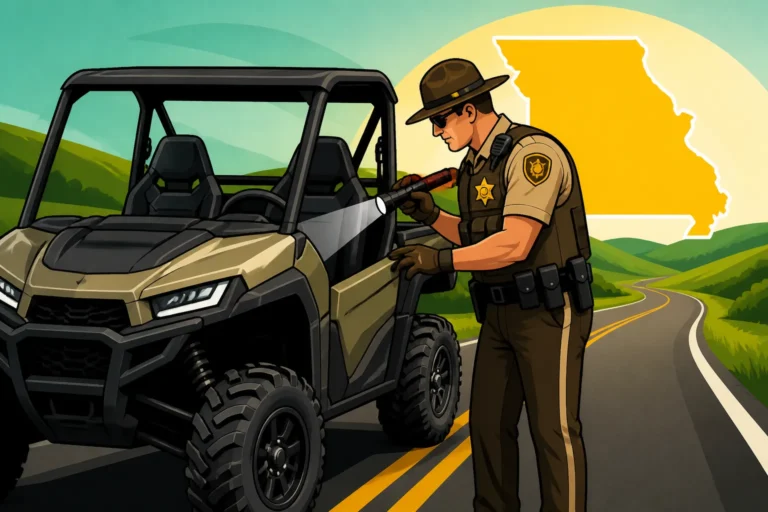
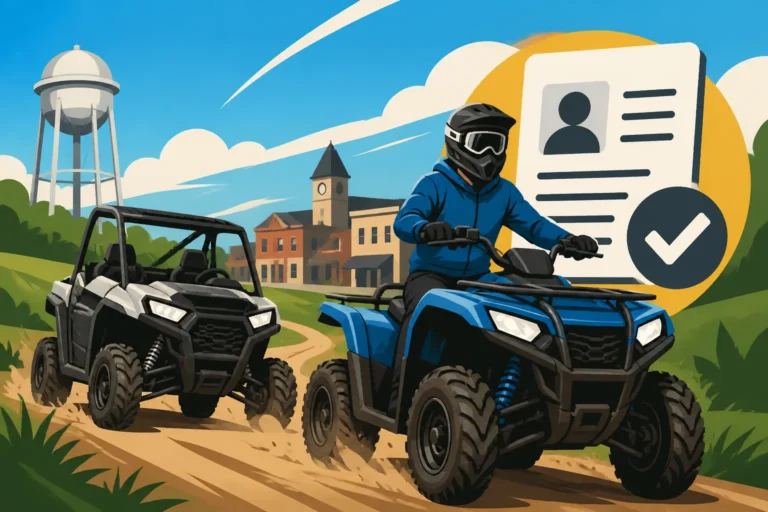
The application process for a county permit can vary. Some counties might require a simple form and payment, while others may ask for an inspection of your vehicle to ensure it meets all the safety criteria. It's not uncommon to see requirements for an operator's or chauffeur's license, even for these localized permits. This ensures that anyone operating on public roads has a basic level of driving competency and accountability. For more on what authorities check, see [What a Missouri Deputy Checks on a Road-Legal ROV].
City Streets: Patchwork of Local Ordinances
When it comes to riding your UTV on city streets, you enter an even more intricate maze of regulations. Unlike county roads, which tend to have a broader jurisdiction, each city or town in Missouri has the authority to pass its own ordinances regarding off-road vehicle use on its streets. This means that driving your UTV in one city might be perfectly legal, while crossing into the next town over could land you a ticket if they haven't passed a similar ordinance.
We've seen various cities across Missouri embrace UTV use, often to support local tourism, agricultural communities, or simply as a convenience for residents. Towns like Lake Ozark, Harrisonville, St. James, Lebanon, and Grain Valley, for example, have enacted ordinances allowing UTVs on certain streets, often with specific speed limits and equipment requirements. Lake Ozark, for instance, is known for allowing UTVs on streets with speed limits up to 45 mph, but again, with strict safety mandates.
These city ordinances are usually very precise about what's allowed. They might specify permitted hours of operation, designate certain streets as off-limits, or impose additional equipment requirements beyond state law, such as turn signals, rearview mirrors, or even specific insurance coverage for road use. The costs for these city permits are typically set by the local municipality and are generally quite reasonable. The crucial takeaway here is that you absolutely must check with the individual city's police department or city hall before you attempt to ride your UTV on its streets. A quick phone call could save you a hefty fine and a lot of headaches. [Missouri Cities That Allow UTVs on Streets] provides more examples of these local variations.
Equipment and Operator Requirements for Road-Legal Use
Whether you're operating under the 3-mile rule or a specific local ordinance, your off-road vehicle needs to be properly equipped and you, as the operator, need to meet certain qualifications. This isn't just about avoiding a ticket; it's about ensuring safety for yourself, your passengers, and others sharing the road.
Essential Gear for Enhanced Visibility and Safety
When a municipality grants permission for off-road vehicles on its roads, it always comes with a caveat: safety first. For ROVs operating under the 3-mile rule or most local ordinances, enhanced visibility is paramount. A crucial piece of equipment is the safety flag. Missouri law specifies that this flag must fly at least seven feet above the ground on a mast and feature at least 30 square inches of day-glow orange material. This makes your machine much more visible to other motorists, especially on rolling terrain or around blind curves. Many riders choose a sturdy, flexible flag pole from a reputable accessory provider like SuperATV to ensure their flag stays upright and visible. [Missouri Safety Flag Requirements] delve deeper into these specifics.
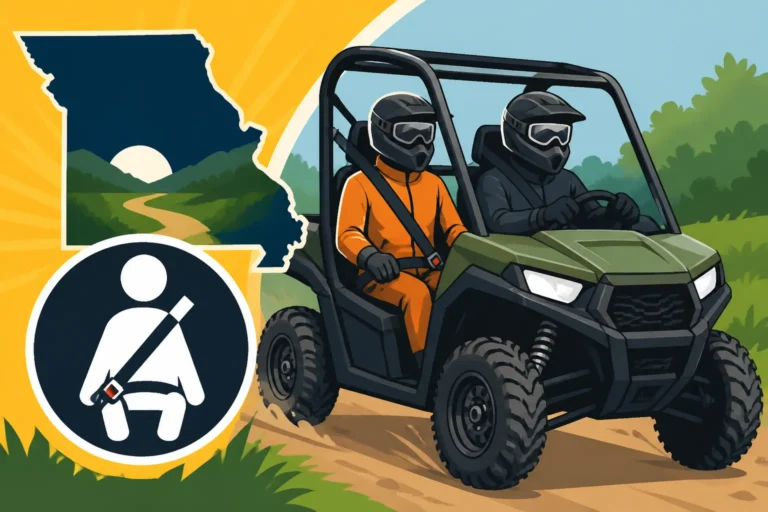
Beyond the flag, adequate lighting is non-negotiable. Your ROV must have functional headlamps and tail lamps that are illuminated, even during daylight hours, when operating on public roads. Depending on the local ordinance, you might also need brake lights, turn signals, and a horn – features often standard on newer UTVs or easily added with aftermarket kits. Roll bars and seat belts are also critical for ROVs, providing occupant protection in the event of a rollover or collision. While most modern UTVs come from the factory with these, it’s always wise to ensure they are in good working order and that all occupants are properly belted in. These features are about safety, not just compliance, making your ride safer for everyone.
Operator Licensing and Age Restrictions
Just as important as the machine's equipment are the requirements for the person behind the wheel. When operating an ROV on any public road in Missouri, whether under the 3-mile rule or a local permit, the operator must possess a valid operator's or chauffeur's license. This isn't a formality; it ensures that anyone driving on public roads has met basic driving competency standards and is accountable for their actions. This requirement makes it clear that operating an ROV on a road is treated similarly to operating any other motor vehicle.
Regarding age, Missouri also has specific rules, especially concerning helmets. While adult riders (18 and over) are not required by state law to wear a helmet when riding an ROV or ATV on private land, if you are riding on a public road or an area requiring a permit (like a state park or national forest), helmet laws can become stricter. For any rider under the age of 18, helmets are generally required when operating an off-road vehicle on public land or roads. [Missouri Helmet Law for Riders Under 18] provides essential details on this. Furthermore, passenger rules are stringent: ATVs are generally designed for one rider and passengers are usually prohibited, especially on public roads. ROVs, if designed by the manufacturer with multiple seats and seat belts, can typically carry the number of passengers they were designed for, provided all occupants are properly restrained. Always check the specific ordinance you're riding under, as local rules can sometimes add further restrictions.
The Reality of Missouri's Road-Legal Landscape
Understanding the rules is one thing; navigating the real-world implications is another. Missouri's approach to ATVs and UTVs on public roads is conservative and highly fragmented, requiring riders to be diligent and informed.
Crossing Highways and Other Limited Exceptions
Even with local permits or the 3-mile rule, there are strict limitations on how you can interact with state and federal highways. Generally, riding on a Missouri state route or federal highway is prohibited for ATVs and ROVs, even if you have a local permit. The primary exception allows you to cross such highways, but only after stopping, yielding to all oncoming traffic, and proceeding at a 90-degree angle to the highway, directly across to the other side. You cannot ride along the shoulder or use it to travel any distance. This "crossing only" rule is a vital safety measure to minimize interactions with high-speed traffic.
Beyond the 3-mile rule and local permits, Missouri law carves out a few other very specific exceptions for ROV use on roads. Agricultural highway exceptions, for instance, allow ROVs to be operated on certain public roads from sunrise to sunset exclusively for farm business, such as moving equipment or checking livestock. Similarly, industrial use on the premises, or short distances for a disabled Missouri rider to access necessities, can also fall under specific, limited permissions. These are not general riding privileges but narrowly defined allowances to accommodate specific needs. It underscores that any road use of an off-road vehicle is typically considered an exception to a general prohibition, not a given right.
The Fines and Penalties for Non-Compliance
Operating your ATV or UTV on a public road in Missouri without proper authorization or without meeting the required equipment and operator standards can lead to significant consequences. Ignorance of the law is never an excuse, and law enforcement officers are well-versed in the specifics of these regulations. A violation can often result in a Class C misdemeanor, which carries potential fines and other penalties. Beyond that, civil penalties can also be assessed, sometimes accumulating daily, which can add up to a substantial amount very quickly. [Missouri Fines for Illegal ATV Road Use] explains these penalties further.
The costs associated with getting a ticket for illegal road use can far outweigh the minor inconvenience of trailering your machine or the small fee for a local permit. It’s not just the immediate fine; it can also mean court costs, and in some cases, your machine could be impounded. That’s a headache nobody wants. The best practice is always to assume your ATV or UTV is not street legal unless you have thoroughly researched the specific laws and ordinances for the exact area you plan to ride in, and your machine meets all the necessary requirements. Investing in quality accessories from companies like SuperATV to ensure your machine meets safety and visibility standards, along with taking the time to understand local laws, is a small price to pay for peace of mind and legal riding.
Comparing Road Use Options for Missouri Riders
To help clarify the various ways you might be able to use your ROV on Missouri roads, here's a quick comparison of the common scenarios and their general requirements. Remember, this is a generalized overview, and specific local ordinances always take precedence.
| Feature | 3-Mile Rule (ROVs Only) | County Road Permit (ROVs/ATVs) | City Street Permit (ROVs/ATVs) |
|---|---|---|---|
| Applicable Vehicle | ROV (UTV/Side-by-Side) only | Varies by county (often ROVs, some ATVs) | Varies by city (often ROVs, some ATVs) |
| Distance Limit | Within 3 miles of operator's residence | Specific county roads only | Specific city streets only |
| Local Ordinance? | REQUIRED | REQUIRED | REQUIRED |
| Purpose | Ag, hunting, fishing, trail access, utility | Varies by county | Varies by city |
| Operator License | Valid Operator's/Chauffeur's | Valid Operator's/Chauffeur's | Valid Operator's/Chauffeur's |
| Safety Flag | REQUIRED (7ft, 30 sq.in. orange) | Often REQUIRED | Often REQUIRED |
| Head/Tail Lamps | REQUIRED (on at all times) | REQUIRED | REQUIRED |
| Turn Signals/Horn | Not state required for 3-mile rule | Often REQUIRED | Often REQUIRED (especially for "street legal") |
| Insurance | Not state required for 3-mile rule | Often REQUIRED | Often REQUIRED |
| Cost | No state fee (local fees may apply) | Varies by county (e.g., small annual fee) | Varies by city (e.g., small annual fee) |
This table highlights just how varied the requirements can be. Your best bet is always to contact the local sheriff's department for county roads or the city clerk/police department for city streets to get the most up-to-date and accurate information before you ride.
Disclaimer
This article is for general informational purposes only and does not constitute professional advice. Laws, prices and regulations vary by location and change over time. Consult a qualified professional for guidance on your specific situation.