Closing Every Gate You Open on a Pasture Lane
A pasture lane can look like an easy shortcut, but one open gate may let cattle reach a road, separate a young animal from its herd, or create a costly problem for the landowner. This guide explains how to approach, open, pass through, and secure gates responsibly on private Missouri property—and how to avoid confusing farm access with permission to ride a public road.
Why pasture gates need a deliberate routine
A gate is part of the livestock system
A pasture gate is not simply an obstacle between one stretch of trail and another. It helps keep animals in the right area, protects crops and equipment, and controls access to a property. An open gate can change where cattle graze or allow them to wander onto a road. Even if you are only stopped for a short time, livestock can move surprisingly quickly through an opening.
That is why “I’ll close it on the way back” is a risky plan. You might take a different route, get separated from your group, or forget which gate you opened. Treat each gate as a task you complete before continuing: check how it was secured, open it carefully, pass through, and restore it to its original condition.
The landowner’s instructions take priority. A gate may be chained, wired, pinned, or arranged to keep a specific group of animals in place. Do not cut a wire, force a latch, or improvise a new way to secure it. If you are unsure how it works, stop and contact the landowner rather than guessing.
Permission matters even when the lane looks familiar
A visible pasture lane does not automatically mean riders can use it. Get clear permission from the landowner before riding, and ask which routes, gates, and areas are permitted. Someone may allow access to a lane but not to the surrounding pasture, timber, creek bottom, or fields. Permission from one landowner also does not grant access across a neighboring parcel.
It helps to agree on practical details in advance: whether you can ride through a gate, whether you should leave it open or closed, where to park, and what to do if livestock are near the entrance. For more on confirming access, see [Missouri Landowner Permission Requirements] and [Missouri Rules for Riding Private Property]. If a route crosses a boundary or uses land you do not recognize, pause and verify the route rather than assuming it is included.
A simple text from the owner can prevent confusion, especially when a family member or friend is leading the ride. Make sure every rider understands the same instructions. One person may remember “use the north lane,” while another assumes that means the gate near the barn. Clear directions reduce the chance that a group will enter the wrong pasture.
How to approach, open, and pass through a gate
Stop before the gate and assess the situation
Slow down well before reaching the gate. Look for livestock on both sides, people working nearby, farm vehicles, uneven ground, mud, and a safe place to stop. A UTV or ATV can startle animals if it arrives quickly, so avoid revving the engine, honking, or crowding animals toward the fence. If cattle are blocking the gate or milling around the opening, wait for them to move or contact the landowner for instructions.
Choose a stable stopping place that does not block the lane, gate swing, or access for farm equipment. Set the parking brake where equipped and follow your machine’s safe parking procedure. Avoid leaving a vehicle on a slope where it could roll while you are away from the controls. If the ground is soft, check that the machine will not sink or slide when you step away.
Before operating the latch, identify how the gate opens and where it will move. A gate can swing into a machine, catch a hand, or shift unexpectedly if it is under tension. Keep fingers clear of pinch points. Do not climb a fence or reach through wires to manipulate a latch if there is a safer way to proceed. If the gate is electrified or the hardware is unfamiliar, do not handle it unless the owner has explained what to do.
Move one machine through at a time
If you are riding with a group, agree on who will handle the gate and in what order. The gate handler should open it far enough for the machine to pass without scraping the posts or fence. The rider should proceed slowly and straight through, without cutting close to the hinge or striking the latch side. Keep the vehicle clear of the opening so the gate can close fully afterward.
For a group, send one machine through at a time and have the person responsible for the gate wait until the last rider has crossed. Do not assume the next rider will close it. A clear call such as “last machine through” helps avoid the common situation where everyone thinks someone else is handling the gate. If the gate is heavy or awkward, do not try to control it while balancing a machine or reaching across moving parts.
Keep passengers informed, too. In a UTV, let riders know when you are stopping and when the machine will move again. A passenger should not jump out to help unless the driver has stopped in a secure place and the group has agreed on who is doing what. For passenger-related rules and safe riding context, review [Missouri Rules for a Passenger in a UTV].
| Situation | Safer response |
|---|---|
| Livestock are beside or in the gate opening | Stop, give them room, and wait or contact the landowner |
| The latch or wire is unfamiliar | Do not force or cut it; ask the landowner for instructions |
| The group is riding through together | Assign one person to manage the gate until the last machine passes |
| The gate is heavy or awkward | Park securely and handle it without balancing on or leaning over the machine |
| You are unsure whether the gate should be left open or closed | Restore the owner’s original arrangement if clear; otherwise ask before proceeding |
Closing the gate and protecting the property
Restore the gate to the way you found it
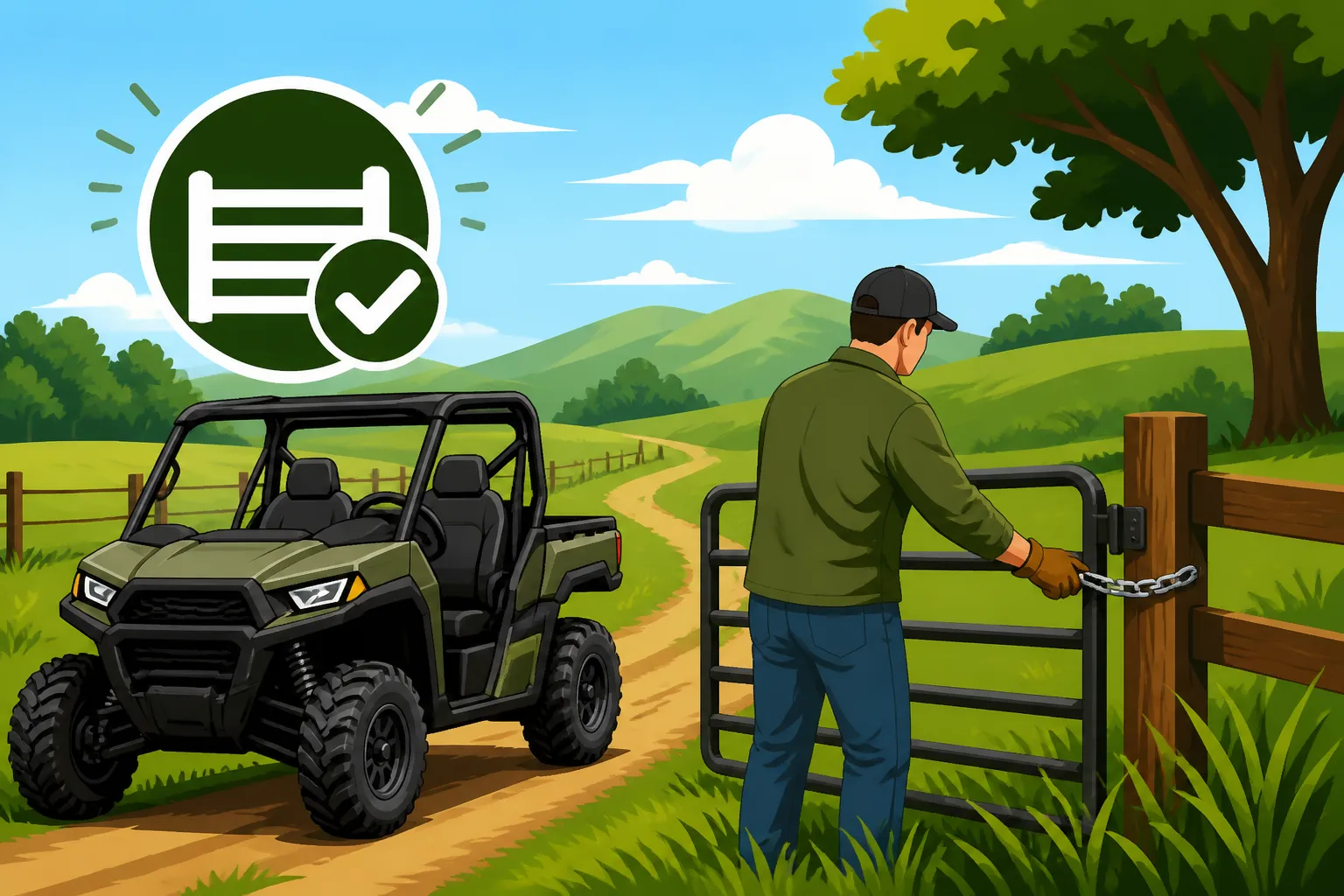
Before leaving, check that the gate is fully shut and secured in the same way it was when you arrived. A gate that looks closed but is not latched can swing open in wind or after livestock push against it. If it was chained, pinned, or secured with a particular latch, return that hardware to its original position without changing the setup.
Do a brief visual check from the lane. Confirm that the gate is sitting against the post as intended, the latch is engaged, and no part of the machine or riding gear is caught in the opening. If the gate will not close properly, do not leave it standing open and hope the owner notices. Contact the landowner right away, explain what happened, and follow their directions.
If you discover damage that was already present, report it rather than trying to repair it without permission. The same applies if your machine hits a post, pulls a wire loose, or damages the ground near the entrance. A prompt, honest message gives the owner a chance to secure livestock and arrange a suitable repair.
It can help to use a consistent routine: stop, secure the machine, open, pass, close, latch, check, then continue. Riders who use several gates in one outing can also agree to call out the gate location after passing it. That makes it easier to notice if a gate has been left unsecured before the group gets far down the lane.
Keep machines, gear, and animals separated
Do not park directly beside livestock if you can give them more space. Animals may be curious, protective, or startled by a vehicle’s movement. Keep children and pets close to the group, and do not let anyone feed, chase, or approach animals without the owner’s permission. If livestock move toward the gate, pause rather than trying to squeeze past them.
Secure loose equipment so it cannot fall off near a fence or into a pasture. Gloves, straps, tools, and bags should be stowed before you start moving again. A rack bag or other storage setup can help keep small items from shifting; if comparing aftermarket storage options from a supplier such as SuperATV, check that the item fits your machine and does not interfere with safe access to the gate. The important point is not the brand but keeping gear contained and away from livestock.
If your ride includes low-light conditions, plan the route and timing with the landowner before setting out. Good visibility can help you notice a gate, animal, or farm vehicle, but added lights do not make it appropriate to ride through a property without permission or to disturb animals. SuperATV is one supplier riders may encounter when comparing aftermarket lighting or utility accessories; whatever equipment you use, operate it with care and follow the owner’s directions for the property.
Keep private pasture access separate from road use
A farm lane is not automatically a public route
A lane that runs through a farm may look like a road, but its appearance alone does not tell you whether it is private, public, or open to motorized travel. Do not ride onto a county road or across a highway simply because a pasture lane connects to it. Ask the landowner where the authorized route ends and check the rules that apply to the road itself.
Missouri has separate rules and exceptions for different kinds of machines and road use. A permission to ride on private land is not, by itself, a permit to use a public road. Likewise, an agricultural-use exception should not be assumed to cover recreational riding. For background on how those situations differ, see [Missouri Rules for Agricultural Road Use], [Missouri Agricultural Use From Sunrise to Sunset], and [Missouri Rules for Crossing a Highway].
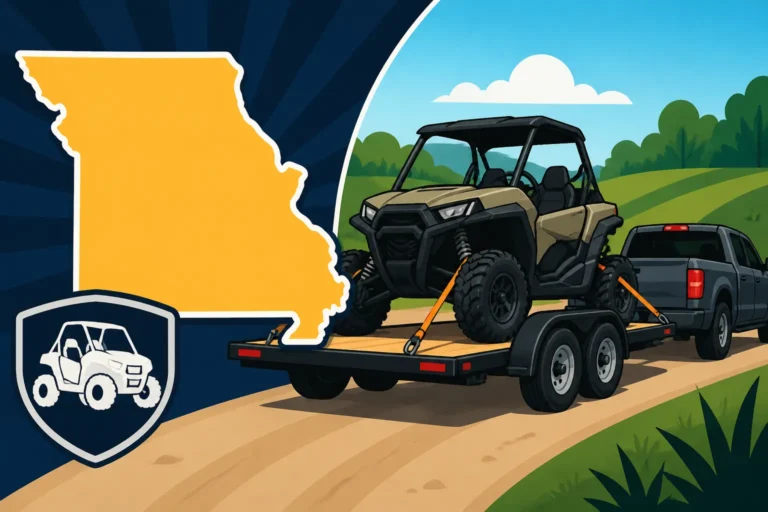
If the landowner asks you to reach a pasture by crossing or traveling along a public road, confirm the route and legal requirements before the ride. A local permit or ordinance may apply in some places, and the rules can depend on the machine and the specific road. More detail is available in [Are ATVs Street Legal in Missouri?]. When the route is unclear, use a trailer to move the machine between riding areas rather than improvising a road connection.
Make the gate routine part of the ride briefing
Before unloading, tell everyone who has permission to ride, which lanes are allowed, and what the landowner expects at each gate. Identify who will handle gates, how the group will signal that the last machine has passed, and who to call if a latch is damaged or livestock block the route. This is especially useful when riders are unfamiliar with the property or when several machines are traveling together.
A short briefing can also cover where not to ride. Stay on the approved lane, avoid crops and sensitive ground, and do not cut around a closed gate through a fence or across a pasture. If a gate is locked, marked, or clearly intended to restrict entry, do not bypass it. Contact the owner for permission or an alternate route. For more context on farm-lane access, see [Missouri Rules for Riding a Farm Lane] and [Missouri Trespass Rules for Riders].
After the ride, let the landowner know if you noticed a loose latch, damaged fence, blocked lane, or animal near the road. Keep the message factual and timely. If you carry tools or spare straps for your machine, store them securely; SuperATV is one example of a brand riders may compare for utility accessories, but any gear should be selected for fit and used only for tasks the owner has authorized. A careful gate routine, clear permission, and a quick report when something goes wrong help protect both the property and future access.
Disclaimer
This article is for general informational purposes only and does not constitute professional advice. Laws, prices and regulations vary by location and change over time. Consult a qualified professional for guidance on your specific situation.