What Gets Checked at a Forest Trailhead
A forest trailhead check can interrupt a ride if your permit, machine or plans don’t match the area’s rules. The details can differ between Missouri riding areas, so a state registration decal alone may not settle whether you can ride. Here’s what to have ready, what may be checked, and how to avoid arriving with a machine that can’t use the trail.
Start with the right permit and riding area
Before loading up, confirm which riding area you’re visiting and which permit applies there. Missouri forest riding doesn’t necessarily use the same permit system as a state park or a privately operated park. A permit for one place may not cover another, even if both are in a forest setting.
For some Mark Twain National Forest riding, permits are available through Recreation.gov. Other areas can have their own requirements. Chadwick, for example, has a separate permit system. Check the current instructions for the specific trail system rather than assuming one purchase covers all your stops. Missouri Forest Permits Through Recreation.gov and What the Mark Twain Forest ATV Permit Covers explain the distinction.
A trailhead check may involve confirming that you have the right permit for the area and the dates you plan to ride. The permit may need to be available to show, so keep it accessible rather than buried in a trailer, glove box full of papers or a phone app you can’t open without a signal. If you bought it online, save the confirmation or permit where you can retrieve it offline. Showing a Forest Permit on Your Phone covers one practical way to prepare.
Don’t confuse an ATV’s Missouri registration decal with an off-highway recreation permit. They serve different purposes. A decal relates to state titling or registration requirements, while a riding-area permit covers access under that area’s rules. Having one does not automatically mean you have the other. Start with Missouri ATV Registration for a Nonresident if you’re bringing a machine from outside Missouri, and check the riding area’s own guidance as well.
| Before leaving home | Why it matters at the trailhead |
|---|---|
| Confirm the exact riding area | Similar names or nearby trail systems can have different permit rules |
| Check the permit type and valid dates | A permit for another area or another day may not be accepted |
| Confirm your machine fits the area | Width limits and machine eligibility can vary by trail |
| Review closures and notices | A trail may be closed even when your permit is valid |
| Save permit proof offline | Cell service may be limited in forest areas |
| Bring required gear and documents | Rules can include equipment and riding restrictions, not just a permit |
Read the permit terms before paying. Some recreation permits are restricted to a particular area or date range, and refund or transfer options may be limited. If a closure or access change would affect your trip, check the area’s latest notices before purchasing and again before you drive out. Checking a Missouri Trail Notice Before You Load is a useful final step.
What may be checked before you ride
There isn’t one guaranteed inspection routine at every Missouri forest trailhead. Some locations may have staff or officers nearby; at others, riders may enter without a person checking each machine. A lack of an immediate inspection does not mean the rules don’t apply. You may still be contacted on the trail, at a staging area or during a later check.
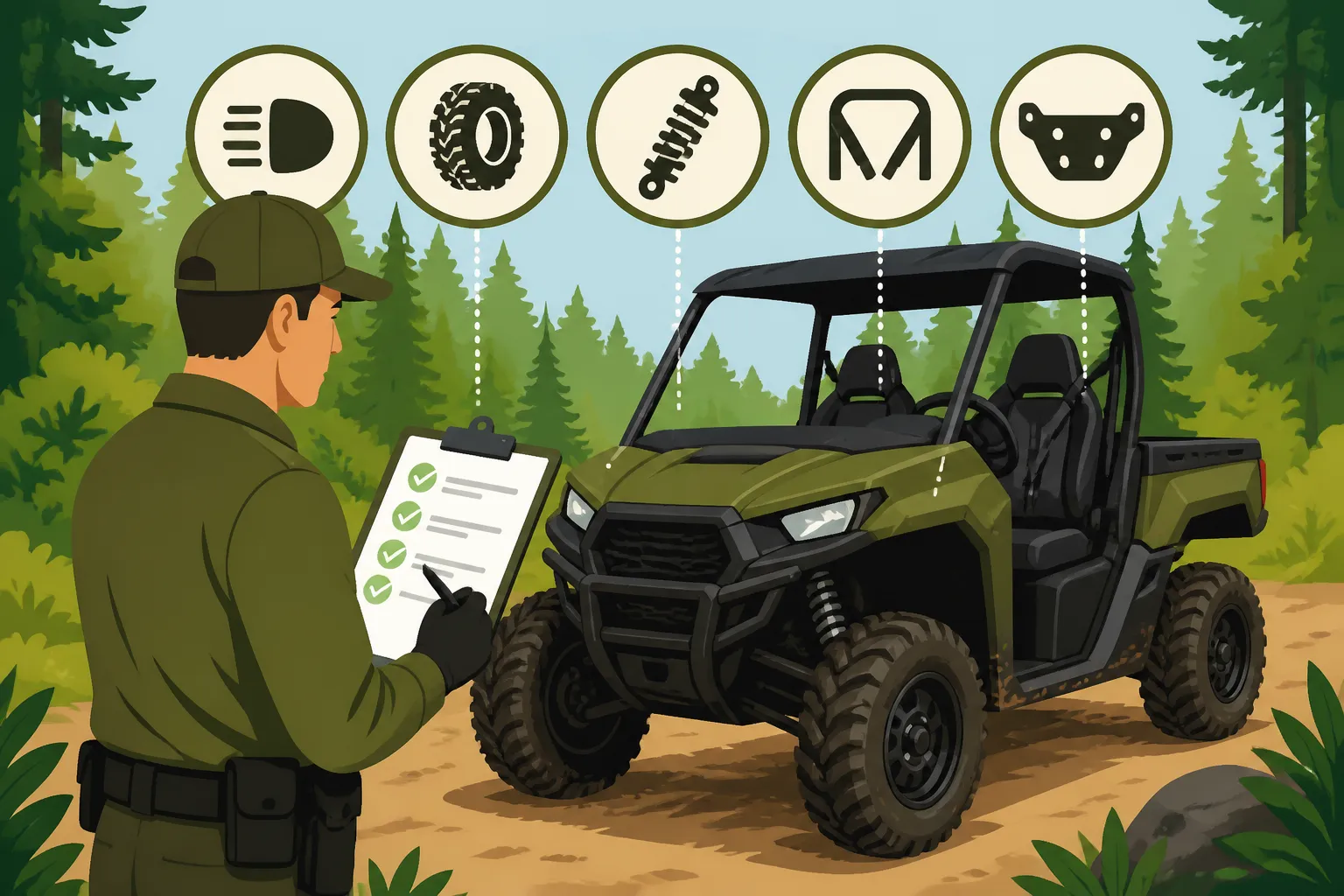
Expect to be responsible for showing that you’re permitted to ride and that your machine meets the rules for that location. A ranger or other enforcement officer may ask about your permit, where you’re headed and whether your machine is allowed on that trail. They may also look at equipment or ask you to move if your machine doesn’t meet a posted restriction.
The details to verify include:
- Permit coverage: Is it for this exact area, and is it valid for your planned ride?
- Machine eligibility: Does the trail system allow your type and size of machine?
- Trail access: Are you staying on routes open to your vehicle?
- Required equipment: Does the area require specific safety or emissions equipment?
- Rider conduct: Are you following posted speed limits, passenger rules and other restrictions?
A trailhead sign is not just background information. Check it for closures, route designations, temporary restrictions and local requirements before unloading. If a notice conflicts with what you expected, treat the posted information as a reason to stop and confirm the rule before riding. The guide Reading the Trailhead Board Before You Unload discusses how to use those notices.
Width and trail access
Machine width is one of the most important things to confirm if you ride a UTV or a wide ATV. Limits can vary between trail systems, and a machine that works at one area may not fit another. Sutton Bluff, for example, has a 50-inch limit for machines using its trails. Don’t assume a UTV fits simply because the trail looks wide at the entrance; narrow gates, trees or trail structures may determine access. See Measuring Your Machine at a 50-Inch Trail Gate before planning around a width limit.
Measure the machine as the area instructs, including anything that affects its maximum width. Accessories can change the measurement. If you’re close to the limit, check directly with the area before traveling rather than relying on a manufacturer’s listed width, which may not account for added parts.
A general permit does not override a trail-specific restriction. If a machine is too wide for a route, the right response is to use an area that allows it—not to bypass a gate or ride along an unapproved route.
Equipment and noise
Trail systems may have requirements about equipment such as spark arresters or noise limits. Don’t assume the rules at a state park apply to a national forest trail, or vice versa. Confirm the specific requirements for the area you’re visiting. Missouri Spark Arrester Rules and Missouri Sound Limits on Public Land can help you understand why these checks matter, but the local trail information should guide your final preparation.
A loud exhaust or missing equipment can turn into a preventable problem at a trailhead or during a ride. If you have replaced or modified exhaust components, check that the machine still complies with the applicable rule. Equipment that was acceptable at a different riding area may not be enough here.
How to make a trailhead check straightforward
A little organization helps you answer questions without holding up your group. Keep permit proof, any relevant registration documents and your phone or printed maps in one accessible place. Have the machine’s basic specifications available, especially width if your riding area has a limit. If you’re bringing several machines, check each one; a group permit or one rider’s paperwork doesn’t necessarily cover every vehicle.
Use this sequence when you arrive:
- Stop at the posted information point. Read the board before unloading, and look for temporary closures or changed access.
- Confirm your permit. Check that the permit matches the location and date, and keep the proof available.
- Compare your machine with the local rules. Pay attention to width, vehicle type and equipment requirements.
- Review the route map. Identify open trails suitable for your machine and note any boundaries or restricted routes.
- Set up safely. Unload in the designated area, keep the staging space clear and follow posted speed or parking instructions.
- Ask before riding if anything is unclear. Use the contact information provided by the managing agency or riding area, rather than guessing.
A permit receipt is useful, but it may not answer every question. For example, it might show that you paid for access without explaining which trail routes are open to your vehicle. Keep the area’s map and current notices handy too. If the permit is digital, save a screenshot or downloaded copy; don’t rely on a live connection at a remote trailhead.
If an officer asks for information, respond calmly and show what you have. If you discover that your permit is wrong or your machine exceeds the limit, don’t try to work around the rule. Ask whether there is an approved alternative, then stop or relocate if there isn’t. Riding past a closed sign or gate can create a separate violation even if you arrived with a valid permit.
For a visiting rider, a Missouri decal or an out-of-state registration can raise a different question from trail access. Reciprocity rules, vehicle registration and recreation permits are not interchangeable. Check both the state requirements and the area-specific permit rules before leaving home. Missouri ORV Reciprocity With Other States is a useful starting point, but confirm the details for your state and destination.
Common reasons riders arrive unprepared
Many trailhead problems come from reasonable assumptions that turn out to be wrong. A rider may have paid for a permit but selected the wrong riding area, or may arrive with a machine that exceeds a trail’s posted width limit. The permit can be valid while the planned route is not.
Assuming one permit works everywhere. Missouri has different access systems. A permit for one forest area, park or trail system may not be valid somewhere else. Match the permit to the specific destination, and check again if your trip includes more than one area.
Relying on a state decal as trail access. Registration and riding-area permits answer different questions. A decal does not, by itself, prove that you have permission to use a particular forest trail.
Not checking closures. Weather, maintenance or other conditions can close a route. A permit is not a guarantee that every trail will be open on the day you arrive. Review current notices before driving and read the board at the trailhead.
Guessing about a UTV’s width. A vehicle’s advertised width may not reflect its current setup. Tires, wheels or accessories can affect the measurement. Confirm how the area measures machines and check your own vehicle before making the trip.
Assuming nobody will check. Enforcement may not be visible at the entrance, but rules still apply. Carry your permit proof and stay on routes open to your machine.
Mixing up forest and state park rules. Public land does not mean one set of rules applies everywhere. A state park may have different equipment, permit or trail requirements from a national forest riding area. Check the destination’s own instructions, including Missouri Rules for Riding a National Forest.
A quick check before departure can prevent a wasted drive: verify the exact destination, permit, machine eligibility, equipment requirements and current trail status. At the trailhead, read the posted information and keep your documents easy to show. That’s the most reliable way to avoid confusing a state decal with trail access—or arriving ready for a route your machine cannot use.
Disclaimer
This article is for general informational purposes only and does not constitute professional advice. Laws, prices and regulations vary by location and change over time. Consult a qualified professional for guidance on your specific situation.